Search - World Summit for Social Development

Thursday, October 15, 2026 | Daily Newspaper published by GPPC Doha, Qatar.

Search Results for "World Summit for Social Development" (360 articles)

All words
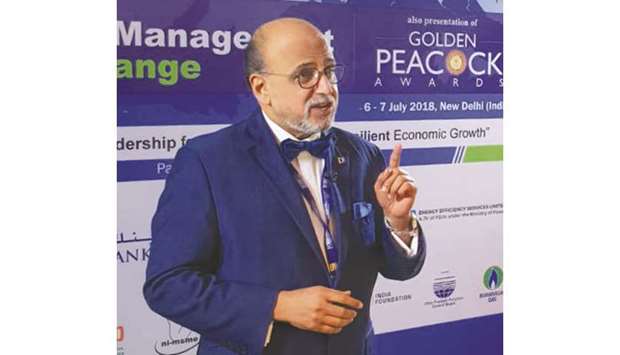
Seetharaman gestures while delivering a special address at the u201820th World Congress on Environment Management and Climate Changeu2019 organised recently by the Institute of Directors (IOD) in New Delhi.
Business

Green economy is an enabler for sustainable growth: Doha Bank CEO

The Qatar Central Bank (QCB) is seeking to issue green bonds as part of efforts aimed towards achieving sustainable development, according to a Doha Bank top official. Speaking at the ‘20th World Congress on Environment Management and Climate Change’ organised recently by the Institute of Directors (IOD) in New Delhi, Doha Bank CEO Dr R Seetharaman delivered a special address, citing issues on global growth and climate change. Seetharaman noted that the QCB is also enhancing co-operation with Qatar Development Bank to foster economic diversification through green financing and promote sustainable investment, and devise incentives for the financial and manufacturing firms to promote such financing. Similarly, Seetharaman said Doha Bank is demonstrating “fair, open, efficient, and consistent” business practices to mitigate climate change and promote sustainable development through corporate social responsibility. “Doha Bank advocates and practices green banking, which is one of its core business philosophies that would support the sustainability into the future. It has tracked the developments pertaining to various Conference of the Parties (COP) meetings and involved with various COP meeting delegations, including COP 18 in Doha,” Seetharaman said.  He also said the bank has worked on the ‘ECO-Schools Programme’ with Unesco, which works with educational institutions to build awareness of key environmental issues and create action plans that are school-specific to help mitigate the overall impact on the environment.  “Following the Paris climate agreement in 2015, European financial supervisors have been increasingly scrutinising the banking sectors to understand their exposure to climate risks and their preparedness for a transition to a low-carbon energy system,” Seetharaman said. Seetharaman said G20 countries, which account for 85% of global GDP and 80% of CO2 emissions, should adopt a combination of pro-growth and pro-environment policies in developing their overall growth and development strategies.  “Infrastructure is at the heart of economic growth and yet there has been chronic underinvestment in most G20 countries. Bringing together growth and climate change agendas rather than treating climate as a separate issue could add 1% to average economic output in G20 countries by 2021 and thereby contribute to green economies,” he said. Seetharaman said the world’s major greenhouse gas emitters are China, the US, the EU, and India. Global green bond issuances exceeded $155.5bn in 2017 with the US, China, and France leading the issuances, he noted. He said India’s move to promote gas usage is in line with the commitment made at the Paris meeting on climate change, which aims to reduce the country’s carbon emission intensity by up to 35% from 2005 levels by 2030 and producing 40% of the power from non-fossil fuel sources by 2030.  Seetharaman said India and France have launched an ‘international solar alliance’ to boost solar energy in developing countries at the COP 21 Paris summit. In 2017, the Securities and Exchange Board of India came out with listing criteria for green debt securities. “Institutions adopt environmental, social and governance (ESG) criteria for sustainable finance, which considers social conscious lending or investments. Environmental criteria look at how a company performs as a steward of the natural environment.  “Social criteria examine how a company manages relationships with its employees, suppliers, customers, and the communities where it operates. Governance deals with a company’s leadership, audits, internal controls, and shareholder rights. The board should be part of the ESG framework and equip themselves with the concept of sustainable finance. It should have the right composition, structure, and process to oversee ESG,” he added.

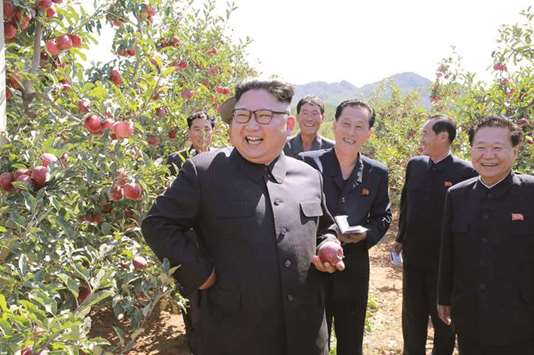
Kim Jong-un with top officials in a file picture. All of the newly promoted officials are younger than their predecessors, even though they are all in their 60s.
International

Kim loyalists shuffled to key posts before summit

North Korea’s new top three military officers are known for their unquestioning support of leader Kim Jong-un and are flexible enough to accept the massive changes that may come from any deal with US President Donald Trump, people who follow the secretive country say.  They replaced older, more conservative officers who have been recently sacked, according to a senior US official and North Korea leadership analysts in Seoul. As Washington pursues a negotiated end to Pyongyang’s nuclear programme, US officials believe there was some dissent in the military about Kim’s negotiations with South Korea and the United States, a complete reversal of the North’s pursuit of nuclear weapons and historic hostility. It was not clear if the sacked officers were responsible.  Citing an unidentified intelligence official, South Korea’s Yonhap news agency said No Kwang-chol, first vice minister in the defence ministry, had replaced Pak Yong-sik as the defence chief, while Ri Yong-gil had returned as the army’s chief of general staff in place of Ri Myong-su. The appointments could not be immediately confirmed. North Korean media had earlier reported that Army General Kim Su-gil had succeeded Kim Jong-gak as director of the army’s powerful General Political Bureau, one of the most senior positions in the country. The changes are a shock because they take place so close to each other and come just ahead of the scheduled June 12 summit between Trump and Kim in Singapore. Some analysts said Kim was replacing older officers who were wedded to the country’s nuclear doctrine with loyalists who would follow any changes he may make following the summit.  “There would be a denuclearisation roadmap coming out of the summit with Trump, and it would be burdensome for Kim to have hawks who could be agitated by any desertion of the nuclear programme,” said Cheong Seong-chang, a senior fellow at South Korea’s Sejong Institute. Trump wants North Korea to “denuclearise” in return for relief from economic sanctions. Pyongyang sees its nuclear weapons as vital to its survival but Kim has said he plans to focus on economic development. The moves are also in line with Kim’s years-long efforts to consolidate power by purging senior officers and promoting trusted younger advisers to the politburo and other core positions. The new officers could also provide some insurance against any attempt to seize power while Kim is away at the summit, experts say. “All these guys are Kim Jong-un people,” said Michael Madden, a North Korea leadership expert at Johns Hopkins University’s 38 North website.  “Kim Jong-un is going to put people in place he can trust, who are loyal to him.” In addition to being hardcore loyalists, Madden said the three officers were experienced in dealing with foreigners, which was seen as a plus point. But it was not immediately clear whether any of them would accompany Kim to Singapore. Kim Su-gil, 68, is a four-star Army general who is one of Kim Jong-un’s most trusted aides, accompanying him on various military inspections and public events. He was among those involved in the purge and execution of Kim Jong-un’s powerful uncle, Jang Song-thaek, in December 2013. Then he was tapped to lead the party’s Pyongyang chamber in early 2014, a job which Madden said was meant for “housecleaning” the administration of Jang’s confidants. Kim’s appointment to the General Political Bureau is part of Kim Jong-un’s drive to expand the party’s control over the military, said Ken Gause, director of the International Affairs Group at CNA, a non-profit research and analysis organisation based in Arlington, Virginia. All of the newly promoted officials are younger than their predecessors, even though they are all in their 60s. The three were also named in May 2016 as alternate members of the ruling Workers’ Party politburo – the opaque, all-powerful governing body where top state affairs are decided.Ri Yong-gil served as chief of staff from 2013 to 2016 until he reportedly fell from grace for a brief period, the analysts said. In the early 2000s, Ri was commander of an Army unit that defends the perimeter around Pyongyang, a sensitive position that Gause said is traditionally “personally selected” by the leader of the country. In March 2013, he was seen attending a late night meeting convened by Kim to order missile units on “standby” to strike US and South Korean military installations after a US strategic bomber flew over South Korea. In February 2016, he was briefly demoted to deputy chief and three stars from four for an unspecified reason. South Korean intelligence officials said he had been executed for corruption and abuse of power, only to see him appear at a major party assembly as a politburo candidate three months later. No Kwang-chol, the 62-year-old relatively less known new defence chief, previously headed the Second Economic Committee, which oversees defence production including the nuclear and missile programmes. “This is where you would send someone you could trust,” said Hong Min, head of North Korea research at the state-run Korea Institute for National Unification in Seoul. “No is a person who has come to the fore in the Kim Jong-un era, as a up-and-coming and trusted aide. It is not strange at all if he becomes defence minister.” Singapore designates special zone for Trump-Kim summit Singapore has designated a central region of the wealthy city state as a “special event area” from June 10 to 14 for a planned summit between US President Donald Trump and North Korean leader Kim Jong-un, the government said yesterday. The area comprising the districts of Tanglin, Newton and Orchard is where the foreign ministry, the US embassy, and several large hotels are located, including the Shangri-La hotel, mentioned as a possible venue for the June 12 summit. The announcement was made in the government’s online gazette. There will be a series of meetings between the two countries over the five days that include “lead-in activities” and social events connected with the summit, it added. Police will make stricter checks of people and personal property and items such as public address systems and remotely piloted aircraft systems will be prohibited, the notice said. There has been no confirmation of the venue for the summit to discuss ending the North’s nuclear weapons programme in return for diplomatic and economic incentives, although several Singapore hotels have figured as candidates. Anti-nuclear group offers to foot summit bill A Nobel Prize-winning anti-nuclear group offered yesterday to pay for next week’s historic summit between the US and North Korea – including the delicate issue of Kim Jong-un’s hotel bill. Who will cough up for lodgings at the five-star Fullerton Hotel, believed to be the North Korean leader’s preferred option, is one of many reported logistical and protocol headaches surrounding this month’s meeting between Kim and US President Donald Trump.  The United States is prepared to pay but fears offending cash-poor but pride-rich North Korea, the Washington Post wrote last week. The International Campaign to Abolish Nuclear Weapons (ICAN) said it was willing to help resolve the impasse by bankrolling Kim’s delegation, using part of the $1.1mn cash prize it received for winning last year’s Nobel Peace Prize. “We are ready to shoulder the cost of the summit, naturally including expenses for accommodation and conference venues,” Akira Kawasaki, an ICAN representative in Japan, told AFP.  “If holding the summit is in danger because of financial problems, we are ready to shoulder the cost as it is an important, historic meeting,” he added. Kawasaki declined to say how much ICAN could stump up but said part of the Nobel Prize award would be put to the summit “in order to support peace in the Korean peninsula and a nuclear weapon-free world”.  The sum would be negotiated if North Korea accepted the offer, he said. The presidential suite at the Fullerton boasts, according to its website, a baby grand piano and claims to be “the most exclusive hotel suite in Singapore.” With a private elevator offering exclusive access, the suite is 201 sq m (2,164 sq ft) and reportedly costs more than $6,000 for one night. Reporters camped outside the hotel last week to catch a glimpse of Kim Chang-son, Kim’s de facto chief of staff, who travelled to Singapore to lay the groundwork for the June 12 summit.  The Singapore dialogue will be the first time a sitting US president has met a North Korean leader. Talks are expected to focus on denuclearisation of the Korean peninsula and improving relations between Washington and Pyongyang.

WISE
Qatar

WISE announces new Learners’ Voice batch

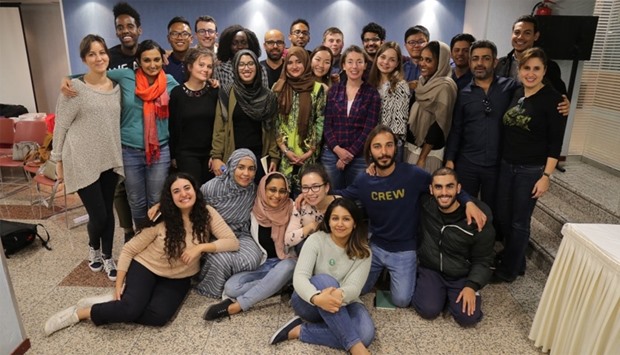
The World Innovation Summit for Education (WISE), an initiative of Qatar Foundation for Education, Science and Community Development, has announced a new cohort of outstanding young people to participate in the 2017-2018 Learners’ Voice programme.  As many as 25 young education advocates from 22 countries, with diverse backgrounds and disciplines, have been selected to join the international Learners’ Voice community. The new cohort will engage in dialogue on pressing education issues including practical, action-oriented approaches to the crisis of global forced migration and displacement.   The WISE Learners’ Voice programme brings the voice of young people to the challenge of rethinking education, and equips them to take on leading roles in their fields and in the world of education. The programme focuses on building their knowledge of education, as well as their communication, entrepreneurship, and leadership skills.  Stavros N Yiannouka, CEO, WISE, remarked: “At WISE, we are very excited to introduce the new cohort of the Learners’ Voice Programme for 2017-2018.  The WISE team has worked hard to bring together this unique group of young people with diverse backgrounds and experiences, who share a commitment to education for individual empowerment and social change.” “Many of them have already faced life-changing experiences and challenges, whether as refugees themselves, or as teachers and advocates in diverse and difficult situations around the globe. I am confident that they and their peers will bring to the WISE community a new and vital energy towards building the future of education,” added Yiannouka. In addition to their participation at the 2017 WISE Summit in Doha this November, the newest Learners’ Voice cohort will join two intensive residential sessions delivered by expert faculty members, as well as a variety of online and on-site activities.  In a key component of the programme, in January 2018, the learners will form teams to conceive and design innovative projects that address critical education challenges.  After thorough evaluation by the Learners’ Voice team, selected projects will have an opportunity to pitch their proposals to an audience of potential investors, donors, and partners next year.

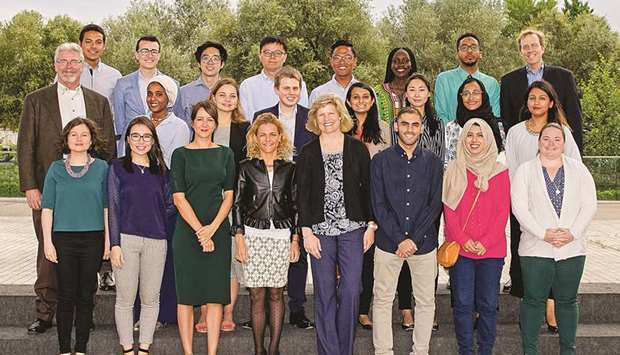
Members of the WISE Learnersu2019 Voice Programme 2016-17, with facilitators, at the Madrid residential session.
Qatar

WISE residential session concludes

The World Innovation Summit for Education’s (WISE) Learners’ Voice Programme has concluded the second of its residential sessions in Madrid, where workshops for the initiative’s 31 participants focused on developing social entrepreneurship, communication and presentation skills. The sessions, delivered in partnership with Banco Santander’s Global Universities Division, were facilitated by experts from Babson College and other specialists. The current group of Learners represent 26 countries, including Qatar. The Learners’ Voice Programme is a core initiative of WISE, a member of Qatar Foundation for Education, Science and Community Development. The year-long programme comprises of two intensive residential sessions – this year in Athens and Madrid – and actively engages a competitively selected and diverse group of young people aged 21 to 30 who have demonstrated their commitment to education. The current cohort is involved in theoretical and practical components relating to the ongoing global forced migration and displacement crisis. Since the first residential session in Athens in March, the learners have been engaged in online group work with expert mentors who have been helping them develop their projects. There are five groups of Learners, each currently developing different education interventions aimed at addressing challenges faced by refugees and displaced people. Based on the strength of their project proposals, selected teams have the opportunity to pilot their projects with a target community. The purpose of the pilot is to test the idea on a small scale and evaluate its benefits, risks and feasibility. The pilot phase will be conducted in partnership with organisations on the ground. In the final phase, selected teams will be given the opportunity to pitch their projects to an audience of relevant experts, practitioners and stakeholders at WISE 2017, which will take place in Doha from November 14 – 16. Banco Santander has supported the WISE Learners’ Voice Programme since 2012 through its Universities Global Programme. The world’s largest supporter of corporate social responsibility programmes in education, Santander collaborates with over 1,100 universities and research centres worldwide.

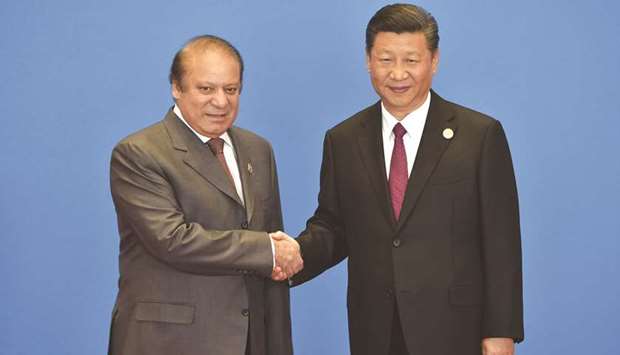
GRAND PARTNERSHIP: Prime Minister Nawaz Sharif, left, with Chinese President Xi Jinping at the OBOR summit in Beijing.
Opinion

Pakistan’s cutting edge in China’s ‘new world order’

The other week, China sent out the strongest message yet of its ambition to carve out what has the makings of a ‘new world order’ — something that had until now been considered the sole preserve of the United States, especially since the dissolution of the Soviet Union. With the unfancied Donald Trump winning the election on the pivot of “Making America Great Again” — designed around an inward policy — and one that is cast in a protectionist mould, a confident China finds itself free to pursue an economic zeitgeist that has the potential to turn it into the world’s leading power. In this larger scheme of things, it finds heavyweight Russia on its side quite simply because their strategic interests converge. The One Belt, One Road — or OBOR, to be more succinct — saw heads of state and government from 29 countries, representatives from more than 40 other countries, and heads of UN and multilateral financial agencies, including IMF and World Bank, turn up in Beijing. An eye for a pie in the trillion dollar infrastructure development project that links the old Silk Road with Europe was palpable. Even the US and Japan sent delegations. The who’s who were keen on getting to know what’s what of the phenomenal juggernaut that, at the moment, binds 68 countries from Asia and Africa to Europe and even South America — accounting for up to 40 trillion of the world’s GDP — in a potential partnership whose gravitas for a windfall is lost on no-one. The OBOR initiative is a manifestation of the shifting sands in global geopolitics, where look-East will hoist Eurasia at the centre of economic and trade activity away from the US-led transatlantic regime. To be certain, Chinese President Xi Jinping has made the OBOR initiative the centrepiece of his infrastructure behemoth, the sheer scale of which, the world has not seen since the end of the Second World War. According to Chinese government estimates, nearly $1tn has been invested in the OBOR with multiple trillion more to come in the next decade. Beijing is also pumping a collective $150bn in development projects in the 68 countries that are part of the project. The only major regional country to abstain from the epoch-making summit in Beijing was India, which has serious reservations about the project owing to its competing interests with China and the OBOR flagship project — China-Pakistan Economic Corridor (CPEC) — which pitches Pakistan right at the fulcrum of the path leading to South and Central Asia. Both China and Pakistan have offered India to join the profitable engine of economic growth, but so far it remains wary of the geographical bind that has Pakistan sitting pretty with a bilateral engagement (CPEC) estimated at approximately $57bn, and which, is expected to grow exponentially in the coming years. It has seen a surge of nearly $11bn in the last three years alone from an initial projected $46bn! For Islamabad, of course, this is more than a prized venture that promises to turn its fortunes around. Once it materialises, it will have insulated Pakistan from any untoward economic downturn and largely addressed the perennial issue of capital. From initial misgivings at home about unequal distribution thanks to political bickering, CPEC has now assumed a certain unity of purpose four years down the road, which was evident in how Prime Minister Nawaz Sharif invited chief ministers of two provinces where his political rivals rule, and both not only accepted the invitation but were a prominent presence in an official delegation led by Sharif that easily outscored every other country at the summit! The CPEC has elevated a more than five-decade-old strategic partnership based largely on security cooperation — famously dubbed as being “Higher than the Himalayas and Deeper than the Oceans” — into a dynamic economic relationship whose reach and potential entwines them in an unbreakable bond. While China would literally, expand its economic might thousands of miles across the region, Pakistan can hardly complain about being the gateway for two routes — the continental Eurasian Silk Road Economic Belt and a Southeast Asian Maritime Silk Road! Prime Minister Sharif had plenty to smile about as he oversaw the signing of new wide-ranging accords amounting to $500mn, including an airport in Gwadar — the site of a deep water port that opens into the Arabian Sea from the far western Chinese province of Xinjiang; the setting up of a dry port in Havelian in northern Pakistan; and economic and technical co-operation for the East Bay Expressway linking Gwadar to Pakistan’s highway network. Addressing the plenary session of the two-day powerhouse of a show in Beijing, Sharif called for finding a connect in line with the official theme entitled ‘Co-operation for Common Prosperity’. “It is time we transcend our differences, resolve conflicts through dialogue and diplomacy and leave a legacy of peace for future generations,” he emphasised, before driving home the imperative of peace and security through economic progress. “The OBOR signifies that geo-economics must take precedence over geo-politics, and that the centre of gravity should shift from conflict to cooperation,” he said, and rejected the notion of encirclement of any country. President Xi underlined this by allaying concerns that OBOR was designed to manipulate geopolitics for Beijing’s vested interest. “China is willing to share its development experience with all countries. We will not interfere in the internal affairs of other countries. We will not export our social system and development model, and will not impose our views on others,” he concluded. * The writer is Community Editor

WISE concludes the first residential session of its 2016-17 Learnersu2019 Voice Programme
Qatar

WISE concludes first session of Learners’ Voice Programme

The World Innovation Summit for Education’s (WISE) Learners’ Voice Programme has concluded its first residential session for the year 2016-17. Taking place in Athens, Greece, for the first time since its inception in 2010, the intensive workshops brought together 25 young people to explore the global forced migration and refugee crisis. The group spent the days supporting the work of organisations working with both urban and camp refugee communities in Athens, including: Khora Community Centre, METAdrasi, Orange House, Project Elea, and Organisation Earth. The practical component was complemented by evening sessions delivered by expert faculty from the University of Oxford, Harvard University, University of Bologña, and Save the Children, among others. Dina Pasic, head of programmes, WISE, said, “After visiting the Katsikas refugee camp last April, it became clear that if we are to seriously explore social issues, we must immerse ourselves and learn from those directly affected by them. The Learners’ Voice Programme challenges its participants to develop feasible, actionable and educational solutions to such challenges.” The sessions came to a close following the presentation of five group projects to a panel of education experts, including Stavros N Yiannouka, CEO, WISE; and Dr Stefanos Gialamas, president, American Community School of Athens as well as representatives from Project Elea, METAdrasi, and Organisation Earth. The residential sessions of the programme are designed to support the participants as they research and develop a variety of innovative educational projects throughout the year. The Learners will continue to develop projects that aim to support the needs of displaced individuals and their host communities through educational interventions. Successful projects will be pitched at the 2017 WISE Summit and the best project will have the opportunity to present at the 2017 Falling Wall Labs Conference in Berlin, Germany. WISE, a member of Qatar Foundation for Education, Science and Community Development, established the Learners’ Voice Programme to engage the perspectives and creative energies of young people in discourse around important education issues and social challenges. This year’s participants, aged 18-25, were chosen from over 1,000 applications and collectively represent 21 countries. The programme is supported by its partners Banco Santander through its Universities Global Division and the American Community Schools of Athens.

Gulf Times
Business

Islamic social finance steps into the limelight

By Arno MaierbruggerGulf Times Correspondent BangkokWith mainstream Islamic finance rapidly taking on greater significance in the international finance world, several of its sub-disciplines are also gaining in importance. One such sector is Islamic social finance, which focuses on three segments of Islamic philanthropy - zakah, sadaqah and awqaf - as well as on cooperative-based social finance, qard and kafala, and on contemporary Islamic microfinance and their role in global poverty alleviation and ability of bridging development funding gaps.Authored by the Islamic Research and Training Institute (IRTI) of Jeddah-based Islamic Development Bank (IDB), there are already two comprehensive studies on the sector available. Last year’s Islamic Social Finance Report 2014 analysed the state of Islamic social finance in seven countries of South and Southeast Asia, namely India, Pakistan, Bangladesh, Malaysia, Brunei, Indonesia and Singapore, and the newly released Islamic Social Finance Report 2015 sets, for the first time, its focus on Islamic social finance on sub-Saharan Africa and on the countries Sudan, Nigeria, Kenya, Mauritius, South Africa and Tanzania.Both reports identify how Islamic social finance could be better utilised to tackle poverty and other needs of the poor. One result is that zakah alone, a form of obligatory alms-giving and customarily 2.5% of a Muslim’s total income, if fully institutionalised, would have the potential of wiping out poverty in most of the countries surveyed. To that end, the IDB has already approved the channelling of Islamic social finance funds towards helping people in fragile and conflict states, with the funds to be used to rebuild education, healthcare, sanitation, public facilities, public works, electricity, transportation and housing in the troubled and impoverished countries. Apart from institutionalised zakah collection and distribution, the 2015 report also recommends the offering of microfinance products for smallholder farmers and allowing the creation of awqaf – a form of perpetual charity deriving from donated assets being held in trusts – by non-Muslims.The reports show that Sudan, Nigeria and South Africa could “easily” generate adequate resources for poverty alleviation through zakah, while Islamic social finance also had great potential for curbing poverty in the three other countries studied. The report estimates the annual zakah potential in Sudan, Nigeria and South Africa stands at about $1.84bn, $8.78bn and $179mn, respectively. However, the actual collection in 2013 was $220mn, a mere $3mn and $100mn, respectively, in the three countries. The big differences are caused by the significantly different levels of the facilitation of Islamic social finance, as well as the percentage of Muslims within the population. While in Sudan compulsory zakah remittances are boosting collection levels, such a policy has not been successful in parts of Nigeria because of the lack of enforcement mechanisms. Incentives in the form of tax rebates for zakah payments have also helped in Sudan.Dr Mohamed Azmi Omar, director general of IRTI, said he hopes that the reports “will satisfy a long-felt need for adequate and relevant information that will help towards instituting an enabling environment for the Islamic social finance sector.”This is particularly important as the global funding gap for humanitarian initiatives has reached $7bn in 2014, according to Dr Jemilah Mahmood, chief of the World Humanitarian Summit Secretariat at the UN.“Tapping into Islamic social finance could reduce this huge gap,” she said.According to calculations by the UN, the world could get rid of poverty if only 5% of people would pay zakah as due.

Members of Learners Voice Programme at the briefing yesterday.
Qatar

WISE programme members share their experiences

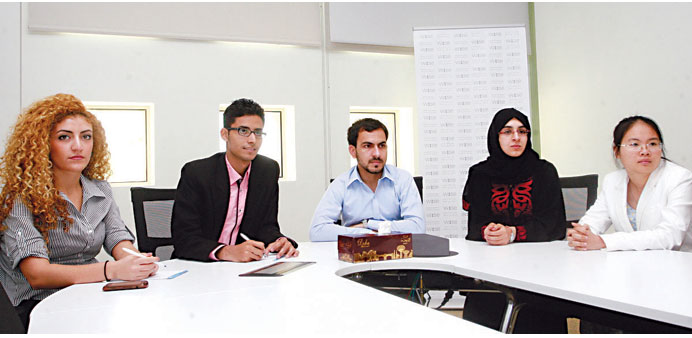
By Joseph Varghese/Staff ReporterMembers of the 2012 Learners Voice Programme (LVP) of World Innovation Summit for Education (WISE) shared their experiences during a roundtable yesterday. The 2012 LVP team is undergoing a 10-day training session at the Students’ Centre of Hamad Bin Khalifa University.Opening the session, Ali al-Mohamoud, international educational conferences co-ordinator at Qatar Foundation, said that the team members had immensely benefitted from the year-long programme and training sessions. He said: “The learners selected in 2012 are currently taking part in a year-long programme that combines online sessions, lectures and workshops about education, public policy and decision-making, social entrepreneurship, leadership and communication, as well as group work on a project in the field of education.”Al-Mahamoud said that the learners participated in a number of international conferences such as Empower 2013: Rota’s 5th Annual Youth Conference in Doha, THE 2013, in Doha, Asian Youth Forum and the 46th annual meeting of the board of governors at the Asian Development Bank, New Delhi, India, WISE/British Council event, Manchester, UK and Wheelock College Inaugural International Conference, Boston, Massachusetts, USA.One of the participants, Huong Nguyen from Vietnam, said that participating in the Asian Youth Forum and the Asian Development Bank’s board of governors meeting was a great experience for her. She said: “This helped me immensely to understand more about the socio-economic issues prevalent in different parts of the world and made me realise many things. I would try to implement many of the things in my country.”Bahauddin Baha from Afghanistan said that the LVP made him understand that traditional education alone was not enough to cope with the present situations. He said that he could clear many of the misgivings about his country at the international scenario and also learn more about the outside world.Similarly, Firyal al-Balushi, a medical professional from Oman, said that there was no proper information about the medical statistics especially in the Middle East and the African countries. She said that she was working on a project to develop a medical tool that will enable people to access information from the region and beyond.Najla al-Khalifa from Qatar, Tala Hammash from Jordan and Maad Sharaf from Yemen also took part in the discussions during the meeting.

Gulf Times
International

PM in Rio for Earth Summit

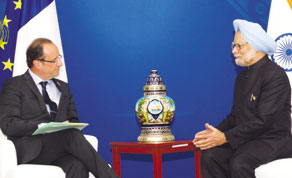
IANS/Rio de Janerio Prime Minister Manmohan Singh meets French President Francois Hollande on the sidelines of the G20 summit in Los Cabos, Mexico, late Tuesday. Singh later arrived in Rio de Janeiro to attend Earth Summit Prime Minister Manmohan Singh arrived here yesterday for the Earth Summit after taking part in the G20 summit in Mexico. Singh will join world leaders here to find ways of reducing poverty, advancing social equity and protecting environment in a sustainable manner. Earlier, G20 nations ended a meeting in the Mexican resort Los Cabos endorsing the Indian stand that investment in infrastructure was critical for sustained growth, economic recovery, poverty reduction and job creation. Singh has been pushing for long-term access to funds for infrastructure for developing countries. India has said it needs at least $1tn in the next five years in infrastructure funding. He also has maintained that fiscal prudence and austerity in debt-laden countries must be matched by measured fiscal expansion by surplus nations. This was endorsed by the leaders including Presidents Barack Obama of the US, Angela Merkel of Germany and Vladimir Putin of Russia and Chinese Premier Wen Jiabao in a document formally called the G20 declaration. “Investment in infrastructure is critical for sustained economic growth, poverty reduction and job creation,” the declaration said, adding the recommendations made by multilateral development banks in this regard must be implemented.

Qatar wins WSIS 2020 e-Science award
Qatar

Qatar wins WSIS 2020 e-Science award

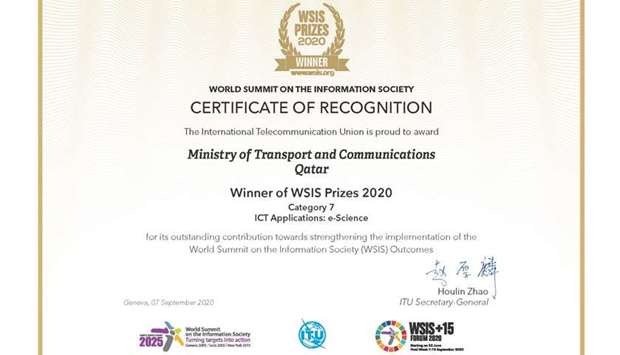
Qatar, represented by Qatar Open Data Portal of the Ministry of Transport and Communications (MoTC), won the 2020 World Summit on Information Society (WSIS 2020) award for e-Science. The announcement came on Monday during the opening activities of the last week of the WSIS 2020, which is organised by the International Telecommunication Union via videoconferencing and continues until Wednesday. Acting Assistant Undersecretary for Information Technology Affairs at the MoTC Mashael Ali al-Hammadi congratulated Qatar for winning the award, which represents an international recognition for the digital progress achieved by the State within the Qatar Digital Government strategy. She indicated that this is an indication of its progress in improving its online services provided to the public, facilitating it in the cyberspace, and getting rid of the restrictions of time and place, wishing for the permanent presence of Qatar's digital government projects and programmes on the coronation platforms to raise Qatar's name high in international forums. Al-Hammadi added that MoTC thanks all government agencies' partners in the portal for providing all the data and statistics needed for the portal. Three Qatar projects have been selected as the heroes of 2020 on the WSIS Award. The second category of the award included the "Centralised Connectivity in the Schools Network" at the Ministry of Education and Higher Education, while the seventh category included the "Open Data" portal under the MoTC, and the eighth category included the multilingual e-contract system project — the Ministry of Administrative Development, Labour and Social Affairs. The WSIS 2020 is held entirely online, under the slogan "promoting digital transformation and global partnerships...WSIS action lines to achieve sustainable development goals", in co-operation between the International Telecommunication Union and the United Nations Educational, Scientific and Cultural Organisation (Unesco), the United Nations Development Program (UNDP) and the United Nations Conference on Trade and Development (UNCTAD), in close co-operation with all the facilitators participating in the WSIS Action Line. The MoTC launched the "Qatar Open Data Portal" to facilitate the process of disseminating government data on the Internet through a single national platform, making it available to the public, and appropriately ensuring its quality and provision and according to international standards followed in this field. The portal comes within the framework of the Qatar Digital Government 2020 strategy, which includes among its axes open data, e-participation, and related policies as major initiatives in this context. The portal promotes Qatar's march towards the transformation of smart transactions to achieve national development goals in providing public services efficiently and transparently, building a digital economy based on a knowledge society, and promoting innovation and creativity by creating an open and transparent culture in which the foundations of knowledge are in circulation and accessible. Several government agencies share their data through the portal, and it is expected that all government agencies will join and participate in the portal to build a more efficient, open, and transparent government. This data represents a huge wealth, especially government sector data, which is the main source for official statistics, due to the amount of data collected as well as its central importance. The MoTC is keen to make this data available online so that it can be used in an innovative way to create useful tools to support and develop business, facilitate public services, and restructure administrative procedures. The WSIS Prizes competition is open to all stakeholders: governments, companies, civil society, international organisations, academia, and others. The competition includes 18 categories that are directly related to the WSIS Action Lines.

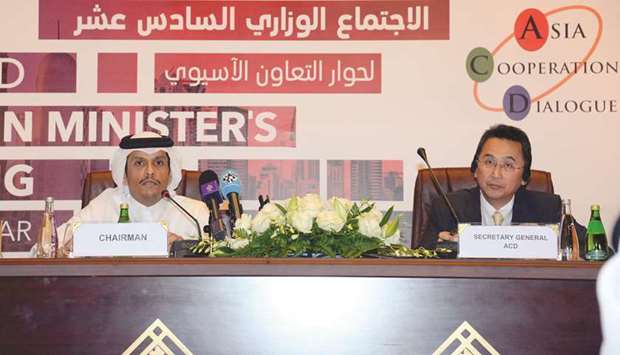
HE the Deputy Prime Minister and Minister of Foreign Affairs Sheikh Mohamed bin Abdulrahman al-Thani with ACD Secretary-General Bundit Limschoon: PICTURE: Thajudheen
Qatar

FM calls for deeper, stronger ties among Asian nations at ACD meet

The 16th Ministerial Meeting of the Member States of the Asian Co-operation Dialogue (ACD), under the chairmanship of Qatar, began in Doha yesterday. HE the Deputy Prime Minister and Minister of Foreign Affairs Sheikh Mohamed bin Abdulrahman al-Thani opened the meeting by saying that the meeting is taking place when the world is undergoing complex changes and developments in political, economic and financial spheres, stressing the need to deepen co-operation among Asian countries to meet the challenges of the future. He pointed out that the Asian continent constitutes an influential proportion in this world, stressing the need to upgrade the level of relations and co-operation among all countries of the Asian continent in various fields in order to achieve the desired joint integration at bilateral and multilateral levels. The FM pointed to the need to address the challenges of the future by deepening and intensifying ties of co-operation and creating healthy environments to build solid and balanced relations between the countries based on respect for international legitimacy and on the proper resolution of disputes in a manner that guarantees justice, strengthens mutual trust and achieves real partnership through more effective implementation mechanisms in line with the ACD vision 2030. He pointed out that the ACD, since its inception on 23 June 2001 and the launch of its ministerial meetings in 2002 and its first term in 2012, has proved beyond any doubt that it is a vital mechanism for co-operation in the development of the Asian continent. New horizons The FM expressed his full confidence that the integration of the course of the previous ministerial meetings will provide an opportunity to deepen and strengthen existing co-operation in all fields and help to open up new horizons, expressing Qatar’s pride in hosting this important meeting and affirming its determination to do its best for its success. “We in Qatar appreciate our relationship with the Asian countries with which we have long-standing historical ties that transcend the material interests and immediate benefits,” he said, adding that Qatar supports the main objectives of the ACD initiative, which include strengthening inter-relations among Member States, co-ordinating political positions, strengthening co-operation in various fields and achieving common interests. Sheikh Mohamed reiterated Qatar’s support for Member States’ proposals related to the 20 fields of co-operation, particularly in the areas of energy, energy security, poverty alleviation, agriculture, transport, biotechnology, environment, tourism and E-education, adding that it encourages all efforts that promote joint action under the umbrella of the ACD Secretariat General. He pointed out that the economies of the Asian countries in recent years have witnessed increasing growth rates, which provide the opportunity for further co-operation among the countries of the continent, pointing out that any situation of tension or instability in any geographical region of this continent will negatively affect all other regions, leading to slower growth rates and development programmes. The FM said although the countries of the continent have taken concrete steps to achieve some ambitions, there is still other aspirations that require hard work to achieve them. “We have every opportunity to achieve the aspirations of our peoples because Asia possesses natural and human resources and occupies an outstanding geographical location.” He stressed that consultation and co-operation in the political field are an important factor in the relations between the Asian countries, but economic and trade co-operation is the cornerstone in the development of these relations, prosperity, economy and sustainable development of these countries and their peoples. Business Forum He pointed out that the Business Forum to be held on the sidelines of this meeting will be an important platform for presenting distinguished experiences, visions, ideas and experiences of investors, entrepreneurs and experts in the fields of economy and trade, which will open new horizons for mutual co-operation, expansion of trade and financial markets and increase the competitive power of the Asian countries with the rest of the world. The FM addressed the phenomenon of terrorism and extremism, stressing that it has become a source of danger to all, adding that Qatar condemns terrorism, extremism and violence in all their forms, regardless of their motives, and is involved in all regional and international efforts to combat terrorism. He also reiterated that there is no religion that calls for terrorism, and that all religions call for noble values, tolerance, co-operation and constructive dialogue for the benefit of human society. Sheikh Mohamed reiterated Qatar’s condemnation of the bombings of churches and hotels in Sri Lanka in April. In another context, he stressed that Qatar believes that education and culture are essential pillars for the development and growth of peoples and for building a bright future for future generations and paying great attention to them, pointing out, in this regard, that Qatar Foundation for Education, Science and Community Development hosted an educational workshop in co-operation with the Asian Co-operation Dialogue (ACD) in Qatar last March, which witnessed a remarkable attendance from educational and academic elites. Economic achievements Sheikh Mohamed also announced that Qatar will host the ACD Summit in 2020, hoping that “this meeting will achieve its objectives of meeting the aspirations of our peoples and our common hopes”. For his part, Iranian Foreign Minister Mohamad Javad Zarif called for the establishment of a comprehensive Secretariat for all Member States by establishing a working group for reform and restructuring. Zarif, who addressed the opening of the 16th ACD Ministerial Meeting as his country was the former chair of the ACD, said that the lack of dialogue is behind many problems, and that the ACD was established in order to help in avoiding such problems, adding multilateral and comprehensive dialogue is the only way out of any conflicts or problems. He also expressed his support for Qatar’s hosting of the ACD summit in 2020, saying that the ACD represents a community of co-operation and dialogue in a friendly environment within a framework that supports the ACD country’s relations. The minister said his country condemned the terrorist bombings in Sri Lanka, adding that his country believed that education, culture and dialogue are essential for development. He stressed that his country adopts the method of dialogue as the best approach to achieve the desired goals, noting his country’s support for projects and events of the Asian continent, including hosting a cultural week for dialogue between countries. Meanwhile, Turkish Foreign Minister Mevlut Cavusoglu said that the Asian continent has enormous potential and resources, while highlighting some of the potentials enjoyed by the continent. The minister, who addressed the opening of the 16th ACD Ministerial Meeting as his country will be the next chair of the ACD, added that the Asian continent has more than half the world’s population, produces about 40% of the world’s industrial production, and has achieved many economic achievements as many of the continent’s countries managed to bring their peoples out of the lowest level of income and achieve high levels. He stressed that economy is the main engine in many gatherings, therefore the ACD should focus on increasing economic co-operation among its members in order to achieve positive results that benefit the ACD countries, especially in light of the crises and challenges facing the continent. He pointed out that communities should not be linked to terrorism, calling for the removal of its root causes by confronting poverty and workers to achieve social justice. Cavusoglu also called for increased economic co-operation, stressing that obstacles must be resolved in order to achieve this goal. He pointed out that Member States should work together to achieve concrete steps in this framework, especially in light of the human and material capabilities of the countries of the continent through the establishment of networks of communication and good integration between the ACD countries. While stressing the importance of economic co-operation, he said, it’s also necessary to pay attention to cultural exchange and tourism, noting that Turkey during the period of its chair of the ACD will give priority to tourism and find mechanisms for co-operation in this field. The minister pointed out that Turkey will also be interested in increasing communication between Member States and providing platforms of co-operation between the Chambers of Commerce of the ACD. In turn, ACD Secretary-General Bundit Limschoon called on Member States to work together to face the crises and challenges facing the region. He said that this forum represents opportunities for dialogue among Asian countries and will enhance their capacity to cope with these crises.

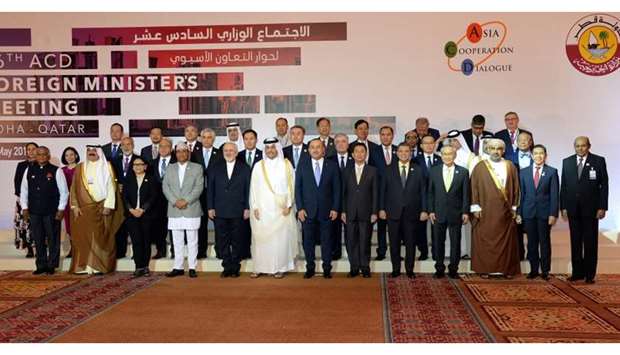
HE the Deputy Prime Minister and Foreign Minister Sheikh Mohamed bin Abdulrahman al-Thani with participants of the 16th Ministerial Meeting of Asia Co-operation Dialogue in Doha
Qatar

Asian countries urged to forge closer ties for peace, growth

*16th Ministerial Meeting of Asia Co-operation Dialogue ends in Doha The Doha Declaration issued by the 16th Ministerial Meeting of Asia Co-operation Dialogue (ACD), which concluded Wednesday, welcomed the proposal submitted by Qatar to host the third ACD summit in 2020, and its initiatives to teach the Arabic language to non-Arabic speakers in the member-states. The declaration also praised Qatar's hosting of the 16th ACD meeting, which was held over two days in Doha under the theme "Partners in Progress". Asia is on the way to becoming a major driving force for global economic growth and a key partner in achieving global partnership in development for adopting the policies of good-neighbourliness, friendship, dialogue, co-operation and common development, the declaration said. It stressed the importance of regional co-operation as a key mechanism for achieving the three pillars of sustainable development, which include social and economic development and environmental protection, as well as the stability of the Asian region. The meeting referred to the six agreed common pillars of ACD co-operation areas among the member states, stressing the commitment of countries to translate the ACD vision into concrete actions through these pillars. The meeting welcomed the report submitted by all major drivers and other members on the planned activities and their expected results. The meeting called for strengthening co-operation for expanding regional trade, transit, increasing investment and promoting infrastructure development. Dialogue as a means for achieving peace, prosperity, solidarity, mutual respect and tolerance was highlighted at the meeting. Informal meetings between Asian leaders would help share ideas and experiences, the conference said. The participants also expressed their commitment to the rules of the World Trade Organisation. The declaration reaffirmed the need to strengthen unity, expand cultural exchanges and deepen practical co-operation to promote sustainable development and prosperity and contribute further to peace, stability and development in the world. Countries participating in the meeting expressed strong rejection of all forms of racism, discrimination, extremism and terrorism, stressing the importance of communication in taking the necessary measures to combat extremism. The declaration called upon all member-states to work together to prevent and suppress terrorist acts and to take effective steps to promote tolerance, mutual respect and understanding, in particular through education, media and civil society, to protect all individuals and communities from hatred and violence through the effective implementation of the UN Global Counter-Terrorism Strategy. It stressed the importance of strengthening cybersecurity, combating organised crime and human trafficking, and promoting and protecting human rights. Countries participating in the meeting expressed satisfaction with the achievements of the ACD and vowed to redouble efforts to consolidate relations among member-states and move towards higher levels of partnerships. Emphasising the important role of small and medium enterprises as the engine for prosperity , they welcomed Qatar's initiative to host the ACD Business Forum to create a private sector business platform to promote small and medium enterprises across Asia. The Doha Declaration referred to the importance of promoting free trade and investment between Asian countries and removing the obstacles to this objective, as well as the need to work together to develop strong mechanisms for the promotion and protection of mutual investments.