Search - covid 19

Wednesday, December 24, 2025 | Daily Newspaper published by GPPC Doha, Qatar.
Search Results for "covid 19" (360 articles)


Couples posing for a group wedding photo in a restaurant in Hong Kong.
International

Hong Kong seniors celebrate life with mass marriage vow renewal

Rowdy cheers spilled from a Hong Kong banquet hall hosting a mass wedding party, as one of the 20 elderly couples renewing their vows coquettishly shared a strawberry marshmallow mouth-to-mouth.Dressed to impress, the brides and grooms - mostly in their 70s - were in high spirits as they took part in the 17th Elderly Wedding event, organised by a local NGO to highlight the importance of love to mental well-being among older adults.Wendy Wong, the vibrant 72-year-old who had delighted the room with her confectionery-based antics, sat by her husband, her arm through his.“What is love? I don’t think I can live without him,” Wong said.“I didn’t have a western-style wedding, so this is very special for us,” she said, her diamante-encrusted white satin gown catching the light from the hall’s chandeliers.The full three-day event has returned after a five-year hiatus caused first by the huge, sometimes violent pro-democracy protests that engulfed Hong Kong in 2019, and then the coronavirus.The pandemic left its mark in other ways too.“In previous years, we had participants even in their 90s, but... many older individuals lost their lives to Covid-19,” said volunteer team leader Chan Hiu-ching.“That’s why the demographics skew younger this year.”Wong and her husband Lun Yuk-lam, the oldest participant at 77, have had their own brush with mortality.Lun survived cancer 10 years ago, and still has to take medication to keep it at bay.“It was a critical moment in life, but I will always by his side and hope for his good health,” Wong said.The uncertainty of the pandemic had made the couple eager to “create more memories” together, she added - and the Elderly Wedding seemed like the perfect way to mark their 50th wedding anniversary.Chan Siu-kam, the chairman of the organising NGO, came up with the idea around 20 years ago.While visiting a care home, she noticed a beautiful gown one of the residents was using for a photoshoot, and saw the desire to dress up for a special occasion did not necessarily fade with age.“This is a way for the elderly to connect with others,” Chan explained.“Their needs extend beyond financial or physical support - their mental health is often overlooked by society.”Many of the participants had reached out themselves, she said, with some of the more tech-savvy ones coming across the event on Facebook.After the banquet, the couples piled into two brightly coloured Hong Kong trams and set off along the tracks, waving to passers-by who stopped to watch delightedly.“Please congratulate them! They just got married today!” volunteers shouted from the top of the tram.


The two-day training programme explored ways to make effective responses to the current developments and challenges in financial risk, internal audit, and compliance.
Business

QFMA and UASA organise training on ‘New Trends in Risk, Governance and Compliance’

A specialised training programme on “New Trends in Risk, Governance and Compliance” was organised by the Qatar Financial Markets Authority (QFMA), in co-operation with the Union of Arab Securities Authorities (UASA).The two-day training programme explored ways to make effective responses to the current developments and challenges in financial risk, internal audit, and compliance, including the revised three lines of defence paper from IIA (Institute of Internal Auditors), BIS (Bank for International Settlements) guidance and the impact of remote working.The target audiences of the training were employees of different capital market institutions, regulators, stock exchanges, depository centres, as well as brokers and other entities related to capital markets.The training programme provided a detailed overview of how risk, internal audit, and compliance have changed as a consequence of Covid-19 and other risks.It shared best practices in managing new risks exposure induced by digital transformation, cyber risk, and remote working. It also shared best practices in managing new risks exposure induced by digital transformation, cyber risk, and remote working.With the expanded understanding in key industry updates, participants gained insights into integrating Governance, Risk, and Compliance (GRC) within the internal control frameworks and the practical implementation.The training covered several topics including developments in financial risks, audit and compliance, operational risk, credit risk, and climate risk.It included other topics covering the three lines of defence (3LoD), new trends in internal audit and compliance, as well as integrating GRC into strategies.

Adam Peaty of Britain reacts after the race. (Reuters/File Picture)
Sport

Peaty in no rush to make 2028 decision after Paris frustrations

Triple Olympic swimming champion Adam Peaty said he is not ready to make a decision about competing at the 2028 Los Angeles Games after the Briton was left frustrated by illness and some of the team’s decision-making in Paris.Peaty missed out on a third straight 100 breaststroke title by 0.02 seconds at La Defense Arena.The 29-year-old had been bidding to join Michael Phelps as the second male swimmer to win the same Olympic individual swimming event three times but, struggling to recover from Covid-19, he lost out to Italian Nicolo Martinenghi.Though rating Paris as a “great Games” personally, Peaty told The Times he was also left with a feeling of frustration by the illness and with some of the decisions made by British team management.“There is still a lot of hurt there because of certain things and, because of the illness, and because of some decisions that were made by the team that I don’t think were in the best interest of the athletes,” said Peaty.“And so there is a bit of anger.”Peaty did not elaborate on his misgivings with team management but said there conversations to be had in private.“Anger is good, if it’s anger with purpose and it makes sure that my voice is heard. Britain can obviously grow from that experience (in Paris),” he added.Peaty, who will be 33 when Los Angeles hosts the Games, said he might take another six months or a year’s rest before being ready to commit to another gruelling Olympic training programme.The possibility of the 50 breaststroke being added to the Olympics might help sway him toward LA given the lower training load required for success compared to the 100. World Aquatics has asked for the 50 breaststroke, butterfly and backstroke events to be added to the schedule for 2028. Peaty is the world record holder in both the 50 and 100 events.“You can train a lot smarter for the pure sprint and it won’t take as much energy to do that,” said Peaty.

A Spirit Airlines plane at Terminal A of LaGuardia Airport in New York. The airline sought Chapter 11 protection in New York to restructure $1.6bn of debt, according to court filings.
Business

Spirit Air files bankruptcy, bondholders set to take control

Spirit Airlines Inc filed for bankruptcy on Monday with a plan to hand over control to bondholders after failing to agree on a merger with rivals.The airline sought Chapter 11 protection in New York to restructure $1.6bn of debt, according to court filings. It said will continue to operate normally throughout the bankruptcy process, which should complete in the first quarter of 2025.Spirit had been seeking to tie up with rivals amid competition from traditional carriers and higher inflation. It was forced to start restructuring talks with creditors after a federal judge blocked a $3.8bn acquisition by JetBlue Airways Corp, ruling the combination would harm cost-conscious travellers by driving up the price of airline tickets across the industry. Separate talks for a merger with Frontier Group Holdings Inc also fell apart in recent weeks, paving the way for the bankruptcy filing.The discount carrier has reached a broad overhaul agreement with creditors holding about 80% of the debt to be restructured and has enough support to receive court approval, according to court documents.Under the plan, which can be revised during the Chapter 11 process, existing bondholders will swap $795mn of their notes for equity, while shares will be de-listed. Holders of senior secured and convertible notes will receive $840mn of new secured notes. Bondholders also committed to inject $350mn of fresh equity and provide $300mn of debtor-in-possession financing to support Spirit throughout the Chapter 11 process.The carrier said it has about $3.6bn in long term debt, including $136mn in unsecured term loans it owes the federal government as part of Covid-19 pandemic-era related support.Spirit, which employs 12,800 people, has struggled following the Covid-19 pandemic as the largest US carriers stepped up use of basic economy fares to lure travellers away, while part of its fleet was grounded by an engine manufacturing defect. Most recently, fares were held down during the crucial summer travel period because airlines put too many seats into the domestic market.The developments kept Spirit from the constant growth that’s needed to keep the discount model successful, offering rock-bottom fares but making money by charging for items such as coffee, bottled water, carry-on bags and printed boarding passes.The company has posted annual losses since 2020 and its stock has plummeted 93% this year through November 15.“The airline industry (particularly in the United States) is contending with shifting consumer demand and operational headwinds, such that it is unrecognisable from what it was pre-pandemic,” Fred Cromer, chief financial officer of Spirit, said in a court document. “Low-fare carriers — whose business models rely on much slimmer margins — are disproportionately affected.”The discount carrier in recent months announced it would begin offering items like extra leg room and free checked bags in response to growing consumer demand for more upscale travel options. It also hired a “world recognised” advertising agency and a brand adviser to help shed its reputation as one of America’s most disliked airlines.Spirit’s Chief Executive Ted Christie told customers in an e-mailed letter on Monday that they could continue to book and make flights on the carrier “now and in the future,” using all tickets, credits and loyalty points as normal.“We expect to complete this process in the first quarter of 2025,” Christie said. “Other airlines that are operating successfully today have undertaken a similar process.”Spirit follows into bankruptcy budget Brazilian airline Gol Linhas Aereas Inteligentes SA, which in January filed for Chapter 11 in New York.The case is Spirit Airlines Inc, 24-11988, US Bankruptcy Court, Southern District of New York (Manhattan).

Gulf Times
Qatar

Qatar, Costa Rica ties based on mutual respect, common interests

The State of Qatar seeks to strengthen its relations and expand its strategic partnerships with Latin American countries in various fields to serve common interests, goals, and ambitions as well as to open new markets and horizons for the Qatari economy and investments. The Latin American countries represent an important consumer market, with a population exceeding 650 million, the fourth largest economy in the world, and includes a group of the key emerging powers in the world. The trade volume between the State of Qatar and Latin American countries in 2023 reached around QR 3.6 billion. In light of the wise policy of His Highness the Amir Sheikh Tamim bin Hamad Al-Thani and His Highness's interest in expanding the State of Qatars economic and political relations and strategic partnerships with various fraternal and friendly countries of the world, His Highnesss official visit to the friendly Republic of Costa Rica comes within the framework of His Highnesss interest in expanding the State of Qatars economic and political relations and strategic partnerships with various fraternal and friendly countries of the world. His Highness the Amir Sheikh Tamim bin Hamad Al-Thani will meet with the President of the Republic of Costa Rica Rodrigo Chaves Robles and senior officials in the Costa Rican government to discuss ways to enhance cooperation between the two sides in various fields, in addition to discussing a number of regional and international issues of common interest. His Highness the Amir's visit to Costa Rica will inaugurate a new and important phase in the course of relations between the two countries, and open new horizons for partnership and cooperation in the economic and investment sectors and other areas that serve the interests of the two countries and their friendly peoples. His Highness the Amir will also attend the ceremony of the 8th edition of His Highness Sheikh Tamim bin Hamad Al-Thani International Anti-Corruption Excellence Award, which will be held this year in San Jose, the capital of the Republic of Costa Rica. The State of Qatar and the Republic of Costa Rica are linked by good relations based on mutual respect and common interests. The two sides are working to explore areas of development and advance them towards new horizons in various political, economic, commercial, investment, and other sectors. The relations between the two countries are characterised by keen attention to developing productive projects and contributing to the process of reducing carbon emissions and combating climate change as essential pillars for enhancing close cooperation between the governments of the two countries and providing an opportunity to develop partnerships at the private sector level in a way that enhances economic growth in Qatar and Costa Rica. The relations between the two countries officially began in 2010, when His Highness the Father Amir Sheikh Hamad bin Khalifa Al-Thani visited the Republic of Costa Rica, during which he met with the Former President of the Republic of Costa Rica Oscar Arias, and senior officials, where they discussed ways to enhance bilateral relations and issues of common interest, in addition to signing a number of agreements. After that, Costa Rica opened an embassy in Doha, followed by the State of Qatar, which opened an embassy in San Jose in 2011, thus becoming the first Arab, Gulf, and Islamic country to establish relations with Costa Rica. Since the beginning of relations between the two countries, several agreements have been signed in many areas of common interest, such as facilitating investments and cooperation in the political, economic, technical, scientific, tourism, cultural and academic fields, civil aviation and air transport, in addition to the visa waiver between the two countries, which allows citizens of both countries to travel with ease without the need to obtain a travel visa. Given the importance that the State of Qatar attaches to the Republic of Costa Rica, and its aspire to further strengthen relations with it, the State of Qatar has always invited Costa Rican officials to Doha to participate in important international conferences, seminars, and forums held in Doha to maintain constant communication and strengthen bilateral relations in an effective manner. To strengthen relations between the two countries, the Vice President of the Republic Costa Rica Marvin Rodriguez Cordero visited Qatar in October 2021. His Highness the Amir Sheikh Tamim bin Hamad Al-Thani met with the Vice President of the Republic of Costa Rica and the accompanying delegation at his office in the Amiri Diwan. During the meeting, they reviewed bilateral relations between the two countries and prospects for strengthening and developing them, in addition to a number of topics of common interest. In November 2020, the Second Vice President of the Republic of Costa Rica and Minister of Sports Mary Munive Angermuller visited Doha, where she praised the exceptional arrangements and preparations provided by the State of Qatar for the FIFA World Cup Qatar 2022. In her remarks to Qatar News Agency (QNA) at the time, Angermuller noted that the FIFA World Cup Qatar 2022 made it possible to meet various nationalities and cultures on the land of Qatar and learn at the same time about the culture and civilization of Qatar, its architecture, museums, and traditional clothing and food, adding that the tournament also made it possible to examine the country's renaissance, its advanced infrastructure, the hospitality and generosity of its people and its respect for others. Angermuller hailed the relations between the State of Qatar and the Republic of Costa Rica. She said the relations began strongly after 2010, noting that the Qatari embassy in the capital, San Jose, was the first embassy of a Middle Eastern country there. Angermuller indicated that during her visit to Doha, she met with a number of officials and expressed to them her country's thanks and gratitude for the assistance provided by Qatar to confront the disaster of Hurricane Otto that struck Costa Rica in 2016, in addition to the medical aid and vaccinations that Qatar provided to Costa Rica with the outbreak of the Covid-19 pandemic, which enabled Costa Rica to control the pandemic. She affirmed that Costa Rica is grateful to Qatar for all that and will never forget it. Economic and trade delegations from Costa Rica also visit Doha from time to time to discuss ways to enhance trade and economic relations between the two parties, and how to enhance cooperation between business owners in the two countries, especially in the agricultural sector and modern methods of agriculture and food security in general. In September 2023, the second round of political consultations between the Ministries of Foreign Affairs of the State of Qatar and the Republic of Costa Rica was held in San Jose. The Qatari side was headed by HE Minister of State for Foreign Affairs Sultan bin Saad Al Muraikhi, while the Costa Rican side was headed by HE Vice Minister of Bilateral Affairs and International Cooperation of the Ministry of Foreign Affairs of the Republic of Costa Rica Lydia Mara Peralta Cordero. The political consultations dealt with bilateral cooperation relations, in addition to a host of topics of common interest. In December 2023, on the occasion of Qatar National Day, Head of Mission of the Embassy of Costa Rica in Qatar Jairo Lopez affirmed to QNA that the relationship between the State of Qatar and his country is rooted in mutual respect, shared values, and a commitment to fostering cooperation and understanding. He pointed out that the two nations have established strong diplomatic ties and that they do collaborate on various initiatives that promote sustainable development, cultural exchange and economic partnership. He also voiced his pride in the friendly and constructive nature of the relationship between the two countries and the prospects for future cooperation, which contributes to the mutual benefit of both peoples and the global community. Katara Cultural Village Foundation hosts from time to time various cultural and artistic events and activities that reflect the identity and heritage of Costa Rica. In October 2021, an agreement was signed between Qatar University and the Embassy of Costa Rica to develop international cooperation in accordance with the interests of both parties, through the development of academic and scientific exchange programs and the establishment of a long-term mutual benefit association. The two sides agreed to do their utmost to establish close friendship and cooperation relations, through the establishment of scholarship schemes for Qatar University and reciprocal scholarships in interested Costa Rican institutions, enhancing mutual understanding, academic cooperation, cultural and people exchanges, and working on further future cooperative agreements. The word Costa Rica means "rich coast" in Spanish. Its area is estimated at more than 51,000 square kilometers, and its population is 5,183,000. It is bordered to the west by the Pacific Ocean and to the east by the Caribbean Sea. Costa Rica has very fertile land and abundant agriculture everywhere, which makes it fertile pastures for livestock, thanks to the heavy rainfall throughout the year, in addition to its moderate climate during all seasons of the year. It is characterized by a diverse climate due to the fact that most of the regions are mountainous, which leads to the difference in the height of each region and allows for the cultivation of different crops according to the heat or cold of the place. As for the country's view of the Atlantic and Pacific Oceans, it provides it with a wealth of fish of different shapes and types. Costa Rica is full of wide and diverse investment opportunities, including agricultural, tourism, real estate, livestock, meat export, and other projects that attract investors from all over the world. Costa Rica is famous for its sugarcane, bananas, coffee, and pineapple, which have a good global reputation. There is a great renaissance in the fields of food manufacturing, construction, tourism, and services, in addition to other sectors such as technology, services, food security, and the medical equipment industry. The government of Costa Rica offers tax incentives to foreign investors, and tourism is one of the most important sources of income in Costa Rica, due to the beauty of its nature and its permanent green color in summer and winter. Costa Rica is famous for its foggy forests covered by low-level clouds, and these tropical forests are one of the rarest natural reserves on Earth.

 Fahad Badar
Business

Buy now, pain later?

There can be a fine line between a user-friendly provider of credit and loan sharks. As ‘buy now, pay later’ apps proliferate, regulators have a crucial role to get the balance rightBuy now, pay later (BNPL) apps, which make it easy to make large purchases, free of interest if you make repayments on time, have been dubbed ‘buy now, pain later’, given the ease of use and lack of restrictions on an individual using multiple BNPL services and getting into debt.Is the concern overblown, and do BNPL services help with financial inclusion? Findings are surprisingly mixed.The concept behind the modern apps is not new. For many decades it has been possible to take out an interest-free loan for large purchases – in furniture retail, for example. What digital technology offers is ease and swiftness of transaction. Regulators are concerned that the frictionless nature of the exchanges, and the freedom to borrow from multiple providers, risk serious indebtedness for financially vulnerable citizens.With a BNPL service, typically you put down 25% of a purchase immediately, with three remaining 25% tranches due at monthly intervals – free of interest if you make the payments punctually, but with fees if you do not. The provider makes money from merchant commissions as well as late-payment fees.The US is the most mature market for BNPL services. The BNPL market grew tenfold between 2019 and 2021, accelerated by the Covid-19 pandemic, to $24.2bn from just $2bn.There isn’t a provider in Qatar, but Tabby is a provider focused on the Gulf region, which has reached ‘unicorn’ status with a valuation of over $1bn. Others are Tamara and Postpay.Should regulators be concerned about the impact of BNPL? Data on use and delinquency reveal a complex picture. In 2022 a report by the Consumer Financial Protection Bureau, indicated that a large majority of borrowers do not default, but also that the rate of default was increasing – from 7.8% of borrowers charged at least one late fee, to 10.5% in the period 2020-2021.Klarna, one of the biggest providers of BNPL services, reported a credit loss rate of 0.41% in 2023, this compares with the national (for USA) credit card delinquency rate of 2.58%. This indicates that an established provider such as Klarna uses an established risk management framework, and has checks in place to prevent individuals becoming over-extended.A Federal survey found that high-income households were the single biggest category of users of BNPL services, and confirmed that the largest providers, such as Klarna and Afterpay, have robust lending standards and low default rates. Such providers argue that their products offer cheaper alternatives to credit cards and bank loans, and are therefore fairer for low-income consumers.While provision has been dominated by fintechs, more established firms including Apple and American Express are moving into the market.Another survey by the consumer Financial Protection Bureau, however, found that users of BNPL were more likely to use other credit products such as credit cards, personal loans and student loans, and exhibit symptoms of financial distress. A study by the Bank for International Settlements found that the overall credit delinquency rate in the US for BNPL users was 18%, more than twice the rate of non-BNPL users (7%).Unaffordable levels of debt can have lifelong effects, including on credit rating, ability to secure a mortgage to buy a house, and so on.So while the vast majority of BNPL users do not end up in problematic debt, the small minority who do may build up significant levels of debt spread across multiple platforms, including traditional providers of credit.Younger adults are heavy users of BNPL, and the most common purchases are furniture, electronics and apparel. BNPL services can be positive for financial inclusion as you do not need to have a bank account or take out a credit card. Retailers are attracted to BNPL for this reason, and because ease of use can boost sales, and also because use of the service can reduce what is known as ‘cart abandonment’, when shoppers fill up an online basket but abandon before payment, something that is more common if you have to complete credit card details.Regulators need to ensure that retailers do not pass on the cost of their commissions to the BNPL provider to customers, as this could affect the inflation rate.These findings indicate that there are diverse demographic and economic segments within the customer base of BNPL providers, and that regulators need to look at the picture as a whole, not just individual providers.The author is a Qatari banker, with many years of experience in the banking sector in senior positions.

One of the conference sessions
Qatar

QRCS scientific conference ends

The 2nd Qatar Red Crescent Society (QRCS) Annual Scientific Conference concluded Saturday.The three-day conference held under the theme ‘Gastrointestinal Disorders in Primary Health Care,’ was organised in strategic partnership with the Ministry of Public Health (MoPH), Hamad Medical Corporation and Primary Health Care Corporation.The event was attended by 35 speakers, 15 facilitators, and 624 participants from QRCS and other primary healthcare providers in Qatar.The opening ceremony was attended by Dr Ahmed bin Hamad al-Mohannadi, member of the Shura Council, Abdullah Ibrahim al-Emadi, assistant undersecretary, Common Services Affairs at MoPH, Sheikh Dr Mohamed bin Hamad al-Thani, director of Non-Communicable Diseases Prevention Programmes at MoPH, among others.In a recorded speech, Yousef bin Ali al-Khater, president of QRCS, said, “Almost one year ago, we met at the 1st QRCS Annual Scientific Conference. Back then, we were just taking our first steps on this path. Today, we meet again on more solid ground, with better experience and a clearer vision. The conference proved itself among doctors and specialists as an innovative platform for learning, development, and exchange of experience”.Al-Khater emphasised QRCS’s auxiliary role in supporting the Qatari healthcare system, undertaking several national, social, and developmental responsibilities, such as operating Workers’ Health Centres, EMS ambulance fleet, training and awareness-raising events by the Training and Development Centre, contribution to the national Covid-19 control efforts, and supporting the health authorities in the medical coverage of FIFA World Cup Qatar 2022. He also referred to QRCS’ large-scale international healthcare outreach in many conflict and poor zones.

Stamford Schools Superintendent Tamu Lucero addresses immigrants, rights groups and concerned citizens at a public meeting to discuss the uncertain future following President-elect Donald Trump’s win in the election, on Tuesday in Stamford, Connecticut. Leaders, including the AG, as well as the Stamford city mayor, police chief and school superintendent addressed high levels of anxiety in the immigrant community, especially undocumented people. (AFP)
Opinion

How Trump plans to crack down on immigration in second term

Republican Donald Trump is expected to crack down on illegal immigration and try to restrict legal immigration when he returns to the White House on January 20, following up on campaign promises and unfinished efforts from his 2017-2021 presidency.Here are some of the policies under consideration, according to Trump, his campaign and news reports:Border enforcementTrump is expected to take a slew of executive actions on his first day as president to ramp up immigration enforcement, including deploying National Guard troops to the US-Mexico border and declaring a national emergency to unlock funds to resume construction of a wall on the US-Mexico border.Trump has said he would restore his 2019 “remain in Mexico” program, which forced asylum-seekers of certain nationalities attempting to enter the US at the southern border to wait in Mexico for the resolution of their cases. The program was terminated by Biden, a Democrat who ended his faltering re-election campaign in July, making Vice-President Kamala Harris the candidate. Biden defeated Trump in 2020, pledging more humane and orderly immigration policies, but struggled to deal with record levels of migrants caught crossing the US-Mexico border illegally. Immigration was a top voter issue heading into last week’s election, in which Trump defeated Harris in a stunning political comeback.Edison Research exit polls showed 39% of voters said most immigrants in the US illegally should be deported while 56% said they should be offered a chance to apply for legal status.Trump also would reinstate the Covid-19-era Title 42 policy, which allowed US border authorities to quickly expel migrants back to Mexico without the chance to claim asylum, he told Time magazine in an interview.He would use record border crossings and trafficking of fentanyl and children as reasons for the emergency moves, Time reported, citing comments from advisers.Trump has said he will seek to detain all migrants caught crossing the border illegally or violating other immigration laws, ending what he calls “catch and release”. At an October campaign event, Trump said he would call on Congress to fund an additional 10,000 Border Patrol agents, a substantial increase over the existing force. Harris criticised Trump for helping kill a bipartisan border security bill earlier this year that could have added 1,300 more agents.Trump criticised a Biden asylum ban rolled out last June and pledged to reverse it during a campaign event in Arizona. He said the measure would not adequately secure the border, even though it mirrored Trump-era policies to deter would-be migrants and has contributed to a steep drop in migrants caught crossing illegally. Trump also said at the campaign event that he would consider using tariffs to pressure China and other nations to stop migrants from their countries from coming to the US-Mexico border.Mass deportationsTrump has pledged to launch the largest deportation effort in American history, focusing on criminals but aiming to send millions back to their home countries, an effort that is expected to tap resources across the US government but also face obstacles. As part of his Day One executive actions, Trump is expected to scrap Biden’s immigration enforcement priorities, which focused on arresting serious criminals and limited enforcement against people with no criminal records.During a rally in Wisconsin in September, Trump said deporting migrants would be “a bloody story”, rhetoric that sparked criticism from immigrant advocates.Trump told Time he did not rule out building new migrant detention camps but “there wouldn’t be that much of a need for them” because migrants would be rapidly removed.Trump would rely on the National Guard, if needed, to arrest and deport immigrants in the US illegally, he said. When questioned, he also said he would be willing to consider using federal troops if necessary, a step likely to be challenged in the courts. Trump has also vowed to take aggressive new steps to deport immigrants with criminal records and suspected gang members by using the Alien Enemies Act, a 226-year-old statute last utilised for interning people of Japanese, German and Italian descent during World War Two.Trump called for the death penalty for migrants who kill US citizens or law enforcement officers at an October rally in Aurora, Colorado. Stephen Miller, the architect of Trump’s first-term immigration agenda who reportedly will return in a top White House role, said in an interview last year with a right-wing podcast that National Guard troops from co-operative states could potentially be deployed to what he characterised as “unfriendly” states to assist with deportations, which could trigger legal battles.Vice-President-elect J D Vance said in a New York Times interview published in October that deporting 1mn immigrants per year would be “reasonable”. Biden in the 2023 federal fiscal year outpaced Trump deportation totals for any single year — with a total 468,000 migrants being deported to their home countries or returned to Mexico by US immigration authorities — and is on pace for even more this year, a tally that includes migrants returned to Mexico.Travel bansTrump has said he would implement travel bans on people from certain countries or with certain ideologies, expanding on a policy upheld by the Supreme Court in 2018. Trump previewed some parts of the world that could be subjected to a renewed travel ban in an October 2023 speech, pledging to restrict people from the Gaza Strip, Libya, Somalia, Syria, Yemen and “anywhere else that threatens our security.” During the speech, Trump focused on the conflict in Gaza, saying he would bar the entry of immigrants who support the Hamas and send deportation officers to pro-Hamas protests.Trump said last June he would seek to block communists, Marxists and socialists from entering the US.Legal immigrationTrump plans to end Biden’s humanitarian “parole” programmes, including one that allowed hundreds of thousands of migrants with US sponsors to enter the US and obtain work permits. He has called Biden’s programmes an “outrageous abuse of parole authority.” Trump said last year that he would seek to end automatic citizenship for children born in the US to immigrants living in the country illegally, an idea he flirted with as president.Such an action would run against the long-running interpretation of an amendment to the US Constitution and would likely trigger legal challenges. During his first term, Trump greatly reduced the number of refugees allowed into the US and has criticised Biden’s decision to increase admissions. He would again suspend the resettlement program if elected, the New York Times reported in November 2023.Trump has said he would push for “a merit-based immigration system that protects American labour and promotes American values.” In his first term, he took steps to tighten access to some visa programmes, including a suspension of many work visas during the Covid pandemic. The Trump campaign criticised a Biden programme — currently blocked by a federal judge — that offered a path to citizenship to immigrants in the US illegally who are married to an American citizen and have lived in the US for at least a decade.Trump said on a podcast in June that he backed giving green cards to foreign students who graduate from US colleges or junior colleges, but Trump campaign spokesperson Karoline Leavitt later said the proposal “would only apply to the most thoroughly vetted college graduates who would never undercut American wages or workers.”He would seek to roll back Temporary Protected Status designations, the New York Times reported, targeting a humanitarian programme that offers deportation relief and work permits to hundreds of thousands. Trump tried to phase out most Temporary Protected Status enrolment during his first term, but was slowed by legal challenges. A federal appeals court in September 2020 allowed him to proceed with the wind-down, but Biden reversed that and expanded the programme after taking office.Family separationIn a town hall with CNN last year, Trump declined to rule out resuming his contentious “zero tolerance” policy that led thousands of migrant children and parents to be separated at the US-Mexico border in 2018.He defended the separations again in November 2023, telling Spanish-language news outlet Univision that “it stopped people from coming by the hundreds of thousands.” While Trump has refused to rule out reinstating a family separation policy, Trump’s incoming “border czar” Tom Homan told Reuters last year that the separations “caused an uproar” and that it would be better to detain families together. The Biden administration last year reached a settlement agreement with separated families that would offer them temporary legal status and other benefits while barring similar separations for at least eight years.DACATrump tried to end a programme that grants deportation relief and work permits to “Dreamer” immigrants brought to the US illegally as children, but the termination was rebuffed by the Supreme Court in June 2020. Following the Supreme Court ruling, the Trump administration said it would not accept any new applications to the programme, known as Deferred Action for Childhood Arrivals, or DACA, and would explore whether it could again attempt to end it.Trump plans to try to end DACA if elected, the New York Times reported.

One of the conference sessions.
Qatar

QRCS concludes its annual scientific conference

The 2nd Qatar Red Crescent Society (QRCS) Annual Scientific Conference concluded Saturday.The three day conference held under the theme “Gastrointestinal Disorders in Primary Health Care, was organised in strategic partnership with the Ministry of Public Health (MoPH), Hamad Medical Corporation and Primary Health Care Corporation.The event was attended by 35 speakers, 15 facilitators, and 624 participants from QRCS and other primary healthcare providers in Qatar.The opening ceremony was attended by Dr Ahmed bin Hamad al-Mohannadi, member of the Shura Council, Abdullah Ibrahim al-Emadi, assistant undersecretary, Common Services Affairs at MoPH, Sheikh Dr Mohamed bin Hamad al-Thani, director of Non- Communicable Diseases Prevention Programmes at MoPH, among others.In a recorded speech, Yousef bin Ali al-Khater, president of QRCS, said, “Almost one year ago, we met at the 1st QRCS Annual Scientific Conference. Back then, we were just taking our first steps on this path. Today, we meet again on more solid ground, with better experience and a clearer vision. The conference proved itself among doctors and specialists as an innovative platform for learning, development, and exchange of experience”.Al-Khater emphasised QRCS’s auxiliary role in supporting the Qatari healthcare system, undertaking several national, social, and developmental responsibilities, such as operating Workers’ Health Centres, EMS ambulance fleet, training and awareness-raising events by the Training and Development Centre, contribution to the national Covid-19 control efforts, and supporting the health authorities in the medical coverage of FIFA World Cup Qatar 2022. He also referred to QRCS’s large-scale international healthcare outreach in many conflict and poor zones.The conference agenda involved two interactive pre-conference workshops on “Management of Dyspepsia in Primary Health Care Setting” and “Approach to Abnormal Liver Function”.Other topics discussed during the conference included Qatar National Health Strategy 2024-2030, National Colon Cancer Early Detecting Programme, prevalence of hepatitis among migrant workers in Qatar, gastrointestinal disorders in QRCS WHCs, gastroesophageal reflux disease, among others.

Gulf Times
Opinion

Could Trump be good for Europe?

Before the US presidential election, it seemed like no-one but Donald Trump’s staunchest supporters believed he could win. After all, the man is a convicted felon, a putschist-provocateur, an agent of chaos, and a walking scandal who has been disowned by almost all his former advisers, some of whom describe him as a fascist. Moreover, the incumbent Democratic administration presides over an economy with low inflation, low unemployment, high economic growth, a record-high stock market, and major new investments in infrastructure, technology, and green energy. Yet it happened.Much has already been written about the reasons for the Democrats’ failure, and about the dire implications of another Trump presidency. With Trump, it is difficult to predict anything, especially now that he is no longer surrounded by serious, reasonable advisers and seasoned politicians. Nor is his Republican Party what it used to be. Like Poland’s Law and Justice (PiS) party under Jarosław Kaczyński, the GOP has effectively become the property of its leader.Still, let’s try to think of something positive, if only to ward off fatalism or despair. First, there is the war in Ukraine. Although the Biden administration has devoted plenty of attention to this issue, one thing is certain: continuing the same policy would not lead to an outright victory for Ukraine. Biden’s approach did not guarantee success, and may instead have guaranteed only a slow bleed in Eastern Europe.Trump’s unpredictability may therefore have a silver lining. It was he, after all, who sent the first shipment of anti-tank Javelin missiles that later aided Ukraine’s initial defence. When Ukraine approached Barack Obama’s administration to purchase lethal arms after Russia’s 2014 incursions into its territory, it was turned down. And when Russia began amassing troops and military equipment near the Ukrainian border in March 2021, the Biden administration approved only $125mn in aid, followed by another $60mn that May.Yes, Trump threatened to withhold aid unless Ukrainian President Volodymyr Zelensky helped him implicate the Biden family in corrupt dealings. But this plot blew up in his face and led to his first impeachment. Looking ahead, it is rather hard to imagine that a man with such a big, all-consuming ego would simply hand over Ukraine. What would he get out of it? Putin has nothing to offer, and he has become a junior partner to China, Trump’s bête noire.As for the broader transatlantic relationship, America’s pivot away from Europe was going to happen sooner or later. It has been dragging on since the Obama years, and now the European Union may finally get the jolt it needs. You cannot drag your feet forever when it comes to investing in your own arms industry and defence. If South Korea can afford it, why can’t Germany and the EU as a whole?The Covid-19 shock already significantly reshaped the EU for the better, proving – finally – that is possible to incur common debt to finance necessary investments. Equally, the war in Ukraine showed that the EU should also have a common defence policy. Now it will finally have to pursue this goal in earnest. Since Europeans can afford it, there is no reason to rely on support from someone else.Poland has been a leader in this respect, having already put its defence spending on track to reach 5% of GDP by 2025. Again, why can’t Germany do the same? If properly armed, the EU is fully capable of defending its eastern flank. Considering that the risks are distributed unevenly (with Poland and other Eastern European countries being the most exposed), the least that the rest of the EU can do is share the expense of a common defence budget.Poles also can be somewhat reassured by the fact that Trump’s Euroscepticism is directed primarily at Western Europe, since it is Germany and France that compete economically with the United States. While the new American right has little patience for “Old Europe,” it loves “New Europe,” owing to its own right-wing populist leanings. Perhaps these political impulses can finally be of some use. Hitherto, Poland’s PiS-aligned president, Andrzej Duda, has only hurt the country; but as a good friend of Trump’s, he may now have a beneficial role to play.With many allies and a budget ten times larger than Russia’s, Europeans can easily take care of themselves as long as they maintain a united front. It no longer has any excuse not to tackle its own problems. — Project Syndicate

Passengers in the departures hall at Paris-Orly Airport. Airfares remain more than 10% higher in several markets as international air traffic rebounds and seat capacity is expected to surpass pre-pandemic levels by the end of the year.
Business

Affordable fares crucial to ensure accessibility to air travel; support broader economic vitality

Airfares remain more than 10% higher in several markets as international air traffic rebounds and seat capacity is expected to surpass pre-pandemic levels by the end of the year.A recent study covering 60,000 routes in some 19 countries showed that several key markets experienced significant airfare increases on both domestic and international routes. The airfare study was undertaken by ACI APAC & MID in partnership with Flare Aviation Consulting.Several markets experienced significant airfare increases. The study showed a sharp rise in domestic airfares during the first half of 2024 compared to 2019 levels. Notable increases were seen in key domestic markets such as India (+43%), Vietnam (+63%), Malaysia (+36%), Thailand (+26%), and Australia (+21%), all of which heavily rely on domestic air travel.Despite the anticipated recovery in international seat supply in these countries, airfares remain elevated compared to pre-pandemic levels.In India and Vietnam, international fares rose by 16%, Malaysia by 21%, Australia by 14%, and Thailand by 7%, with low-cost carriers (LCCs) contributing to the sharpest increases.The study also notes that low-cost carriers (LCCs) in the Asia-Pacific region have demonstrated greater resilience to the Covid-19 pandemic, increasing their market share and bargaining power, further influencing airfare trends.In the Middle East, traffic volumes have surpassed pre-pandemic levels in most countries by second quarter (Q2) 2024. Countries such as Bahrain (+24%), Qatar (+27%), Saudi Arabia (+30%), and the United Arab Emirates (+39%) have experienced robust traffic growth.Market analysts say rising airfares can indeed become a barrier for potential customers, especially for price-sensitive travellers. They include leisure travellers, students, and lower-income groups.Even among business travellers, where demand has traditionally been more inelastic, shifts are being seen in behaviour as companies adapt to cost-cutting measures and increased acceptance of virtual meetings, post-pandemic.For many passengers, especially those travelling for leisure, the demand is relatively elastic. As fares rise, these customers may reduce the frequency of their trips, switch to more budget-friendly options, or choose alternative travel modes.Increased fares for full-service airlines tend to drive travellers toward budget airlines, which continue to focus on leaner operational models and ancillary revenue (fees for extras like seat selection or checked bags) to keep fares relatively low.Another challenge, analysts say, is that higher costs might prompt more businesses to replace some trips with virtual meetings. Although in-person interactions are sometimes essential, many businesses have realised that video conferencing can effectively substitute for face-to-face meetings in a number of scenarios.Commenting on the study, Emmanuel Menanteau, President of ACI Asia-Pacific & Middle East and Regional Director, VINCI Airports, said: “Affordable airfares is crucial not only for ensuring accessibility to air travel but also for supporting the economic vitality of our communities. Excessive fare increases can discourage passengers, hinder connectivity, and ultimately impact the growth of our sector. It is critical to keep air travel within reach for all, allowing our airports and local economies to thrive together.”Stefano Baronci, Director General, ACI Asia-Pacific & Middle East, said: “While passenger numbers in Asia-Pacific are returning to pre-pandemic levels this year, many travellers are paying significantly more, especially on domestic routes. This indicates that the demand for air travel is likely higher than in 2019.“We must ensure that rising airfares do not become a barrier for potential customers. Passengers deserve transparency about these costs. Airfares result from a complex pricing system set by airlines, influenced by demand and supply, price elasticity, competition on any given route. For example, routes that are reliant on a single airline saw fare increases of over 25%, while those with steady competition experienced only about a 10% rise.”Baronci added: “It is important to note that the increase in airfares is not related to airport charges. Considering the airlines' cost structure, fuel prices and inflation have a much greater impact than airport charges. For a long time, airport charges have represented a stable component of airlines' operating costs, averaging around 4%. From 2019-2024, airport charges have decreased by 7% for domestic flights and increased by only 6% for international flights, making their influence on the recent spike in airfares in the region negligible”.In the long term, if airfares continue to rise without accompanying increases in income or economic growth, they could limit consumer access to air travel, particularly for discretionary trips.

Gulf Times
Opinion

As Trump returns to White House, tariffs threat looms large

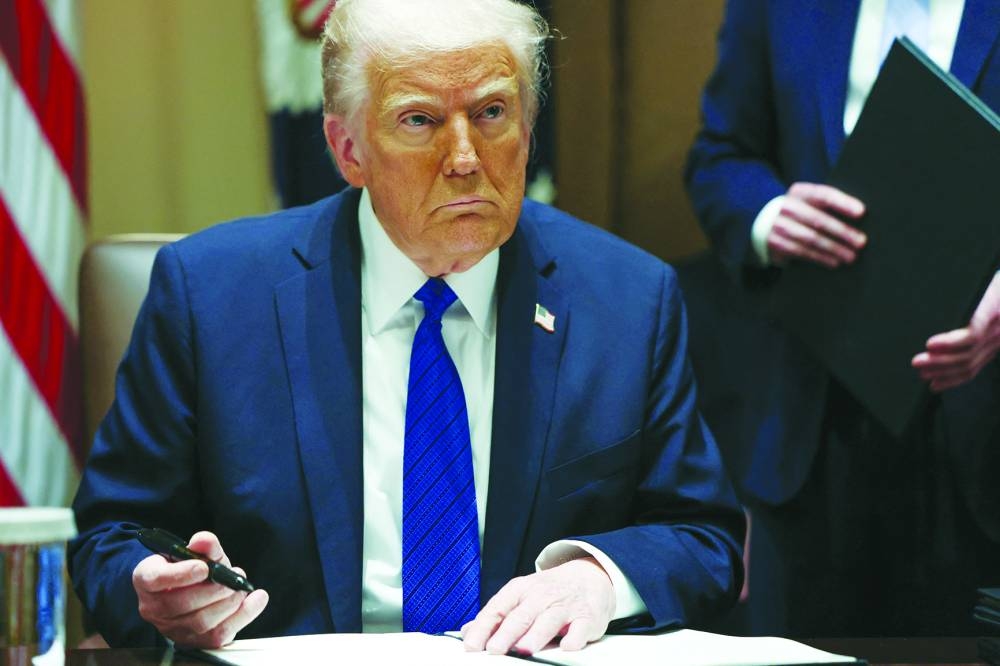
The return of Donald Trump, who had railed at the loss of US jobs to overseas competitors, has brought the spotlight again on his proposed tariffs.The first Trump administration from 2016 used tariffs as a key tool to negotiate better deals from its trading partners. Now, Trump, who on November 5 won his bid for a second term, says he will dramatically increase taxes on imports and put them at the centre of his economic policy.Trump has proposed raising tariffs to 60% for goods imported from China and to 20% for those brought in from the rest of the world. The US currently imposes tariffs in those ranges and higher on select categories of goods, but to levy them at that level across the board would be a radical change.Currently, for imported industrial goods, which make up 94% of US merchandise imports by value, the country has a trade-weighted average tariff rate of 2%, according to the Office of the US Trade Representative.Half of industrial goods enter the US duty free. According to a Bloomberg Economics analysis released in October, Trump’s tariff proposals “would bring average US levies above 20%, a level not seen since the early 20th century.”Trump can raise tariffs unilaterally although in some cases it would be necessary to first have a finding by one of the federal agencies that report to the president.Tariffs are actually paid by the importer, or an intermediary acting on the importer’s behalf, though the costs are typically passed on. Trump argues that ultimately exporters pay for tariffs. Studies have shown the burden is more diffuse.The foreign company that makes the product may decide to lower prices to appease the importer. Or it might spend significant sums to build a factory somewhere else to sidestep the tariff. Or an importer — Walmart and Target are among the biggest in the US — could raise the prices consumers pay at the checkout counter.Admitted to the WTO in 2001, China gained greater access to global markets even as its critics say it broke the letter and spirit of free-trade rules.China’s trade surplus is on track to hit a fresh record this year, aggravating an imbalance in global commerce that risks provoking Trump.The difference between Chinese exports and imports is set to reach almost $1tn if it continues to widen at the same pace as it has in the year to date, according to Bloomberg calculations.During Trump’s first presidency, his administration imposed new tariffs on Chinese imports that were worth about $380bn in 2018 and 2019. The Biden administration maintained those levies and raised more of them this year on goods worth an additional $18bn.The European Union voted in early October to impose duties as high as 45% on electric vehicles from China, which in turn has threatened to retaliate against European products.Economists are still untangling the inflationary effects of Trump’s initial tariffs from a much bigger shock to supply chains and economic activity that started not long after the US-China trade war began: the Covid-19 pandemic.In February 2019, the Federal Reserve Bank of San Francisco estimated that the tariffs were adding 0.1 percentage point to consumer price inflation and 0.4 percentage point to a metric that measures the costs for businesses to invest.Trump’s tariff proposals could reduce American consumers’ spending power between $46bn and $78bn each year, according to a National Retail Federation study.With arguably the world’s most powerful job in hand, President-elect Trump has a duty to do. While he has to bring a deeply-divided nation together, he should also demonstrate to the world that he really is seeking partnership and common ground.Make no mistake, in a globalised world, no country can ensure quality growth with inward-looking isolation and restrictive trade protection.