Search - World Summit for Social Development

Thursday, October 15, 2026 | Daily Newspaper published by GPPC Doha, Qatar.

Search Results for "World Summit for Social Development" (360 articles)

All words
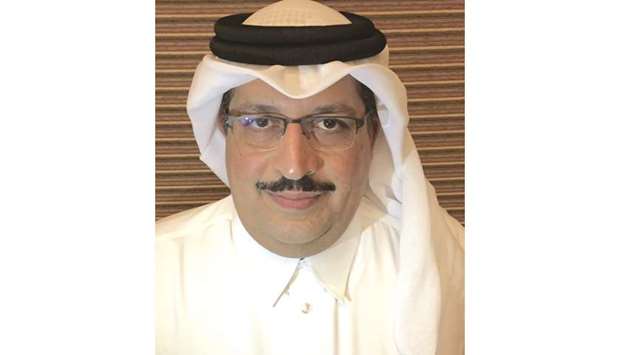
Dr Mustafa Boutoura
Qatar

Amir's participation in summit set to deepen Algeria-Qatar ties

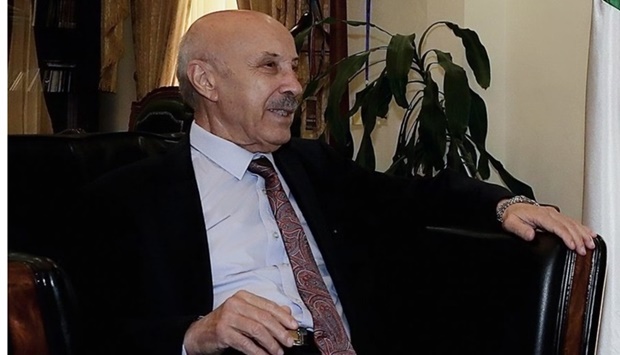
Algerian ambassador to Qatar Dr Mustafa Boutoura expressed appreciation for the participation of His Highness the Amir Sheikh Tamim bin Hamad al-Thani in the 31st regular session of the Arab League Summit, in response to the invitation of Algerian President Abdelmadjid Tebboune. In an exclusive interview, Boutoura told Qatar News Agency (QNA) that the acceptance of His Highness the Amir to the invitation of Algerian president to participate in the 31st session of the summit proves the depth of Algerian-Qatari relations and strength of ties that bring together the leaders of the two countries, who are working to strengthen these relations for the benefit and interest of the two brotherly countries. The Algerian ambassador described the Qatari-Algerian relations as historic, stressing that a continuous and growing development is taking place in various fields in light of the directives of the wise leaderships of the two countries. Relations between the two countries are based on a bright historical background, and are currently witnessing a continuous development, especially since the visit of the Amir to Algeria in February 2020, and the visit of President Tebboune to Qatar in February 2022, he added. Dr Boutoura affirmed that these relations were further strengthened by the participation of His Highness the Amir in the opening of the Mediterranean Games in Oran in June 2022. From this standpoint, the bilateral relations between the two countries have seen a great development in many fields, foremost of which is the significant co-operation in the economic field and investment, he added. The ambassador indicated that the visit of the Algerian president to Qatar in February attained a great importance and gave a strong and great impetus to the distinguished bilateral relations at all levels. That visit culminated in the signing of several agreements and memoranda of understanding at the level of political consultation, and legal and judicial cooperation, in addition to the field of higher education and scientific research, and social and family development, as well as partnership in the industrial sector, he said, adding that this opens new horizons for bilateral co-operation in all fields, which reflects the great potential that the two countries have, and for the benefit and common interests of Algeria and Qatar, as well as their peoples. Dr Boutoura noted that bilateral relations between officials of the two countries at all levels are characterised by their keenness on periodic and permanent consultation in approaching various regional and international issues, which was strengthened through the political consultation mechanism at the level of the two countries' foreign ministers, pointing out the document that the Algerian president signed during his visit to Qatar. He also noted that the two countries share views on many issues, most notably of which is the Palestinian cause, as both countries support the right of the Palestinian people to establish their independent state on the 1967 borders with Al-Quds as its capital, adding that the two countries also agree in their approach to the Libyan crisis by emphasising support for the political process under UN auspices and the necessity of making the electoral process and the national reconciliation project a success on the path to achieving stability in the country. On Algeria's efforts to achieve Palestinian reconciliation, which culminated in the signing of the '13 October Declaration of Algiers', the ambassador said that based on Algeria's commitment to the principle of its positions towards the issues of the Arab nation and the just issues in the world, as well as Algeria's awareness of the magnitude of the current international challenges, President Tebboune announced an initiative to unite the Palestinians under his auspices and direct supervision. He affirmed that Algeria has sought and made strenuous efforts for several consecutive months in order to achieve Palestinian unity in the service of the steadfast Palestinian people and their just cause.

Faisal Abdulhameed al-Mudahka/Editor-in-Chief
Qatar

Amir's visit paves way for big growth in Qatar, Latin America relations

Qatar has been a robust player both on regional and international arenas for decades, creating new strategic alliances every now and then, building new collaborative partnerships, and further fortifying friendly relationships. Though small in size, Qatar has been able to skillfully approach superpowers and establish long-term cooperative relationships with them as well as other countries. Doha has also been able to create long-term partnerships with international organisations and intergovernmental organisations like the United Nations (with its agencies) and World Trade Organisation. Such strategic alliance, partnerships, and relations are also already established with countries in Europe, Asia, Africa and North America. Latin America, too, has also got Qatari partnerships in good measure.  Currently, His Highness the Amir of Qatar Sheikh Tamim bin Hamad al-Thani is on official visits to key South American countries which include Ecuador, Peru, Paraguay and Argentina. One aim of the visits is to explore ways of bolstering relations, developing and enhancing cooperation in various fields and areas of mutual interest. Such discussions involve signing new deals and agreements, with the hopeful outcome of increasing political, economic, cultural, scientific and technical cooperation.  The current visit comes within the framework of the “Doha Declaration” of 2009. It is the implementation of what was agreed on at the end of the Arab-South America Summit held in Qatar in March 2009. The summit planted the seeds of the relationships between Qatar and Latin America, and HH the Amir Sheikh Tamim bin Hamad al-Thani saw it as an objective to be achieved.  Among what the leaders approved at the summit was agreeing on several issues that aimed at promoting key areas of common interests. There has been a stress on the importance of cooperation and promotion of capacity building and exchange of expertise in development and innovation.  Of the countries which HH the Amir has so far visited, there has been agreements on various issues related directly to the Doha Declaration. For example, Qatar and Ecuador signed an agreement to expand and develop joint cooperation in the field of environment protection and sustainable development. They also signed a joint declaration on cooperation in the agricultural field between the two countries and increase the volume of exchange of agricultural products. Such agreements directly relate to what was agreed on in the Doha Declaration with regard to “environment preservation and the leaders’ stress on the sustainable development, fighting desertification and promoting ecotourism.”  Another occasion where the Doha Declaration is implemented is seen in HH the Amir’s briefing HE President Martín Alberto Vizcarra on the ongoing Gulf crisis, and, in this regard, the Peruvian President accentuated the importance of respecting the sovereignty of states, and commended the meditation of HH the Amir of Kuwait and the United States of America to find a solution for the crisis on the basis of dialogue and diplomatic ways. Such an accentuation is in direct agreement with what the Doha Declaration stipulated in terms of the need to “respect the international law and sovereignty and territorial integrity of states.” Arabs and Latin America too share a lot in common. The countries in both regions are emerging ones. Latin American countries went through the same political and social cycle which Arab countries had gone through, in terms of colonisation, revolutions and gaining of independence, dictatorships and reaching up to opening new pages of emerging democracy. Both regions have rich and family-oriented cultures. Arabs and Latin America can work together to bring ties and relations even closer.  In addition to what the visit is trying to achieve, I believe that both Qatar and Latin America can secure significant ways of cooperation in areas that include, for example, the creation of a pension fund or social security system which would encourage Latinos to explore opportunities in Doha. Such a system would attract South Americans, especially qualified and expert human resources, from all sectors to employ their expertise in Qatar. The fund will be helpful in that Qatar will stop being a transit station and will make expats feel somehow at home. Some facilitation regarding family visas would also be helpful in encouraging skilled Latinos to come and work in Qatar. In the area of landscaping, both Qatar and Latin American countries can work even on rapid steps to reach agreements and form committees that would help explore Qatar’s opportunities in exchanging resources so as to make the country greener. In this regard, I would call upon Hassad Food Company to work more so as to come up with proposals and suggestions that would generate agreements and memoranda of understanding with Latin America, aimed at achieving food security. These areas include the livestock field, the creation of a logistics food hub in Qatar, especially that we already have the necessary infrastructure, the economic zone (Manateq) and the huge Hamad Port. These steps can can make Qatar a major exporter in the region.  In the same vein, more investments between Qatar and Latin America can be planned in the energy sector and mining. This would also widen the scope of cooperation and presence of both Qatar and Latin America even more.

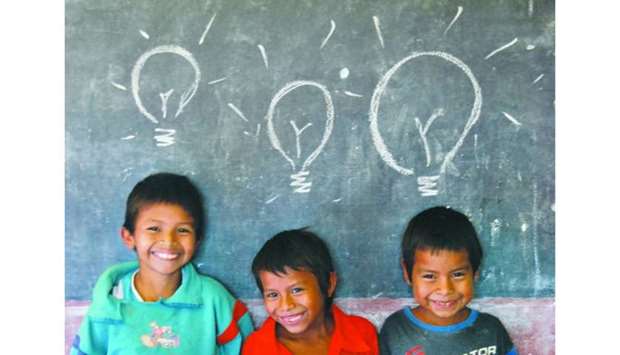
u2018Lights to Learnu2019 project.
Qatar

Winners of 2017 WISE Awards announced

The World Innovation Summit for Education (WISE), a leading international initiative for innovation and collaboration in education, has named six winning projects of the 2017 WISE Awards to recognise and promote innovative education initiatives around the world. The 2017 WISE Awards winners are: 42 (France/US); Lights to Learn (Spain/Latin America); PhET Interactive Simulations (U S/global); The Learner Guide Programme (Tanzania/UK); The Speed School project (US/global) and Ubongo Edutainment (Tanzania). The six winners were selected from a group of 15 finalists by a panel of expert judges. The six winning projects, as well as the runners-up, will be celebrated at the eighth WISE summit, to be held from November14-16 in Doha. In addition to publicity and networking opportunities, each winning project receives $20,000. 42 is a free computer programming training programme open to anyone between the ages of 18-30, whether they possess an academic degree or not. The programme focuses on peer-to-peer learning and learning through group projects. Lights to Learn is a programme led by the Organisation of Ibero-American States for Education, Science and Culture to provide electricity and support quality education and community development in rural and marginalised regions of Latin America. It does so through the installation of photovoltaic systems, internet, IT equipment, teacher training, and community development. PhET Interactive Simulations is an engaging education solution that promotes science and math literacy through interactive simulations. It is founded by Nobel Laureate Carl Wieman and housed at University of Colorado Boulder. The Learner Guide Programme is a mentorship programme led by Camfed Tanzania to support education and employment opportunities for young women in rural areas. The Speed School project is an intensive, child-centred programme run by the Luminos Fund to enable out-of-school children to catch up to their grade level at government schools. Ubongo Edutainment is a Dar-es-Salaam-based initiative that provides fun learning to millions of children in Africa through animated educational content across multiple platforms including TV, SMS, and smart phones. Stavros N. Yiannouka, CEO, WISE, remarked: “From rural Tanzania and South America, to Silicon Valley and Paris, our six WISE Awards winners reflect the wide range of what can be achieved in advancing education¬ – whatever the social or geographical context – when there is a creative solution and a determination to see it through. We look forward to showcasing our winners and runners-up at the WISE Summit in Doha in November, and to supporting their progress as they grow.” To be selected, the winning projects were required to show success and innovation, demonstrating a transformative impact on individuals, communities, and society. They must be financially stable, have a clear development plan, and be scalable and replicable. The judging process, as well as on-site due diligence, was overseen by independent education consultants from Parthenon-EY.

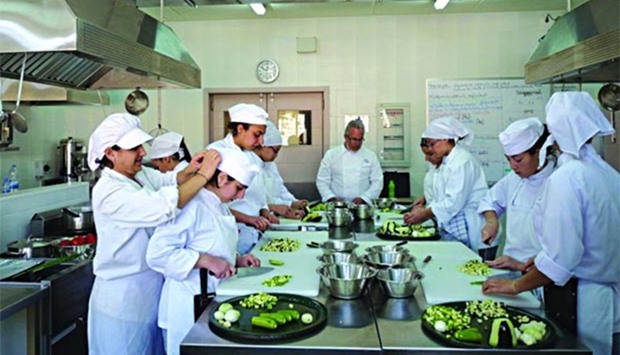
Students learning new ideas through the project 'Education for Growth and Value Creation'.
Qatar

WISE Awards finalists showcase innovative projects

The finalists for the World Innovation Summit for Education (WISE) Awards 2016 showcase a mixture of innovative solutions, effective approaches and creative ideas to key global education challenges. As many as 15 projects from 13 countries have been shortlisted for 2016 WISE Awards, a global initiative of Qatar Foundation for Education, Science and Community Development. Each one of these projects displays high impacting solutions to education challenges and generates positive social impact. The 15 finalists join the WISE Awards community of projects that are supporting cutting-edge practices and encouraging new collaboration around the world. The 2016 WISE Awards Finalists are Geekie, Brazil; Ideas Box, France; Sports for Sharing, Mexico; Smart Robot Coding School, South Korea; Glowork, Saudi Arabia; Tara Akshar Literacy Programme, India; Lights for Learning, Spain/Latin America; Partners for Possibility, South Africa; Little Ripples, US/Chad; Jump Math, Canada; Youth for Technology Academy, US/Nigeria; Sonidos de la Tierra, Paraguay; 1Kgbox, China; Education for growth and value creation in Lebanon, Lebanon; and From puppets to empowerment, Bosnia and Herzegovina. All these projects vary in their nature and focus on certain specific challenges that a society or a region faces. For example, the project "Puppets to Empowerment" aims to reduce the devastating impact that mines and unexploded ordnance have on children and their communities throughout Bosnia and Herzegovina, and to develop awareness about the constant and long-term danger they present. The programme "Glowork" is the first women’s employment organisation in the Middle East and has launched a platform that links female jobseekers with employers. Glowork’s digital system lists thousands of job opportunities for women in customer service, sales, research and digital marketing. "1KG Box" is a programme that designs and produces courses in the form of a box for teachers in rural China including an “Art Box”, “Road Safety Box”, “Reading Box Box” and “Handicraft Box’, among others. So far, 840,000 such courses have been provided free of charge to rural students. "Sports for Sharing" designed for children aged 6 to 15, is a civic educational programme that uses the power of play and sport to trigger active citizenship resulting in local development of child-led projects, while "Ideas Box" is a portable media centre that unfolds on 100 square metres. It can accommodate 70 people at a time and 400 per day and provides learning tools. "Education for Growth and Value Creation” aims to reverse the strong trend of migration from Lebanese villages to the cities by providing relevant training and fostering job opportunities locally. "Little Ripples" provides a cost-effective and replicable early childhood development programme that empowers refugee women to implement culturally inspired, play-based education to support the social-emotional, cognitive, and physical development of refugee children. Sonidos de la Tierra creates social capital through the running of orchestras as schools for life and has become Paraguay’s most emblematic social project that was born out of the necessity of creating an active civil society in a country that was coming out of long dictatorship. The final six winners of WISE Awards are expected to be announced later this year.

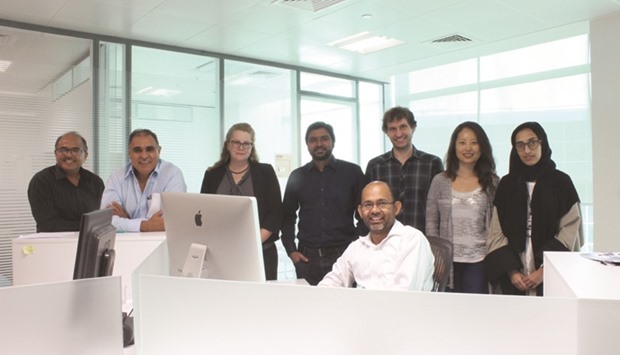
QCRI Social Computing team
Qatar

QCRI to attend World Humanitarian Summit

The Qatar Computing Research Institute (QCRI), one of Hamad Bin Khalifa University’s three research institutes, has been invited to showcase some of its technology at the inaugural World Humanitarian Summit in Istanbul later this month. The summit, organised by the United Nations Office for Co-ordination of Humanitarian Affairs (UNOCHA), aims to propose solutions to humanitarian challenges around the globe. It will bring together governments, people affected by humanitarian crises, humanitarian organisations and businesses. QCRI’s Artificial Intelligence for Disaster Response (AIDR) technology and MicroMappers will feature at the summit’s Innovation Marketplace during the event on May 23 and 24. Only 100 global innovations have been selected. QCRI executive director Dr Ahmed Elmagarmid said that QCRI, a non-profit research institute, planned to highlight the difference that partnerships between researchers, digital humanitarians and communities could make, as well as collect input on how the technology could support other attendees at the summit. Dr Elmagarmid said: “It is part of our mission to be a global leader of computing research in areas that will bring a positive impact to the lives of citizens and society.” AIDR and MicroMappers were deployed following last month’s earthquake in Ecuador, the 2015 Nepal earthquake, Cyclone Pam in Vanuatu the same year, and with typhoons Hagupit and Haiyan in the Philippines in 2014 and 2013. The tools use data to provide insights for humanitarian responders following emergencies. AIDR collects and categorises social media data. This can be combined with news and aerial imagery information from MicroMappers, a community that analyses data using a tagging system. MicroMappers is a collaboration between UNOCHA and the digital humanitarian NGO Standby Task Force. QCRI has also partnered on the project with organisations including the Qatar Red Crescent Society, Reach Out To Asia (Rota), the United Nations Development Programme (UNDP), the United Nations Educational, Scientific and Cultural Organisation (Unesco) and the United Nations Children’s Emergency Fund (Unicef) to improve the technology and address common research questions.

Gulf Times
Opinion

G7 summit to discuss wars, Grexit fears

The Bavarian Alps venue may look tranquil, but global turmoil - from Ukraine to militancy and the Greek crisis - dominates the agenda of the G7 summit, which is being held without Russia. From tomorrow, German Chancellor Angela Merkel hosts US President Barack Obama and the other leaders of the Group of Seven rich nations,  including Britain’s David Cameron, Canada’s Stephen Harper, France’s Francois Hollande, Italy’s Matteo Renzi and Japan’s Shinzo Abe, with Russian President Vladimir Putin barred for a third time from what was previously the G8. The leaders of the top industrialised democracies, who will meet for two days at the tightly-guarded Elmau Castle retreat, argue that Russia’s annexation of Ukraine’s Crimea last year has, at least temporarily, disqualified it from the group. Merkel - the group’s veteran after nearly a decade in office - has repeatedly urged Putin to end Ukraine’s separatist conflict so he can return to the club and help deal with other pressing global challenges on the G7 agenda, from climate change to security threats. Weighing heavily on the leaders’ minds as they discuss the world economy will be the looming threat of crisis-hit Greece crashing out of the eurozone if it fails to resolve a reforms-for-cash dispute with its creditors. To discuss Greece and other issues of global significance, the G7 has also invited the heads of multilateral bodies such as the United Nations, IMF, World Bank and WTO, as well as the chief of the EU executive, Jean-Claude Juncker. Also on the agenda will be long-running issues such as Iran’s nuclear programme, the stalled Middle East peace process, and maritime disputes between China and its neighbours. The traditional focus of the G7, which has its roots in the mid-1970s oil crisis, has been foreign, security and economic policy, but Merkel has added a host of development, social and environmental issues, from women’s rights to Ebola. With Paris due to host a UN climate summit late this year, Merkel - whose country is seeking a shift from nuclear power and fossil fuels to renewable energy - has vowed the summit will show that “the G7 states are willing to take a leading role in fostering low-carbon development”. The G7, derided by protesters as a group of former colonial powers, will also reach out to African leaders and hold talks with Nigeria’s new president, Muhammadu Buhari, Liberia’s Ellen Johnson Sirleaf and the leaders of Tunisia and the African Union. Together with Iraqi Prime Minister Haider al-Abadi they plan to discuss militants, such as Nigeria’s Boko Haram, and rapidly growing refugee flows across the Mediterranean, a pressing issue for the EU. Other topics Merkel has tabled under the motto “Think ahead, act together” range from improving labour rights for textile workers to fighting antibiotics resistance and cleaning up oceanic pollution.

Gulf Times
Qatar

‘Wise’ decision by QP, ExxonMobil

Sheikh Abdulla is flanked by al-Mawlawi and Cahir at the announcement of the partnership yesterday Qatar Petroleum (QP) and ExxonMobil will be the corporate partners of the World Innovation Summit for Education (Wise) for the fourth year in succession, Qatar Foundation announced yesterday at an event in Education City. Welcoming the partnership, ‘Wise’ chairman Sheikh Abdulla bin Ali al-Thani said: “Wise is based on a conviction that education is both a collective need and an individual right. If we are to overcome the global issues of our times we must mobilise all the talents at our disposal. At the same time, those individuals who have not benefited from education risk becoming increasingly marginalised in our societies.” Sheikh Abdulla also indicated that the Supreme Education Council would have a strong presence at the summit and effective communication with it would be maintained for potential application of the outcomes. The summit would focus on the diversity of participants to represent all quality trends and ideas in education. All Arab ministers of education and higher education have been invited to take part alongside those who have prominent role in education.  “I am very pleased that two of the main players in our country’s current hydrocarbons-based economy – Qatar Petroleum and ExxonMobil – share our understanding of the urgency of this task and have reaffirmed their association with Wise as corporate partners. I am grateful to them for their continuing support,” Sheikh Abulla said. Wise was established in 2009 on the initiative of HH Sheikha Moza bint Nasser as an international forum for decision-makers and practitioners from all sectors to discuss the challenges facing education. It is now the premier global event dedicated to innovation in education, as well as a series of programmes which are implementing ideas that have been generated at the annual summit in many localities and at all levels of education. “The strong support of QP for an educational initiative like Wise is part of its social responsibility commitment,” said QP director  of administration Ahmad Ali al-Mawlawi. “Education plays a highly critical role in the development of any nation and Wise, with its global scope and noble objectives, is instrumental in ensuring that effective education strategies are being continuously developed and applied so that we can meet future challenges. “Our thanks go to HH Sheikha Moza for her vision in initiating Wise and for her continued guidance in advancing the initiative so that it can succeed in building the future of education worldwide.” Wise 2012 will take place on November13-15  at the Qatar National Convention Centre under the general theme ‘Collaborating for Change’ with participants exploring ways to combine diverse skills and experiences to address the educational needs of individuals and communities around the world. “Throughout our history, ExxonMobil has been committed to investing in education, because we believe it is essential to economic and social progress around the world,” said ExxonMobil Qatar Inc president and general manager Bart Cahir.  “It is an honour to stand with Qatar Foundation and QP – two organisations that also place a significant emphasis on the importance of education – as we bring the fourth edition of Wise to a growing group of leaders who will become the driving force of efforts to inspire innovation in education,” he stressed. The three-day Summit, consisting of more than 70 sessions, is a unique opportunity for participants to learn about leading educational practices and theories, and to network.  Among the highlights will be the announcement at the opening plenary session on November 13 of the second Laureate of the Wise Prize for Education, the only global recognition of an outstanding contribution to education. The winning projects of the 2012 WISE Awards – six exceptionally innovative educational initiatives which are transforming societies - will be celebrated at a gala dinner under the patronage of HH Sheikha Moza. Speaking at the United Nations in New York at the launch of UN Secretary General Ban Ki-moon’s ‘Education First’ Initiative on September 26, HH Sheikha Moza had said that on the second day of the Doha summit, she would launch a significant new education initiative that will be “a practical and powerful step towards getting 61mn children into school”.

Doha Bank CEO Dr R Seetharaman speaking at the Virtual Global Economic Summit 2020.
Business

Doha Bank CEO speaks on ‘Changing Dynamics and Opportunities Post Covid-19’ at virtual summit

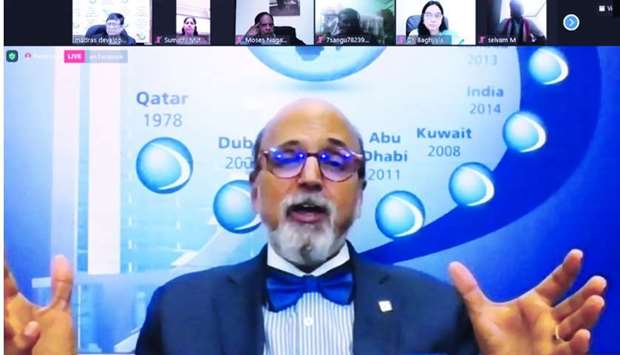
Doha Bank CEO Dr R Seetharaman recently spoke about ‘Changing Dynamics and Opportunities Post Covid-19’ during the Virtual Global Economic Summit 2020 organised by World Tamils Economic Foundation, Madras Development Society from December 28 to 30. “Today, there are 80mn Covid-19 cases globally and it has resulted in lives of more than 1.8mn people. To combat the crisis, central banks across the globe have announced adequate liquidity measures. Central banks have assured sustainability measures in global norms. Globally, approximately $30tn of liquidity is pumped. “The liquidity has played a role to hold the balance, making sure the economy doesn’t get crippled out. Covid-19 has changed way of doing business globally, work from home culture has increased, and no one is any more location-centric; it is an information-centric world. Global trade has dipped by 9% and is expected to bounce back going ahead in 2021,” Seetharaman said. Seetharaman said there are four risks that need to be mapped: social risks, economic risks, human risks, and environmental risks. Covid-19 has reignited the pace of digital governance across the globe with acceleration in digitalisation across all the industries has led to rise in cybersecurity. He said cybercrime costs include damage and destruction of data, stolen money, lost productivity, and theft of intellectual property, theft of personal and financial data, embezzlement, fraud, and post-attack disruption to the normal course of business, forensic investigation, restoration and deletion of hacked data and systems, and reputational harm.     According to Seetharaman, digital governance plays a key role in transforming the organisation globally. A 5% digital access can reduce carbon emissions nearly by 538mn tonnes, which is nearly 230mn coal mines capacity, which will ignite the green economic growth. He said greenhouse gas emissions need to be estimated for major economic sectors in areas of operation to determine carbon footprint. Based on carbon footprint in different economic sectors, various initiatives should be proposed to promote green economies, such as lending for green projects, CDM scheme, and paperless banking. “The allocation matrix should be such that the greater the carbon footprint in the relevant economic sector, the higher the allocation of capital for green banking and sustainable projects. “The carbon footprint will be different across various geographies and economic sectors and hence, country wise and sector wise allocations should be explored. This forms the basis for green banking and brings prudency into the capital framework,” he said. Given changing dynamics of business, Seetharaman said IoT is based on the fact that everything will be connected to each other, such as multiple objects and devices working in tandem to seamlessly deliver solutions and services. Research firm Gartner estimates that nearly 5.5mn new things will get connected every day in 2016, while around 6.4bn connected things will be in use worldwide this year, up 30% from 2015, Seetharaman said. He added: “There are 50bn gadgets that can be used today. Areas where AI can be used in banking are AML pattern detection, chat bots, algorithmic trading, fraud detection, and customer recommendations. “Robotics, enabled by AI and machine learning, is proving to be a game changer that can bring unique operational efficiencies to the financial services industry. The opportunities are reflecting positive side of pandemic.”

The meeting was convened by videoconference.
Business

Natural gas stepping stone to sustainable development, lower energy emissions: GECF

Natural gas, which is an abundant and flexible source of energy, will continue to satisfy the increasing world energy needs, ministers attending the 22nd Ministerial Meeting of the Gas Exporting Countries Forum (GECF) stressed on Thursday. Natural gas will also meet the exigences of the three pillars of sustainable development, namely economic development, social progress and the protection of the environment. The ministerial meeting was held last night, under the chairmanship of Abdelmadjid Attar, Algerian Minister of Energy as its president. The meeting was convened by videoconference. It was attended by energy ministers and top authorities from Qatar, Algeria, Bolivia, Egypt, Equatorial Guinea, Iran, Libya, Nigeria, Russia, Trinidad and Tobago, and Venezuela, as well as Angola, Azerbaijan, Iraq, Malaysia, and Norway as Observers. Heads of energy administrations of Indonesia, Mozambique, Senegal, Tunisia, and Turkmenistan along with the leadership of ERIA, IEF, and OPEC attended the opening session as guests. The meeting assessed the current dynamics in the natural gas industry and acknowledged that the fundamentals that will drive natural gas’ projected growth to the top of the global energy mix remain unchanged. According to the GECF, natural gas is the fastest growing fossil fuel in the world and will become the leading source in the global energy mix by mid-century, increasing its share from 23% today to 28% by 2050. The ministerial meeting also emphasised that natural gas will continue to be a stepping stone to sustainable development and lower energy systems’ emissions. It reaffirmed its determination to enhance the pace of co-operation to raise the efficiency of the GECF. It also acknowledged the resilience displayed by the member countries in their attempt to ensure unrestricted functioning of free and flexible gas markets, as well as uninterrupted supplies to customers, in spite of numerous challenges and decline in revenues. In his opening remarks, Attar provided an overview of the developments in the gas industry and outlined the strategic imperatives that will carry it forward, as well as the key role of the GECF as a unique platform for multilateral dialogue between gas exporting countries and gas consuming countries and the industry. GECF secretary general Yury Sentyurin presented the management report of the secretariat, highlighting the various activities undertaken in 2020 and aimed at realising the vision as enshrined in the 2019 Malabo Declaration, the forum’s statute, its long-term strategy, the five-year working plan, and the 2019 and 2020 programmes of work. An advanced 2020 edition of the forum’s publication- ‘Global Gas Outlook 2050’, was presented to the meeting, based on the GECF Global Gas Model. Ministers welcomed the launch of the 2020 edition of the GECF annual statistical bulletin and appreciated the data-driven insights it provides. Furthermore, the ministerial meeting hailed the new GECF annual short-term gas market report. In the area of research, the ministers commended the achievements made in the establishment of the Gas Research Institute in Algeria. The meeting approved the policy and procedures for the "GECF Awards". The public launch of the GECF Awards will start in 2021 and culminate in a gala ceremony to be held on the sidelines of the 6th GECF Summit of Heads of State and Government. In reviewing the status report on preparations of the 6th Summit, the ministers recorded their satisfaction with the progress made by Qatar as the host of this flagship biennial event, scheduled to be held in Doha on November 18, 2021. Algeria will host the 7th GECF Summit in Algiers in 2023. The Ministerial Meeting appointed Franklin Molina Ortiz, Minister of Hydrocarbons, Bolivia as president of the Ministerial Meeting for 2021, and Franklin Khan, Minister of Energy and Energy Industries of Trinidad and Tobago, as alternate president for the same period. Furthermore, the Ministerial Meeting appointed Mohamed Hamel from Algeria as the executive board chairman and Angel Gonzalez Saltron from Venezuela as the Alternate chairman of the Executive Board for the same period. Additionally, it was decided that the 23rd Ministerial Meeting of the GECF will convene in Doha on November 16, 2021. The ministers and heads of delegation extended their appreciation to minister Abdelmadjid Attar for leading and guiding the functioning of the GECF under Algeria’s 2020 presidency.

The National Museum of Qatar
Opinion

2019 a glorious year for Qatar

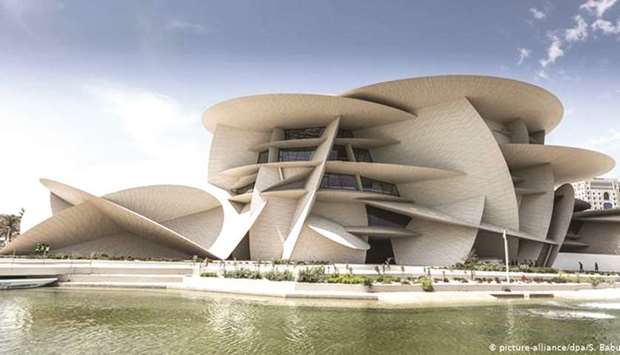
Today, Qatar celebrates the National Day, which falls on December 18 each year, under the slogan: “Ten years embraced glory and arts,  Obtained all excellence and manliness, The path of excellence is difficult”. This poetic line is of the Founder Sheikh Jassim bin Mohamed bin Thani, in which he talked about his martyr son Sheikh Joaan, enumerating his venerations, as he was of a young age, a student of knowledge, and a cavalier knight, and these are the values that were brought up in his Qatari environment. The slogan expresses the faith of successive generations of Qatari youth, that the path of the excellence is difficult, and to reach it you will need morality and science. On this day in the glorious history of Qatar, we remember the biography of the founder, Sheikh Jassim bin Mohamed bin Thani, who, approximately 140 years ago, upon assuming the reins of power in the country (on December 18, 1878), laid down the foundations of our modern state, preserved its sovereignty and the dignity of its people, and made Qatar a united, coherent and independent country with foundations and values and principles on which it was founded. Thanks to this, Qatar went on the paths of glory, achieving accomplishments, caring for rights, helping the needy, championing the oppressed, observing the right of neighbourliness, adhering to values and morals, offering the world a bright example of a safe and stable country capable of achieving the highest levels of development, and providing the finest quality of life for its people and residents. As Qatar celebrates its National Day this year, the country is proud of its past glory, present accomplishments and filled with hope, optimism and confidence of a bright tomorrow and a future full of giving, building, renaissance and progress under the leadership of His Highness the Amir Sheikh Tamim bin Hamad al-Thani and his wise government. Perhaps the most prominent progress of the country’s accomplishments this year is the political, economic, military and defence successes achieved by its foreign relations and strategic alliances open to various countries and peoples with active and calm diplomacy based on mutual respect and common interests. The year 2019 was marked by the Amir’s foreign visits that included Korea, Japan, China, Kuwait, Austria, Rwanda, Nigeria, Pakistan, the United States, France, and Britain. In an affirmation of the respect and appreciation of the leaders of the brotherly and friendly countries of Qatar, the heads of Iraq, Sudan, Somalia, Bulgaria, Botswana, Palestine, Angola, Gambia, Brazil, Rwanda, Armenia, Turkey, and Malaysia visited Qatar. The country’s interests and bilateral relations with these countries were at the top of the agenda of the discussions that took place during these visits. Within the framework of external interaction, the Amir participated in the 2019 Arab Economic and Social Development Summit in Beirut and the Arab Summit in Tunisia. He also participated in the Munich Security Conference, and the 5th Summit of the Interaction and Confidence-Building Measures Conference in Asia held in Kyrgyzstan, and in the meetings of the General Session of the 134th IOC held in Lausanne, Switzerland. Last September, the Amir, participated in the opening session of the general discussion of the 74th session of the UN General Assembly (UNGA 74) in New York, and the Amir delivered a speech, in which he tackled the most prominent international issues on the agenda of the session, the positions of Qatar regarding it and its vision towards the various challenges and current crises. The Amir pointed out that Qatar announced the provision of support for the basic resources of the United Nations in the amount of $500mn, in addition to the support previously provided, so that today it is considered among the largest partners supporting the international organisation in various fields. The Amir in New York also participated in the session of the Alliance on Financing Climate Activities and Carbon Pricing, and delivered a speech which dealt with the phenomenon of climate change as one of the serious challenges of our time, and an ever increasing problem. The Amir affirmed Qatar’s commitment to its responsibility as an active partner in the international community to confront this phenomenon, enumerating its actions, steps and initiatives in this regard internally and externally, including the commitment of Qatar as a host to the FIFA World Cup in 2022, to organise an environmentally friendly championship, and the first “carbon neutral” championship by using solar energy in stadiums, and using energy and water-saving cooling and lighting technology. The Amir also announced Qatar’s contribution of $100mn to support small island developing states and least developed countries to deal with climate change, natural hazards and environmental challenges, and build capacity to face their devastating effects. In December, the Amir and President of Rwanda Paul Kagame, presented the prizes of the fourth edition of ‘Sheikh Tamim Bin Hamad Al Thani Anti-Corruption Excellence Award’, at a ceremony held in the Rwandan capital Kigali.  Economy Qatar has been able to record tangible achievements in a short time as a result of good planning and following a tight strategy in which all the influential sectors in the country are integrated, and it has succeeded in overcoming the effects of the unfair blockade imposed for the third year in a row and after it became more powerful, preventive and coherent, and more self-reliant, and achieved the highest rates of economic growth, while major projects and projects related to the 2022 FIFA World Cup are being completed, infrastructure development in the free, economic, industrial and logistical areas has taken place, and the national economy has witnessed a great recovery with the opening of more than 800 Qatari companies in the field of manufacturing food, service and manufacturing industries, as well as the expansion of several industrial cities to provide land for more investment projects and promising opportunities in various sectors. The country’s economic wheel is supported by Qatar Airways fleet, which includes more than 250 aircraft connecting Qatar through Hamad International Airport to more than 160 destinations around the world. Likewise, Hamad Port, which is one of the largest ports in the Middle East, and which contributed to connecting Qatar to more than 40 ports on the continents of the world. Hamad International Airport announced that it received 10.7mn passengers during the third quarter of 2019, making it the busiest quarter that the airport has witnessed so far, while Hamad Port received this year more than 3,700 ships, and more than 1,200,000 containers. The Port entered the Guinness World Records, as the deepest artificial basin being constructed on the surface of the earth.  Defence In the context of the defensive policy aimed at protecting the homeland, His Highness the Amir Sheikh Tamim bin Hamad al-Thani, the Supreme Commander of the Armed Forces, honoured last June officers, non-commissioned officers and members of the Qatari Rafale fighter (Al Adiyat) that Qatar will receive in implementation of the deal concluded with the French company Dassault Aviation SA. The Amir witnessed a live air show of the Rafale aircraft carried out by the pilots of the Qatari Amiri Air Force upon arrival at Dukhan Airbase. On the occasion, the Amir listened to a briefing on the airbase and the most prominent operations and combat and offensive capabilities that characterise the Al Adiyat squadrons. Last January, the Amir sponsored the graduation ceremony for the first batch of police college candidates. He also witnessed the graduation ceremony of the sixth batch of Al-Zaeem Air College candidates, and the 14th batch graduation ceremony for Ahmed bin Mohammed Military College candidates. HE the Prime Minister and Minister of the Interior Sheikh Abdullah bin Nasser bin Khalifa al-Thani, inaugurated Al Daayen Naval Base (the new building of the General Directorate of Coasts and Borders Security) in the Sumaysimah region in northern Qatar. Qatar received the first batch of Apache — QA aircraft, during a ceremony held at at the headquarters of Boeing Defence Systems in Arizona, USA. The Qatar Amiri Naval and Air Force carried out several joint exercises with the forces of a number of brotherly and friendly countries. During the year 2019, the Amir, Chairman of the Supreme Council for Economic Affairs and Investment chaired five meetings of the council held at the Amiri Diwan, where he was informed of the developments in energy affairs, the strategic plan, future development and organisational structure of the Investment Promotion Agency and the most important of its initiatives contributing to attracting investors. During the meetings several issues were discussed, like the progress of the work of the second national development strategy (2018-2022), and the latest developments of the Free Zones Authority, in addition to adopting distinguished partnerships between the private sector and international companies from various fields. Education In the context of the state’s interest in the educational process, the Amir honoured, last May, during a ceremony, the 2019 batch of the 787 graduates of Education City universities, and he honoured the distinguished graduates from the 42nd batch of Qatar University students, while Her Highness Sheikha Jawaher bint Hamad bin Suhaim al-Thani, wife of the Amir, honoured the female graduates from the same class in a separate ceremony. The Amir honoured the winners of the Scientific Excellence Award in its 12th edition, during the ceremony held under the patronage of the Amir, under the slogan “Excellence, Build Generations” at the Doha Sheraton Hotel. Public Health In the public health sector, the Ministry of Public Health is keen to adopt the highest international quality standards in its services for patients, which enables them to reach the care they need in a timely manner. Eight new public and specialised hospitals have been opened since 2016, including Sidra Medical Centre, which specialises in providing healthcare for women and children, the new Trauma and Emergency Centre, which is considered one of the largest emergency centres in the region, besides ten primary healthcare centres, of which seven belong to the Primary Health Care Corporation, and three health centres for single males, managed by Qatar Red Crescent based on an agreement with the Ministry of Public Health. Qatar ranked fifth in the world in the health index issued by Legatum Institute and its head office in London, thanks to the improvement of life expectancy, health results for patients and the high rate of investment in the level of health infrastructure. This progress is linked to being the first in the Middle East in terms of life expectancy, and among the list of 25 best globally in terms of quality of health services and access to healthcare. The country’s spending in the healthcare sector is one of the highest in the Middle East. Infrastructure Within the framework of construction and infrastructure projects, the Amir, during March, inaugurated Umm Al Houl Power Station, His Highness made a field tour of the stations departments, where he listened to a summary of the work and production mechanisms there. The production capacity of the plant reaches 136mn gallons of water per day, and 520 megawatts of electricity, at an estimated cost of approximately QR11bn, and the station represents a qualitative addition and a strong support to achieve water and electrical security, as it will secure 30% of the country’s electricity needs, and 40% of its desalinated water needs. Under the guidance of the Amir, a corridor named after the Amir of the State of Kuwait Sheikh Sabah al-Ahmad al-Jaber al-Sabah, was launched on the “Axis Road” project, which was inaugurated by HE the Prime Minister and Minister of Interior Sheikh Abdullah bin Nasser bin Khalifa al-Thani, in the presence of Sheikh Nasser al-Mohamed al-Ahmad al-Sabah, representative of the Amir of Kuwait at a ceremony held at the Sheraton Hotel. Energy In 2019, Qatar witnessed a major development in the energy sector that will enhance the strength of the Qatari economy and Qatar’s position in the global natural gas market. Qatar is preparing to achieve a qualitative and quantitative leap in the production and export of LNG. HE Minister of State for Energy Affairs and President & CEO of Qatar Petroleum Saad bin Sherida al-Kaabi announced that Qatar will raise the capacity of LNG production to 126mn tonnes annually, which is an increase of 64% from the current production level of 77mn tonnes annually. He said that the technical tests showed that the quantities of proven gas contained in the North field exceed 1,760tn cubic feet of gas, in addition to more than 70bn barrels of condensate, and huge quantities of liquefied petroleum gas, ethane, and helium gas, which are very important results, that have positive dimensions to push the Qatari gas industry to new heights. Qatar Petroleum also continued its march towards globalisation, and became involved in exploration and production in ten countries in Africa, Latin America and Asia, including two Arab countries, in the context of its endeavour to become one of the best national oil companies in the world. Qatar Petroleum has also issued a call for bids to build up to more than 100 LNG tankers to cover its future needs. Culture and Heritage Last March, to preserve the heritage and folk heritage, the Amir inaugurated the National Museum of Qatar’s new building. The Amir toured the museum accompanied by several Qatar’s guests, during which he viewed various galleries that include the beginnings of the geological development of the Qatar peninsula, natural environments in it, monuments and rock inscriptions in archaeological sites, the lives of the people of Qatar on land and coast, and the digital exhibition. He was briefed on the most important pieces and holdings related to pearls and jewellery design, in addition to galleries of modern Qatari history since the discovery of oil and gas. The National Museum of Qatar, thanks to its desert rose-inspired design, is one of the distinctive tourist destinations in Qatar and the region. Global ranking Furthermore, Qatar ranked third in the world in economic performance. Besides, Qatar ranked 29th in the world and second in the Arab world out of 141 countries in the Global Competitiveness Index. Qatar was among the top 10 countries in many indicators, including the efficiency of the legal framework, the readiness of communications and information technology, the skills of graduates, the skills of the workforce in the future, the abundance of capital, and the financing of small and medium-sized companies. Qatar was also among the world leaders in terms of protecting property rights, the performance of the state’s public sector, the quality of road infrastructure and air freight, the quality of seaport services, and communications and information technology services. Qatar ranked seventh in the world with the Specter Index of the best investment destinations in the world in 2019. Qatar surpassed major investment centres and topped the list of the highest countries in the per capita gross domestic product to occupy the first position globally by about USD134,600 per capita annually, followed by Luxembourg in the second place with a share of USD108,800 per capita annually, and in third place Singapore with USD103,700 per capita annually. Qatar continued its global excellence according to the global security indicators for 2019 by obtaining the first Arab and global position in terms of security and safety among 118 countries according to the global annual report of the crime index for 2019. The excellence of Qatar in this indicator comes as a result of the continuous efforts of the Ministry of Interior within the framework of its vision to achieve the highest levels of security and stability in society and to protect lives and property, based on its comprehensive strategy in line with Qatar National Vision 2030. Also, Qatar ranked 33rd globally in the Corruption Perceptions Index for the past year out of 180 countries included in the index, where Qatar has achieved 62 points, while more than two-thirds of countries have obtained less than 50 points in the index for this year. Sports In the sports field, the Amir chaired, in 2019, three meetings of the Board of Directors of the Supreme Committee for Delivery & Legacy (SC), held at the Amiri Diwan, to follow up the development of work in all projects of the 2022 FIFA World Cup in Qatar. The year was full of Qatari sporting achievements, the most prominent of which was the victory of the Qatari national football team in the Asian Cup, and the victory of many Qatari champions of cups and medals of all kinds in international competitions and championships. Qatar organised the World Athletics Championships Doha 2019, which was held for the first time in the Middle East and the ANOC World Beach Games 2019 in its first edition. Also, Qatar organised the 24th Arabian Gulf Cup. On September 27, the Fath Al Khair 4 marine voyage returned to Doha, after a nearly 80-day cruise that included Turkey, Greece, Albania, Croatia, and Malta to introduce Qatar’s civilisation and maritime heritage and promote Qatar’s hosting of the 2022 FIFA World Cup. In parallel with the great attention it gives to local affairs and internal construction, Qatar has continued its contributions in financing the activities of international organisations and institutions concerned with humanitarian affairs. Qatar and its official and civil charitable organisations continued to extend their hands with generous giving, initiatives and participation in providing relief to millions of people from brotherly and friendly countries, providing humanitarian needs for the afflicted, and alleviating the suffering of the homeless due to wars and natural disasters. Qatar directed its support to the Palestinians in besieged Gaza, Jerusalem, the West Bank, and refugee camps, as well as people in Syria, Sudan, Somalia, Afghanistan, and the Rohingya.

File photo of Yasser al-Mulla, senior manager with the SCu2019s Landscape & Sport Turf Management department.
Sport

Qatar will deliver all stadiums two years before the 2022 FIFA World Cup: Official

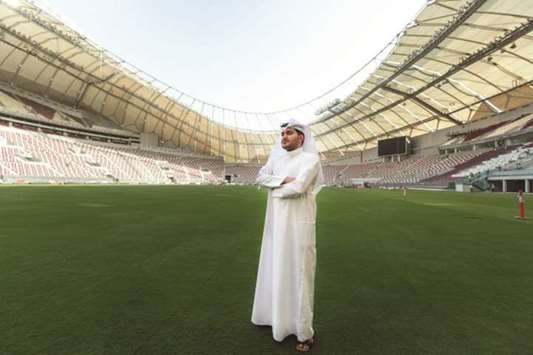
The Supreme Committee for Delivery & Legacy (SC) remains on track to deliver all its stadiums two years before the 2022 FIFA World Cup kicks off.  Yasser al-Mulla, the SC’s Landscape & Sport Turf Management Senior Manager, told delegates at the 2018 European Stadium & Safety Management Association (ESSMA) Summit that all eight venues would be completed well in advance of the tournament.  He also said that Qatar remains committed to hosting a historic event that bridges cultures in just four years’ time. “All the stadiums will be completed two years before the tournament starts,” al-Mulla informed delegates at the Aviva Stadium in Dublin.  “Khalifa International Stadium is already completed and was opened by His Highness The Emir last May. The other seven stadiums are currently being constructed, with two – Al Wakrah Stadium and Al Bayt Stadium – close to completion.” As well as updating delegates on infrastructure progress, al-Mulla spoke about the power of hosting mega events such as the FIFA World Cup™. “The event is helping to accelerate progress across Qatar,” said al-Mulla. “It is also helping to break down social barriers. We know that sport has the power to bring people together and help them understand different cultures.  “Hosting the first World Cup in the Middle East is a huge responsibility and we are determined to make the whole region very proud.” During a separate presentation, al-Mulla gave details of the SC’s pitch development project and its drive to create the perfect playing conditions for 2022.  “We have developed significant turf development knowledge for Qatar’s conditions,” said Al Mulla. “We have created a state-of-the-art research and development centre – one of only two in the world – which aims to deliver the perfect pitch for 2022. Our aim is to develop a signature pitch that can be used in winter or summer, in shade or in sunlight.”  Al-Mulla revealed that the SC had tested 24 different types of grass during its research and also broken a world record by relaying the pitch at Khalifa International Stadium in just 13.5 hours.  He added: “Our trials have provided insightful data on grass resilience for different weather conditions and soil types. We will soon reveal the signature design grass species to be used during the tournament.” The annual ESSMA Summit offers a platform for stadium professionals to share, learn and discuss topics related to stadium development, operations and ticketing, sustainability, safety and security, fan entertainment and hospitality, and pitch management.  This year’s summit, which was held in partnership with the European Professional Football Leagues and European Club Association, attracted speakers from numerous football clubs, including Arsenal, Bayern Munich, Juventus and Valencia.  (www.sc.qa)

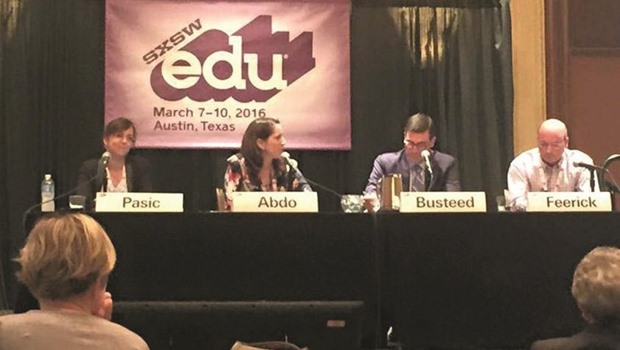
A session during the conference.
Qatar

WISE takes part in Texas conference

The World Innovation Summit for Education (WISE), an initiative of Qatar Foundation for Education, Science and Community Development (QF), recently participated in the SXSWedu Conference & Festival held in Texas,USA.   As well as organising several sessions, members of the WISE team and representatives of WISE Accelerator projects took part in a number of panels and workshops exploring employment and the skills gap, the role of social entrepreneurs, and the impact of social enterprise in teaching and learning.  The SXSWedu Conference & Festival fosters innovation in learning by hosting a diverse and energetic community of stakeholders across a variety of backgrounds in education. The four-day event served as an opportunity for the WISE community to present its work to a wider audience, bringing a unique global perspective to the US-focused mega-conference on education. The WISE Accelerator is a competitive programme in which selected innovative education projects receive a year of dedicated mentoring with members of the WISE community, providing them with effective strategies and concrete support to ensure their development.The programme links the projects with an international network which creates opportunities for knowledge sharing and investor support. Three WISE Accelerator project leaders presented their work at the conference.  Moreover, Dr Sakena Yacoobi, the WISE Prize for Education Laureate, was honoured as a keynote speaker. In her address, ‘Education, Development and Peace in Afghanistan’, Dr Yacoobi presented her work in bringing education to Afghans under the extremes of war, displacement, and oppression during Taliban rule.