Search - World Summit for Social Development

Thursday, October 15, 2026 | Daily Newspaper published by GPPC Doha, Qatar.

Search Results for "World Summit for Social Development" (360 articles)

All words
Gulf Times
International

WISE 12 unveils global speaker lineup for ‘Humanity.io’ Summit in Doha

The World Innovation Summit for Education (WISE), an initiative of Qatar Foundation, has announced its lineup of speakers for the WISE 12 Summit, taking place on November 24–25 at the Qatar National Convention Centre under the theme ‘Humanity.io: Human Values at the Heart of Education.’This year’s edition will convene over 200 local and international speakers representing academia, technology, policy, and social impact, united by a shared commitment to reimagine education through empathy, equity, and human purpose. Building on the momentum of the previous summit, WISE 12 will explore how human values can remain at the core of learning systems in an era rapidly transformed by Artificial Intelligence and technological acceleration.The summit’s diverse roster of speakers includes Laila Lalami, award-winning author and novelist celebrated for her powerful explorations of identity and belonging; Mo Gawdat, bestselling author and former chief business officer of Google X recognised for his influential work on AI, happiness and innovation; and Nobel Laureate and MIT Professor Dr Abhijit Banerjee, whose research has transformed global understanding of education and poverty reduction.Continuing this renowned line-up, WISE 12 will also welcome Anousheh Ansari, space explorer and CEO of XPRIZE Foundation, who advocates for inclusive innovation and STEM access; Dr Michael Fung, executive director of Singapore Institute of technology; Fahad Hamad Hassan al-Sulaiti, director general of the Qatar Fund for Development; Omar al-Shogre, director for Detainee Affairs at the Syrian Emergency Task Force and advocate for education access in conflict zones; and Lady Mariéme Jamme, founder of iamtheCODE and a global champion for digital literacy for girls across Africa, among others.With over 60 core sessions including plenaries, research dialogues, and interactive masterclasses, WISE 12 will provide a platform to address how education can evolve without losing its humanity. The summit will explore key questions around ethics in AI, equitable access to quality learning, redefining success and well-being in education, and the role of collaboration across sectors.These questions will be examined across five interconnected thematic tracks: ‘Putting Human Needs at the Heart of Education,’ ‘Realizing the Promise of Progressive Education,’ ‘Navigating the Skills Revolution in Higher Education and Lifelong Learning,’ ‘Catalyzing Multi-Sectoral Systems Change to Transform Education,’ and ‘Centering Education towards Economic Opportunities and Community Resilience.’“WISE 12 is a space where the global conversation on education, technology, and humanity truly converges,” said Stavros N Yiannouka, CEO of WISE. “We are at a defining moment for education systems worldwide. As artificial intelligence and emerging technologies accelerate, it becomes vital to ensure that innovation amplifies human potential rather than replaces it. This summit will gather voices who are not only transforming education but re-centering it on the very values that make us human.”

HE Sheikha Hind bint Hamad al-Thani presents the WISE Prize for Education 2023 to Safeena Husain. PICTURE: AR Al-Baker
Qatar

Girls advocate wins WISE Prize for Education 2023

Qatar Foundation (QF) vice chairperson and CEO HE Sheikha Hind bint Hamad al-Thani awarded Tuesday the 2023 WISE (World Innovation Summit for Education) Prize for Education to Safeena Husain, founder and board member of Educate Girls.The honour comprises $500,000 and a WISE medal. Husain was recognised for dedicating 16 years to building the non-profit organisation focused on empowering communities for girls’ education in some of India’s hardest to reach villages.Earlier, QF chairperson Her Highness Sheikha Moza bint Nasser opened the 11th edition of WISE, under the theme ‘Creative Fluency: Human Flourishing in the Age of AI’. The global summit convenes more than 2,000 education industry stakeholders, including influential thought leaders, young trailblazers, and key decision-makers to foster dialogue on the transformative power of Artificial Intelligence in the global education landscape. The WISE Prize for Education is the first global award of its kind that honours an individual for an outstanding contribution to education. Speaking to Gulf Times Husain said : “ We have been able to recruit over 1.9mn girl children from the interior villages in several states in India. Over 16 years we have mobilised more than 1.4mn girl children from various states in the country for enrolment in our programme. With a precision targeting method using AI, Educate Girls is able to target in five years, the same number of out-of-school girls, which would otherwise require 45 years.”Husain’s journey with WISE began with a WISE Award in 2014 that acknowledged Educate Girls for its positive social impact and ability to scale. Through a network of over 21,000 community-based champions in some of the most marginalised communities in the country, the organisation has been working to break the intergenerational cycle of inequality and exclusion.Under Husain’s guidance, Educate Girls has evolved into a leading global force, harnessing innovative financing and AI technology to bridge the gender gap in education. This is mirrored in its global milestones: the delivery of the world’s first Development Impact Bond in education, and the organisation becoming Asia’s first The Audacious Project – which, housed at TED, is a collaborative funding initiative catalysing social impact on a grand scale. Husain said: “This is a collective win for all of us working toward girls’ education, right from the government and local communities to dedicated gender champions and our supporters. It is a testament to the array of initiatives that are actively addressing this global challenge, embracing grassroots innovations and technology-driven solutions that are tirelessly working to ensure that every girl, in every village, is in school and learning well.”“Girls' education is the closest thing we have to a silver bullet to solve some of the world’s most complex problems. We must recognise that the right to education is a girl’s inherent right – a right that must always take center stage,” continued the WISE Prize Winner.Among the highlights of the opening plenary was a performance by 15-year-old Palestinian rapper Abdulrahman AlShanti – known as MC Abdul.The official strategic partner of WISE 11, Education Above All, a global non-profit organisation established by Her Highness Sheikha Moza, dedicated to transforming lives through education, is at the forefront of the summit’s programme creating dialogue around inclusive education, innovative financing, and protecting education in crises.

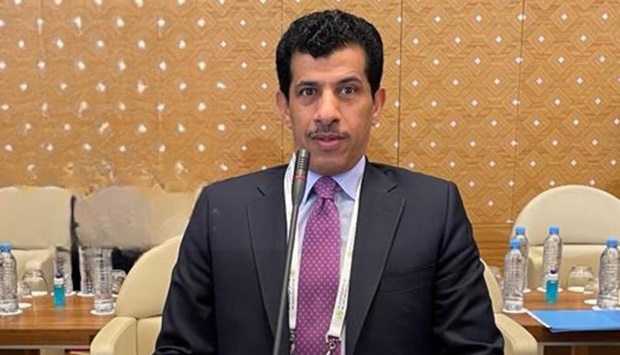
HE the Permanent Representative of Qatar to the Arab League, Salem Mubarak al-Shafi.
Qatar

Algeria summit: Amir's attendance to promote Arab solidarity

  The importance of His Highness the Amir Sheikh Tamim bin Hamad al-Thani's participation in the 31st Ordinary Arab Summit in Algeria has been highlighted in the run-up to the event that takes place on November 1 and 2. HE the Permanent Representative of Qatar to the Arab League, Salem Mubarak al-Shafi, underlined that the participation reflects the strong relationship between His Highness the Amir and Algerian President Abdelmadjid Tebboune. This stems from His Highness's keenness to solidify and consolidate the Qatar-Algeria relations at all levels and the willingness of the leaders of the two countries to contribute to the success of the Arab summit and promote the joint Arab action and Arab solidarity in countering challenges. Similarly, Algerian Centre for Economic Foresight, Investment Development and Entrepreneurship president Akram Zidi said the participation of His Highness the Amir in the summit, at the invitation of his brother, Algerian President Tebboune, will give the summit great momentum and influence, affirming His Highness's keenness to boost joint Arab action and Arab solidarity. He stressed that Qatar represents a role model in developing its economy, diversifying its income, and through its ability to adapt and resist successive global economic crises. In exclusive statements to Qatar News Agency (QNA), HE al-Shafi pointed out that Qatar remains at the forefront of any effort or initiative dedicated to uniting the Arab ranks, alleviating the suffering of the vulnerable people, including effective and constructive discussion on the issues that concern the region. He hailed the co-operation and fraternal relationship that links Qatar with Algeria at the official and popular levels and extended his sincere thanks and appreciation to Algeria's leadership, government and people for the generous hospitality and good reception, in addition to the enormous efforts made - and are still being made - for the success of the summit. Further, he congratulated the leadership, government and people of Algeria on the 58th anniversary of the liberation revolution that was a beacon and model for countries in regaining their freedom and independence. With regard to the key issues for Arab leaders at the summit, HE al-Shafi said the region is undergoing a momentous political period, which is reflected in the agenda that contains numerous vital topics. He explained that there are multiple political, economic and social files incorporated into the summit agenda, including permanent issues. The Palestinian cause is at the forefront along with the latest developments in the occupied territories, the latest developments in Libya, Syria, Iraq, Yemen and Sudan, as well as other files pertaining to Arab economic co-operation and trade exchange, the Greater Arab Free Trade Area (Gafta) and Arab Customs Union. HE the Permanent Representative hailed the Palestinian reconciliation deal that was recently signed under the patronage of Algeria, adding that such a development is not new for Algeria, which is always committed to supporting the brothers in Palestine and espousing their cause. The independence of the Palestinian state was proclaimed at the Arab Summit hosted by Algeria in 1988. The official added that he anticipates further Arab support for the Palestine cause at the upcoming summit, including the right of the Palestinian people to establish their independent and sovereign state within the June 4, 1967, borders with Jerusalem as its capital. Regarding Arab League reform, he said such a topic is not new and, "of course, there are resolutions issued by the Council of Arab League concerning the overhaul of the League, along with the task forces that have been systematically operating in this direction for a while". As for taking advantage of the FIFA World Cup Qatar 2022 that will be hosted by Qatar to present an honourable image of the Arab region, he said Qatar is anticipating an unprecedented sporting event by hosting the World Cup, asserting that the tournament's success is per se a success for all Arabs, especially as it is the first time the tournament is being held in an Arab and Islamic country. Sport generally unites all people, despite diverse cultures, affiliations and territories, and it is a rare humanitarian opportunity to show unity, happiness and celebration, especially at a time the world is suffering from uncertainty and multiple challenges, he said, adding that that the tournament represents a real opportunity to have a closer look into the beauty of the Arab culture and meet those who represent and embody this culture. HE al-Shafi noted that the Arab welcome to Qatar's hosting of the World Cup exists at the official and popular levels, adding that the event concerns the Arab region and the whole world.

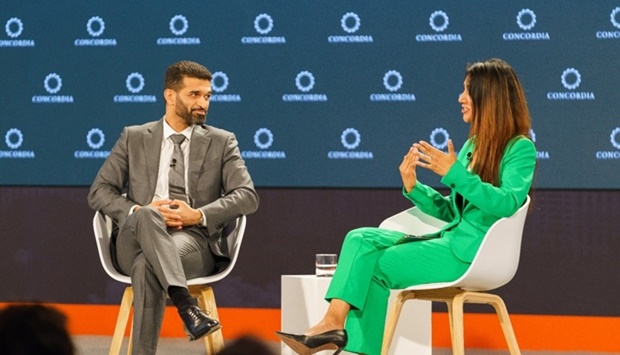
HE Hassan al-Thawadi taking part in the summit.
Qatar

Legacy, a key element of FIFA World Cup Qatar 2022

  * SC signs MoU with Concordia to raise awareness of Qatar 2022 legacy projects Legacy has been a key element that Qatar has been focusing on, right from the beginning of the preparations of the FIFA World Cup Qatar 2022, noted a top official of Supreme Committee for Delivery & Legacy (SC) at an international event in New York. “From day one, legacy was at the forefront of our plans. Right from the bidding stage, every single project, every single penny spent in terms of infrastructure and other things was designed with legacy in mind,” said HE Hassan al-Thawadi, Secretary-General, SC. Al-Thawadi was interacting with Reshmin Chowdhury, a sports journalist, at the Concordia Annual Summit in New York on Monday on the topic ‘FIFA World Cup Qatar 2022: Legacy Initiatives Beyond the Tournament’. As for a question about labour conditions and reforms in the country, al-Thawadi said that hosting the tournament has a transformational power. “It has a lot of impact in accelerating the infrastructure in the country as well as social reforms. The commitment towards labour reforms is embodied in Qatar National Vision 2030. We recognised that the World Cup would provide the momentum or become a vehicle to provide the reforms. We welcomed all the criticism and worked on them. The work that has been done is a benchmark in the region and it showcases that there is a commitment beyond the tournament. These reforms are done in a way that they are sustainable and last beyond 2022.” The official noted that Qatar has already delivered a legacy in labour reforms by setting a global benchmark. “An action that has become a global benchmark is about recruitment fees. We have made all the recruitment firms to reimburse the fees charged from the workers as recruitment fee. The companies volunteered to pay the recruitment fees which is around $28mn and out which $23mn has already been paid,” he highlighted. Al-Thawadi pointed out that legacy on labour reforms has already been delivered and this is something that has been delivered before the tournament and will last beyond the tournament. He said that the World Cup brings people together and celebrates humanity. “Great sporting events in history showcased the best in humanity. These are common opportunities and common celebrations. This is the biggest event in the post-Covid world that people will be able to celebrate together and that is reflected in record number of tickets that have been issued already. We are a hospitable and welcoming region. People might be from different backgrounds but once you reach our region you feel at home, no matter where you are from,” he highlighted. “Everybody is welcome to Qatar. All communities are welcome and we respect all of them and we also request all to respect our culture and values. It is an experience to explore difference and more importantly to celebrate the coming together of humanity. We are ready to welcome the world and we are excited to experience the first World Cup in the Arab World, which will truly be a global event. We are about to make history,” al-Thawadi added. Al-Thawadi highlighted the work of Generation Amazing, which is on track to reach 1mn beneficiaries. “Since its launch, our human and social legacy programme, Generation Amazing, has been successful in using football as a tool to teach youth and other targeted communities important life skills, like teamwork, leadership and inclusion,” he said. The SC’s commitment to drive workers’ welfare reforms and implement behavioural science projects to improve the impact of its programmes was also discussed by al-Thawadi. The SC also participated in other panel sessions during the event. Mahmoud Qutub, executive director of Workers’ Welfare & Labour Rights, took part in ‘The Social and Human Legacy of the World Cup’, while Dr Fadi Makki, director, B4 Development, took part in the ‘Using Behavioural Insights at the World Cup’ session. Generation Amazing discussed the role of women in shaping its programme and took part in the ‘Sports for Development Future’ panel. Generation Amazing also participated in a roundtable discussion co-organised by Laureus Sports for Good titled ‘Sports for Development and Leveraging Sports Mega Events’. Meanwhile, the SC and Concordia signed a memorandum of understanding (MoU) to share expertise and raise awareness of FIFA World Cup Qatar 2022 legacy projects. Among the legacy programmes that will benefit from the collaboration are Generation Amazing, the B4 Development Foundation and Workers’ Welfare, according to a press statement by the SC. Al-Thawadi said, “We are very pleased to formalise our strong working relationship with Concordia. Over the years, the summit has been an invaluable platform to share the story of Qatar’s FIFA World Cup, which will be a game-changer for our country and region. Over the past decade, our legacy programmes have been busy making a positive impact in Qatar and across the globe. We look forward to working with Concordia as we strive to achieve our legacy goals.” Matthew Swift, co-founder and CEO, Concordia, added: “We are delighted to formalise our partnership with the SC and support Qatar in its efforts to deliver meaningful impact through its various legacy programmes. With only weeks to go until the big kick-off, we are confident this edition of the FIFA World Cup will have a hugely positive impact on Qatar, the Middle East region and globally.”  

US President Joe Biden speaks to representatives of more than 100 countries during a virtual democracy summit at the White House in Washington DC on December 9, 2021. (AFP)
Opinion

Technology and the global struggle for sustainable democracy

The commemoration of the first anniversary of the January 6, 2021, attack on the US Capitol by supporters of former president Donald Trump showed that the extreme political polarisation that fuelled the riot also frames Americans’ interpretations of it. It would, however, be gravely mistaken to view what happened as a uniquely American phenomenon with uniquely American causes. The disruption of the peaceful transfer of power that day was part of something much bigger. As part of the commemoration, President Joe Biden said that a battle is being fought over “the soul of America.” What is becoming increasingly clear is that this is also true of the international order: its very soul is at stake. China is rising and asserting itself. Populism is widespread in the West and major emerging economies. And chauvinistic nationalism has re-emerged in parts of Europe. All signs point to increasing illiberalism and anti-democratic sentiment around the world. Against this backdrop, the US hosted in December a (virtual) “Summit for Democracy” that was attended by hundreds of national and civil-society leaders. The message of the gathering was clear: democracies must assert themselves firmly and proactively. To that end, the summit devoted numerous sessions to studying the digital revolution and its potentially harmful implications for our political systems. Emerging technologies pose at least three major risks for democracies. The first concerns how they structure public debate. Social networks balkanise public discourse by segmenting users into ever smaller like-minded communities. Algorithmically-driven information echo chambers make it difficult to build social consensus. Worse, social networks are not liable for the content they distribute, which means they can allow misinformation to spread on their platforms with impunity. Moreover, because the new digital players’ advertising-dependent business models compete directly with those of traditional news organisations, they have undermined the architecture that once supported high-quality journalism and public debate. And their open, digital nature makes them highly vulnerable to external interference and misuse by nefarious actors, including those seeking to disrupt elections and other democratic processes. The second major risk posed by new technologies is to privacy. Owing to advanced monitoring and surveillance technologies, public and private actors alike can access detailed information about private citizens and consumer behavior. With the convergence of Big Data and artificial intelligence, insights into collective and individual behaviour are becoming increasingly predictive. Systematic violations of privacy could usher in at least two different scenarios in which personal freedom would be severely restricted. The first is surveillance capitalism: corporations using their knowledge of consumers to manipulate them into serving their own bottom lines. The second scenario is the surveillance state: public authorities using their knowledge of citizens’ most private, intimate behaviour to stifle dissent. The third major risk is to political agency. A democracy is essentially a large information system. Freedom of expression and association, together with universal enfranchisement, enables citizens to voice their opinions and offer or withhold their consent to political initiatives. Yet today’s surveillance and data-mining technologies have created the conditions for an alternative political system in which understanding citizens’ freely expressed preferences is no longer necessary, because preferences can be inferred from monitored behaviour. In such a scenario, individual agency and freedom cease to be the cornerstones of the political system, because they would be supplanted by data and public control. And with advances in neuro- and behavioural sciences blurring the lines between knowing how a person behaves and being able to shape that behaviour, it is easy to see how a highly repressive political system – a technological Leviathan – could emerge. China seems to already be deploying what some are calling a technological mandarinate. Although these risks are real, they need not become our new reality. It is fully within a democracy’s power to embrace certain technological developments while restricting others. At the Summit for Democracy, attendees agreed to launch a major initiative to identify and support the development of technologies that advance democratic principles and values. In close collaboration with the White House and the US Department of State, IE University, where I work, and other summit partners will be holding a series of start-up and scale-up competitions to identify entrepreneurs who are working on promising new “democracy-affirming technologies.” The project will focus on five main areas: verification technologies designed to combat disinformation and strengthen public debate; data-analytics tools that respect privacy; digital identity systems and trust frameworks for managing individual and public data; transparency technologies to improve public services; and unbiased AI systems. This multi-stakeholder collaboration is a perfect example of democratic societies’ unique capacity to come together and innovate. It is also a reminder that, despite the tone of our public debates, the democratic world is not helpless in the face of technological change. The countries present at the summit represented 70% of global GDP, and they contain the world’s most highly developed regulatory institutions. If technology is a new domain of international relations and competition, the democratic world is equipped for success. According to Freedom House, eight of the ten largest consumer markets are in “free” countries, and those same countries are also home to 85 of the world’s top 100 universities. In venture capital markets, democratic countries have an overwhelming lead, accounting for over 80% of all investment activity in the past year. The democratic world dominates in terms of research ability, regulatory capacity, and market size – all of which is key for innovation and business scalability. The Summit for Democracy underscored the urgency of studying both the strengths and vulnerabilities of democratic systems in the twenty-first century. It showed that an analysis of the role of new technologies must take center stage. The commemoration of the January 6 events in Washington DC, in turn, is a good reminder of how urgent it is that we direct our innovative potential toward shoring up the health of our democracies. The soul of our political systems and of the international order are at stake.                                           — Project Syndicate •Manuel Muñiz is Provost of IE University and Dean of IE’s School of Global and Public Affairs.

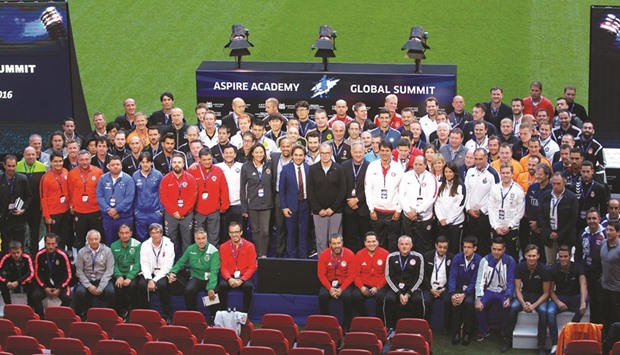
More than 165 businesses and exhibitors took part in the Aspire4Sport and Global Summit on Football Performance & Science held in Amsterdam.
Sport

Attendees hail Aspire4Sport and the Global Summit

Aspire Academy hailed the enormous success of the 2016 Aspire4Sport and Global Summit on Football Performance & Science that took place on October 3-4 by highlighting a number of milestones achieved during this year’s events. Taking place this year at the iconic Amsterdam Arena, home of AFC Ajax, Aspire4Sport is a networking session that brought European and Qatari sports industry professionals together to build bridges and pave the way for future partnerships. This year’s event was amongst the best attended in recent years, highlighting its enduring appeal and importance in enabling the development and success of the sports industry whilst also sending a clear signal about Qatar’s significance as a leading player in the world of sport. More than 165 businesses and exhibitors took part, representing more than 16 countries. In total, 688 meetings took place between prestigious Qatari and Middle Eastern government organisations and companies and Europe’s leading sports businesses across sectors including construction, sports medicine, logistics, event management, communication and technology. One of the main features of Aspire4Sport is that it provides unparalleled networking opportunities for organisations taking part. Feedback from participants this year was unanimous in praise of the organisation of the event itself, the format of meetings as well as their number and frequency, and also the quality of interactions and opportunities they produce. The significance attached to the event by the State of Qatar was clearly demonstrated by the participation of  Khaled bin Fahed al-Khater, the ambassador of the State of Qatar to the Netherlands, who took part in the opening ceremony to welcome delegates to Amsterdam and to encourage them to make the most of the opportunities on offer. Khaled bin Fahed al-Khater said: “Bringing flagship events such as Aspire4Sport and the Aspire Academy Global Summit on Football Performance and Science to the Netherlands is clear evidence of the strong and growing relationship between our two countries. The business and investment opportunities in Qatar are very strong, and our sports industry is thriving. These two internationally renowned events provided an excellent insight into the potential that exists in Qatar. I am delighted that Amsterdam was selected to be this year’s host for these world-renowned events.” Commenting on the quality of the business engagements and interactions in evidence at Aspire4Sport, Ward Abdallah, Executive Director, Aspire4Sport said: “Over the past seven years we have built an incredibly strong brand, and now Aspire4Sport unarguably represents a major highpoint in the sports business calendar. Thanks to the continued efforts and support of our partners, and the vision of Qatar’s leadership, we are making real progress in creating meaningful opportunities for partnership and collaboration between growing numbers of European businesses and Qatari institutions.” Saud al-Attiyah, Director of Economic Policies & Research from the Ministry of Economy & Commerce said: “I really enjoyed this event which presented a very good opportunity to engage with a range of international sport businesses. It provides an excellent way to meet with suppliers.” In parallel, Aspire Academy hosted the Global Summit on Football Performance & Science, and the quality of the participants this year was also of an exceptionally high standard. The event featured some of the biggest stars of the game, including Andres Villas-Boas, Xavi Hernandez, Ronald de Boer, Carles Puyol, Edwin van der Sar and Marc Overmars. More than 160 representatives from clubs including FC Barcelona, Manchester United, AC Milan and Juventus took part in what ranks as one of the highest profile gatherings of leading experts in youth development and training methodology of anywhere in the world. Together they reviewed and examined the latest training methods and approaches designed to nurture championship potential and support elite performance. This group makes up the “Aspire In the World” Fellows programme, which has continued to grow and develop since it was launched in 2014. For the first time this year, the original members of the “Aspire in the World Fellows” were invited to extend invitations to affiliates, meaning more than 80 football clubs attended the summit. As well as participating in a variety of workshops and presentations, participants also took part in “Master Classes” for the first time this year, designed to share ideas and approaches and promote discussion around how science, technology and cutting-edge coaching techniques positively influence the game. A particular highlight of these was Argentinian star manager Marcelo Bielsa who led one such “Master Class” on training methodology on both days. This generated hugely positive feedback from participants and prompted a huge response on social media. Commenting on the Global Summit on Football Performance & Science, Richard Grootscholten, Head of Academy at Feyenoord said: “It’s great to have all these experts in one place, and to gather knowledge from around the world. The model for this community is great, and I’m sure other sports would benefit from replicating it.” Joshua Jeffrey, Academy Sports Therapist at Everton FC said: “This event is very professional and well organised. The opportunity just to meet with peers from other clubs, from different countries and to familiarise yourself with a different way of doing things is part of the enormous benefit of belonging to the Aspire In the World Fellows community. The online platform that we use throughout the year to work on our topics is a big bonus and a great way to gain valuable insights.” Feedback from delegates at the Global Summit about this year’s Star Chats was also exceptionally positive. Some of the most recognizable and influential names in sports broadcasting – including the BBC’s Reshmin Chowdhury and Al Kass’ Marianne Caracalla – engaged legends of the game including Andres Villas-Boas, Xavi Hernandez and Carles Puyol on a variety of hot topics, drawing out illuminating and thought provoking insights. Amongst the many highlights were Edwin Van der Saar’s comments recounting the best coach he’d ever worked with. He said: “In my eyes, the best coach I’ve ever had was Louis van Gaal here at Ajax. I would have expected and hoped that he would have succeeded more than he did last year. I think the team was a little slow. United want excitement with the ball going forward with good technical players. Changing the 4-4-2 formation to a different system cost him a bit of momentum in the players.” In addition, Andre Villas-Boas shared his perspective on what makes Aspire Academy so successful. He said: “What is so good about Aspire is that there’s a vision – there is a vision and a clear set-up. It’s aiming for 2022 and it has a great mix of such different people yet they all reflect the same vision. I have been to Aspire many times and I appreciate and value how so many different people and backgrounds strive to help build Qatar’s football and other sports.”   Elsewhere, Xavi Hernandez described his pride and passion for the progress and quality delivered by Aspire Academy, saying: “In the same way I’m proud of Barcelona, I’m also very proud of the Academy in Doha. They have a lot of professionalism at Aspire, including all the coaches. I’m also learning a lot of things. They’re always training. I think Aspire Academy is working very well, and the event they have organised here is incredible. The Academy and Qatar have a lot of solutions and are sharing them with the world.”

Gulf Times
Qatar

Rota intensifies efforts in supporting youth needs

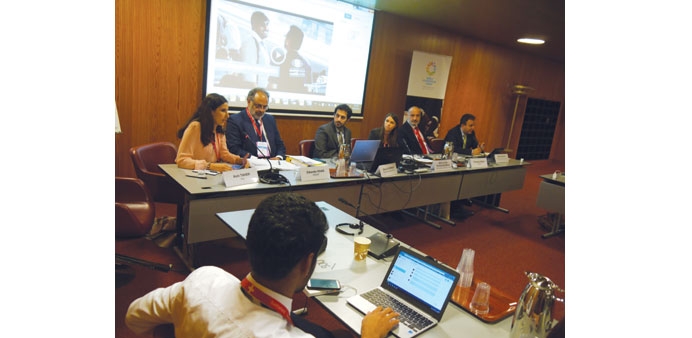
The Geneva meeting to discuss strategies to empower young people. Reach Out to Asia (Rota) has been recognised by international institutions and organisations working in the fields of social development and humanitarian affairs following the successful hosting of the World Humanitarian Summit – Global Youth Consultation (WHS-GYC) in October.Rota was invited to join the United Nations at a meeting held in Berlin in September to discuss the main proposals and Synthesis Report of the WHS, as well as provide a road map for the summit taking place in Istanbul in 2016, according to a statement.The report included youth recommendations, which were developed during the WHS-GYC in Doha. Rota, a member of Qatar Foundation for Education, Science and Community Development, continued its international participation in supporting global youth needs by attending the second edition of the Social Innovation and Global Ethics Forum 201 in Geneva in October to discuss the strategies to empower young people by addressing their specific needs and enhancing their active participation. In addition, the meeting offered a platform for stakeholders to discuss the proposal for the formation of a Global Alliance to support youth.Rota’s participation in the Geneva meeting was significant as it represented an addition to the discussions due to its experience in supporting and empowering youth locally, regionally and globally, the statement noted.Essa al-Mannai, executive director of Rota, said: “Rota is a key player and an important partner for humanitarian work around the world. This global interest in Rota’s ideas and initiatives is strong evidence that we are on the right path for human and social development.“Rota’s vision based on education and youth empowerment has found a strong position in the international community, especially since Rota is dealing with the most affected areas around the world.”Rota was chosen by the UN Office for Co-ordination of Humanitarian Affairs for its efforts in supporting the youth, in particular Empower, Rota’s’s flagship youth conference, which has taken place annually for seven consecutive years. Empower has built a reputation for enabling young people from all over the world to voice their opinion on the global sustainable development agenda, the statement adds.

Gulf Times
Opinion

Data revolution can drive sustainable development

By Jeffrey D Sachs/New YorkThe data revolution is rapidly transforming every part of society. Elections are managed with biometrics, forests are monitored by satellite imagery, banking has migrated from branch offices to smartphones and medical X-rays are examined halfway around the world. With a bit of investment and foresight, spelled out in a new report, prepared by the UN Sustainable Development Solutions Network (SDSN), on Data for Development, the data revolution can drive a sustainable development revolution, and accelerate progress toward ending poverty, promoting social inclusion, and protecting the environment.The world’s governments will adopt the new Sustainable Development Goals (SDGs) at a special UN summit on September 25. The occasion will likely be the largest gathering of world leaders in history, as some 170 heads of state and government adopt shared goals that will guide global development efforts until 2030. Of course, goals are easier to adopt than to achieve. So we will need new tools, including new data systems, to turn the SDGs into reality by 2030. In developing these new data systems, governments, businesses and civil-society groups should promote four distinct purposes.The first, and most important, is data for service delivery. The data revolution gives governments and businesses new and greatly improved ways to deliver services, fight corruption, cut red tape and guarantee access in previously isolated places. Information technology is already revolutionising the delivery of health care, education, governance, infrastructure (for example, prepaid electricity), banking, emergency response, and much more. The second purpose is data for public management. Officials can now maintain real-time dashboards informing them of the current state of government facilities, transport networks, emergency relief operations, public health surveillance, violent crimes and much more. Citizen feedback can also improve functioning, such as by crowd-sourcing traffic information from drivers. Geographic information systems (GIS) allow for real-time monitoring across local governments and districts in far-flung regions.The third purpose is data for accountability of governments and businesses. It is a truism that government bureaucracies cut corners, hide gaps in service delivery, exaggerate performance, or, in the worst cases, simply steal when they can get away with it. Many businesses are no better. The data revolution can help to ensure that verifiable data are accessible to the general public and the intended recipients of public and private services. When services do not arrive on schedule (owing to, say, a bottleneck in construction or corruption in the supply chain), the data system will enable the public to pinpoint problems and hold governments and businesses to account. Finally, the data revolution should enable the public to know whether or not a global goal or target has actually been achieved. The Millennium Development Goals, which were set in the year 2000, established quantitative targets for the year 2015. But, although we are now in the MDGs’ final year, we still lack precise knowledge of whether certain MDG targets have been achieved, owing to the absence of high-quality, timely data. Some of the most important MDG targets are reported with a lag of several years. The World Bank, for example, has not published detailed poverty data since 2010.The data revolution can end the long lags and dramatically improve the quality of the data. For example, rather than relying on household surveys every few years to calculate the mortality rate, systems of civil registration and vital statistics can collect mortality data in real time, with the added benefit of information on cause of death.Likewise, poverty data could be collected at relatively low cost and with much higher frequency than today, by using smart phones to replace paper-based surveys. Some analysts have suggested that the use of mobile phones could bring down the cost of surveys by up to 60% in some East African countries over a 10-year period. Private companies, such as Gallup International, could work alongside the more traditional public-sector statistical offices to accelerate data collection.The data revolution offers a breakthrough opportunity for service delivery, management, accountability and validation, thanks to a dense ecosystem of technologies that collect information in multiple ways: remote sensing and satellite imagery, biometric data, GIS tracking, facilities-based data, household surveys, social media, crowd-sourcing and other channels.To support the SDGs, such data should be publicly available for all countries at high frequency – at least within one year for key targets, and in real time in sectors where service delivery is vital (health, education, and the like). Private companies, including telecoms, social marketing companies, systems designers, survey firms, and other information providers, should all be integrated into the data “ecosystem”.In preparing the new report, the SDSN teamed up with several partner agencies to prepare a “needs assessment” on how to launch the data revolution for the SDGs. The report offers an action plan that builds on partnerships between national statistical systems and private information firms and other non-governmental data providers. As the report emphasizes, low-income and lower-middle-income countries will need financial help to create these new data systems.While the cost estimates are necessarily provisional, especially in this era of disruptive technological change, the new study suggests that proper data systems for the SDGs will require at least $1bn per year to cover all of the 77 lower-income countries. Of that sum, around half should be financed through official development assistance, which implies an increment of at least $200mn per year above current donor flows.Now is the time for such an increased commitment of funding. In July, the world will assemble in Addis Ababa for the International Finance for Development Conference, and just weeks after that, at UN headquarters to adopt the SDGs in late September. With quick action before these two summit meetings, the world will be ready to launch the SDGs with the data systems that they need to succeed. - Project Syndicate- Jeffrey D Sachs is professor of sustainable development, professor of health policy and management, and director of the Earth Institute at Columbia University. He is also special adviser to the UN secretary-general on the Millennium Development Goals.

Gulf Times
Qatar

2nd Arab Future Cities Summit opens in Doha

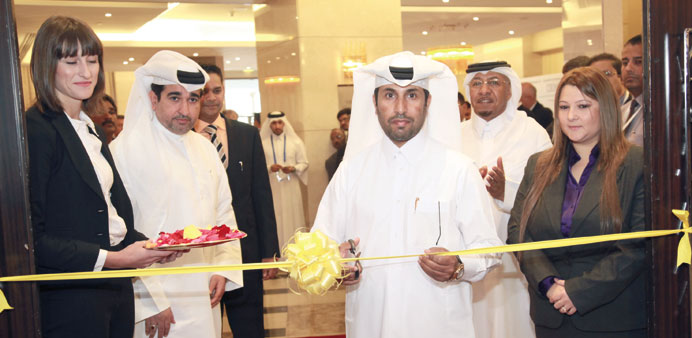
Guest of Honour HE Sheikh Abdurrahman bin Khalifa bin Abdulaziz al-Thani, Minister for Municipality and Urban Planning, cuts the  ribbon to inaugurate the second annual Arab Future Cities Summit 2013, at the St Regis Doha. By Hamza Jilani/Staff Reporter The challenges of building and managing large modern cities were discussed at Arab Future Cities Summit 2013, a two-day international event that began in Doha yesterday. Hundreds of international delegates are taking part in the event  at the St Regis hotel, held under the patronage of Ministry of Municipality and Urban Planning to share knowledge and tap into the smart city market that is growing across the Arabian Gulf countries. Attracted to the event were mayors, ministers, chief executives, city planners, strategy and policy officers and advisers, as well as technology and investment experts who gathered at the summit’s second edition after either enjoying or hearing about last year’s success. The programme is seen as a direct response to rising global populations and the gradual trend in these populations’ movements from rural to urban centres. “Rapid urbanisation demands sustainable growth, smarter economies and most importantly, people power. What we need is good governance through efficient strategies, resource optimisation and smarter transport grids,” said keynote speaker Sean Patrick O’Brien, vice-president of Urban Management and Public Security at software company SAP. Topics discussed by panellists included improving quality of city life, administration, education, efficiency in transportation and energy and water usage as well as access to a variety of services through the ease of smartphones and mobile applications. Many case studies were also presented to prove the effectiveness of such solutions where they are being implemented in other parts of the world. “There are more new cities popping up in the Middle East region than in any other part of the world. But it’s not enough to just start up a city; you need proper planning, access to services like quality education for everyone, and not only in schools,” Lynn Reyes of IBM Global Business Services said. “It’s important for us to remember that a city is a system within systems, and all components have to be harmonious in a formula that keeps development running smoothly. If you make the right choices from the beginning, you’ll save yourself a headache later down the line.” The speaking delegates agreed that developing regions such as the Middle East, which “seeks to innovate rather than copy developmental success”, should not only look to build big cities, but ensure their long-term viability by educating residing populations about their lifestyles and how they affect the cities environment. “When residents know the impacts that their lifestyles and habits of transportation, consumption or waste management are doing to the city, you’ll see major change and smart decisions being made,” said Graham Bodell, head of transport strategy at the ministry. Expert panelists like Ahmad Olaywan, Qatar/Kuwait/Bahrain country manager for BlackBerry, stressed on the dependence of data-driven, technology-driven development strategies. He said that while the region is one of the most mobile regions in the world with 200% penetration, with Qatar’s smartphone penetration at 75%, according to ictQatar, the young and changing smartphone and app market could lead Arab cities in the next stage of development. “It’s not only about using your smartphone to connect to social networks and communication services. Mobile computing has served the GCC to provide solutions to people with disabilities, the police with community information a public reach police services as well as utility bill paying though the convenience of mobile apps,” Olaywan said. “Building a smart ecosystem around your smartphone makes it easier for companies like us as well as developers to create solutions for people like you.”  

Gulf Times
Qatar

Mowasalat in pact to hold global transport summit

Mowasalat chairman Jassim Saif al-Sulaiti is flanked by Abdulla Nasser and Ahmed al-Mansoori during the briefing. PICTURE: Jayaram Mowasalat will hold a series of meetings of the UITP Mena Public Transport & Large Events Summit, beginning with a major summit to be held in November this year. Announcing this on Thursday, the company chairman and managing director Jassim Saif al-Sulaiti said the first in the series of the UITP ((International Association of Public Transport) meetings in Qatar will be held on November 6 and 7. He said the summit will be held every two years and will be hosted by Mowasalat along with UITP until the 2022 Fifa World Cup, which the country is hosting. An agreement to host the event was earlier signed between Al Sulaiti and Ousmane Thiam, president of UITP. The Brussels-headquartered UITP has a membership of more than 600 transport companies across the world. At the briefing, UITP Mena region chairman Abdulla Nasser thanked the forum president Ousmane Thiam for choosing Mowasalat to hold the summit once in two years. The UITP is the global network of over 3,400 public transport professionals from more than 92 countries. It represents urban and regional passenger transport operators, authorities, the supplying and service industry, as well as a broad range of other mobility actors. UITP gathers and monitors public transport best practices, statistics and mobility indicators. Speaking later al-Sulaiti said Mowasalat would upgrade its technologies and products in the coming years so that the public transport system in Qatar would attain global standards. While insisting that Mowasalat has grown into one of the major transport solutions provider of the region, the chairman said the company is not going to sit on the recent laurels and he vowed to continue efforts to take it to the best possible levels, through new solutions and services. “The public transport provides sustained mobility to the society and it is a key factor to boost every economy. Our social responsibility as the sole public transport provider is to bring environmental justice and to support Qatar National Vision 2030, reducing congestion, pollution and identifying alternate sources of non-renewable energy to deliver new products and services embracing innovation and technology. ” Also speaking, Mowasalat executive director Ahmed al-Mansoori said “our roadmap of sustained development over the years included several projects on safety, public transport and green initiatives.” Mansoori said the company is set to launch battery-powered electric buses and cars, LPG vehicles, CNG vehicles by the end of this year and water transport by the middle of next year. “We believe that embracing latest technology in synergy with engineering will benefit our customers and help Mowasalat improve its products and services,” said Strategy & Business Development Director Nasser al-Khanji. ‘Disposable travel cards’ for bus commuters Mowasalat plans to introduce “disposable travel cards” for the benefit of those bus passengers who do not possess the company’s Smart cards. The cards are expected to be launched during the Ramadan period. The company chairman Jassim Saif al-Sulaiti said the disposable cards will be available in denominations starting from QR10 onwards. “Arrangements are underway to ensure availability of these disposable cards of different denominations inside the bus,” he said. There would be cards for 24 hours and also cards with indefinite validity (until its value is fully utilised by a passenger). With the disposable cards being launched, one need not pay the minimum “no ticket” charge of QR10, for those travelling on buses without the Smart cards. Replying to another query, the chairman said the work on the bus station in Dukhan would begin by the middle of next year. The chairman also informed about the company’s plans to launch about 500 public transport and other buses to be operated using Compressed Natural Gas (CNG) in the next few years, in its bid to reduce environmental and atmospheric pollution.

Gulf Times
Qatar

Ministry, WHO hold talks on support services for elderly

Assistant Undersecretary for Social Development Affairs at the Ministry of Social Development and Family (MSDF) Fahd Mohammed al-Khayarin met with Regional Director of the World Health Organization (WHO) for the Eastern Mediterranean Dr Hanan Hassan Balkhy, where they discussed ways to enhance co-operation in developing services provided to people with disabilities and the elderly.During the meeting, they discussed the mandate and role of the Ministry of Social Development and Family in caring for persons with disabilities and the elderly. The meeting also addressed areas of co-operation regarding the Global Disability Summit 2028 and strengthening the strategic partnership between the ministry and the WHO to support the achievement of the National Development Strategy.In August 2024, the Ministry of Social Development and Family implemented a training program on the rights of persons with disabilities in reproductive health in conflict and war zones, in co-operation with the UN Human Rights Training and Documentation Centre for Southwest Asia and the Arab Region, and the Regional Office for the Middle East and North Africa of the Office of the High Commissioner for Human Rights.The program addressed a number of significant topics, including reproductive health issues for people with disabilities, and the development of emergency plans for this group to ensure they receive the necessary protection and support during times of crisis, thus strengthening national and international efforts in this area.

Gulf Times
Business

MCIT announces opening of applications for ‘World Summit Awards 2023’ competition

The upcoming ‘World Summit Awards 2023’ competition would be an opportunity for Qatar to showcase the country’s achievements in the field of digital technology, a Ministry of Communications and Information Technology (MCIT) has said.The MCIT announced yesterday that registration is now open for individuals, companies, and local institutions who wish to nominate their best digital projects and applications for the WSA 2023 competition.Reem Mohamed al-Mansoori, Assistant Undersecretary of Digital Society Development at MCIT, said: “We are pleased to announce the opening of the application process for the World Summit Awards 2023. This prestigious competition encourages the power of digital innovation and its transformative impact on society.“Based on this, we encourage companies, institutions, and individuals across Qatar to seize this important opportunity and submit their projects to be showcased and shared as Qatari projects and talents on the global stage. This is to inspire the world with our digital achievements and propel the digital landscape in the country to new heights.”To represent Qatar’s projects globally, interested parties can submit their applications until August 30, 2023, by sending their information and business details to MCIT via [email protected] WSA 2023 includes eight categories: ‘Government and Citizen Engagement’, ‘Health and Well-being’, ‘Environment and Green Energy’, ‘Business and Commerce’, ‘Learning and Education’, ‘Culture and Heritage’, ‘Smart Settlements and Urbanisation’, and ‘Inclusion and Empowerment’.Applicants can submit their work in these categories if their submissions comply with the Universal Declaration of Human Rights, which prohibits any content that incites war, violence, or racial discrimination, and does not violate internationally recognised copyright and intellectual property rights.The judging committee reserves the right to reject any submissions that contravene the Universal Declaration of Human Rights.Once applications are received, a local judging committee consisting of experts and leaders from MCIT will review and evaluate the submitted works and projects. The committee will then select one qualified candidate from each of the eight award categories to represent Qatar internationally.The competition includes representatives from 168 countries from different continents around the world and consists of four stages. The first stage is pre-selection in each country, where a national committee from the participating countries selects the top eight projects in each competition category (one from each category).The second is the evaluation of applications and projects and a nomination for the selection stage through an online judging committee. The third is the final evaluation of applications and projects submitted by all participating countries takes place through the grand jury, which consists of prominent experts in this field. They will evaluate the projects submitted by all participating countries and select the top 40 projects (five from each category).The fourth and final stage is the WSA events are held, where the winners of the competition will gather to showcase their projects, celebrate international digital innovation, and meet with business leaders, experts, and specialists in the field of information technology.The WSA aims to reduce the digital gap among countries worldwide by promoting the best emerging digital companies and innovative applications that effectively and creatively impact cultural, scientific, and educational content digitisation.It strives to increase awareness and recognition of impactful digital content within society by creating continuous forums of international events and activities that bring together a global network of startups, social entrepreneurs, directors, jurors, speakers, experts, government leaders, academics, and civil society.