Search - World Summit for Social Development

Friday, October 16, 2026 | Daily Newspaper published by GPPC Doha, Qatar.

Search Results for "World Summit for Social Development" (360 articles)

All words
Gulf Times
Qatar

Qatar strengthens rights, inclusion and accessibility for persons with disabilities

Qatar has continued to strengthen its legislative, digital, healthcare and social programmes aimed at advancing the rights and inclusion of persons with disabilities, with recent measures placing greater emphasis on equality, accessibility, empowerment and participation in public life.A key development was the enactment of Law No. (22) of 2025 on Persons with Disabilities, which strengthens the legal framework governing their rights and reinforces the principles of equality, non-discrimination, empowerment and protection. The legislation represents an important step in translating Qatar’s commitments under the international disability rights framework into national policies and services.Qatar ratified the Convention on the Rights of Persons with Disabilities (CRPD) on May 26, 2008. The convention establishes an international framework to ensure that persons with disabilities enjoy their rights on an equal basis with others and participate fully in society without discrimination. Its principles cover a wide range of areas, including accessibility, education, healthcare, employment, social protection, political participation, justice, culture, sports and recreation.In recent years, Qatar’s efforts have increasingly focused on making accessibility part of everyday public and digital services. Among these initiatives is the national digital platform “Yusr”, which is designed to facilitate access for persons with disabilities and their families to relevant services and information while incorporating digital accessibility standards.**media[478579]**The government has also reported a 94% digital accessibility rate across government websites, while Qatar ranked fifth globally in the Digital Accessibility Rights Evaluation Index. The figures reflect the growing role of accessible digital infrastructure in enabling persons with disabilities to obtain public information and services.Healthcare and rehabilitation have also been key areas of focus. The “Qatar Creates Vision” initiative seeks to expand access to eye-care services worldwide for millions of adults and children. Broader healthcare efforts include access to prosthetic limbs, orthotic devices, assistive technologies and specialised rehabilitation services.Accessibility extends beyond healthcare and digital platforms. The “Accessible Qatar” initiative provides information on the accessibility of public and tourist locations across the country, helping persons with disabilities and their families identify facilities and destinations equipped to meet different accessibility requirements.Participation in social, cultural and sporting activities is another component of Qatar’s approach. National programmes such as 'For All Abilities' seek to expand opportunities for persons with disabilities to take part in sports, cultural and recreational activities. These efforts include adapting facilities and activities to accommodate different needs and encourage wider participation.The rights framework also covers education and employment. Under the principles of the CRPD, persons with disabilities are entitled to an inclusive and integrated education system at all stages. Employment rights include equal opportunities, equal pay and promotion, as well as reasonable accommodation in the workplace. The framework also recognises the right to an adequate standard of living and social protection, including access to housing, assistance and disability-related services without discrimination.Access to justice is similarly recognised as a fundamental right. Persons with disabilities should have equal access to the judiciary, with recognition of their legal capacity and appropriate support and accommodations to enable them to exercise their legal rights.Qatar has also sought to promote inclusion through technology and communication. The “Sukoon” application was launched to digitise the Unified Arabic Sign Language Dictionary and promote digital inclusion for deaf persons. The initiative addresses communication barriers while expanding access to digital resources for people who rely on sign language.At the international level, Qatar has contributed to efforts to raise global awareness of disability rights. The country contributed to the adoption by the United Nations General Assembly on June 16, 2025, of a resolution declaring June 27 as International Day of Deafblindness. Qatar also participates annually in the United Nations’ observance of World Autism Awareness Day on April 2.Qatar is also preparing to host the Fourth Global Disability Summit in Doha in 2028, in cooperation with the International Disability Alliance. The summit is expected to provide an international platform for discussions on disability inclusion, accessibility and the implementation of rights-based policies.Taken together, Qatar’s efforts to expand accessibility across government services, digital platforms, healthcare and public spaces, alongside its international engagement on disability issues, reflect a broader approach to promoting social development, equal opportunity and the full participation of persons with disabilities in society. 


On a national level, Qatar’s Ministry of Communications and Information Technology (MCIT) continues to advance a strategic vision aimed at positioning the country as a global leader in digital transformation.
Opinion

Qatar at the forefront of world’s most digitally advanced nations

Global disparities in internet access are presenting an escalating challenge to international efforts aimed at promoting equality and achieving the Sustainable Development Goals, as gaps in digital accessibility persist across different social demographics and nations. The issue takes center stage on World Telecommunication and Information Society Day, observed annually on May 17. The 2026 theme, ‘Digital Lifelines: Strengthening Resilience in a Connected World’, underscores the critical role of digital infrastructure as a foundational pillar supporting vital services and bolstering societal resilience in an increasingly connected world. Against this backdrop, the international observance serves as a reminder of the urgent need to protect the digital technologies that underpin essential societal functions and critical infrastructure. Experts note this can be achieved through a comprehensive framework agreed upon by all United Nations member states. Such a framework would define common parameters for digital trust and security within a shared vision for digital co-operation rooted in universal values. Within this framework, international organizations and telecommunications experts are calling for the reinforcement of digital lifelines to ensure a more interconnected and resilient world. As reliance on secure communication networks grows, these lifelines-comprising terrestrial networks, submarine cables, satellites, and data systems-now form the core infrastructure of modern societies and economies. Conversely, despite the benefits of digital technologies, the potential for misuse remains high. Rogue actors can bypass laws and violate human rights through unauthorized access to personal data and the deployment of surveillance technologies. This risk has prompted widespread calls to place human rights at the center of regulatory frameworks and legislation. “Digital technology is shaping history,” United Nations Secretary-General Antonio Guterres said in a statement marking World Telecommunication and Information Society Day. “But it also raises profound questions about the human future, human rights, equality, and security in our societies.” Guterres added that addressing these challenges depends on the ability of diverse stakeholders to work collectively to maximize the benefits of technology while mitigating its risks and negative applications. On a national level, the Ministry of Communications and Information Technology continues to advance a strategic vision aimed at positioning the country as a global leader in digital transformation. Through a series of initiatives, Qatar has established itself among the world’s most digitally advanced nations. The country’s strategy relies on a robust infrastructure integrated with cutting-edge technologies, including artificial intelligence and blockchain. Furthermore, the ministry also focuses on digital literacy and cybersecurity, aiming to ensure that all members of society can engage safely across digital platforms, fostering a secure and inclusive digital environment. Speaking on the importance of the digital sector and the practical implications of its deployment, Director of the Digital Innovation Department at the Ministry of Communications and Information Technology (MCIT), Eman al-Kuwari, said digital innovation constitutes a central pillar in the country’s efforts to develop a knowledge-based digital economy, in line with the foundations of the Digital Agenda 2030, which aims to contribute QR40bn to the non-oil economy and generate 26,000 jobs. In remarks to the Qatar News Agency (QNA), al-Kuwari said the ministry is implementing this transformation through integrated pillars: advancing the performance of vital sectors by expanding the use of artificial intelligence, and enabling a nationally connected innovation ecosystem linked to global markets and systems. Al-Kuwari added that the ministry has strengthened strategic partnerships with major technology companies, including Microsoft, Google Cloud, Oracle and Scale AI, while also deepening co-operation with the private and academic sectors through digital transformation offices across several key industries. Al-Kuwari noted that one of the most significant achievements in entrepreneurship has been the inclusion of more than 521 startups in the Digital Incubation Center, with those companies securing more than QR 747mn in funding. She added that startups from 78 countries have also been attracted to Qatar, generating revenues exceeding QR 670mn. She said the 2030 Digital Agenda had received recognition from the United Nations as one of the leading international practices in digital transformation. For her part, Director of the Digital Society and Digital Competencies Department at MCIT, Duha al-Buhendi, said the ministry is committed to fostering a more digitally prepared society through investment in digital skills development and strengthening national capabilities to meet the demands of the digital future. Al-Buhendi told QNA that the ministry is developing initiatives and programs targeting various segments of society to enhance digital readiness and align skills with labor market needs. She said one of the ministry’s most prominent initiatives is the Qatar Digital Academy, which delivered more than 330 training programs last year, benefiting over 5,700 employees from more than 90 entities, in partnership with 17 global technology providers. She added that initiatives such as Studio 5 and the digital safety project Safe Space have contributed to promoting digital awareness and fostering a culture of innovation and online safety among children, youth, parents and teachers. Qatar ranks first globally in the Digital Accessibility Rights Evaluation (DARE) Index for 2020, issued by the Global Initiative for Inclusive ICTs, known as G3ict, which tracks countries’ progress in making information and communications technology accessible to all, in line with Article 9 of the Convention on the Rights of Persons with Disabilities. Qatar also ranked first globally in internet penetration, with a rate of 99% in 2021, according to the ‘Digital 2021: Global Overview Report’, issued by Hootsuite, which covered more than 230 countries and territories. In addition, the country ranked third in the Arab world in the 2023 Government Electronic and Mobile Services Maturity Index (GEMS). In the same context, Qatar placed third among Arab countries in the 2023 ICT Development Index, which covered 169 countries and is based on 10 indicators measuring universal and meaningful connectivity as well as the quality of internet access. In terms of achievements, Qatar received the World Summit Award for Arabic digital content through the government portal Hukoomi in the category of e-government and open data in 2011 and 2013. The Ministry of Communications and Information Technology also received ISO/IEC 27001 certification in 2018 following an assessment of information security systems in shared government services. In 2020, the ministry received the “Champion” award from the World Summit on the Information Society for the Safe Space platform in the category of “Building Confidence and Security in the Use of ICTs.” In 2021, the TASMU platform won a World Summit Awards award in the category of “Government and Citizen Engagement,” selected among 40 winners from nearly 800 nominations representing more than 100 countries.

Qatar Foundation continues its efforts to support sustainability, and empowering the voices of youth in conjunction with Qataru2019s national vision 2030 in sustaining the development of the country and providing high standards of living for its people.
Qatar

QF students, educators shine at Youth4Climate Summit

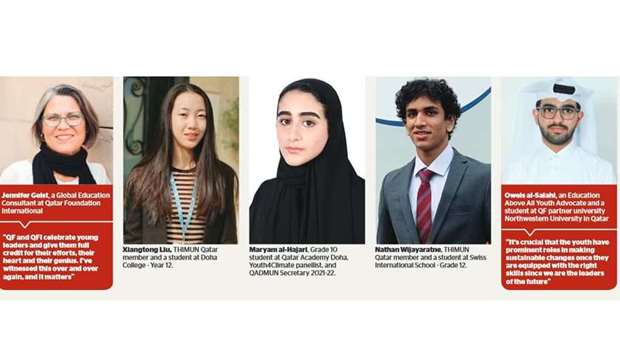
Qatar Foundation continues its efforts to support sustainability, and empowering the voices of youth in conjunction with Qatar’s national vision 2030 in sustaining the development of the country and providing high standards of living for its people. In this context, QF assures to be presented in major global events, enabling its students to thrive in a global environment and contribute to the nation’s development. While QF believes that action is needed in preventing climate crisis; dialogue, education, and the empowerment that comes from that are catalysts for energising and mobilising the youth of every country to lead the charge for climate change This belief is reflected in the opportunities QF provides for youth to be real change makers through engaging them on global conversations; hence giving them a seat and a voice to de-bate climate change issues facing our world and share their perspectives and actions. Furthermore, through its educational programs from school age onward, QF cultivates a sustainable mindset among students that have their eyes open to the need for sustain-ability to be everyone’s responsibility, and to be part of their everyday habits. Qatar Foundation has stressed its commitment to advocate for the role of youth in leading climate action at the “Youth4Climate 2021 Global Conference. Being the only entity in Qatar and the region, QF recently participated in “Youth4Climate: Driving Ambition”, a civil society event that brought together young climate activists from around the world, to create awareness of the need for climate action and support the UN’s Sustainable Development Goals. As a forerunner event to the COP26 summit, QF and its entities including Doha Debates, THIMUN Qatar, Qatar Debates organised over 10 sessions to engage and connect young climate activists to debate ideas and explore how to solve local sustainability challenges. QF’s students along with 400 young climate champions from the 193 member countries of the UN Frame-work Convention on Climate Change came together in Milan from September 28-October 2 and participated in working groups with their peers from around the world and developed concrete proposals that were presented to ministers attending the Pre-COP and COP26 global sustainability summit. By leveraging its own ecosystem to provide forums for youth to lead the conversation on climate change and sustainability on innovative, engaging platforms, QF is playing a prominent role in galvanising a new generation of thinkers and change-drivers to take the lead in ensuring the action needed to face down the greatest challenge of our times materialises.   QGBC and THIMUN Qatar participated in educators’ panel discussion An educators’ panel discussion hosted by THIMUN Qatar, a youth driven program that is part of QF’s Pre-University Education was held on the 1st day of the conference. Panellists stressed that taking an action to fight climate change is everybody’s responsibility not just the leaders. Meshal al-Shammari, Director of Qatar Foundation’s (QF) Qatar Green Building Council, who was speaking during the panel, emphasised that: “Sustainability is beyond solar panels and water usage” “It’s a lifestyle, from eating habits to shopping habits to travelling patterns. If you want to make a difference, commit to something. Maybe take a pledge to reduce paper consumption for one week. For you it’s just one week, but in the larger picture, when a lot of people do this, it makes a big difference. It’s not just the role of the government, but it’s everyone’s responsibility to fight climate change. Climate change will impact each and every single one of us. And thankfully, the younger generation is very aware of this.” al-Shammari said.   Qatar Foundation International hosted a talk that looked at how to connect youth globally to empower them to act locally During the session, panellists shared their journeys in climate change activism and how their roles impact and contribute toward this. Cynthia Bolton, Head of Gifted Edu-cation and Manager of Learning 365 at QF’s Pre-University Education, explained the role of educators in the area of climate change activism. “We support students to explore areas of the world that previously may not been explored in traditional classroom settings – for example, climbing a mountain. In doing this, we are allowing them to explore sustainability and facets of the environment.” Oweis al-Salahi, an Education Above All Youth Advocate and a student at QF partner university Northwestern University in Qatar, believes education is the foundation in knowing how to approach issues, and that educators shouldn’t limit students to certain sub-jects. Everyone, he said, has a passion and a fire inside them, and: “We should let the youth pick what they want. The topic of climate change is linked to behaviour, and once we are aware of our social abilities and consequences, we will make better choices, which will happen from education. “It’s crucial that the youth lead the journey of sustainability, I believe that the youth are the key factors in advocating for a sustainable long-term solutions; every member of the com-munity has a fire within them and a passion to develop their surroundings. It’s crucial that the youth have prominent roles in making sustainable changes once they are equipped with the right skills since we are the leaders of the future,” al-Salahi said. He added: “QF offers numerous opportunities that allow the youth to excel in the field of activism and advocacy. The programmes offered really inspire youth to explore their inner passions and equip young activists with relevant negotiation skills to be able to engage on global issues such as climate change. Education Above All provides an amazing platform for the youth to engage with the SDGs and provides them with the necessary tools to excel in the field of activism by focusing on Goal 4; Education which in my opinion is the foundation to empowering generations so that they can innovate solutions that contribute to world issues such as cli-mate change” A Global Education Consultant at Qatar Foundation International, Jennifer Geist added: “An entire youth conference devoted to amplifying the work of young activists from all over the world sends a sincere message to young people everywhere that their voices, ideas, and leadership is not just wanted, but genuinely needed for real climate action and to reach the 17 Global Goals in the next 8 years. For the last ten years I have watched Qatar Foundation take a leading role in empowering young changemakers; it is evident in the language the organisation uses and the programs they create and support. As an example, Qatar Foundation International (QFI) works through local and international education systems to encourage and sponsor the exchange of ideas amongst both students and educators. We’ve worked with teachers to integrate this dialogue in Arabic language classrooms to cultivate a sense of shared responsibility as well as infinite possibility. Young people who are touched by QFI and QF have not only a sense of hope and agency that they de-serve, but also the language skills and global competencies that will fuel the action we need to cope with climate change. QFI seeks out interdisciplinary curricular projects and collaborations that reveal the diverse perspectives of a variety of stakeholders in the climate crisis. When young people are engaged in this kind of open, inquisitive, collaborative learning, they can innovate beyond the walls of the classroom or the confines of their own limited worldview. And, perhaps most importantly, QF and QFI celebrate young leaders and give them full credit for their efforts, their heart and their genius. I’ve witnessed this over and over again, and it matters”. “Our youth already have so much passion spilling over, new thinking methods that could spread like wildfire if it’s directed in the relevant path. Stu dents today have a very different sense of community because they are living in a digital age. They have access to any information they want, so in this new generation we can see exceptional eco- activists if we as educators are giving our students the chance to engage in open dialogue and meaningful personal development that extends to the classroom and beyond to seek solutions to the various problems of the world.” “Within the framework of THIMUN Qatar, and as a proud QF programme that operates under PUE, we strive our efforts to engage our students in debates and discussions on global is-sues that they will one day face in the real world. THIMUN Qatar’s work is all about empowering the new genera-tion and instilling in them a confidence to take any challenge or issue they will encounter later in their lives”, Fatima El Mahdi, Head of THIMUN Qatar added.   QatarDebate participants at Youth4Climate addressed societal perspectives on the environment During a debating panel titled Transforming Societal Views Towards The Environment, QatarDebate participants addressed societal perspectives on the environment. Moza al-Hajri, a debater from Qatar, explained why she took up veganism, which to her was the single most impactful thing she could do on the personal front to help flight cli-mate change. “When we think about climate change and sustainability, we think about solar energy, plastic waste, car pollution and so forth,” she said. “We never think of the effects of our food choices.” She highlighted that more 70 billion animals are killed for food every year, saying: “This is a huge number, and shows that humans have interfered with breeding”. This means “plant-based options are better, because every single meal matters.” al-Hajri said. Another debater from Qatar, Sara al-Maadeed, a science enthusiast who is engaged in fighting electronic climate waste, raised the point that all industries – whether healthcare, medicine, food, or transport, are based on science, and this means environmentalism is uniquely scientific. “So, the million-dollar question is, how can science fix a problem it creat-ed?” al-Maadeed asked the audience. She pointed out that big polluters,  such as oil and pharmaceutical companies, are not going to suddenly stop operating, and the best way to make them answerable for their contribution to climate change is to legally bind them to environment research, which she said would be a small ask that directly offsets their business activities that affect the climate.   QF’s Doha Debates participated in Youth4Climate session that highlighted how effective communication is invaluable to solve even the most challenging issues including climate change With the aim of equipping young activists with negotiation skills, Doha Debates held a better conversations workshop on the topic of Finding Common Ground: Having Better (Difficult) Conversations, hosted by Govinda Clayton, a Doha Debates Connector, and a Senior Researcher in Peace Processes at ETH Zurich. Clayton explained that promoting sustainability requires solving some of the most complex challenges that the world faces today, which can be achieved “only through good communication and effective negotiations.” The experiential workshop had several exercises where participants were paired to learn to negotiate one on one and then placed in larger groups to negotiate with more people. “There is no right kind of negotiation. Sometimes forceful negotiation works, and sometimes a more empathetic approach works,” Clayton said. THIMUN Qatar students – including students from Qatar Foundation’s Qatar Academy Doha reflected their experience participating in such global prominent event and how that gave them a seat and to share their real-world solutions to real world issues and connect with other young activists. “We are the ones who can make a difference and be the leaders of change!! We have a large network of friends, utilising social media as our powerful tool to have our voices heard really helps. Through THIMUN Qatar, I was able to participate as a delegate in the Kyoto Youth Crime Congress as well as Youth4Climate Conference, which empowered me and nurtured my negotiation skills to communicate my climate change framework and initiatives to a wider audience. My participation at the Youth4 Climate Conference gave me a golden opportunity to connect with other youth influential activists, and understand their efforts through a global sustainability lens”, said Nathan Wijayaratne, THIMUN Qatar member and a student at Swiss International School - Grade 12. “To be real change makers and advocates of climate action, youth should be given a seat at the table and be heard. Participating in an event like #Youth4Climate give us a voice to speak and debate with other youth to exchange of ideas on climate change. Such events clearly boosted our confidence and galvanised our interest to take the lead in taking the action needed to face down the greatest challenge of our times such as climate change. At QF schools, sustainability is an integral part of our curriculum. I am actually part of my schools eco club as well as the MUN club; and they both complement each other re-ally well. Through the eco-club, which comes out of the QGBC’s eco school programme, we work with students across the school to reuse recycle and use less waste for a better sustainable environment”, said Maryam al-Hajari, Grade 10 student at Qatar Academy Doha, Youth4Climate panellist, and QADMUN Secretary 2021-22. “At Youth4Climate Conference, I was given the golden chance to meet young activists from all over the world who are all fighting the same issues while showcasing their environment-focused projects. I should say that being MUN member taught me communication and collaboration skills, to go beyond debating and public speaking”, said Xiangtong Liu – THIMUN Qatar member and a student at Doha College - Year 12

Qatar's delegation to the summit was headed by HE the Minister of Transport and Communications Jassim bin Saif al-Sulaiti.
Qatar

Qatar attends OIC summit on science and technology

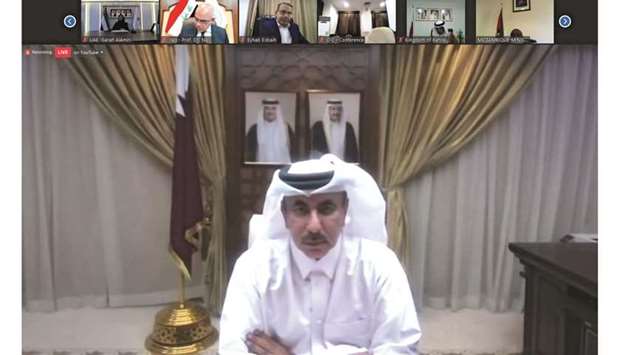
Qatar participated in the work of the second Organisation of Islamic Co-operation (OIC) Summit on Science and Technology, which was held Wednesday via video conference technology, under the title 'Science, Technology and Innovation: Opening New Horizons'. Qatar's delegation to the summit was headed by HE the Minister of Transport and Communications Jassim bin Saif al-Sulaiti. During the summit, chaired by the United Arab Emirates, the implementation of the OIC Science, Technology and Innovation Programme 2026 was reviewed and the organisation's commitment to take all necessary measures to create and activate an environment conducive to achieving progress in the field of science, technology and innovation in the OIC member states, in addition to emphasising the practice of the best ideas, solutions, plans, policies and innovations that motivate the OIC countries to overcome the challenges posed by the repercussions of the coronavirus pandemic, and to pursue a development path that brings benefit to all. During the speeches of the heads of delegations to the summit, HE al-Sulaiti extended his thanks and appreciation to Kazakhstan for hosting the first science and technology summit and its efforts over the past years. He also thanked the UAE for taking over the presidency of the second session of the summit. He indicated that the exceptional circumstances imposed by the repercussions of the coronavirus pandemic require more co-operation to come up with the best ideas, solutions, plans, policies and innovations that motivate the OIC countries to overcome challenges and adopt a development process that benefits everyone, in addition to taking all appropriate measures to create and activate an environment conducive to achieving progress in the field of science, technology and innovation in the member states of the organisation. He stressed that Qatar has spared no effort to enhance the rapid response to face the repercussions of the pandemic and has provided medical assistance to many countries of the world, in addition to financial contributions to multilateral health care institutions working in the development of vaccines to ensure the efficiency of health care, especially in the least developed countries, in addition to the many international contributions of Qatar in supporting the issues of poverty eradication, the environment, the provision of education for all, and climate change. He added that based on this principle, Qatar supports all initiatives that enhance the joint work of the OIC in addressing the pandemic, as well as its support for all aspects that enhance the fields of science, technology and innovation in a manner that ensures the advancement of social and economic development of member states and enhances Islamic solidarity and co-operation in various fields.    

Gulf Times
Opinion

A global call to action at Rio+20

By Jeffrey Sachs/New York A clown posing next to a fake tank covered with bread, by German artist Holger Gussefeld, on display to protest against the weapon market, in the Santa Marta shantytown in Rio de Janeiro, on the sidelines of the UN Conference on Sustainable Development, Rio+20 One of the world’s pre-eminent scientific publications, Nature, has just issued a scathing report card in advance of the current  Rio+20 summit on sustainable development. The grades for implementation of the three great treaties signed at the first Rio Earth Summit in 1992 were as follows: Climate Change – F; Biological Diversity – F; and Combating Desertification – F. Can humanity still avoid getting itself expelled? We have known for at least a generation that the world needs a course correction. Instead of powering the world economy with fossil fuels, we need to mobilise much greater use of low-carbon alternatives such as wind, solar and geothermal power. Instead of hunting, fishing, and clearing land without regard for the impact on other species, we need to pace our agricultural production, fishing and logging in line with the environment’s carrying capacity. Instead of leaving the world’s most vulnerable people without access to family planning, education and basic healthcare, we need to end extreme poverty and reduce the soaring fertility rates that persist in the poorest parts of the world. In short, we need to recognise that with 7bn people today, and 9bn by mid-century, all inter-connected in a high-tech, energy-intensive global economy, our collective capacity to destroy the planet’s life-support systems is unprecedented. Yet the consequences of our individual actions are typically so far removed from our daily awareness that we can go right over the cliff without even knowing it. When we power our computers and lights, we are unaware of the carbon emissions that result. When we eat our meals, we are unaware of the deforestation that has resulted from unsustainable farming. And when billions of our actions combine to create famines and floods halfway around the world, afflicting the poorest people in drought-prone Mali and Kenya, few of us are even dimly aware of the dangerous snares of global interconnectedness. Twenty years ago, the world tried to address these realities through treaties and international law. The agreements that emerged in 1992 at the first Rio summit were good ones: thoughtful, far-sighted, public-spirited, and focused on global priorities. Yet they have not saved us. Those treaties lived in the shadow of our daily politics, imaginations, and media cycles.  Diplomats trudged off to conferences year after year to implement them, but the main results were neglect, delay, and bickering over legalities. Twenty years on, we have only three failing grades to show for our efforts. Is there a different way? The path through international law engages lawyers and diplomats, but not the engineers, scientists, and community leaders on the front lines of sustainable development. It is littered with technical arcana about monitoring, binding obligations, annex-I and non-annex-I countries and thousands of other legalisms, but has failed to give humanity the language to discuss our own survival. We have thousands of documents but a failure to speak plainly to one other. Do we want to save ourselves and our children? Why didn’t we say so? At Rio+20 we will have to say so, clearly, decisively, and in a way that leads to problem-solving and action, not to bickering and defensiveness. Since politicians follow public opinion rather than lead it, it must be the public itself that demands its own survival, not elected officials who are somehow supposed to save us despite ourselves. There are few heroes in politics; waiting for the politicians would be to wait too long. The most important outcome in Rio, therefore, will not be a new treaty, binding clause, or political commitment. It will be a global call to action. Around the world, the cry is rising to put sustainable development at the centre of global thinking and action, especially to help young people to solve the triple-bottom-line challenge – economic well-being, environmental sustainability, and social inclusion – that will define their era. Rio+20 can help them to do it. Rather than a new treaty, let us adopt at Rio+20 a set of Sustainable Development Goals, or SDGs, that will inspire a generation to act. Just as the Millennium Development Goals opened our eyes to extreme poverty and promoted unprecedented global action to fight Aids, tuberculosis, and malaria, the SDGs can open the eyes of today’s youth to climate change, biodiversity loss, and the disasters of desertification. We can still make good on the three Rio treaties, by putting people at the forefront of the effort. SDGs to end extreme poverty; decarbonise the energy system; slow population growth; promote sustainable food supplies; protect the oceans, forests, and drylands; and redress the inequalities of our time can galvanise a generation’s worth of problem-solving.  Engineers and technology wizards from Silicon Valley to Sao Paolo to Bangalore to Shanghai have world-saving ideas up their sleeves. Universities around the world are home to legions of students and faculty intent on solving practical problems in their communities and countries. Businesses, at least the good ones, know that they can’t flourish and motivate their workers and consumers unless they are part of the solution. The world is poised to act. Rio+20 can help to unleash a generation of action. There is still time, just barely, to turn the F’s to A’s, and to pass humanity’s ultimate test. - Project Syndicate l Jeffrey D Sachs is Professor of economics and director of the Earth Institute at Columbia University. He is also special adviser to United Nations secretary-general on the Millennium Development Goals.

Gulf Times
Qatar

Global leaders, experts attend EAA event on education at G20 Summit

Education Above All (EAA) Foundation, the OECD Network of Foundations Working for Development (netFWD), and Fundacao Getulio Vargas’ Division for the Development of Public Management and Educational Policies (FGV-DGPE) co-hosted a high-level event, 'Catalysing Change: Education’s Role in Building a Just and Sustainable Future,' during the G20 Leaders’ Summit in Rio de Janeiro.The event highlighted the essential role of education in addressing climate change and advancing equality, aligning with Brazil’s G20 Presidency theme, 'Building a Just World and a Sustainable Planet,' a statement said.The event brought together global leaders, educators, climate and health experts, and youth advocates to explore how education can drive resilience, equity, and sustainability across global agendas. The two-part event fostered meaningful dialogue and actionable insights on the transformative power of education.A high-level breakfast featured opening remarks from global leaders, emphasising the connection between education, climate, and health as foundational pillars for a resilient and equitable future. Following the opening, a round-table discussion focused on integrating education into climate and health policies to effectively address today’s most pressing challenges.During a technical session, panel discussions and workshops explored topics such as innovative financing for education, climate-resilient learning, the role of foundations in sustainable development, and youth-driven advocacy for systemic reform. They highlighted strategies to incorporate education into climate adaptation efforts and public health preparedness, reinforcing its central role in addressing global inequalities.Mohamed al-Kubaisi, acting CEO of Education Above All Foundation, said: “To achieve sustainable development goals and ensure equitable access to quality education, we must prioritise innovative financing solutions and collaborative approaches. EAA has provided educational opportunities to over 19mn out of schoolchildren and youth across 60 countries, leveraging nearly $3bn in co-funding through strategic partnerships. Closing the gap faced by over 260mn children and youth worldwide without access to education is critical for building a resilient, sustainable future.”Henrique Paim, director of the Public Management and Educational Policy Development Division at Fundacao Getulio Vargas, stated that education is a cornerstone in addressing persistent social, environmental, economic, cultural, and ethical challenges. To achieve this, he emphasised the need to develop and strengthen pedagogical practices that are forward-looking and adaptable to today’s rapidly evolving, innovation-driven landscape.Federico Bonaglia, deputy director of the OECD Development Centre, underscored the importance of addressing today’s global challenges and calls for a more inclusive multilateral system that amplifies voices from the Global South and inclusive partnerships that engage a diverse spectrum of actors, including philanthropy.

HE Buthaina bint Ali al-Jabr al-Nuaimi speaking at the event. PICTURE: Thajudheen
Qatar

Minister calls for addressing new challenges in education

Learning losses resulting from Covid-19 pandemic and sustainable development goals seek global attention     HE the Minister of Education and Higher Education Buthaina bint Ali al-Jabr al-Nuaimi, said that despite the progress made by Qatar in basic and higher education, and the recent reforms and commitments it made to improve learning processes and outcomes, "we must now, in light of the recent challenges that education faced in Qatar and the rest of the world, to move towards reviewing our plans and policies to discuss ways of transforming education in order to achieve the goals of the 4th goal of sustainable development and the comprehensiveness and quality of education, and to consider what should be changed, what should be strengthened, and what should be developed." This came in a speech delivered by HE the minister at the opening of the national consultative meeting for Qatar in preparation for the Education Transformation Summit, which was organised by Qatar National Commission for Education, Culture and Science and Education Above All Foundation, over two days, in partnership with the United Nations Educational, Scientific and Cultural Organization (Unesco) and the United Nations Children's Fund (Unicef). Holding the aforementioned summit comes in recognition that education is a human right and a basis for peace and sustainable development, and seeks to renew the global commitment to education as a priority public good, in addition to mobilising ambition and solidarity for joint action and finding solutions towards forming a new concept of education, as well as its goal of accelerating efforts to recover from learning losses resulting from the Covid-19 pandemic and revitalise efforts to achieve the 4th goal of the sustainable development related to education and its quality, and better prepare societies for the future. The opening event was also attended by HE the Deputy Speaker of the Shura Council Dr Hamda bint Hassan al-Sulaiti and other dignitaries and officials. A pre-summit conference to prepare for it is scheduled to be held in the French capital, Paris, on June 29-30. HE the minister reviewed the task of the consultative meeting to identify priority areas to achieve the transformation in education, including transformational measures to enroll all children in schools, ensure their acquisition of reading, writing and arithmetic skills, and appropriate psychological and social skills, and pay attention to the needs of the most marginalised groups, including children with disabilities and discussing how to enhance the capabilities of teachers, and providing them with the necessary tools and capabilities to enable them to teach according to the highest quality standards, whether in Arabic or any of the many other languages used in teaching in Qatar. HE the minister noted that the objectives of the consultative meeting include supporting the achievement of the goal of the Education Transformation Summit, which aims to develop a common vision, achieve international commitment, harmonise the measures to be taken at all levels to transform education from now until 2030, and identify and document the experiences of Qatar in a comprehensive way with regard to the great achievements, the mission, good practices, and important drivers of education transformation, and building on them for a better future. She said that the national consultative meeting brings together more than 50 stakeholders under one roof, to discuss the urgent measures needed "to recover and transform our education system in ways that restore hope to an entire generation of children and youth whose future may be challenged, especially in the context of the Coronavirus pandemic. The most important objectives of the national consultations revolve around the exchange of innovative ideas and strategic plans, to develop a common vision in developing the field of education for Qatar in a manner that suits the 21st century, from now until 2030 and beyond, and to work on designing appropriate programs to raise the level of educational outputs, and to improve educational systems to ensure comprehensive foundations that help achieve Qatar National Vision 2030. HE the minister explained that to this end, and in preparation for the preparatory meeting in Paris, and for the Education Transformation Summit itself, Qatar held a regional consultative meeting with ministers of education, and with development partners, including representatives of Unesco and Unicef, and representatives from West Asia last May, to help identify the perspectives of countries and partners in the region, in particular on three central and fundamental questions in education transformation. The Ministry of Education and Higher Education participated in the plenary session of the consultative meeting entitled 'Education Transformation in Qatar', and was represented by the Director of Educational Policies and Research Department Dr Nouf al-Kaabi. The ministry's participation aimed at defining the role of education in the trend towards forming a common future that contributes to the transformation of education, reviewing practices and concepts, and looking forward to setting effective goals for 2030 and beyond, while providing some examples and solutions to achieve this goal. Dr al-Kaabi pointed out that the Coronavirus pandemic has significantly increased absenteeism and dropout rates, not to mention the challenges faced by the most vulnerable students such as speakers of a non-native language, students with disabilities, and students from economically disadvantaged families. It also affected the economies of countries, marginalized entities and low-income families. She cautioned that there are many practices and misconceptions that we must abandon immediately, including the idea that learning takes place only in the classroom, and that in this context, we must look at some successful models and focus on development and research, and work on recovery from the pandemic, bridging the gender gap and promoting technology in the classroom, and called for putting the human element at the core of work. The ministry also participated in the session concerned with raising the ambition of national education goals and standards with several other parties participating in the meeting, with the aim of identifying the revisions -- based on lessons learned -- that must be made regarding the goals and standards of national education, to highlight a higher level of ambition required to recover from the pandemic crisis. and accelerating progress towards achieving the fourth goal of the sustainable development goals on quality education. It is scheduled to prepare a report on the outputs and desired outcomes of the consultative meeting, on the commitments of Qatar in the field of education transformation, to be presented and discussed at the ministerial preparatory meeting for the summit in Paris at the end of June, to enrich in this regard the report of the summit to be prepared by the Secretary-General of the United Nations, which in turn will feed the work of the high-level steering committee for the fourth goal of sustainable development goals. The results will also be at the heart of preparations for the 2023 high-level political forum under the auspices of the United Nations General, and the proposed United Nations Summit for the future, as well as obtaining a comprehensive national document of important achievements, good practices and motivation for education transformation, achieving balance and compatibility with the requirements of the labour market. (QNA)    

HH the Amir speaking at the forum.
Qatar

Amir patronises opening of 6th Summit of Gas Exporting Countries Forum

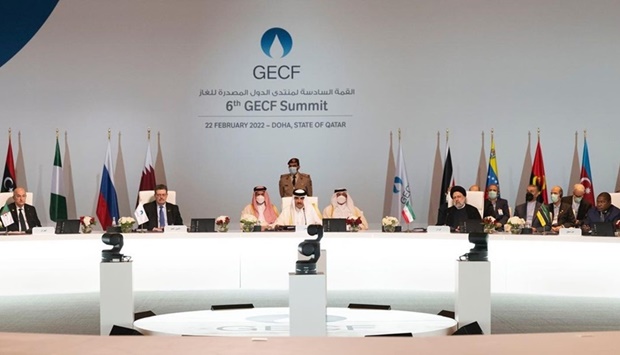
HH the Amir Sheikh Tamim bin Hamad Al-Thani patronised the opening of the 6th Summit of the Gas Exporting Countries Forum (GECF), which is held under the title "Natural Gas: Shaping the Energy Future", at Doha Sheraton Hotel on Tuesday morning. The opening was attended by President of the People's Democratic Republic of Algeria Abdelmadjid Tebboune, President of the Islamic Republic of Iran Ebrahim Raisi, President of the Republic of Mozambique Filipe Nyusi, President of the Republic of Equatorial Guinea Teodoro Obiang Nguema Mbasogo, Head of the Government of National Unity of the State of Libya Abdul Hamid Mohammed Al Dbeiba, Prime Minister of Trinidad and Tobago Dr. Keith Rowley, and a number of ministers and heads of delegations of brotherly and friendly countries. It was also attended by a number of ministers, heads of diplomatic missions accredited to the state, senior officials, businessmen, decision makers in the field of economy and energy, representatives of international institutions and companies and guests of the summit. HH the Amir delivered a speech on this occasion. Following is an unofficial translation of HH the Amir's speech at the Opening of the Sixth Summit of the Heads of State and Government Members of the Gas Exporting Countries Forum (GECF) In the Name of God, the Most Gracious, the Most Merciful Your Excellencies, Heads and Members of Delegations, Our Distinguished Guests, Members of Delegations of the Observer States,   At the opening of the Sixth Summit of Heads of State and Government of the Gas Exporting Countries Forum, it is my pleasure to welcome you to Qatar, praying to God that our deliberations be culminated in success. Our summit is being convened today amidst the challenges that have been posed by the Corona Virus pandemic for more than two years, leaving its imprint on various aspects of human life around the world. While we are all working to confront this unprecedented crisis, it has become clear that resilience and international cooperation are still important factors in transforming challenges into opportunities, and in the transition to a new normal situation that ensures the continuation of growth and prosperity that everyone seeks to achieve. This pandemic has constituted a supportive factor for renewing the global dialogue on the challenges facing humanity as a whole, namely the climate change and the transition to low carbon energy. This dialogue provided an opportunity to highlight the pivotal role of natural gas in the desired energy transformation, and in the search for a reliable source of energy that provides the right balance between achieving economic growth and dealing with environmental challenges, in addition to the valuable opportunities it offers towards economic recovery in the post-coronavirus pandemic era. Honourable Audience, Ladies and gentlemen, Over the past two decades, the world has witnessed a major change in the energy chart, where the natural gas has occupied a large space, for several reasons, including that it is the least harmful energy source to the environment among other fossil energy sources. Natural gas has been able to occupy increasing spaces in the energy basket in many countries. The Gas Exporting Countries Forum has played a major role in enhancing the contribution of natural gas to supporting economies and facing environmental challenges, which also contributes to achieving sustainable development goals. In this regard, we appreciate the joint efforts of all member states which have worked to provide reliable natural gas supplies to global markets, and maintained the stability of the markets. The transition to low-carbon energy is not only relevant to producers, but is also closely related to end-users whose consumption behaviours determine the extent of the effectiveness and success of this transition. The transformation efforts must follow a balanced approach that takes into account human and economic development requirements in developing countries and poor societies, where nearly one billion people are deprived of electricity and fuel, the two basic sources required for a decent life for human beings. Investing in the ways and means of scientific and technological advances to capture and sequester carbon and reduce methane emissions is an essential component of a successful clean energy transition, and in enhancing the qualitative value that natural gas provides to users around the world, and keeping the global energy economy on a sustainable path. The State of Qatar has confirmed on many occasions its commitment to support the transition to low carbon energy through working to remove more carbon from the gas production chain, as the largest ever carbon capture and sequestration facility in the Middle East and North Africa (MENA) region was commissioned several years ago with an annual capacity of up to 2.5 million tons of carbon dioxide equivalent annually. This capacity will reach about 9 million tons by 2030. To enhance our role in the natural gas industry, we are working to develop and increase our production capacity of liquefied natural gas from 77 million tons per year currently to 126 million tons per year by 2027, through the North Field production expansion projects, which include huge investments in eco-friendly technologies, namely an integrated system for capturing and injecting carbon dioxide, which, when fully operational, will become the largest of its kind in the LNG industry. Solar energy will be relied upon to generate part of the electricity required for this project. Honourable Audience, Ladies and gentlemen, The achievements of the Forum during this short period since its inception cant be ignored. They contribute day after day to achieving its goals and enhancing its collective vision and mission. Our summit comes today to confirm the basics through which our Forum works to promote the role of natural gas and its contribution to supporting economic development, social progress and environmental protection. Our summit also emphasizes the importance of ensuring the security and stability of the supplies and the demand, and the existence of transparent and non-discriminatory legal frameworks that guarantee the interests of the member states of the Forum, in addition to adopting fair policies in the fields of energy and environment in gas consuming countries. The importance of highlighting the crucial position of natural gas must be emphasized here as a primary energy source that we greatly need to manage the irregular nature of renewable energy resources and to compensate for daily and seasonal demand fluctuations. The State of Qatar will continue to support the efforts to protect the interests of the gas exporters, and to preserve the interests of the consumers, and to affirm the full and permanent sovereign rights of the member states to develop and exploit their natural resources. We will remain committed to enhancing the role of natural gas in the transition to low-carbon economies, and working alongside all our partners to achieve sustainable growth in the gas industry and meet the growing demand for this important source of energy. We will also seek to encourage investments and develop infrastructure and member states' capabilities to respond to natural disasters and accidents. We renew our call for strengthening dialogue and cooperation between the member states on the one hand, and between the exporters and importers on the other hand, to ensure the security of natural gas supplies and the stability of the global gas markets. In conclusion, I would like to congratulate His Excellency Eng. Mohamed Hamel, Secretary-General of the Gas Exporting Countries Forum, on assuming his new tasks and to commend the valuable efforts of the General-Secretariat over the past years under the leadership of His Excellency the former Secretary General, Dr. Yury Sentyurin. I reiterate my welcome to you, and I wish the deliberations of this summit every success. May peace, mercy and blessings of God be upon you.

..
Community

Qatar-based activist to attend first UN Youth Climate Summit tomorrow

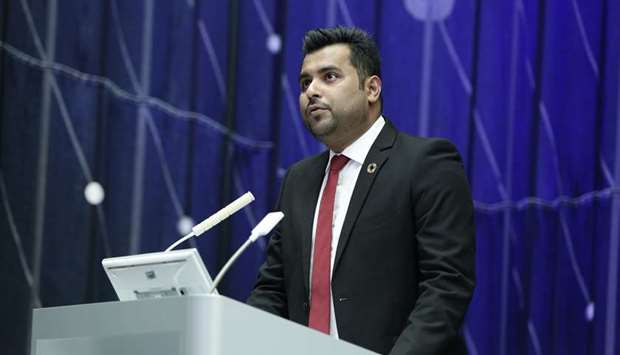
Climate change has become a hot topic with planet Earth getting hotter. Experts believe that a lot needs to be done to first slow down global warming and then to undo the impacts of the damage caused by humans to the environement. While awareness is key in such a campaign, we all have to do our parts on micro and macro levels. Therefore, more and more young people are taking it upon themselves to create awareness of the severity of the issue and analyse the volume of work that needs to be done. The first ever United Nations Youth Climate Summit is going to be held in New York on September 21 (tomorrow). As many as 500 selected young leaders, working for the cause of climate change, have been invited to the one-day-long summit to discuss the issue at length and to come up with practical solutions.  Qatar will not be unrepresented at the UN summit. Neeshad Shafi, a Doha-based Indian expatriate, will attend the event for Qatar. He is the executive director of Arab Youth Climate Movement Qatar and curator of Global Shapers’ Doha Hub. He has quickly established himself as a climate change advocate in Qatar raising awareness among the youth by means of organising seminars, workshops and lectures. He has invited different local and international expert speakers for the lectures called Earth Talks. The climate advocate, highlighting the summit’s significance, said: “The UN Youth Climate Summit is a platform for young leaders who are driving climate action to showcase their solutions at the United Nations, and to meaningfully engage with decision-makers on the defining issue of our time. “This historic event will take place at the United Nations Headquarters in New York, as part of a weekend of events leading up to the UN secretary-general’s Climate Action Summit on September 23.” Sharing further details, Neeshad said: “The Youth Climate Summit will feature a full-day of programming that brings together young activists, innovators, entrepreneurs, and change-makers who are committed to combating climate change at the pace and scale needed to meet the challenge. It will be action oriented, intergenerational, and inclusive, with equal representation of young leaders from all walks of life.” The enthusiastic young leader further said: “Over 7,000 young people between the ages of 18 to 30 applied to attend the Youth Climate Summit. I was one of 500 young people from around the world selected to attend the summit after demonstrating their commitment to addressing the climate crisis and displaying leadership in advancing solutions.” Highlighting the youth summit, Neeshad quoted Luis Alfonso de Alba, Special Envoy for the 2019 Climate Action Summit, and said: “Youth are showing us the way on climate action. I am eager for young climate leaders from all over the world to take their rightful place on the global stage and participate in this historic moment.” “I feel proud that I was selected based on my immense work with the Global Shapers’ Doha hub and as well as for my initiative of Arab Youth Climate Movement Qatar. I will be able to give young people – (especially from Arab World) a voice at the gathering, where youth from across the world would converge for the issue of our existence.” When asked to explain what he has been doing in Qatar so far, Neeshad said: “Ever since I move to Qatar some five years ago, I have been known to be an climate change activist, educator, speaker and a social change advocate for my extensive campaigns to raise the awareness about climate change and sustainable development goals both offline and online channels of communications. “I hold a master’s degree in Environmental Engineering. Over the years, I gained extensive experience in analysing global environmental and climate politics, with a special focus on the Middle East. Further, this leads me to be a part of several global environmental youth groups and have contributed to international summits related to climate policy and youth’s role in development. Since 2015, I have been actively part of the UNFCCC climate negotiation process.”

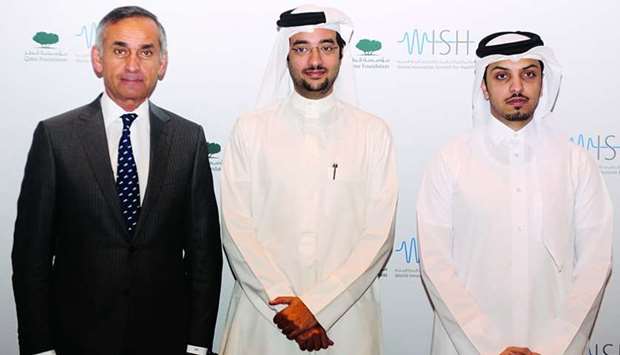
Prof the Lord Darzi of Denham, Omran Hamad al-Kuwari and Khalifa al-Kubaisi at the press conference. PICTURE: Shemeer Rasheed
Qatar

WISH 2018 conference in November

The World Innovation Summit for Health (WISH) an initiative of Qatar Foundation for Education, Science and Community Development (QF), will hold its 2018 conference at the Qatar National Convention Centre on November 13–14. The announcement was made by Prof the Lord Darzi of Denham, executive chair of WISH at a press conference on Monday at QF headquarters. Omran Hamad al-Kuwari, executive director, CEO Office, QF; and Khalifa al-Kubaisi, head of Press Office, QF, were also present on the occasion. “WISH is making a great positive impact on several healthcare systems across the world. Many of the WISH research reports have been presented in several countries and some of the recommendations in these reports have had significant impacts on a number of healthcare systems across the globe", said Lord Darzi. “When, back in 2012, Her Highness Sheikha Moza bint Nasser, chairperson of Qatar Foundation, announced her intention to create WISH, she offered global healthcare leaders an exciting opportunity to come to Qatar and use WISH as a base from which to capture and disseminate the best new evidence-based, healthcare-focused ideas,” he continued. For the fourth time, WISH, will convene its meeting of global leaders, policy-makers, and innovators in healthcare, charging them with exploring new ways to build a healthier world through collaborative efforts and the sharing of novel ideas. The biennial summit will feature keynote speakers drawn from both inside and outside the healthcare sector. Lord Darzi also announced that applications are open for the WISH 2018 Innovation Showcase competition – a competition that offers entrepreneurs and healthcare innovators from around the world an opportunity to display their innovative projects or products at next year’s summit. Successful applicants , not less than 20, will be invited to Doha to be part of an Innovation Showcase gallery that will run alongside the main summit. WISH 2018 will also see the inauguration of ‘The WISH Hub’, which will provide interactive demonstrations in health-related technologies – such as robotic devices, artificial intelligence, and virtual reality – and will offer a place for summit attendees to network, take part in informal group discussion sessions, and meet the authors of WISH’s latest reports. Al-Kuwari said, “Qatar Foundation is dedicated to making Qatar a leading global centre for excellence and innovation. We seek to foster collaboration across our mission areas, and WISH is a prime example of our approach in creating multi-disciplinary synergies in research and development.” WISH 2018 will focus on nine topics that highlight and address some of the world’s most pressing healthcare challenges. Groups of experts from around the world will work together to build evidence-based research on the topics in the months leading up to the summit. They will present their findings in a series of reports that will be published prior to the summit and explored during panel discussions at WISH 2018. The topics will be announced over the coming months and will focus on a range of medical, social, humanitarian, and policy-driven areas.

Gulf Times
Qatar

More than 2,000 delegates to attend WISE confabulations

About 2,000 participants from 100 countries are expected to attend the eighth summit of the World Innovation Summit for Education (WISE), a global initiative of Qatar Foundation (QF), in Doha on November 14-16. The biennial summit, a premier international gathering on the future of education, will attract some of the world’s most creative leaders in the fields of education, technology, social entrepreneurship, global development, media, and philanthropy. The theme of the 2017 summit, ‘Co-Exist, Co-Create: Learning to Live and Work Together,’ is designed to spark debate around education challenges in times of global disruption and economic uncertainty.  Central to these discussions will be the role of education in a post-truth world, with sessions focusing on media literacy, artificial intelligence and virtual reality, social entrepreneurship, design thinking and direction for best education choices, among others. Among some of the 100 confirmed speakers and moderators include: Prof Sebastien Thrun, chairman and co-founder of Udacity, innovator, edu-preneuer, and founder of Google X Labs (US);  Fareed Zakaria, writer and columnist, CNN host (US); Dr Amel Karboul, commissioner,  International Commission on Financing Global Education Opportunity (Tunisia);  Wendy Kopp, CEO and co-founder, Teach for All (US);  Michael Barber, founder and chairman of Delivery Associates (UK);  Noella Coursaris Musunka, founder, Malaika (Democratic Republic of Congo); Prof  Kishore Mahbubani, dean, Lee Kuan Yew School of Public Policy of the National University (Singapore); Sarah Borgman, director and curator, Skoll World Forum (US); Vivian Onano, youth leader and advocate, Women Deliver (Kenya) and  Samir Saran, vice president of the Observer Research Foundation, New Delhi (India). A highlight of the programme will be the announcement of the 2017 WISE Prize for Education Laureate. The WISE Prize for Education is the first distinction of its kind to recognise an individual or a team of up to six people for an outstanding, world-class contribution to education. Her Highness Sheikha Moza bint Nasser, chairperson of QF, will present the WISE Prize for Education gold medal and $500,000 to the laureate during the opening plenary session on November 15. The 2017 WISE conference provides an opportunity to meet the people behind pioneering international projects championed by WISE initiatives all year round. These include the WISE Awards for proven, high-impact education solutions; the WISE Accelerator programme, which supports promising edtech projects in education; the WISE Learners’ Voice, a mentorship programme for young leaders in education and the WISE Research series of reports, authored by experts with leading international institutions. Participants will also attend hands-on workshops run by organisations including LEGO, working jointly with Ashoka; IDEO; the Organisation of Economic Co-operation and Development; the Brookings Institution; Meetpro, China; and the National Education Opportunities Network, UK. There will also be an interactive lab for adults and children run by C2 (Montreal), questioning participants on their vision for the future of education. The outcomes will serve as guidance to policy-makers. Twelve to 14-year-old students from Qatar’s schools will also take part in four experiential learning labs aimed at fostering fun and collaborative learning, run by the Little Engineer, Lebanon; Cultural Infusion, Australia; ibTECHar, Qatar; and the Supreme Committee for Delivery & Legacy (Qatar).

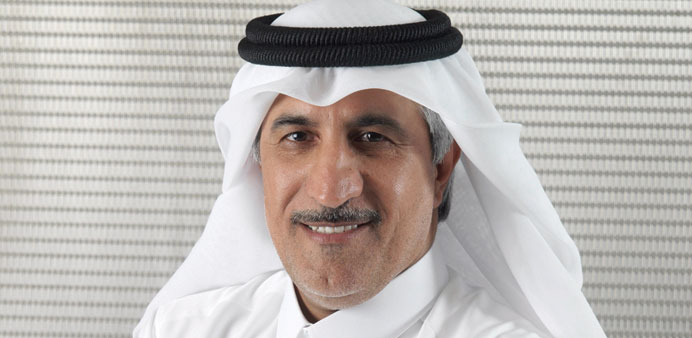
Ooredoo chairman HE Sheikh Abdullah bin Mohamed bin Saud al-Thani.
Qatar

Ooredoo chairman to lead youth summit delegation

Ooredoo and a delegation of young people from the Mena region and Southeast Asia will participate in the Global Youth Summit: BYND 2015 in Costa Rica from September 9 to 11. Led by chairman HE Sheikh Abdullah bin Mohamed bin Saud al-Thani, Ooredoo will bring together a young delegation from across its global footprint to represent the achievements and aspirations of the next generation at the international event. The summit is being held by International Telecommunications Union, an agency of the United Nations. It will serve as a platform for young people to be included in the 21st century’s most important decisions.Ooredoo is bringing its experience of empowering youngsters and supporting youth employment to the event. “Ooredoo is a founding partner of the Global Youth Summit as we believe that supporting the needs and aspirations of the next generation is an essential duty of communications companies. The ideas and recommendations of the event will make a major contribution to human growth and development in the coming years,” said HE Sheikh Abdullah.The delegation includes young developers, innovators and engineers, as well as aspiring leaders from a diverse range of communities. It also includes people who have made an impact on their community and who have ideas on how to change their world for the better using ICTs.In total, the delegation has gathered 27 youngsters from Qatar, Kuwait, Oman, Iraq, Indonesia, Algeria, Tunisia as well as Yemen and Palestine.The youth delegation from Qatar will include Qatari nationals Hassan Ali al-Mulla and Asma Jaber al-Haram, both of whom were sponsored by Ooredoo through university and are now working in the company. They will be joined by eight talented young Qatari nationals hosted by ictQATAR.The event, held under the theme BYND 2015, will be attended by 500 young delegates from around the world, along with a number of “summit elders”. Discussion of the event will develop into a global conversation via a vast social media network. In the build-up to 2015, which is the deadline for member-states of the United Nations to achieve their Millennium Development Goals, global leaders will need to review their progress on the same and devise new goals.Throughout the Middle East, North Africa and Southeast Asia, Ooredoo has been a leader in mobile development in support of human growth, including in the fields of women’s empowerment, education, healthcare and employment and entrepreneurial opportunities for young people.One of the most prominent examples of Ooredoo empowering youth has been in Tunisia, which has a youth unemployment rate of 30%. In response, Tunisiana - which is a part of Ooredoo - launched in April 2013 the Najja7ni Employment mobile service in partnership with Silatech.Najja7ni Employment provides career guidance, financial literacy, career search strategies, links to local training opportunities and tips on how to start a business. The response – with more than 300,000 customers signing up for the service in the first month – is indicative of the urgent demand for mobile services in this area.In a few weeks, Ooredoo will announce key findings from a major research project on how the youth use technology across the Middle East and Asia, with a view to understanding the needs and aspirations of the next generation. Ooredoo expects the key findings to influence both corporate and government policy decisions around the world as they reach out to a growing tech-savvy youth population.