Search - World Summit for Social Development

Friday, October 16, 2026 | Daily Newspaper published by GPPC Doha, Qatar.

Search Results for "World Summit for Social Development" (360 articles)

All words
Gulf Times
Qatar

MSDF inks agreement with IDA to promote disability rights

The Ministry of Social Development and Family (MSDF) on Monday signed a memorandum of understanding (MoU) with the International Disability Alliance (IDA). The MoU aims to enhance collaboration in the field of supporting and empowering persons with disabilities.The signing took place on the margins of the preparatory events for the Global Disability Summit 2028, held at Multaqa (Education City Student Center) of Qatar Foundation, under the theme: from commitments to change: the journey toward Doha. HE Minister of Social Development and Family Buthaina bint Ali al-Jabr al-Nuaimi said the signing of the MoU comes as part of the State of Qatar's enduring commitment to advancing the rights of persons with disabilities and enabling their full participation across all spheres of life.The memorandum intends to support persons with disabilities, hone their skills, and safeguard their dignity and autonomy, in addition to strengthening programs and initiatives that foster their access to employment opportunities, healthcare, and community participation, al-Nuaimi highlighted.Al-Nuaimi explained that the move aligns with the MSDF's vision of building an inclusive society founded on dynamic national and international partnerships.She announced that the State of Qatar will host the fourth Global Disability Summit 2028 in Doha, noting that this hosting will build upon the achievements realized through cooperation with regional and global partners. For his part, President of IDA and President of the Arab Organization of Persons with Disabilities (AOPD), Dr Nawaf Kabbara, affirmed that this partnership represents a phenomenal model of international cooperation that can contribute to advancing the rights and empowerment of persons with disabilities worldwide.He commended the leading role assumed by Qatar in this domain, noting that his visits to several institutions concerned with persons with disabilities in Qatar revealed advanced experiences and exemplary practices that reaffirm the nation's steadfast commitment to promoting inclusion and meaningful participation of this group, emphasizing that Qatar has emerged as a regional and global role model.He added that the national efforts in Qatar embody dynamic leadership and a genuine desire to ensure that persons with disabilities are partners in development and prosperity, noting that this approach serves as an inspiring model for many countries and international organizations.Dr. Kabbara, in his capacity as President of AOPD, touted the progress materialized across the Arab region in empowering persons with disabilities, emphasizing that such strides reinforce the prospects for achieving inclusive and sustainable development on both the national and regional stages.The program of the event, which brought together international and regional officials and experts, featured a series of panel discussions and specialized workshops, most notably a session on global horizons: from Berlin to Amman 2025, a session on innovation in inclusion, and a workshop on the invisible majority: bridging the disability data gap. The program also included specialized workshops titled: from disability to participation and integrating children with disabilities, organized in collaboration with the World Health Organization (WHO) and the Unicef program.

Katherine Maher talks about the Web Summit Qatar 2024. PICTURE: Thajudheen
Qatar

Web Summit Qatar 2024 'a golden opportunity for startups'

The Web Summit Qatar 2024 provides a golden opportunity for startups to shine and unlock the Middle East’s huge potential in creating economic opportunities and positive social impact, Web Summit CEO Katherine Maher has said.The event, scheduled from February 26-29, 2024 at the Doha Exhibition and Convention Centre, will bring together more than 7,500 international entrepreneurs, investors, and leaders as it seeks to further boost the region’s rapidly growing tech scene.“I know how big the market is, I know how young the market (is) ... the opportunity to turn that into tremendous economic opportunity, transformational opportunity, the positivity that can be created by startups, the impact they could have on social development,” said Maher at a recently held talk titled ‘Runway to Web Summit’ at Qatar Science and Technology Park.Seeing Web Summit as a way to establish lasting ties, she stressed the need for startups to connect with major players in various sectors, especially in fields such as energy, aviation, media, and telecommunication.Maher added that she sees the Web Summit as a catalyst for fostering connections and relationships that extend beyond the event itself, creating a year-round community.Web Summit Qatar will offer master classes and exhibitions, providing startups with exposure to mature services and facilitating networking opportunities.The Web Summit CEO, who views the region as a hub for creativity and opportunity, said the upcoming event in Qatar will see an influx of numerous startups as it holds the key to building innovations that can make a significant global impact.Reiterating the significance of startups in tapping into emerging markets, she shines a spotlight on the value they bring in terms of access to young talent, creative capital, and technological skills.Maher acknowledged the passion for developing the startup ecosystem in Qatar, citing the ongoing transformation towards becoming more hospitable and encouraging to startups.“We know very well that every startup that launches is not going to succeed. But for every failure you have the learning opportunity that makes you more likely to succeed in the next round,” she said.As part of preparing for the event, Maher, who expects a diverse group of investors from around the world, said participants should identify key contacts and set goals without being overly scripted.“We have very strong investors cultivated over the years and we know there are a number of investors certainly from the US and Europe plan to be here. I expect them to be from Asia as well given the proximity and the access to the market and of course from the GCC.“From our perspective, it is going to be great, so there will be different investors with different interests. And having that diversity is going to be much more successful from the investor side and the startup side,” she said.

Gulf Times
Qatar

Qatar attends meeting of Arab Economic and Social Council

Qatar participated in the meeting of the 112th session of the Arab Economic and Social Council at the ministerial level, held on Thursday at the headquarters of the Arab League General Secretariats in Cairo.Assistant Undersecretary for Economic Affairs at the Ministry of Finance Dr Saud Abdullah al-Attiyah headed Qatar's delegation to the meeting. The agenda of this session included several important topics including preparation for the 5th Arab Economic and Social Development Summit held in Mauritania next November, in addition to supporting Palestine's economy in the face of the financial challenges and unfair economic sanctions against the Palestinian people imposed by the Israeli occupation.In his opening statement at the meeting, Secretary-General of the League of Arab States Ahmed Aboul Gheit stressed the importance of the current session as it comes before the 5th Arab Economic and Social Development Summit which will revolve around Arab food security. Arab food security is a crucial issue that falls under Arab national security in its broad sense, especially considering the worrying data related to grain trade and its supply chains, as well as the impact of climate change on the state of food security in many countries including Arab countries, Aboul Gheit added.He said that the agenda of the session includes an initiative to support efforts to save Sudan's agriculture in co-operation with the Arab Organization for Agricultural Development (AOAD), with the aim of alleviating the burdens resulting from the conflict that threatens the spread of hunger and large-scale displacement.Aboul Gheit pointed to the crises in the Arab region and the world during the past few years which results in the need for cooperation and solidarity to overcome them. Deeper support should be directed to specialized Arab organizations for their pivotal role in the joint Arab action through proposing initiatives and implementing strategies.

Gulf Times
Qatar

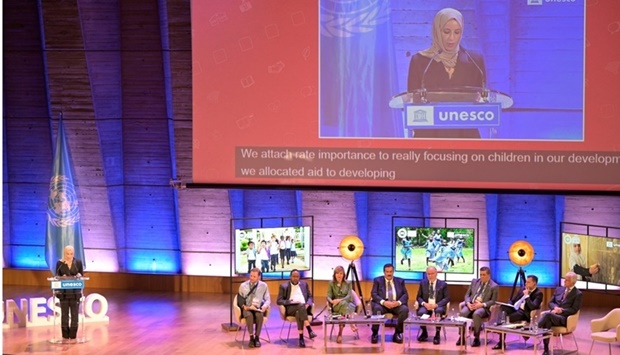
Qatar participates in Transformation Education Pre-Summit in Paris

Qatar participated in the Transforming Education Pre-Summit, held at the headquarters of the UN Educational, Scientific and Cultural Organisation (Unesco) in Paris. Qatar’s delegation was headed by HE the Minister of Education and Higher Education and Chairman of the Qatar National Committee for Education, Culture and Science Buthaina bint Ali al-Jabr al-Nuaimi. In her speech at the summit, HE al-Nuaimi noted the importance that Qatar attaches to education in its permanent constitution and Qatar National Vision 2030, as one of the most important pillars of social progress. She reviewed the most important results of the national consultations that were held in Qatar on June 16-17, regarding recommendations according to priorities that will help re-imagine education in the country, which can be crystallised into five priority axes, the first being the need for the effective application of a student-oriented learning experience that meets their needs, well-being, interests, abilities and aspirations, and full integration of persons with disabilities as well as those who face learning difficulties. The minister added that the second axis is to make the most of technology, including artificial intelligence, which has witnessed an increasing acceleration, as digital learning is at the top of the priorities and interests of Qatar more than ever, especially in the wake of the coronavirus (Covid-19) pandemic. HE al-Nuaimi indicated that the third axis is concerned with attracting, motivating and developing teachers professionally, in light of the widespread of new technologies nationally and globally. Thus, teachers will play a major factor in the successful transformation of educational systems, she added. HE al-Nuaimi said that the fourth axis is to enable learners to contribute to their long-term well-being and that of their society, especially in light of the state's orientation towards building a knowledge-based economy and maintaining economic and environmental sustainability, which will require basing scientific research on the environment, sustainability and climate change. She stressed that these requirements and priorities must reflect on educational curricula, as well as research funding in higher education institutions. The fifth axis deals with education financing, where she underscored the importance that Qatar attaches to this field all over the world, and its keenness to provide quality and inclusive education for all everywhere, as a top priority of its policy in the field of development aid in areas of conflict and crisis. HE al-Nuaimi explained that Qatar has provided support over the past decade, through the Qatar Fund for Development, to educational projects worth $1bn around the world, benefiting more than 70 countries. She concluded her speech by emphasising that education is the road map to the future, and the Education Transformation Summit can help determine the best routes on this map. The transformation will require a lot of effort; however, Qatar is fully committed to these crucial tasks, she underlined. The preparatory summit brought together about 140 ministers of education from the world over. The ministers shared their countries' national consultation experiences. Additionally, the initial content of the Education Transformation Summit to be held next September in New York was presented, with it having five main focus areas of transformation: schools and education, quality of life, educators, online connectivity, and education financing. On the sidelines of the preparatory summit, HE al-Nuaimi met the UN Secretary-General’s Special Envoy to the Summit Dr Leonardo Garnier, and discussed with him the summit's desired outcomes, in addition to the follow-up mechanisms post-summit. The two officials also discussed development-oriented working procedures that would contribute to the transformation of education. HE al-Nuaimi also met Director of the Education and Adolescent Development Program Group at the UN Children's Fund (Unicef) Dr Robert Jenkins, where they reviewed topics of common interest in education.

Gulf Times
Qatar

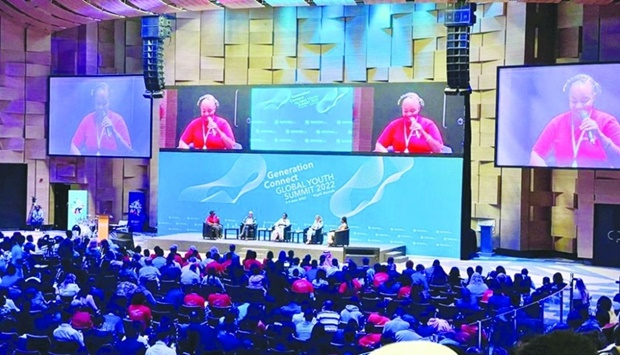
Qatar takes part in Generation Connect Global Youth Summit

    A Qatari delegation from the Communications Regulatory Authority (CRA) and the Ministry of Communications and Information Technology (MCIT) is participating in the first edition of the Generation Connect Global Youth Summit 2022, organised by the International Telecommunication Union (ITU) in a hybrid format combining virtual and physical participation in Kigali, Rwanda, under the theme: "Connecting the unconnected to achieve sustainable development". The Summit brings together from around the world, young leaders, entrepreneurs, social change-makers, engineers, policy specialists, students, and others who are aged between 15 and 29 years. It addresses the digital divide and related topics, including digital skills, gender, climate change, online safety, the future of work, entrepreneurship, and more. The Summit also includes discussions on how technologies can be harnessed to advance progress towards the Sustainable Development Goals (SDGs) and how the power of technology can change the world for the better. Participating in the global events organised by the ITU is considered a good opportunity to exchange views and experiences with the stakeholders and effectively be part of the key discussions to contribute to shaping the future of the global Information and Communications Technology (ICT) sector and contributing to the development of a digital future for everyone and everywhere. The importance of Qatar's participation in this Summit is evident in that it focuses on meaningful youth engagement, consultations, collaboration, empowerment, mentoring, participation and calls for action, aimed at bringing the voices of young people around the world into the World Telecommunication Development Conference (WTDC), in accordance with the objectives of the Generation Connect initiative that aims to engage global youth and encourage their participation as equal partners alongside the leaders of today's digital change, empowering young people with the skills and opportunities to advance their vision of a connected future. At the end of the Summit, the "Call to Action" document will be issued as an outcome and will be submitted to world leaders at the WTDC, which will be organised by the ITU in Kigali, Rwanda, from June 6-16, 2022.

Gulf Times
Opinion

BRICS fail to fulfil the world’s expectations

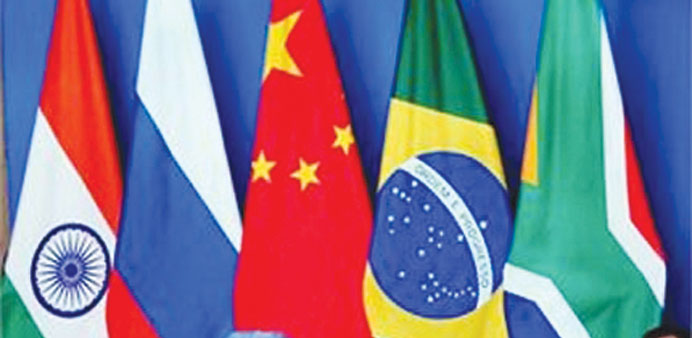
By Jaswant Singh/New Delhi In 2001, when Jim O’Neill of Goldman Sachs coined the acronym BRIC to refer to Brazil, Russia, India, and China, the world had high hopes for the four emerging economies, whose combined GDP was expected to reach $128.4tn by 2050, dwarfing America’s projected GDP of $38.5tn. When the four countries’ leaders gather on March 26 in South Africa – which joined their ranks in 2010 – for the fifth BRICS summit, their progress and potential will be reassessed. The summit’s hosts have set ambitious goals, reflected in the summit’s theme: “BRICS and Africa – a partnership for development, integration, and industrialisation”. They seek to advance national interests, further the African agenda and realign the world’s financial, political, and trade architecture – an agenda that encompasses objectives from previous summits, while reflecting South Africa’s goal of harnessing its membership to benefit all of Africa. But, while strengthening ties with African countries might seem like the kind of pragmatic development issue that should bring consensus, the seeds of doubt are already being sown. Lamido Sanusi, the governor of Nigeria’s central bank, has called for Africans to recognise that “their romance with China” has helped to bring about “a new form of imperialism”. Moreover, the central item on the summit’s agenda, a proposed “BRICS development bank”, is one that has gone nowhere at previous summits. This time, armed with a “feasibility study” put together by the five BRICS finance ministers, some progress may at last be made. With trade, both among the BRICS countries and between the BRICS and the rest of Africa, expected to increase from roughly $340bn in 2012 to more than $500bn in 2015, there is also much to discuss on the commercial front. So far, the goal of “global realignment” away from the advanced countries has catalysed these five very disparate countries’ efforts to forge their own bloc. But the primacy given to “advancing national interests” has always precluded real concerted action, at least until now. This is why the idea of establishing a BRICS development bank has taken on such importance. And the recently-conducted feasibility study might spur long-awaited progress. But toward what end? According to China’s official news agency, the development bank’s primary objective would be “to direct development in a manner that reflects the BRICS’ priorities and competencies”. Once the bank is established, a working group will be tasked with building the necessary technical and governance capacity. But this stock rhetoric fails to address the discrepancies between the BRICS’ interests, or to define the bank’s role in reconciling and advancing them. The fact that China is already Africa’s top trading partner, for example, invites questions about the proposed bank’s potential contributions. And China’s answer – that the bank would foster the “development of more robust and inter-dependent ties between the BRICS” – provides little substance. Is the bank supposed to serve as a counterweight to global multilateral development banks like the World Bank, or to reduce American and European dominance over the Bretton Woods institutions? Whatever the underlying objective, it must be identified, and its concomitant risks addressed, if the BRICS are to make genuine progress. For example, if the proposed bank is simply an additional funding institution aimed at supporting the BRICS’s development agenda, the participating countries’ leaders must establish how it will interact with national institutions, such as the Brazilian Development Bank, the China Development Bank and the Export-Import Bank of India. But the problem of aligning the BRICS’ interests is a much deeper one. Consider India’s need for massive investments in infrastructure, made evident in its just-proposed 2013-2014 budget. Some hopeful Indians see a BRICS bank as a way to channel China’s surplus funds – as well as its expertise and experience – to such investments (especially railways), as well as to strengthen Sino-Indian ties. But, given the two countries’ many serious bilateral problems, will either government really want to bind itself so closely to the other? Likewise, it is unclear what South Africa has to gain from the BRICS. Over the last few decades, the country has used mining revenues to pave roads, strengthen law enforcement, advance education and revitalise cities and towns. The country’s most serious remaining problems – poverty and social inequality – are unlikely to be ameliorated through co-operation with the other BRICS countries, all of which rank among the world’s most unequal societies. Other shared problems – such as corruption, poverty, and social underdevelopment – would be similarly difficult to address together. And it seems that the BRICS may not even be willing to try. Although Wen Jiabao, in his final address as prime minister, highlighted the enduring obstacles to China’s economic development (many of which its fellow BRICS share), China’s new president, Xi Jinping, insists that his country will not sacrifice its “sovereignty, security, or development interests” for the sake of more trade. Meanwhile, Russia’s impaired democracy and resource-driven economy are a poor example for its fellow BRICS – and, in fact, could serve as a warning to the others about the risks of excessive reliance on the state. And Brazil, like India a genuine democracy, also seems sui generis. Despite the commodities boom of the last decade, its industrial output relative to GDP is no higher than it was when the effort to create a BRICS bloc began. The BRICS’ ambitions – and the world’s expectations for them – may yet be fulfilled. But shared potential does not translate into collaborative action. On the contrary, each of the BRICS will have to pursue its goals and confront its challenges, individually. - Project Syndicate   ♦ Jaswant Singh is a former Indian finance minister, foreign minister and defence minister.

Arab League Secretary-General Ahmed Aboul Gheit speaking at the meeting.
Qatar

'Qatar dazzled world by hosting exclusive version of World Cup'

Arab League Secretary-General Ahmed Aboul Gheit has congratulated Qatar, His Highness the Amir, government and the people of Qatar for the successful and impressive organisation of the FIFA World Cup Qatar 2022, confirming that it was an exclusive version, in terms of good organisation, generous hospitality and suspenseful football event.In his speech delivered before the high-level session of the 42nd meeting of Arab Ministers of Social Affairs, Aboul Gheit stressed that through this impressive success of the tournament, Qatar has proved that the Arab world has the ability and grit to hold global events and activities at the highest levels. He noted the efforts undertaken by HE the Minister of Social Development and Family in co-ordination with the Social Affairs Sector at the Arab League to organise this vital Arab event which, he said, is a new phase in the joint development and social action through focusing on the issues that touch the life of every single Arab citizen.Today, a new support is launched for persons with disabilities who constitute the most important categories that deserve social protection through the initiative of the Arab League secretary-general to launch the 2nd Arab Decade for Persons With Disabilities 2023-2032, Aboul Gheit pointed out.He clarified that in the context of the implementation of the Arab Strategic Framework for the Eradication of Multidimensional Poverty that was ratified by the 4th development Arab summit, the Arab multidimensional poverty report came, after it was prepared in partnership with the specialised UN agencies. He added that such two topics, if they are implemented in the required form and content, will constitute an important paradigm shift in those two fields.He confirmed that Arab League supports Doha Declaration which is due to be issued at the end of this event, to strengthen the Arab efforts dedicated to proceeding with the implementation of 2030 Sustainable Development Plan, which reflects positively on the Arab citizen. In his speech delivered to the session, Secretary-General of the Union for the Mediterranean Nasser Kamel reviewed the union's efforts in social development with its various dimensions, along with the nature of co-operation with the Arab states in this field.He also highlighted the nature of challenges facing the comprehensive development in the region, and the union's role in building a robust regional co-operation, specially with regard to persons with disabilities.

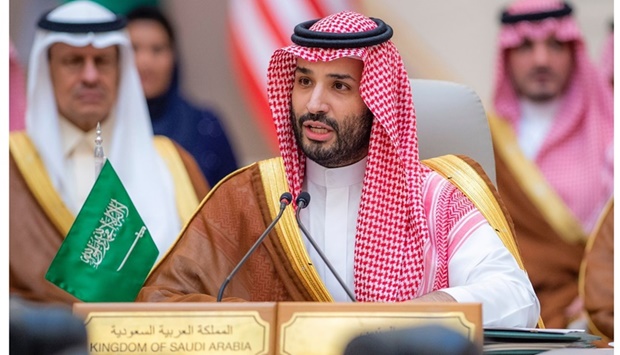
Crown Prince Mohamed bin Salman bin Abdulaziz expressed his hope that the summit will establish a new era of co-operation, to deepen the strategic partnership between the countries of the region and the US.
Region

Saudi crown prince calls for stronger co-operation for global economic recovery

Saudi Crown Prince, Deputy Prime Minister, and Minister of Defence Prince Mohamed bin Salman bin Abdulaziz stressed that the challenges the world faces today as a result of the Covid-19 pandemic and geopolitical changes require stronger co-operation to ensure the recovery of the global economy, as well as achieving food security and good healthcare. Speaking at the opening of the Jeddah Security and Development Summit, he said that the summit comes at a time when the region and the world are facing major challenges. He added that these challenges require intensifying co-operation within the framework of the principles of the UN Charter, which are based on respect for the sovereignty and values of states and non-interference in their internal affairs. The Saudi crown prince expressed his hope that the summit will establish a new era of co-operation, to deepen the strategic partnership between the countries of the region and the United States to serve the joint interests, and enhance security and development in this vital region for the whole world. He added that the environmental challenges that the world is currently facing, especially climate change, and the determination of the international community to maintain the Earth's temperature in accordance with the levels set by the Paris Agreement, require dealing with them realistically and responsibly to achieve sustainable development by adopting a balanced approach towards more sustainable energy sources. He stressed that the growth of the global economy is closely linked to making use of all available energy sources in the world, including hydrocarbons, while controlling their emissions through clean technologies, which would enhances the possibility of the world reaching net carbon neutrality in 2050 or earlier while maintaining the security of energy supplies. The Saudi crown prince said that the adoption of unrealistic policies to reduce emissions by excluding major sources of energy without taking into account the impact of these policies on the social and economic pillars of sustainable development and global supply chains will lead in the coming years to unprecedented inflation, rise in energy prices, increase in unemployment and exacerbation of serious social and security problems, including the increase in poverty, famine, crimes, extremism and terrorism. He added that Saudi Arabia announced an increase in its production capacity of oil to 13mn barrels per day, after which it will not have any additional capacity to increase production. The Saudi crown prince said that the desired future of the region requires adopting a vision that prioritises achieving security, stability and prosperity, and is based on mutual respect among the countries of the region, strengthening common cultural and social bonds and confronting security and political challenges. With regard to the Palestinian issue, the Saudi crown prince said that the region's prosperity requires a just and comprehensive solution to the Palestinian issue, in accordance with international initiatives and resolutions and the Arab Peace Initiative. He pointed out that having lasting security and stability in the region requires finding realistic political solutions to other crises, especially in Syria and Libya, to ensure an end to the suffering of their people. He added that he was pleased to see an improvement in the security and stability of Iraq recently, given it will reflect positively on its people.

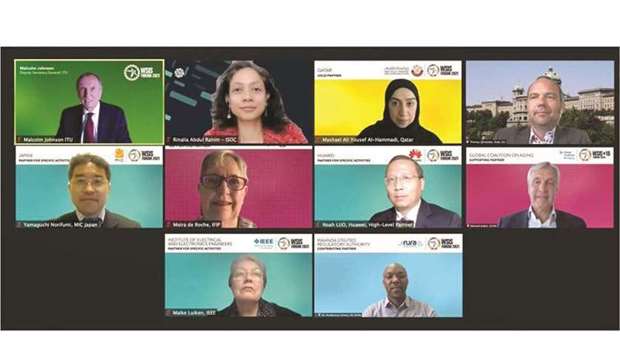
MoTCu2019s acting assistant undersecretary of Government Information Technology Mashael Ali Yousef al-Hammadi attended the WSIS Forum.
Qatar

Qatar participates in WSIS Forum 2021

Qatar, represented by the Ministry of Transport and Communications (MoTC), is participating in the activities of the final week of the Virtual World Summit on the Information Society (WSIS) Forum, which concludes on May 21. Addressing the WSIS Forum 2021 Ministerial Round Table meeting yesterday, on behalf of HE the Minister of Transport and Communications, MoTC’s acting assistant undersecretary of Government Information Technology, Mashael Ali al-Hammadi, said Qatar realises the paramount role that the ICT sector plays in accelerating the pace of social and economic development and creating a knowledge-based economy and supporting the efforts that aim for sustainable and inclusive development. “Accordingly, the Qatar Digital Government Strategy 2026 is in harmony with the UN Sustainable Development Goals 2030, fostering it's values through ICT such as increasing accessibility, improving the quality of education, healthcare, and justice, aiming for a better environmental impact for a more sustainable model, and empowering all social elements equally,” al-Hammadi said. “Qatar’s investment in digital and innovative technology has helped provide innovative and flexible solutions that enabled the country to take immediate and effective measures to contain the pandemic and lessen it's impacts,” she added. "The Qatar Digital Government and it's services have been of a significant role in business continuity throughout the pandemic thanks to a robust digital infrastructure and concerted efforts during the pandemic, thus fast-tracking the digital transformation and telework and overcoming the challenges that we and the whole world has encountered,” she noted. Al-Hammadi pointed out that Qatar, the gold sponsor of WSIS Forum 2021, appreciates the efforts exerted by the World Summit on the Information Society and backs the works it does and will spare no effort in enhancing the use of innovative technology and digital transformation to create a human-centric, inclusive, development-driven information society and supporting the efforts for achieving inclusive sustainable development. Qatar had participated in a series of WSIS Forum 2021 thematic workshops as well as the WSIS virtual exhibition which was held last March.    

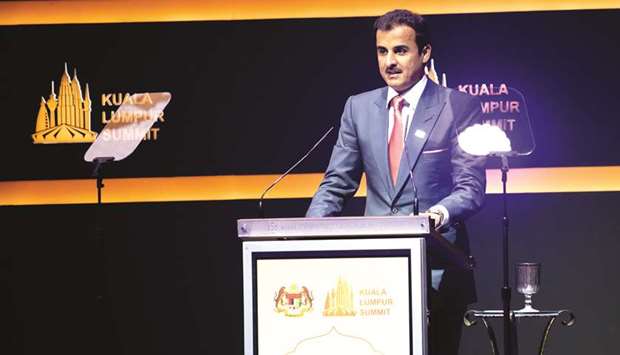
His Highness the Amir Sheikh Tamim bin Hamad al-Thani delivering his speech at the opening session of the Kuala Lumpur Summit 2019 yesterday.
Opinion

‘Qatar has placed development on top of its priorities’

His Highness the Amir Sheikh Tamim bin Hamad al-Thani participated yesterday in the opening session of the Kuala Lumpur Summit 2019, which carries the theme The Role of Development in Achieving National Sovereignty. Malaysian King Abdullah Riayatuddin al-Mustafa Billah Shah, Turkish President Recep Tayyip Erdogan, Iranian President Dr Hassan Rouhani, and Malaysian Prime Minister Dr Mahathir Mohamed also participated in the summit. The session that took place at Kuala Lumpur Convention Centre was also attended by their excellencies ministers that are members of the official delegation accompanying the Amir, heads of the delegations of Islamic countries, a number of intellectuals and researchers in the Islamic world’s issues. The following is the text of the speech the Amir gave on the occasion: In the Name of God, the Most Merciful, The Most Compassionate Your Majesties, Excellencies, Ladies and Gentlemen, At the outset, I would like to thank His Excellency Dr Mahathir bin Mohamed, the government and the people of Malaysia for the cordial reception, good preparation and organisation of this promising summit and for providing it with all means of success. Ladies and Gentlemen, This summit theme, “The Role of Development in Achieving National Sovereignty”, reflects the great challenges facing the world in general, and the Muslim world in particular, with regard to issues of security, peace, development, good governance and human rights. Various schools seeking to approach and address these issues have emerged, yet we cannot tackle them at this summit. Our meeting today does not emanate from a particular theoretical approach to these issues, but rather from the nature of the politicians’ and State leaders’ role that requires having faith in the political will and potential to effect change. We cannot give up to structural difficulties or what are alleged to be cultural obstacles existing in our countries and societies. Also resorting to conspiracy theories to justify failure in any of the above areas is also a form of surrender. This does not mean that there are no external conspiracies and foreign interventions. But their use to justify failures and wrong choices is an expression of intellectual indolence and political incompetence. Also, the negative external factors, dubbed sometimes as conspiracies, often become effective and influencing under favourable domestic conditions. Countries, where there is a Muslim majority, have proved by experience and practices that there is no contradiction between Islamic culture, development, good governance and human rights, and that, like other major civilisations, they can be incubators of enlightened and rational systems of governance; meanwhile other regimes justify underdevelopment, tyranny, and treading on human rights on the grounds of the Islamic culture of their peoples, although such justification in itself is incompatible with the spirit of Islamic civilisation. We are not fundamentally different from other peoples and civilisations in the world. The approach that categorises people into ranks according to their religions reflects a racist thinking which is not different from the thought that branded them into grades in the past according to their ethnicities. We treasure our civilisation and religion within the framework of our adherence to our humanity and universal values, and there is no contradiction between the two issues. As we meet here to discuss the co-relation between development and sovereignty, we stress that national development, especially the one that takes human development into consideration, is not possible without national sovereignty in countries that own their decision. On the other hand, it is almost impossible to maintain national sovereignty and independence of decision in conditions of economic backwardness and dependency. Therefore, development is an essential pillar of independence and national sovereignty. In this regard, the State of Qatar has placed development on top of its priorities by means of the National Development Strategy 2012/2017 and the Second Development Strategy 2018/2022 to achieve its National Vision 2030. In our development policy, we consider that our trust in the national identity and adherence to our moral values and our true Islamic faith is consistent with rationality in social and economic planning, openness to the world, and the universal human view of justice and human rights issues. Also this means tolerance of other beliefs and accepting pluralism and diversity in our world as a reflection of God’s enduring laws that govern His creation. In any case, we see fanaticism as not only an evidence of lack of self-confidence but rather a proof of an identity crisis. Out of our firm belief in the importance of international co-operation for achieving development as a pillar of regional and international security and stability, the State of Qatar has spared no effort in fulfilling its obligations to provide development assistance, that is unfettered by political agendas, to developing countries to enable them implement their development programmes, combat poverty and unemployment, develop education and improve healthcare. Ladies and Gentlemen, The violent bigotry that some people try to attach to a particular religion and culture is, as the sequence of events in the modern time shows, a global problem that has not spared a society or culture from its affliction. It is a blight that may afflict all and is fuelled by religious fanaticism, as well as non-religious ideology, despair, frustration, conditions of ignorance, poverty and unemployment. Therefore, its long-term confrontation must include addressing its roots. Our topic is closely related to regional and international collective security issues, as stability is one of the most important conditions for development. It requires balanced relations between States based on common interests, shared regional and international responsibilities, mutual respect for sovereignty, non-interference in internal affairs, and no dictation on foreign policy. Justice is one of the most important conditions for stability in conflict areas, so no settlements and solutions would last in the long run if they are not based on justice and fairness. In many cases, this is incomprehensible by many countries that are trying to impose disputes settlements according to the existing parameters of powers, and not according to the principles of justice. Therefore, our alignment with fair causes stems not only from the moral principles of international politics but also from the mutual interest in stability. One of the most important sources of instability in our region is the neutralisation and marginalisation of the international legitimacy, and the attempt to dictate the will of the occupation by of force in Palestine, where annexation and settlement policies, including the Judaisation of Jerusalem, continue. These are the policies that wipe out the Arab character of the city and provoke the feelings of Arabs and Muslims everywhere. What disturbs the Arab and Islamic public opinion and a large part of the global public opinion regarding the cause of Palestine is that it is an unresolved issue of settler colonialism. The Arabs have accepted a settlement through the Arab Peace Initiative and showed great willingness to co-operate with the international community for a just solution to the Palestinian issue, but the party that refuses to comply with the international will and international law, and rejects the fair peace offer, even if relatively, is Israel. We suffer from double standards in more than one issue. There are double standards even in dealing with human rights, and the global conflict of axes makes some harbour war criminals who have perpetrated crimes against their own peoples, as allies, while being fought by others. However, situations may alter with the change of locations and interests. Double standards also prevail in the case of armed militias that commit terrorist acts. Some forget their eloquence against terrorism and terrorists when they harbour armed militias that operate against domestic and international law and commit crimes against civilians. We call for the endorsement of methods of negotiation and dialogue for resolving lingering issues, and we reject the use of methods of force, blockade, starvation and dictation of opinions. Adopting this approach requires a minimum of unanimity in granting greater power to international institutions where the right of veto does not prevail in favour of this or that country. With the exception of justice based on international law, collective security requires a kind of rationality in the relations between States so that these international relations and other peoples’ issues should not be subject to internal political rivalry between parties in each country, at a stage when populism and irrationality may become dominant in internal political considerations. Incitement against Islam and Muslims has recently become a populist tool for gaining votes. These are short-sighted internal party politics, yet it would make the relations with other peoples subject to irrational policies and whims in domestic politics, which negatively affects relations between States. Ladies and Gentlemen, It has become evident that the relationships with the other within each State and the dealing with him on an equal footing while respecting differences and disparities is a test of the extent to which this country is civilised and developed. Just as we demand from communities in Western and other countries to deal with Islam and Muslims in accordance with the principles of democracy and human rights that they adhere to, and to criminalise racial abetting against Muslims as well, we should also expect Muslim States as well as Muslim and non-Muslim societies in the East to deal with their citizens and residents equally, regardless of race, religion and doctrines, and respect their religions and exclusivity. We must also consider citizenship and equality before the law as regulators of the interaction between the individual and the State, regardless of race, religion, gender, or origin in Muslim countries as well. In short, justice is indivisible. We demand justice and good governance within States, and we look forward to justice and good governance in international relations. I pray to God Almighty to crown the deliberations of this summit with success and to guide our steps towards what is good for our peoples. May God’s peace, mercy and blessings be upon you.

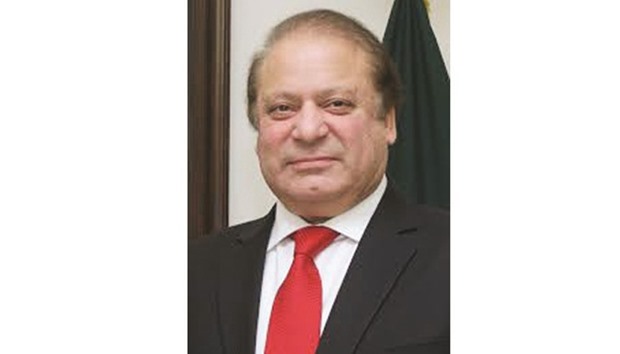
Nawaz Sharif
International

Sharif seeks regional solution to social ills

Pakistan Prime Minister Nawaz Sharif yesterday urged countries in the region to work jointly in changing the economic landscape of South Asia and help get people out of the clutches of poverty, illiteracy and other social ills. “Three decades back the South Asian leadership made a commitment to accelerate economic growth, social progress and cultural development of our region,” Sharif said while addressing the inaugural function of a meeting here of Finance Ministers of the South Asian Association for Regional Co-operation (Saarc). “For economic and social progress of the masses, increasing connectivity, ease of communication, freer trade and finding solution to hunger, poverty and food insecurity has helped the world enhance regional and sub-regional co-operation.” Sharif expressed the confidence that the deliberations of the Finance Ministers would complement the agenda of the 19th Saarc summit, which Pakistan looks forward to hosting on November 9-10 this year. Ministers and senior officials from Saarc member-nations — Afghanistan, Bangladesh, Bhutan, India, Nepal, the Maldives, Pakistan and Sri Lanka — participated in the day-long conference, Xinhua news agency reported. Officials said the delegates discussed proposal to move from the South Asian Free Trade Area to the South Asian Economic Union, focus on customs-related trade facilitation measures, and finalising the draft on Saarc agreement on promotion and protection of investment. Also coming up for discussion was implementation of the Saarc Agreement on Trade in Services (SATIS), avoidance of double taxation and mutual administrative assistance in tax matters and transactions in local currencies. Sharif said that in this era of globalisation, the world focuses on finding regional solution to common problems and that for economic and social progress of the masses, increasing connectivity, ease of communication, freer trade and finding solutions to hunger, poverty and food insecurity has helped the world enhance regional and sub-regional co-operation. He said trans-boundary effects of climate change, spread of disease, economic spill over and social evils are being countered by joint strategies at the regional level. The prime minister said South Asia is endowed with abundant human and natural resources and that it is home to one-fifth of humanity and reservoirs of untapped wealth and under-utilised resources, which provide opportunities for development and prosperity in the region. He said that to optimally harness this potential for peace and prosperity of the people, Saarc provides platform to work collectively to make the region free of economic constraints and social ills. Nawaz Sharif said Pakistan is a strong advocate of stepping up regional efforts to ensure energy security by sharing indigenous sources of energy. He said that connectivity is critical to progress and prosperity of the region which is why Pakistan supports, in principle, road, air, rail and water connectivity in the region. The prime minister also apprised the participants about economic policies being pursued by the Pakistan Government, their acknowledgement by the multilateral institutions and their ‘trickle-down’ effect. He said that Pakistan has made progress in bringing economic stability in the country and the reforms agenda of the Government is aimed at strengthening regulatory and supervisory framework and safeguarding of the national economy. Addressing the conference, Secretary General Saarc Arjun Bahadar Thapa said that the South Asian region has the potential to become the global economic force. He said that since the last Saarc Summit, significant progress has been made to bolster economic cooperation amongst member states. He said the leaders of Saarc countries have set an ambitious target of establishing South Asian Economic Union which requires deeper interaction amongst member-countries. He expressed the confidence that the meeting of finance ministers will give impetus to speed up the process of South Asian Economic Union. In his welcome address, Pakistan’s Finance Minister Ishaq Dar said the South Asian region is blessed with immense resources and has the potential to meet the growth requirements of its peoples. He said that joint strategies is the way forward to exploit this potential for the socio economic uplift of the peoples. He expressed the confidence that the vision of South Asian Economic Union will promote economic co-operation, investment and connectivity amongst the regional countries. He said the leaders of Saarc countries have repeatedly been emphasising upon greater economic integration and co-operation. He said though significant headways have been made in this regard, however, there is need to remove non tariff barriers and the simplication of procedures in order to enhance cooperation in different sectors including trade, investment and energy cooperation. He said that such a course will help achieve our goal aimed at betterment of the region. Ishaq Dar said Pakistan adheres to the Saarc vision to make it a successful regional organisation. He said the proposals finalised in yesterday’s meeting would be presented before the Saarc summit to be held in November in Islamabad. “For economic and social progress of the masses, increasing connectivity, ease of communication, freer trade and finding solution to hunger, poverty and food insecurity has helped the world enhance regional and sub-regional co-operation”

Gulf Times
Opinion

Knowledge for progress With the global economy

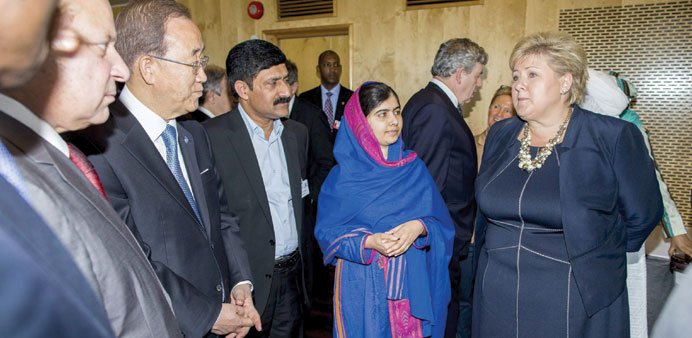
UN Secretary-General Ban Ki-moon (fourth right), Nobel Peace Prize winner Malala Yousafzai (second right) and Norway’s Prime Minister Erna Solberg (right) participate in the Oslo Summit on Education for Development yesterday.   By Kevin Watkins/LondonSome 236 years ago, a young governor from the American state of Virginia broke the mould on education reform. In his Bill for the More General Diffusion of Knowledge, Thomas Jefferson called for “a system of general instruction” that would reach all citizens, “from the richest to poorest.” It was the first step in the creation of the American system of public education – an institution that helped to propel the country’s rise to global prominence.By the early 20th century, the US was a global leader in public schooling. Investments in education provided a catalyst for economic growth, job creation, and increased social mobility. As Claudia Goldin and Lawrence Katz have shown, it was American “exceptionalism” in education that enabled the country to steal a march on European countries that were under-investing in human capital.As world leaders gather this week for the Oslo Summit on Education for Development, the lessons from this experience could not be more relevant. In fact, with the global economy becoming increasingly knowledge-based, the education and skills of a country’s people are more important than ever in securing its future. Countries that fail to build inclusive education systems face the prospect of sluggish growth, rising inequality, and lost opportunities in world trade.In this context, some of today’s discussions on education sound curiously anachronistic. Harvard economist Ricardo Hausmann recently berated what he describes as the “education, education, education crowd” for advocating an “education-only” strategy for growth. It was an impressive attack on a view that, to the best of my knowledge, nobody holds.Of course education is not an automatic route to growth. Expanding education in countries where institutional failure, poor governance, and macro-economic mismanagement stymie investment is a prescription for low productivity and high unemployment. In North Africa, the disharmony between the education system and the job market left young, educated people without decent opportunities – a situation that contributed to the revolutions of the Arab Spring.None of this detracts from the vital role of education – not just years of schooling, but genuine learning – as an essential component of growth. Extensive research – from the work of Adam Smith to Robert Solow and Gary Becker and, most recently, Eric Hanushek – confirms the importance of learning in building productive human capital. One step up the standard deviation score on the OECD’s Programme for International Student Assessment is associated with a 2% increase in a country’s long-run per capita growth rate.Education may not be a quick fix for slow growth. But try naming a country that has sustained an economic transformation without advances in education.Economists at the World Bank have contributed a few straw men of their own to the education debate. In one contribution, Shanta Devarajan criticises the view that education is an essential public good that governments should finance and deliver, arguing that it should instead be considered a private good, delivered through markets to customers – that is, parents and children – seeking private returns.The problem is that education is self-evidently not a public good – in the real world, few things are. It is, however, a “merit” good, something that governments should offer for free, because of the wide-ranging private and social returns that might be lost if parents underinvest, or if the poor are excluded. For example, progress in education – especially girls’ education – is closely associated with improvements in child survival and nutrition, and maternal health, as well as higher wages.It is time to move beyond futile discussions based on flawed logic to focus on the real challenges in education – challenges that must be addressed, if we are to meet the Sustainable Development Goal of delivering high-quality primary and secondary education to all by 2030. The Oslo summit presents an important opportunity to lay the groundwork for success. With 59mn primary school-age children and 65mn adolescents out of school, that opportunity should be seized with both hands.A successful summit would advance four key imperatives. First, governments must commit more domestic funds to education. One background paper for the summit highlights the failure of successive governments in Pakistan, which now has the world’s second-largest out-of-school population, to invest in education. At the heart of the problem are politicians who are more interested in facilitating tax evasion by the wealthy than improving learning opportunities for the poor.Second, international donors must reverse the downward trend in aid for education. Even with an enhanced resource-mobilisation effort, roughly $22bn annually in aid will be needed to achieve universal lower-secondary education. That is around five times current levels. Beyond closing the aid gap, UN Special Envoy on Education Gordon Brown has rightly called for financing mechanisms to deliver education to children affected by conflict and humanitarian emergencies.Third, world leaders must get serious about inequality. Every government should be setting targets aimed explicitly at narrowing education disparities – linked to gender, wealth, and the rural-urban divide – and aligning their budgets with those targets. As it stands, the disparities are huge. In Nigeria, for example, urban boys from the wealthiest 20% of households average 10 years of schooling, while poor rural girls in northern areas can expect less than two years. Yet, as another Oslo summit background paper shows, education finance is skewed toward the wealthy in most countries.Finally, governments and aid agencies must abandon market-based experiments, and commit to genuine system-wide reform. One key priority area is teachers, who need strong incentives, effective training, and dependable support systems to deliver real learning. After all, an education system is only as good as its educators.As world leaders gather in Oslo, millions of parents will be struggling to ensure that their children receive the education they deserve – one that will enable them to build better lives for themselves and their families. For these parents, schooling is a source of hope. We owe them and their children our best efforts. - Project Syndicate♦ Kevin Watkins is Director of the Overseas Development Institute, a leading UK think tank on international development and humanitarian issues.