Search - Menendez

Friday, October 23, 2026 | Daily Newspaper published by GPPC Doha, Qatar.

Search Results for "Menendez" (103 articles)

All words
House Speaker Nancy Pelosi speaks at a Fed Up? Rise Up!u2019 rally outside the US Capitol in Washington yesterday.
International

Trump okays release of Ukraine call transcript

President Donald Trump said yesterday he will release the “fully declassified” transcript of a controversial call with Ukraine’s president which is fuelling Democratic calls for his impeachment. “I am currently at the United Nations representing our Country, but have authorised the release tomorrow of the complete, fully declassified and unredacted transcript of my phone conversation with President Zelensky of Ukraine,” Trump tweeted yesterday. “You will see it was a very friendly and totally appropriate call,” wrote Trump, who is accused of pressuring Zelensky to investigate his White House rival Joe Biden and his son. “No pressure and, unlike Joe Biden and his son, NO quid pro quo!” Earlier, Trump had confirmed he had withheld nearly $400mn in US aid to Ukraine but denied he did so as leverage to get its president to initiate an investigation that would damage Biden. In remarks to reporters at the United Nations over the intensifying political controversy, Trump sought to portray that there was nothing sinister about the withholding the aid, saying he wanted Europe and not just the United States step up and provide Ukraine assistance. The money was later released by the Trump administration. In Washington, House of Representatives Speaker Nancy Pelosi, a Democrat, is to meet Democratic lawmakers to consider impeaching the Republican president as more lawmakers voiced support for the action. In addition, a senior US senator demanded an investigation of the withholding of the aid. Trump is seeking re-election next year and Biden, the former US vice president, is the front-runner for the Democratic presidential nomination. Trump had on Sunday acknowledged that he discussed Biden and Biden’s son Hunter, who had worked for a company drilling for gas in Ukraine, with Zelenskiy. But Trump on Monday denied trying to coerce Zelenskiy in the July 25 phone call to launch a corruption investigation into Biden and his son in return for the US military aid. Arriving at the United Nations before his speech to the annual General Assembly, Trump confirmed that he had wanted the money for Ukraine frozen, saying European should countries provide assistance to Kyiv, but changed his mind after “people called me.” Trump told reporters that he still felt other nations should be paying to help Ukraine.  “The money was paid, but very importantly, Germany, France, other countries should put up money,” Trump said. Regarding aid to Ukraine, Trump said, “We’re putting up the bulk of the money, and I’m asking why is that?...What I want, and I insist on it, is that Europe has to put up money for Ukraine also.” The controversy came to light after a whistleblower from within the US intelligence community lodged a complaint with an internal watchdog about Trump’s conversation with Zelenskiy, leading to calls from some Democrats that Trump be impeached for trying to enlist a foreign power to smear a domestic opponent. US intelligence agencies and a special counsel previously concluded that Russia boosted Trump’s 2016 presidential election bid with a campaign of hacking and propaganda aimed at harming his Democratic opponent Hillary Clinton. Senator Bob Menendez, the top Democrat on the Senate Foreign Relations Committee, said Congress had not been made aware of any substantive review of security assistance to Ukraine or any policy reason the funds should have been withheld. In a letter to Mike Mulvaney, director of the White House Office of Management and Budget (OMB), Menendez said “it is becoming clear that” Trump put pressure on Ukrainian officials. Menendez, in one of three letters sent to administration officials, also said “we must immediately understand whether, and to what extent, the President and his team converted duly-appropriated United States foreign assistance funds for his personal and political benefit, and what role federal agencies may have played in it.” Under the US Constitution, the House has the power to impeach a president for “high crimes and misdemeanours” and the Senate then holds a trial on whether to remove the president from office. No president has ever been removed from office through impeachment. A House committee has already launched a formal impeachment probe of Trump in light of his actions in the Russia matter but the impeachment drive never won the support of key party figures including Pelosi. Pelosi appeared to be moving closer to favouring impeachment as Democrats demand that the Trump administration release details of a whistleblower complaint and the transcript of his call. Democratic Representative John Lewis, speaking on the House floor, said he now believed it was time to begin impeachment proceedings.?  “I have been patient while we tried every other path and used every other tool,” Lewis said. Trump yesterday accused Democrats of considering impeachment for purely political reasons. “They have no idea how they stop me. The only way they can try is through impeachment,” Trump said at the United Nations. In his letter, Menendez noted that the US State and Defense Departments recommended and prepared to distribute in late June $391.5mn in military and security assistance to boost Ukraine’s armed forces as the country dealt with Russian aggression and sought to improve maritime security in the Black Sea. However, weeks before Trump’s call with Zelenskiy, OMB blocked the aid, Menendez said in the letter to Mulvaney. “Ukrainian officials were reportedly ‘blindsided,’” Menendez wrote. “For months, despite repeated inquiries from my office and others, administration officials have been unable to offer any policy justification for why these funds were blocked.” OMB did not immediately respond to a request for comment. Joseph Maguire, acting US director of national intelligence, is defying a federal law mandating that the whistleblower report be shared with Congress.  Maguire is due to testify tomorrow at a public House intelligence committee hearing.

A person carries a child exposed to tear gas after law enforcement deployed tear gas and munitions against protesters in north Minneapolis. – Reuters
International

Trump threatens to send troops over Minnesota protests

US President Donald Trump threatened Thursday to invoke the Insurrection Act to deploy military forces in Minnesota after days of angry protests over a surge in immigration agents on the streets of Minneapolis.Confrontations between residents and federal officers have become increasingly tense after an Immigration and Customs Enforcement (ICE) agent fatally shot a US citizen, Renee Good, in a car eight days ago in Minneapolis, and the protests have spread to other cities.Trump's latest threat came a few hours after an immigration officer shot a Venezuelan man that the government said was fleeing after agents tried to stop his vehicle in Minneapolis."If the corrupt politicians of Minnesota don't obey the law and stop the professional agitators and insurrectionists from attacking the Patriots of I.C.E., who are only trying to do their job, I will institute the INSURRECTION ACT," Trump wrote on social media.Trump, a Republican, has for weeks derided the state's Democratic leaders and called the Somali community in the area "garbage" who should be "thrown out" of the country.He has already sent nearly 3,000 federal officers into the Minneapolis area, who have carried guns through the city's icy streets, wearing military-style camouflage gear and masks that hide their faces.They have been met frequently by loud, often angry protests by residents, some blowing whistles or banging tambourines.The agents have arrested both immigrants and protesters, at times smashing windows and pulling people from their cars, and have been shouted at for several episodes where they have stopped black and Latino US citizens and demanded identification.The US Department of Homeland Security (DHS), which is overseeing Trump's immigration crackdown, said that just before Wednesday's shooting, two people attacked the federal officer with a broomstick and snow shovel as he wrestled with the Venezuelan man on the ground outside a home he had been running towards.The officer "fired defensive shots to defend his life", the DHS statement said.The DHS said the man had been allowed into the US by the administration of Trump's predecessor, Joe Biden, in 2022 through the government's humanitarian parole programme.The Trump administration, which has sought to revoke Biden-era immigration and asylum programmes, accused him of being in the country illegally.Reuters was not able to verify the account given by the DHS.Minneapolis Police Chief Brian O'Hara told reporters at a late-night press conference that the Federal Bureau of Investigation (FBI) and Minnesota's Bureau of Criminal Apprehension were gathering evidence from the scene.The man's injuries were not life-threatening and he was recovering in hospital, O'Hara said.Speaking alongside O'Hara, Mayor Jacob Frey called the ICE surge an invasion and said he had seen "conduct from ICE that is disgusting and is intolerable”."We cannot be at a place right now in America where we have two governmental entities that are literally fighting one another," Frey said.The Insurrection Act of 1807 is a law allowing the president to deploy the military or federalise soldiers in a state's National Guard to quell rebellion, an exception to laws that prohibit soldiers being used in civil or criminal law enforcement.It has been used 30 times in US history, according to New York University's Brennan Centre for Justice.The Supreme Court has ruled that the president alone can determine if the act's conditions have been met.However, so far Trump has stopped short of resorting to the law as he presses an agenda that has drawn accusations of authoritarian overreach and periodic mass rallies with the mantra "No Kings”.Tge president has already taken the unusual step of federalising National Guard soldiers to help with immigration law enforcement in Democrat-run cities over the objections of state governors, including in Los Angeles last year, which a judge ruled in December was unconstitutional.Homeland Security Secretary Kristi Noem, addressing reporters outside the White House, declined to say if she thinks Trump should invoke the law."I think that the President has that opportunity in the future. It's his constitutional right, and it's up to him if he wants to utilise it to do it," Noem said.Asked if Trump is likely to take this major step, she said: "I don't know."The Insurrection Act was last invoked in 1992 by [resident George HW Bush at the request of the Republican governor of California, who was facing unprecedented riots in Los Angeles following the acquittal of police officers who had beaten Rodney King, a black motorist, the previous year.If Trump sends soldiers to Minnesota, he would almost certainly face legal challenges by the state.The Minnesota attorney-general's office has already sued the Trump administration this week, saying that the ICE surge was violating Minnesotans' rights, and on Wednesday asked US District Judge Kate Menendez to issue a temporary order restraining it.Brian Carter, a lawyer for Minnesota, told the judge that Trump's agents were engaged in a "pattern of unlawful, violent conduct", including racial profiling and forced entry into residents' homes without warrants."They are foisting this crisis onto us," Carter said.In a social media post Thursday morning, Trump said incorrectly that the judge had "declined to block" the ICE surge.In the hearing, Judge Menendez ordered the Trump administration to respond by Monday to Minnesota's complaints, saying that she would rule after that, calling the issues raised by Minnesota's lawsuit "enormously important"."They deal with the very fundamental relationships between the government and the state and municipalities," she said. 

Henry Cuellar
International

US lawmaker hit with bribery charges tied to Azerbaijan, Mexican bank

US Representative Henry Cuellar and his wife were indicted for allegedly accepting close to $600,000 in bribes in two schemes meant to benefit an Azerbaijani state-owned energy company and an unnamed bank based in Mexico, court papers showed.The federal indictment, returned by a grand jury in Texas on Tuesday and unsealed on Friday, said the bribes were laundered through sham consulting contracts into shell companies owned by Imelda Cuellar, the Democratic congressman’s wife, from December 2014 through at least November 2021.In exchange, it says Henry Cuellar sought to use his public position to influence US foreign policy in Azerbaijan’s favour and to pressure US government officials to help the Mexican bank lobby against anti-money laundering enforcement policies and payday lending regulations that threatened its business.Before the charges were unsealed, Cuellar issued a statement denying the allegations.“Both my wife and I are innocent of these allegations,” said Cuellar.One of the most conservative Democrats in the House of Representatives, Cuellar is seeking an 11th two-year term in the November 5 election. He represents a Texas district that borders Mexico and includes Laredo and parts of San Antonio.The 54-page indictment identifies the bank only as “Foreign Bank-1,” a Mexico City-based institution that conducts payday lending in the US and is part of a Mexican finance and retail holding company that also owns a Mexican media company.That appears to match Grupo Salinas, a sprawling conglomerate controlled by Mexican billionaire Ricardo Salinas, whose business empire includes Banco Azteca. The indictment also provides identifying details of a bank executive who appears to match a recently retired Banco Azteca executive.“Right now, we don’t have information about this,” Grupo Salinas executive Luciano Pascoe told Reuters by email in response to a request for comment.Cuellar will step down as the ranking member of the Homeland Security Appropriations subcommittee while the case is pending, said a spokesperson for Democratic House Minority Leader Hakeem Jeffries.Cuellar’s home and campaign office in Laredo were searched by federal law enforcement in January 2022, when Cuellar served as a co-chair of the Congressional Azerbaijan Caucus.In that capacity, he and several other members of Congress signed a letter urging Congress to provide humanitarian support to assist people displaced following the war between Azerbaijan and Armenia.The indictment cites Cuellar’s support for providing funding to Azerbaijan and a pro-Azerbaijan speech he gave on the House floor, among other actions.Cuellar said in his statement he had sought legal advice from the House Ethics Committee and a national law firm.“We requested a meeting with the Washington, DC prosecutors to explain the facts and they refused to discuss the case with us or to hear our side,” he added.The Justice Department said Cuellar and his wife made initial appearances before a federal magistrate judge in Houston on Friday. They were released on bond.Each faces 14 counts on charges including conspiracy, bribery, honest services wire fraud, being a public official acting as an agent of a foreign principal, and money laundering.Several of the charges carry a statutory maximum of 20 years in prison.Cuellar is not the only member of Congress facing federal charges.Democratic Senator Bob Menendez is awaiting trial on corruption charges in New York, while Republican George Santos last year was expelled from the House while he awaits trial on charges of violating campaign finance laws.Both Menendez and Santos deny wrongdoing.

Thailand's Atthaya Thitikul, 14, won at the Ladies European Thailand Championship in Pattaya. (AFP)
Sport

Thai teen breaks record for youngest professional win

A Thai teenager became the youngest known winner of a professional golf tournament yesterday, overcoming huge pressure to secure a two-shot victory at the Ladies European Thailand Championship in Pattaya. There were gasps from the crowd as Atthaya Thitikul — aged just 14 years and four months — calmly slotted home a must-win final putt on the 18th to see off Ana Menendez of Mexico. Her victory smashes the current record set by Canada’s Brooke Henderson who won the Canadian Women’s Tour in June 2012 aged 14 years, nine months and three days. She also beats the Ladies European Tour record held by former number one Lydia Ko who took the 2013 New Zealand Open aged 15 years, nine months and 17 days. Atthaya, who hails from Thailand’s western province of Rachaburi, turned 14 on 20 February. Local media said she first picked up a golf club aged six. The shy but seemingly always smiling teenager had a dream week at the 72-par Phoenix Gold Golf and Country Club in Pattaya. She burst into the first day with a two under 70, struck a 71 on day two and another 70 on day three. She began the final day one shot behind Menendez, 25, facing the daunting task of keeping the finish line in sight. The first nine she shot two bogeys and a birdie but was helped by a poor start from Menendez who fired four bogeys, giving the rising Thai star a cushion as the two went into the back nine. If Atthaya felt pressure, she did not show it, firing another birdie on the back nine and calmly slotting home the final par putt. “I’m so proud and so happy for my score and win this week,” she said. “I’m so excited, thank you so much.” As an amateur she does not take home any prize winnings. That means the top 45,000 euro ($51,000) prize went to runner up Menendez while 27,500 euros went to third placed pro Whitney Hillier. Final top scores  283 — Atthaya Tithikul (THA) 70-71-70-72 285 — Ana Menedez (MEX) 68-72-70-75 286 — Whitney Hillier (AUS) 74-72-69-71 287 — Leticia Ras-Anderica (GER) 73-73-74-67; Parinda Phokan (THA) 75-73-71-68; Amy Boulden (WAL) 73-74-67-73.

Gulf Times
International

Cecil the lion’s killer finds himself in a legal thicket

Stuffed heads of tigers, leopards and other big cats are seen on the shelves of the US Fish and Wildlife Service (USFWS) National Wildlife Property Repository in Denver, Colorado in a picture provided by the USFWS.   Tribune News Service/WashingtonA 115-year-old US law that’s grown like kudzu now hangs over the head of the Minnesota dentist who shot Cecil the lion.But it’s one of the Supreme Court’s newest decisions that could shape how officials may handle angry members of the public who have raged against the bow-and-arrow wielding dentist, Dr Walter Palmer.Now both hunter and hunted, Palmer has ventured into a legal thicket that’s almost certainly darker than he ever could have imagined. It’s also getting thicker by the day, as lawmakers take aim on their own.“Let’s not be cowardly lions when it comes to trophy killings,” Sen. Bob Menendez said on Friday as he introduced legislation inspired by Cecil’s death.Menendez dubbed his new bill the Conserving Ecosystems by Ceasing the Importation of Large (CECIL) Animal Trophies Act. Menendez, who is facing trial on corruption charges, was the first member of Congress to thrust himself into the Cecil story line.Menendez’s bill, even if it becomes law, won’t directly affect Palmer. Other laws, both foreign and domestic, might.Investigators in both Zimbabwe and the US want to talk to Palmer in connection with the shooting of Cecil in early July. Reportedly, Palmer and his guides lured Cecil from the protected confines of Hwange National Park. First shot by an arrow, Cecil was later tracked, finished off with a rifle and beheaded.US Fish and Wildlife Service officials are taking the lead in the US, guided by a law first passed in 1900 commonly called the Lacey Act. On Friday afternoon, officials revealed via Twitter that they had been “voluntarily” contacted late Thursday “by a rep” of Palmer.“That investigation will take us wherever the facts lead,” Edward Grace, the agency’s deputy chief of law enforcement, said Thursday.Named for an Iowa congressman and staunch conservationist, John F. Lacey, the much-amended law now spans some 11 pages of the US Code and covers much more territory than originally envisioned.Briefly, the Lacey Act makes it “unlawful to import, export, sell, acquire, or purchase” wildlife taken in violation of US, state or foreign laws. A felony conviction can result in a fine of up to $250,000 and a prison sentence of up to five years.“When the Lacey Act was first passed, it was essentially designed to deal with interstate poaching,” Paul Larkin, a senior legal research fellow at the conservative Heritage Foundation, noted in an interview. “It was only over time that Congress began to add in violations of a foreign law.”The prosecutorial emphasis is often on explicitly commercial operations.Palmer said in a statement issued on Tuesday that he relied on professional guides and believed all the necessary permits were in hand.Page Pate, an Atlanta-based defence attorney who has handled Lacey Act cases, noted in an interview on Friday that though the law is pinned to importation or trafficking, prosecutors could conceivably argue that it also covers “conduct that you think is going to happen,” such as conceiving a plan to ship an animal trophy.“It would not be an easy case to make,” Pate said.A different legal question arises from the furious reactions to Palmer’s killing of Cecil. Online postings collected by the BuzzFeed news site included a number that sounded like threats.One man, for instance, declared that “I’d put a cross bow bolt through Walter Palmer then track him from 40 hrs, shoot him, behead him, skin him and sleep peacefully.”It sounds horrific. But under a Supreme Court decision issued last June, in a case arising out of graphic Facebook postings, conviction on a charge of making a threatening communication requires that the defendant actively intends a threat or knows his or her words will be seen as threatening.

New York City police officers escort Menendez to an awaiting car. Menendez, who made self-incriminating statements, was taken in custody in the death
International

Woman accused of New York hate crime subway murder

AFP/New York A 31-year-old New York woman was scheduled to appear before a judge today after being charged with murder as a hate crime for shoving a Hindu man to his death in front of an oncoming subway train. Erika Menendez of the Bronx borough was motivated by hatred of Muslims and Hindus, according to the Queens District Attorney’s Office. “I pushed a Muslim off the train tracks because I hate Hindus and Muslims. Ever since 2001 when they put down the twin towers, I’ve been beating them up,” she told police. Menendez, who is awaiting arraignment in Queens Criminal Court, faces from 25 years to life in prison if convicted. The victim, 46-year-old Sunando Sen, was born in India and raised Hindu, a roommate told the New York Times. The incident took place late on Thursday at a station on the number 7 line in Queens. Menendez – who was speaking to herself as she paced along the platform, according to witnesses – pushed the man as the train was pulling into the station. He apparently had his back to Menendez and did not see her. Police released surveillance camera video footage via Twitter showing a woman running from the scene. “The defendant is accused of committing what is every subway commuter’s worst nightmare – being suddenly and senselessly pushed into the path of an oncoming train,” Queens District Attorney Richard Brown said in a statement. “The victim was allegedly shoved from behind and had no chance to defend himself. Beyond that, the hateful remarks allegedly made by the defendant and which precipitated the defendant’s actions can never be tolerated by a civilised society.” Sen’s death was eerily similar to that of a 58-year-old man killed on December 3 when he was pushed onto the tracks during a fight with a deranged man at a Manhattan subway station. The assailant, later identified as 30-year-old Naeem Davis, has been charged with murder. Davis is homeless. A New York Post front page picture of the man on the tracks a split second before he was killed by the oncoming train provoked public fury as to why no one helped him – and why the tabloid newspaper published the photo. Several million people use the New York City subway system every day, but incidents of this kind are rare. Before the December 3 death, the last time someone was pushed onto the rails and hit by a train was in 2010. The woman survived. Thursday night’s incident appeared to have scared many New York subway riders as they kept closer to the walls as trains rolled into station. “It’s horrible,” said 46-year-old city resident Elena Rodriguez. “We’re feeling so insecure now to be in the subway.”  

Gulf Times
International

China-made US Olympic outfits spark political row

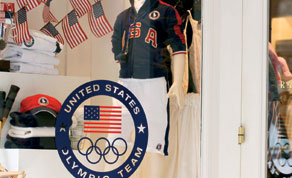
Displays of 2012 USA Olympics clothing at the Ralph Lauren store on Lexington Avenue in New York. Several lawmakers, mostly Democrats, unloaded this week on the US Olympic Committee after news reports that US athletes in this year’s London Games will wear outfits designed by American Ralph Lauren but manufactured mostly in China Reuters/New York Ralph Lauren’s stylish uniforms for the US Olympic team, complete with a jaunty beret, have sparked a political row because the red, white and blue outfits were made in China. With US unemployment hovering just above 8%, politicians have spoken out against the uniforms for the London Games, which start later this month, and six Democratic senators said they plan to introduce legislation requiring the ceremonial uniforms be produced in the US. “At a time when too many Americans are looking for work and our manufacturers are closing factories, we need to do everything we can to keep jobs in America and not give the work of producing our iconic American uniforms for our Olympians to China,” Senator Robert Menendez of New Jersey said in a statement announcing the measure. The senators said they will introduce the “Team USA Made In America Act of 2012” next week. “I call on the USOC (US Olympic Committee) to do the right thing for this summer’s team, and I call on my colleagues to help pass this bill to ensure we don’t find ourselves in this appalling, embarrassing situation before the opening of the Sochi 2014 Winter Olympics,” Menendez said. The committee said in a statement late on Friday that it was too late to change the outfits ahead of the summer games in London, but it had agreed with Ralph Lauren to make apparel for the 2014 Olympic Winter Games in the US. “With athletes having already arrived in London, and the apparel distribution process beginning this weekend, we are unfortunately not able to make a change for London,” it said. “We are absolutely committed, however, to working with our sponsors to ensure that the concerns voiced are addressed. To that end, Ralph Lauren has agreed to domestically manufacture Team USA’s apparel for Opening and Closing Ceremonies for the 2014 Olympic Winter Games.” The proposal from Menendez and Frank R. Lautenberg, of New Jersey, Bob Casey of Pennsylvania, Chuck Schumer and Kirsten Gillibrand of New York and Sherrod Brown of Ohio would amend the Ted Stevens Olympic and Amateur Sports Act, which specifies requirements and rules for the US Olympic Committee (USOC) and its members. A spokeswoman for Menendez said it would be limited to ceremonial uniforms because some athletes may require specific high-performance items for their sport uniforms that simply aren’t produced in the US. The move follows criticism of the uniforms from both political parties on Thursday. Rep. Steve Israel, a Democrat from New York, said the issue was not just about a label, but an economic solution. “Today there are 600,000 vacant manufacturing jobs in this country and the Olympic committee is outsourcing the manufacturing of uniforms to China? That is not just outrageous, it’s just plain dumb. It is self-defeating,” he said. House Speaker John Boehner, a Republican from Ohio, echoed that criticism. “You’d think they’d know better,” Boehner told reporters. The US Olympic Committee defended its decision to have Lauren design the outfits and oversee the manufacturing process. “Unlike most Olympic teams around the world, the US Olympic Team is privately funded and we’re grateful for the support of our sponsors,” spokesman Patrick Sandusky said in a statement.

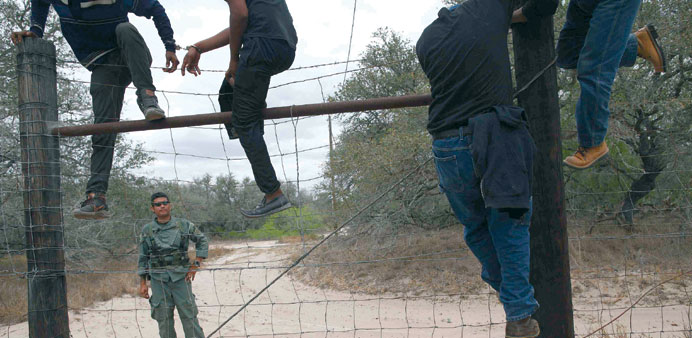
Men are taken into custody by the US Border Patrol near Falfurrias, Texas in this file photo taken on March 29.
International

Negotiators see Senate accord on immigration

Reuters/Washington Prospects for passage of a US immigration bill with strong bipartisan support brightened on Wednesday when a group of Republican and Democratic negotiators reached a tentative deal on ways to shore up US border security, senators said. After days of intensive negotiations, a small group of senators had hit upon a compromise that was being floated more broadly in order to gauge support, Republican Senator Bob Corker of Tennessee told reporters. “I think we’ve overcome the issues that have separated the group in negotiations. I think we’re together now,” Corker said. It was unclear how the new package might be received by senators who are considered to be undecided and Corker did not want to reveal details of the potential compromise. A positive response could mean that the Senate next week would approve a sweeping immigration bill by a huge margin, giving it greater chances of success in the House of Representatives. This bill, the biggest change in US immigration policy since 1986, would put 11mn undocumented residents on a pathway to citizenship, strengthen border security and update the US visa system. Corker indicated that the tentative deal, which still could fall apart, contains additional money, on top of the more than $6bn already in the bill, for border security operations. Some senators have talked about adding funds for additional border patrol agents and high-tech surveillance, such as unmanned, aerial drones. A Republican demand that the Obama administration achieve a 90% success rate in stopping illegal border crossings as a condition for the pathway to citizenship was “not a sticking point anymore”, Corker said. He would not elaborate. Democrats have pressed hard to prevent such a link. Republican Senator Jeff Flake of Arizona, who also has been involved in the negotiations, told reporters that he was “hopeful” about the progress made. Some Democratic senators already were buoyed by Tuesday’s Congressional Budget Office (CBO) report, which concluded that the Senate immigration bill would reduce federal budget deficits by nearly $900bn over 20 years and boost the US economy. The economic projection is “a big game-changer”, New Jersey Democratic Senator Robert Menendez, a member of the bi-partisan “Gang of Eight” that wrote the bill, told Reuters. Menendez said the CBO report undermined Republican arguments that the measure would cost the governmenttns of dollars over the long term, mainly in federal benefit payouts to illegal immigrants who are put on a path to citizenship. Meanwhile, Corker said the CBO’s projection that the bill would reduce illegal border crossing by only 25% “added some momentum to our discussions about doing something very substantial on border security.” Brian Fallon, a spokesman for Democratic Senator Charles Schumer, a member of the “Gang of Eight”, said the CBO report “assumes that some immigrants who enter the country legally will overstay their visas” under new programmes for temporary workers. “The bill creates a system to track people who overstay their visas and prevents employers from hiring them, so the number is likely to be much lower than CBO projects,” he said. The bill faces an uncertain fate in the Republican-led House, where Speaker John Boehner declared on Tuesday that he would only bring immigration measures to the full chamber that enjoy the support of most of his fellow Republicans. Many House Republicans have vowed to oppose a bill like the Senate’s, voicing objections to the pathway to citizenship, which they argue would reward lawbreakers. Yesterday, Congressional sources said that a flood of new federal agents and high-tech surveillance devices would be dispatched to the southwestern US border with Mexico under the deal. The proposal, which could be formally offered as an amendment to the sprawling immigration bill as early as today, would double the overall number of US border patrol agents, according to senior Senate Democratic aides. That would mean assigning 21,000 new officers to the southwestern border in an attempt to shut down future illegal crossings by foreigners. The bipartisan bill also calls for building an additional 50 miles (80km) of fencing to complete a 700-mile (1,130km) border barrier, Senate aides said. At a price tag of around $40bn to $50bn, the amendment, if passed, would represent a potentially massive investment of federal resources in securing the border. While the legislation would authorise these security programmes, it would be up to Congress in the future to actually appropriate the money for them. The deal represents a significant win for Republicans who have been clamoring for tougher border security measures. But Democrats could also claim a victory in fending off Republican attempts to delay legalising 11mn undocumented residents until new border security measures were in place. However, one of the aides said that the newly legalised residents would not get “green cards” allowing permanent resident status until the border security measures were in place. Gaining permanent resident status would take 10 years under the bill, giving the federal government a decade to install the added border manpower and equipment. During debate of the bill by the Senate Judiciary Committee last month, some lawmakers were sceptical that such a huge investment would be a smart use of federal dollars and they questioned whether 700 miles of new fencing was even practical. But supporters of the legislation are hoping to capture the votes of more undecided Republican senators with this deal, improving chances of a major rewrite of immigration law in the more conservative House of Representatives, which is controlled by Republicans. The Senate, controlled by Democrats, 54-46, is expected to vote on passage of the measure by the end of next week, just before Congress begins its Fourth of July holiday recess. Bill backers have long voiced confidence that they will have the 60 votes needed to clear Republican procedural roadblocks. Menendez voiced confidence that all 54 members of the Senate Democratic caucus will support the bill, along with a number of Republicans. Backers have long hoped they could get 70 or more votes for passage in the Senate. Besides the additional agents and fencing, the measure also calls for employing large amounts of unmanned aerial drones, radars and other surveillance devices to catch or deter illegal crossings. The plan brought a harsh reaction from at least one civil liberties and human right group. Christian Ramirez, director of the Southern Border Communities Coalition, said the huge build-up in agents, surveillance hardware and fencing “is expensive and extreme”. In a telephone interview with Reuters, Ramirez expressed fears that adding so many more armed officers would compound problems already being experienced involving fatal shootings of bystanders on either side of the border. “The current force on the US-Mexico border is already excessive. What makes matters worse is that there are no checks and balances” on border patrol activities, Ramirez said. Border patrol officials were not immediately available for comment.      

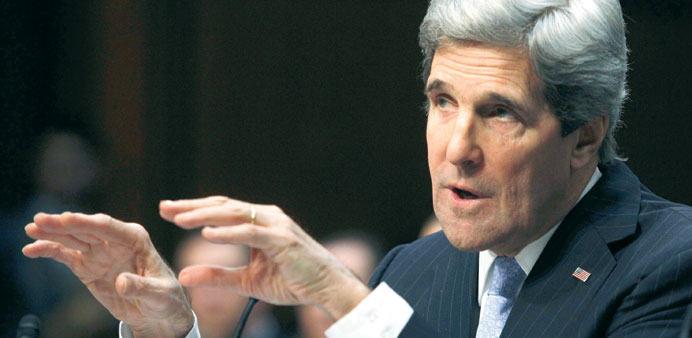
Kerry, Obamau2019s nominee for secretary of state, faces his colleagues as he testifies before the Senate Foreign Relations committee during his confirmat
International

Praise for Kerry at US Senate hearing

Reuters/WashingtonUS Senator John Kerry received backslaps and lavish praise from his Senate colleagues at a hearing yesterday that left little doubt he will win easy confirmation as secretary of state.Appearing before the Senate Foreign Relations Committee which he has chaired for the last four years, the five-term senator from Massachusetts and Vietnam War veteran was praised by Democrats and Republicans alike.“I look at you, in being nominated for this, as someone who has almost led their entire life, if you will, for this moment, being able to serve in this capacity,” said Senator Bob Corker of Tennessee, the top Republican on the panel.“We’re honoured to welcome you as the president’s nominee for a position you have most-deservedly earned,” said Senator Robert Menendez, the New Jersey Democrat who is chairing the hearing for the committee, which is still technically chaired by Kerry.“You will need no introduction to the world’s political and military leaders, and will begin – on day-one – fully conversant not only with the intricacies of US policy, but with an understanding of the nuanced approach necessary,” Menendez added.Kerry was greeted with backslaps as he arrived for his hearing and bantered easily with senators, wryly noting his role reversal after spending 29 years sitting up on the dais and questioning witnesses.“I don’t want this to affect your opening questions, but let me say I have never seen a more distinguished and better-looking group of public officials in my life,” he said to widespread laughter.Several senators said they were certain of his confirmation.The one note of discord during the hearing came when a protester dressed in pink shouted “we need peace with Iran ... I am tired of my friends dying” before being removed by police.Kerry broke no new ground in his testimony, stressing his commitment to President Barack Obama’s policy of seeking a diplomatic solution to persuade Iran to give up its suspected pursuit of nuclear weapons.Iran says its programme is solely for peaceful purposes.“The president has made it definitive – we will do what we can to prevent Iran from obtaining a nuclear weapon. I repeat here today: our policy is not containment,” Kerry said. “He and I prefer a diplomatic resolution to this challenge and I will work to give diplomacy every effort to succeed.” The senator added: “But no one should mistake our resolve to reduce the nuclear threat.”The main vehicle for diplomacy with Iran has been talks between Tehran and the five permanent members of the UN Security Council and Germany, a group collectively known as the P5+1.Kerry said that “everybody’s very hopeful that we can make some progress on the diplomatic front now” and, without disclosing US negotiating strategy, noted Obama had made clear his willingness to have direct negotiations with Iran if need be.His critics have said that Kerry has failed to seek tougher sanctions to discourage the Islamic Republic from pursuing its nuclear programme, but the nominee signaled that he was ready to keep the pressure on Tehran.Kerry told Menendez, one of the Senate’s most ardent advocates of tighter sanctions against Iran, that he was “totally” committed to enforcing them.As a senator, Kerry visited Damascus repeatedly prior to the outbreak of Syria’s devastating civil war and was a proponent of US re-engagement with Syrian President Bashar al-Assad.Kerry said there was a moment where Assad, impelled partly by of his desire to find jobs for his “burgeoning” youthful population, had an interest in improving relations with the US but that he missed the opportunity.“He has made a set of judgments that are inexcusable, that are reprehensible and I think is not long for remaining as the head of state in Syria,” Kerry said.The Yale-educated son of a foreign service officer, Kerry, 69, has long been a specialist in foreign affairs. In the 1960s, he differed from some of his well-heeled peers by enlisting in the US Navy and serving two tours of duty in the Vietnam War.He broke from – and enraged – the military establishment by becoming a prominent anti-war demonstrator after returning home.Bitter personal attacks over that anti-war role helped cost him the presidency in 2004 when he lost to Republican George W Bush.Kerry, who first testified before the committee in 1971 to express his opposition to the Vietnam War, choked up when recalling his father’s service as a career diplomat.“If you confirm me, I would take office as secretary proud that the Senate is in my blood – but equally proud that so, too, is the foreign service,” he said.

Veterans of the Ukrainian National Guard Azov battalion conduct military exercises for civilians amid threat of Russian invasion in Kyiv, Ukraine, yesterday. (Reuters)
International

Nato has concerns over Europe’s energy security

Europe needs to diversify its energy supplies, the head of Nato said yesterday, as Britain warned it was “highly likely” that Russia, the continent’s biggest natural gas supplier, was looking to invade Ukraine. Russia has massed some 120,000 troops near its neighbour and demanded the western defence alliance pull back troops and weapons from eastern Europe and bar Ukraine, a former Soviet state, from ever joining the Western defence alliance. US officials said on Saturday Russia’s military buildup had been expanded to include supplies to treat casualties of any conflict. Across the border in Ukraine, locals trained as army reservists as the government scrambled to prepare. In a sign of the tensions, Canada said yesterday it was temporarily withdrawing non-essential personnel from its embassy in Ukraine but added that the embassy would remain open. The United States, which has threatened Russia with major new sanctions if it invades Ukraine, has said it is waiting to hear back from Moscow. It says Nato will not withdraw from eastern Europe or bar Ukraine from joining Nato, but it is prepared to discuss topics such as arms control and confidence-building measures. US senators are very close to agreeing on sanctions legislation, the two leading lawmakers working on the bill said yesterday. Measures include targeting the most significant Russian banks and Russian sovereign debt as well as offering more lethal assistance to Ukraine. Some of the sanctions in the bill could take effect before any invasion because of what Russia has already done, said US Senators Bob Menendez, the Democratic chairman of the Senate Foreign Relations Committee, and James Risch, the panel’s top Republican. Menendez pointed to cyberattacks on Ukraine, false flag operations and efforts to undermine the Ukrainian government internally. Washington has spent weeks trying to build agreement with European partners on a strong sanctions package, but the issue is divisive, with Germany urging “prudence”. The European Union depends on Russia for around a third of its gas supplies and any interruption would exacerbate an existing energy crisis caused by a shortage. “We are concerned about the energy situation in Europe because it demonstrates the vulnerability of being too dependent on one supplier of natural gas and that’s the reason why Nato allies agree that we need to work and focus on diversification of supplies,” Nato Secretary-General Jens Stoltenberg said. Britain said yesterday it would expand the scope of its own possible sanctions in legislation this week to deter Russian President Vladimir Putin. “We think it’s highly likely that he is looking to invade Ukraine. That is why we’re doing all we can through deterrence and diplomacy, to urge him to desist,” Foreign Secretary Liz Truss told BBC television. Truss, who is due to visit both Ukraine and Russia in the next two weeks, told Sky News the legislation would enable Britain to hit a much wider variety of targets “so there can be nobody who thinks that they will be immune to those sanctions”. Asked if the new powers could include the ability to seize property in London, Truss said: “Nothing is off the table.” The Center for American Progress, a US think tank, has said Britain would face a challenge uprooting wealthy Russians with Kremlin links from London given close ties “between Russian money and the United Kingdom’s ruling conservative party, the press, and its real estate and financial industry”. Asked about this, Truss said: “There’s a real threat here to freedom and democracy in Europe. And that is more important than short-term economic gains, both for the United Kingdom but also for our European allies.”

Al Rayyan players celebrate one of their goals against Al Kharaitiyat.
Sport

Big win for Al Rayyan, Gharafa beaten again

Al Rayyan eased past relegation-threatened Al Kharaitiyat 6-0, while Al Gharafa’s bid to finish in the top four suffered another blow after they were beaten 3-1 by Al Ahli in the QNB Stars League yesterday. Al Kharaitiyat were never going to pose any problems for the Lions – they have won only one of their 15 matches so far while losing 14 – and sure enough their struggles were plainly evident early on in the match when Ali Fayez scored an own goal in the very first minute. Al Rayyan captain Rodrigo  Tabata, who picked up a loose ball inside the Al Kharaitiyat box, crossed to Sebastian Soria, but Fayez deflected the ball into his own net with keeper Ahmed Sofyan in no position to stop the ball.  Soria (24th minute), Lucca Borges (69th and 84th), Tabata (71st) and Jonathan Menendez (84th) then produced classy goals to complete Al Rayyan’s commanding show. Al Rayyan doubled their lead through a combined effort from seasoned duo Tabata and Soria. The Al Rayyan skipper curled in a corner kick and Soria, stationed just a few metres away from Al Kharaitiyat goalmouth, back-headed the ball into the net with a short jump. Al Rayyan went 3-0 up when Lucca headed home from an acute angle off a loopy cross that came his way. The Lions jumped to a 4-0 cushion following a powerful drive by Tabata off a cross from Soria. Lucca then drilled in a low deflection from close range off a cross from Menendez, who also netted a goal just a minute later following a cross from Khalfan Ibrahim. Al Rayyan have 27 points from 15 matches and are in third position, behind leaders Al Duhail and second-placed Al Sadd. Al Ahli, meanwhile jumped to fourth after their commanding win over Al Gharafa, who were thrashed 8-1 by Al Sadd last week. Al Ahli have now gone eight matches without defeat, a sensational run for a team who were initially not favoured for a top-four finish. Mohamed Muntari (first minute), Abdelrehman Mustafa (58th) and Nigel de Jong (83rd) scored the goals for the visitors at the Al Gharafa Stadium, where Amro Seraj (37th) was on target for the home side. In just the first minute of their Round 15 clash, following a loopy Mohsine Moutaouali cross that landed at his feet, Muntari outpaced his marker and shot the ball into the net for Al Ahli’s first goal. The early strike brought a huge smile to coach Milan Macala. Al Gharafa equalised when Seraj made the most of a fumble by keeper Ivanildo Rodrigues. Stationed just a few feet away from Santos, who failed to pouch a low cross from the flank, Seraj quickly sent the ball into the net with a low right-foot drive. It was Seraj’s third goal of the season. A couple of minutes later, Al Gharafa’s Ahmed Alaaeldin failed to send the ball into an open net from close range off a cross from the flank. Just two minutes before the end of first half, Al Ahli’s Mohamed Reza was booked with a yellow for a reckless tackle in his own box. In the second half, Mustafa helped Al Ahli take the lead with a left-footed drive from inside the Al Gharafa box with only keeper Ali to beat. It was Mustafa’s third goal of the season. De Jong then fired a bullet from 25 yards out into the net in spectacular fashion to complete the scoring.