Search - World Summit for Social Development

Friday, October 16, 2026 | Daily Newspaper published by GPPC Doha, Qatar.

Search Results for "World Summit for Social Development" (360 articles)

All words
Gulf Times
Qatar

Qatar Charity project to protect children in Syria

With generous support from Qatari people, Qatar Charity continues its humanitarian efforts to support the most vulnerable groups in northern Syria. The 'Our Children's Safety' project in partnership with the Syrian Forum in Azaz City aims to enhance the protection of children affected by crises and provide a safe and supportive environment for them and their families. The project's launch coincides with the upcoming Second World Summit for Social Development in Doha next week. The topics to be discussed include comprehensive policies that promote fair opportunities for all and accelerate efforts towards social inclusion. The project benefits more than 3,900 children, families, and caregivers annually through a range of integrated activities, including psychosocial support sessions, awareness programmes on child protection issues, and training sessions for mothers and fathers, in addition to providing case management services for children most at risk. Mohammed Barakat, deputy director of Social Affairs and Labour in Aleppo, stated during the opening ceremony: "Many thanks to Qatar Charity, the Syrian Forum, and the generous supporters in Qatar for establishing such centres." Karam Ali, director of QC's office in Turkey, said the project is aimed at protecting children's rights and improving their psychological and social well-being in crisis areas, in line with its humanitarian principles of childcare and mitigating the impact of conflict on communities.

Gulf Times
Opinion

Qatar’s support for Unesco’s global projects wins praise

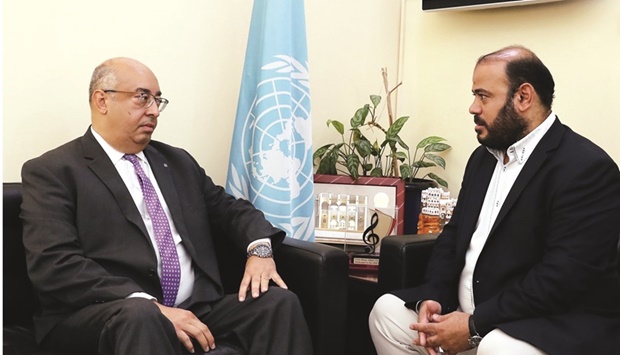
UN Educational, Scientific and Cultural Organisation (Unesco) Representative for the Gulf States and Yemen and Director of the Unesco Regional Office in Doha Salah El Din Zaki Khaled has praised Qatar’s support for Unesco projects around the world, stressing the UN’s interest in strengthening partnership with all institutions and ministries in Qatar. In an interview with Qatar News Agency (QNA), on the occasion of the recent assumption of his new position, Khaled said that Unesco’s work in Qatar during the past several years has been characterised by deep relations and strong partnerships, especially with the continuous support of various institutions in Qatar for Unesco programmes, including Qatar Foundation (QF), Education Above All Foundation, Katara – the Cultural Village Foundation, Qatar Museums, Qatar National Library, and others, as well as the Qatari government’s support for Unesco projects worldwide. From the beginning, Qatar has strongly supported Unesco’s programmes. As a result of its commitment and efforts, Qatar has hosted Unesco’s Al Reem Biosphere Reserve since 2007, which has provided unparalleled research opportunities for sustainable development and the use of arid lands. There is also a Unesco-Unevoc Centre located within the Doha University of Science and Technology, which aims to promote technical and vocational education and innovation in the country and abroad, he said. In the past few years, Qatari universities have established three Unesco “chairs” in various scientific fields, and the cities of Doha and Al Wakra are part of the Unesco Global Network of Learning Cities (GNLC). The archaeological site of Al Zubarah was registered as the first Qatari site to be inscribed on the World Heritage List in 2013, while Doha was recognised in 2021 as a part of Unesco Creative Cities Network. Moreover, a programme was launched with the Katara – the Cultural Village Foundation for the first festival for cultural diversity, and a regional programme in co-operation with the Qatar Library aimed at protecting documentary heritage was launched. He also noted the recent election of Qatar as a member of the World Heritage Committee, where Qatar was already a member of many of the organisation’s committees. Qatar’s recent election as a member of the World Heritage Committee confirms Qatar’s full awareness of its obligations towards the various conventions and legal instruments of Unesco and its commitment to exchanging experiences and deepening learning from various processes. It is also an opportunity to learn more about global experiences and good practices in line with the principles of integrity and authenticity. Khaled stressed that Unesco, which has been present in Qatar since 1976, is looking forward to strengthening its partnership with Qatar with more activities and programmes in the coming years. He pointed out that after consultations and interviews with a number of senior Qatari officials, including HE the Minister of Education and Higher Education Buthaina bint Ali al-Jabr al-Nuaimi and HE the Minister of Culture Sheikh Abdulrahman bin Hamad bin Jassim bin Hamad al-Thani, they have agreed on broad lines of co-operation between Qatar and Unesco in the next stage in all areas and programmes of the organisations work related to education, culture, and science. He pointed out that the priority for both sides is to enhance the country’s national heritage, keeping pace with the pioneering role of Qatar in the process of education transformation, as Qatar played an important role in preparing for the Transforming Education Summit that will be held in New York in September. The organisation is participating with Qatar in all the efforts that Qatar will make in this field. Khaled revealed the readiness of Unesco and the UN organisations present in Doha to participate in the activities of the FIFA World Cup Qatar 2022, which are organised by the Education Above All Foundation during the tournament. A daily exhibition will be held on the United Nations 17 Sustainable Development Goals 2030. Unesco will also support the fourth goal on education, as well as goals related to the environment, freedom of media and opinion and everything related to the creative and cultural industries. Khaled also praised the efforts of Qatar’s government to consolidate a culture of peace and dialogue at the global level and highlight partnerships with Unesco, which was established with the aim of promoting lasting peace through the fields of education and culture. He stressed Qatar’s keenness to establish a basis for dialogue between different cultures and common understanding through its many partners. This also includes Qatar’s support for declaring September 9 the International Day to Protect Education from Attacks and raising awareness of the plight of millions of children and youth living in countries affected by conflict. The joining of Qatar schools to the Unesco Global Network (ASPnet) reinforces the interest of education in Qatar, with Unesco educational institutions around the world, in a common goal of building peace in the minds of children and youth, as member schools promote the ideals and values of Unesco by promoting the human, ethical, cultural and international dimensions of education, as well as supporting international understanding, peace, intercultural dialogue, sustainable development and quality education in practice, Khaled added. He stressed on the interest of the Unesco Regional Office for the Gulf States and Yemen in promoting a stronger partnership and continuous cooperation with all Gulf countries and Yemen. Recently, plans were drawn up to support Unesco programmes in all these countries and to contribute to strategies and development plans for each country separately, noting that the organisation contributes to activating the United Nations frameworks for co-operation in the field of sustainable development for the next five years in Saudi Arabia, Kuwait and Yemen in the main areas of Unesco’s work, namely education, science, culture, media and informatics. This contribution will be strengthened in the coming period within the framework of specific projects in each of these countries with regard to developing the education sector in particular, after agreeing on a new roadmap after the Education Transformation Summit next September. The Director of the Unesco office stressed that the organisation will also contribute to the development of everything related to cultural heritage in the region, especially the creative industries and ways to preserve tangible and intangible heritage, in addition to encouraging the submission of new proposals to the Unesco World Heritage List, as well as in the science sector and the cooperation with all the relevant sectors on projects to preserve the environment and deal with climate change and its effects. As for the communication and information sector, he added that work is underway with governments and institutions to support the media and awareness sectors and combat misinformation and violence and hatred on social media platforms, especially among young people. He stressed the importance of promoting creative industries in the Gulf region and strengthening them in the regional environment, as the region have rich heritage, and therefore needs to transform creative industries from informal activities to an economic sector that contributes to development and operate a larger number of factories related to these industries, pointing to the importance of developing creative industries in various fields, including cinema and music. The Director of the Unesco office noted the continuation of the Organisation’s work in preserving archaeological and historical sites in Yemen and rebuilding archaeological and historical buildings and sites that were affected by the armed conflict, saying that the largest project of the Unesco Regional Office in the Gulf States and Yemen is related to Yemen, as the office have funding from the European Union that amounts to 200mn euros to implement second phase of the restoration of buildings that were affected as a result of the conflict, as well as restore all historical buildings and markets in the cities of Aden, Sanaa and Zabid. Thousands of young men and women have been working in renovations, he said, pointing out that 400 historical homes have been restored,and a traditional brick-making plant has been established to rebuild these buildings. He added that in the next stage, the geographical scope of this project will be expanded to include eight governorates in Yemen, including Socotra Island, to revive the creative and cultural industries to provide means of livelihood for youth and communities, as well as organise events related to Yemeni heritage worldwide. For example, events on Yemeni heritage will be organised in Paris, as well as Doha in the near future. Khaled pointed out that an agreement was signed between the Unesco office in Doha and Qatar National Library recently regarding co-operation in organising an exhibition on the documentary heritage of Yemen, which will be launched from May to July 2023. He explained that this exhibition relies on unique photographs and manuscripts about Yemen in order to enrich awareness of the importance of protecting the documentary heritage of Yemen and draw attention to the need to preserve it, emphasising also the interest and focus of Unesco on supporting the education sector in Yemen during the coming period.

Dudley Reynolds
Opinion

Opportunities for language education in a (post) pandemic world

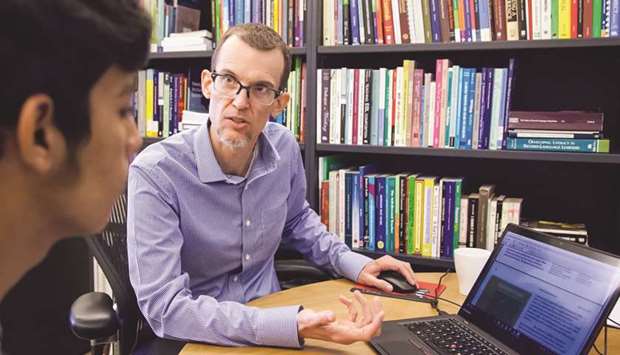
Dudley Reynolds, Co-Area Head of Arts and Sciences and Teaching Professor of English at Carnegie Mellon University in Qatar – a Qatar Foundation partner university – on why students need to be allowed to experience how “multilingualism makes a place richer” I believe that schools should do more than pass along the past; they should lay the foundation for a better future. They should try to make the community they serve a smarter, fairer, and more welcoming place. The past year has made us all very aware of the dangers and injustices of a divided world. During the Covid-19 pandemic, we have seen how inequities in healthcare, living conditions, and economic security mean that some people fare better than others. We have also realised how none of us will be healthier than the least healthy among us.   We must begin to dismantle the barriers within our communities that lead to economic disparities, and also those that cause us to see the person beside us as a “worker,” a “citizen,” an “Arab,” or a “Black person” before we see them as a human being. Jobs, nationalities, and races should never be ignored – they are important parts of who we are. But we must realise that all jobs, all nationalities, and all races contribute to the well-being of our world. How can we teach this? Last year I authored a report on Language Policy in Globalised Contexts for the World Innovation Summit for Education (WISE), Qatar Foundation’s global education initiative. I argued that if schools want to improve their communities and begin dismantling social barriers, they need to rethink how they use and teach languages. They should challenge the perception that some languages are more valuable than others. Too often, languages spoken at home are not used in school. A United Nations report estimates that as many as 40% of students worldwide have to study in a language they do not fully understand. In addition to making learning difficult, this result of a policy decision tells them their home language is not good enough for school. It makes them question whether they are part of a community.  Moreover, when teaching Arabic or English or Malayalam, we often focus on one language at a time and forbid all others. This suggests that what we know about one language is not helpful when learning another language, that languages somehow compete for mental space. It also presents a false picture of how languages are spoken in the world outside the classroom.  Go into any shop in Qatar and you will hear multiple languages being spoken, often by the same individual as part of a single conversation. Skilled users of language can easily go between multiple languages. They recognise connections and use what they know in one language to help them with another. They have a deep understanding of how all languages work as a medium for informing, persuading, and entertaining. Seeing how social divisions have exacerbated the impact of Covid-19, I realise even more the imperative of valuing and supporting what each student thinks of as “their” languages, of including in school curricula multiple opportunities to learn additional languages that increase economic opportunities and open up different ways of seeing the world. Students need to feel valued by their community; they need to value people who are different from them. They need the mental exercise that comes with making connections between languages. They need to leave behind fears of languages they do not understand and experience first-hand how multilingualism makes a place richer.    The changes that I am asking for are more than token acknowledgment of diversity. As detailed in the report, they involve changes to how we structure curricula, the financial support we provide for learning inside – as well as outside – schools, the power we give teachers to design instruction for their individual students, and even what we teach as language knowledge.  While working on the report, I had the chance to observe specialists from Qatar Foundation’s Education Development Institute working with schools from Qatar Foundation’s Pre-University Education to implement such changes. They started by asking school leaders about their own experiences hearing and learning languages and what they could do to value the experiences of each of their students. Real, practical changes that can be implemented at the level of individual schools begin with crafting a broad, shared vision for how each individual should feel as part of a community.  As we emerge from an isolated and divided pandemic world, I hope we will envision the opportunities education systems worldwide provide to promote languages and multilingualism as vehicles for collaboration and community building. *Dudley Reynolds is Co-Area Head of Arts and Sciences and Teaching Professor of English at Carnegie Mellon University in Qatar. In 2016-2017, he served as President of TESOL International Association, the world’s largest professional association for teachers of English to speakers of other languages. He has been a teacher and researcher of multilingual language learners for more than 30 years. In addition to language education policy, his research addresses developmental patterns in additional language learning, curricular and pedagogical approaches to literacy development, teacher education and learning. Qatar Foundation – Unlocking Human Potential Qatar Foundation for Education, Science and Community Development (QF) is a non-profit organisation that supports Qatar on its journey to becoming a diversified and sustainable economy. QF strives to serve the people of Qatar and beyond by providing specialised programmes across its innovation-focused ecosystem of education, research and development, and community development. QF was founded in 1995 by His Highness Sheikh Hamad bin Khalifa al-Thani, the Father Amir, and Her Highness Sheikha Moza bint Nasser, who shared the vision to provide Qatar with quality education. Today, QF’s world-class education system offers lifelong learning opportunities to community members as young as six months through to doctoral level, enabling graduates to thrive in a global environment and contribute to the nation’s development. QF is also creating a multidisciplinary innovation hub in Qatar, where homegrown researchers are working to address local and global challenges. By promoting a culture of lifelong learning and fostering social engagement through programs that embody Qatari culture, QF is committed to empowering the local community and contributing to a better world for all. For a complete list of QF’s initiatives and projects, please visit: www.qf.org.qa  For any media inquiries, please contact: [email protected]

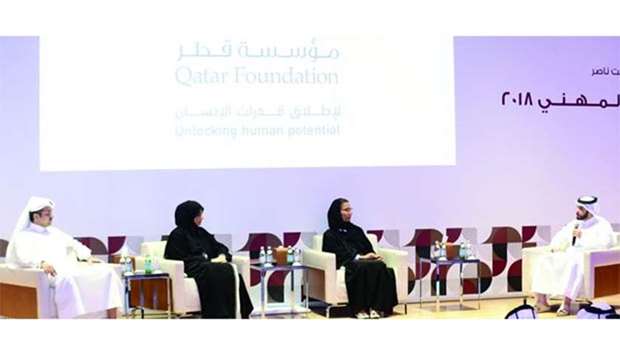
The Career Guidance Stakeholders Platform 2018's opening yesterday featured a plenary session, which brought together (from left) Saif al-Kaabi, Fawzia Abdulaziz al-Khater and Professor Sheikha Abdulla al-Misnad. It was moderated by Al Arab managing editor Jaber bin Nasser al-Marri. PICTURE: Shaji Kayamkulam.
Qatar

Top experts converge for career summit

More than 250 policy-makers, decision-makers and senior executives from various government institutions from Qatar and international organisations from the rest of the world took part in the second edition of Career Guidance Stakeholders Platform yesterday at the Qatar National Convention Centre. The event, organised in partnership with the Unesco Doha Office and the Ministry of Education and Higher Education, comes within the framework of Qatar Career Development Centre’s (QCDC) commitment to delivering on the priorities stipulated by His Highness the Emir Sheikh Tamim bin Hamad al-Thani in his address to citizens and residents of Qatar in July 2017. He stressed the importance of investing in the development of national human capital. The event, under the patronage of Her Highness Sheikha Moza bint Nasser, Chairperson of Qatar Foundation (QF) and organised by QCDC, a member of QF, was attended by HE the Minister of Culture and Sports Salah bin Ghanem bin Nasser al-Ali, HE the Minister of Administrative Development, Labour And Social Affairs Dr Issa Saad al-Jafali al-Nuaimi and HE the Minister of Education and Higher Education Dr Mohamed Abdul Wahed Ali al-Hammadi and other senior QF officials. Themed ‘Moving Operationally to Strategically Enhance Career Guidance in the State of Qatar’, Career Guidance Stakeholders Platform 2018 is in line with QF’s efforts to promote career guidance in Qatar. “Nation-building requires a diverse set of competencies, skills, and jobs to ensure self-sufficiency when it comes to the local labour force required to bolster the state’s economy at present and in the future,” QCDC director Abdulla al-Mansoori told participants yesterday, including representatives from Unesco and various ministries in Qatar. He added that QCDC is collaborating with the Ministry of Education and Higher Education, Unesco and public and private institutions to create a framework for the development of standards and policies for career guidance at the national level. The Centre also wants to identify the roles and responsibilities of stakeholders in the implementation of this strategy inspired by the Qatar Education and Training Strategy 2017-2022. “This event highlights the importance of integrating technology-based career guidance services and resources and applying Unesco’s technical and vocational education and training (TVET) standards,” al-Mansoori added. Representatives from educational institutions such as QF, Qatar University (QU), Community College of Qatar, College of the North Atlantic – Qatar, and national talent development committees in institutions like Hamad Medical Corporation, Qatar Petroleum, Sidra Medicine, and Qatar Airways also participated in the event. “After this event, we will first seek to agree on a strategy and standardised policies that will identify how different government sectors and agencies could work together in harmony for a common goal. As we move forward, such strategies would serve as catalysts that would speed up the development process,” keynote speaker Dr Raimo Vuorinen, Associate Professor at the Finnish Institute for Educational Research, at the University of Jyvaskyla, Finland and Vice-President of the International Association for Vocational and Educational Guidance, said. In her speech, Dr Faryal Khan, programme specialist for Education, Unesco Doha Office, stressed that: “Qatar, alongside its partners on the national, regional, and global levels, is a leading country in promoting career guidance in accordance with a well-planned agenda that falls in line with its national strategies and vision.”

Gulf Times
Qatar

Qatar committed to goal of sustainable development

By Dr Saleh al-Nabit/Secretary General, General Secretariat for Development Planning At the Rio+20 United Nations Conference on Sustainable Development, held in Rio de Janeiro, Brazil in June 2012, the State of Qatar renewed its commitment to sustainable development and to “ensuring the promotion of an economically, socially and environmentally sustainable future for our planet and future generations”. Participants at the Rio+20 Conference, a 20-year follow-up to the 1992 Earth Summit which had led to Agenda 21 and the landmark conventions on climate change and biodiversity, committed to further mainstream sustainable development at all levels, integrating their economic, social and environmental aspects. There was general recognition that future patterns of production and consumption need to be more sustainable. Qatar National Vision 2030 At Rio+20, world leaders signed on to a document The Future We Want which in many ways reaffirmed at the global level what is foreseen for the State of Qatar in the Qatar National Vision 2030 (QNV) and what we are now implementing in Qatar National Development Strategy 2011-2016 (NDS). QNV/NDS  are rooted in the principles of sustainable development, and our people are at the centre of national efforts to advance sustainable development. The QNV/NDS recognise that Qatar has been developing at an unprecedented speed. Its very rapid economic growth, spatial development, natural resource use and exceptionally high population growth have resulted in environmental stresses. They recognise too that overly aggressive economic development could lead to economic overstress and risk tipping the environmental scales. So we set out a path for development that balances the needs for economic growth and social development with environment protection. Qatar’s future development path will be compatible with the requirements of sustainable development. We are ensuring, inter alia, effective environmental policies and regulations, the application of best available technology, the development of strong environmental institutions, and advocacy campaigns for behavioural change. The NDS, which is being co-ordinated by the General Secretariat for Development Planning (GSDP), outlines the programmes and projects being implemented by ministries and agencies across government, with measurable outcomes and targets, that will help Qatar achieve our Vision of sustainable development.  Reducing Emissions from Gas Flaring Qatar is hosting the eighteenth Conference of the Parties (COP 18) under the United Nations Framework Convention on Climate Change (UNFCCC), to be held in Doha between 26 November to 7 December 2012. The Convention provides that parties should protect the climate system for the benefit of present and future generations in accordance with their common but differentiated responsibilities. That Qatar is hosting COP 18 is a clear indication of the national commitment to sustainable development in general, and to a reduction in greenhouse gases in  particular. Climate change has been identified as the most pressing global environmental problem with potentially catastrophic consequences for human development, human health, coastal zones and marine biodiversity. Qatar is committed to eliminating inefficiencies that raise CO2 emissions, and to working with multiple partners to address global climate change challenges. Qatar, like its Gulf neighbours, is highly vulnerable to the adverse impacts that would result from rising temperatures. CO2 emissions, mostly from energy production, add to greenhouse gases and contribute to global climate change.  Qatar is developing a national policy to manage greenhouse gas emissions and the broader challenges of climate change. All sectors of society, especially the private sector, are playing a role. While Qatar’s CO2 emissions continued to rise over the decade 2000 to 2010, the rate of increase slowed markedly between 2007 and 2010.  Almost two thirds of CO2 emissions stem from the hydrocarbon  industry. The slower increase in CO2 emissions stems from marked reductions in gas flaring and venting.  Qatar’s flaring volume declined by half between 2008 and 2010, meeting the NDS target set for 2016, as the impact of new technologies to reduce emissions started to take effect (Figure 1). Frontier Technology Research As foreshadowed in the QNV/NDS, there are further ongoing initiatives to reduce carbon emissions, especially from gas flaring and venting, including through new legislation to limit emissions, investment in cleaner technologies, and improvements in industrial standards and processes. For example, as part of a National Flaring and Venting Reduction Project, formal reporting requirements and voluntary reduction targets for industries are being introduced. The flaring reductions stem from reduced routing flaring and best-practice non-routing flaring among existing facilities, as well as clear standards for new facilities to minimise flaring.  The project is initially targeting the largest companies responsible for the bulk of flaring-related emissions. Qatar, in multiple partnerships, is at the forefront of developing environmentally sound, cleaner and energy-efficient technology (Figure 2). Innovative research is underway on new carbon capture and sequestration technology, including at the Imperial College London’s Centre for Carbon Capture and Storage, which is working  in partnership with the Qatar Science and Technology Park. A Better Future Qatar’s long-term development outcomes of our Vision emphasise the need to strike a careful balance between the interests of the current generation and the interests of future generations. The country’s substantial economic gains provide a solid foundation for this, and through the NDS, returns from the current use of non-renewable resources will be further channelled into both physical and human capital formation. Given the wisdom and foresight of Qatar’s leaders and people, there will be increasing harmony between economic growth, social development and environmental management.

Gulf Times
Qatar

Sheikha Moza meets UN deputy secretary-general

Her Highness Sheikha Moza bint Nasser, Chairperson of Qatar Foundation (QF) and the Education Above All (EAA) Foundation, met today with UN Deputy Secretary-General Amina Mohammed, on the sidelines of the Second World Summit for Social Development.**media[378049]**The meeting discussed the efforts undertaken by the Education Above All Foundation and the UN to protect education in conflict zones, reduce the number of out-of-school children, and empower youth. It also reviewed ongoing collaboration with Qatar Foundation in the field of technology and innovation in education.

Gulf Times
Qatar

King Philippe tours QF with Sheikha Moza

Her Highness Sheikha Moza bint Nasser, Chairperson of Qatar Foundation (QF), met with King Philippe of the Kingdom of Belgium Wednesday at the QF Headquarters in Education City.**media[377979]**His visit took place on the sidelines of his participation in the Second World Summit for Social Development, hosted in Doha.Her Highness accompanied the king on his tour that highlighted QF's vision to advance education, research and innovation.**media[377980]**They also visited Hamad bin Khalifa University where they met with students who shared their academic experiences and spotlighted the Education City multiversity model, which connects QF students to a wider academic network of international partner universities and advances the exchange of knowledge and expertise.

Gulf Times
Qatar

Armenia president arrives in Doha

The President of the Republic of Armenia Vahagn Khachaturyan arrived in Doha on Monday to participate in the Second World Summit for Social Development, which Qatar is hosting from November 4 to 6.Upon his arrival at Hamad International Airport, Khachaturyan was welcomed by HE Ibrahim Yousef Fakhro, Director of the Protocol Department, the Ministry of Foreign Affairs, and Tigran Gevorgyan, Ambassador of the Republic of Armenia in Doha.

Gulf Times
Qatar

Comoros president arrives in Doha

The President of the Union of the Comoros, Azali Assoumani arrived in Doha on Monday to participate in the Second World Summit for Social Development, hosted by the State of Qatar from 4 to 6 November.Upon arrival at Hamad International Airport, Assoumani and his accompanying delegation were welcomed by HE Director of Protocol at the Ministry of Foreign Affairs, Ibrahim bin Yousif Fakhro.

Gulf Times
Qatar

President of Tajikistan arrives in Doha

The President of the Republic of Tajikistan, Emomali Rahmon arrived in Doha on Monday to participate in the Second World Summit for Social Development, hosted by the State of Qatar from 4 to 6 November.Upon arrival at Hamad International Airport, Rahmon and his accompanying delegation were welcomed by HE Director of Protocol at the Ministry of Foreign Affairs, Ibrahim bin Yousif Fakhro and the Ambassador of the Republic of Tajikistan to the State of Qatar, Nurmurod Mahmadali.

Gulf Times
Qatar

President of Transitional Presidential Council of Haiti tours NMoQ

The President of the Transitional Presidential Council of the Republic of Haiti, Anthony Frank Laurent Saint-Cyr, and his accompanying delegation visited the National Museum of Qatar (NMoQ) on Monday.The visit came as part of his participation in the Second World Summit for Social Development, scheduled to convene on Tuesday.During the tour, Saint-Cyr viewed the museum's most prized collections across its various galleries and received a comprehensive briefing on its precious treasures, which span multiple eras.He was accompanied by HE Director of the National Museum of Qatar Sheikh Abdulaziz bin Hamad Al-Thani.

Gulf Times
Qatar

DRC president arrives in Doha

President of the Democratic Republic of Congo, Felix Tshisekedi, arrived in Doha yesterday to participate in the Second World Summit for Social Development, hosted by Qatar from Nov 4 to 6. He was welcomed upon arrival at Hamad International Airport by the HE Director of Protocol, Ibrahim bin Yousif Fakhro, and ambassador of the Democratic Republic of Congo, Valerie Lusamba Kabeya.