Search - World Summit for Social Development

Friday, October 16, 2026 | Daily Newspaper published by GPPC Doha, Qatar.

Search Results for "World Summit for Social Development" (360 articles)

All words
Gulf Times
Qatar

Cabinet holds weekly meeting

HE Prime Minister and Minister of Foreign Affairs Sheikh Mohammed bin Abdulrahman bin Jassim Al-Thani chaired the Cabinet's regular meeting held on Wednesday morning at the Amiri Diwan.At the outset of the meeting, His Excellency commended the outcomes of the Second World Summit for Social Development (WSSD2) held in Doha during the period of Nov. 4-6, under the chairmanship of HH the Amir Sheikh Tamim bin Hamad Al-Thani.The Cabinet affirmed that the summit, with its broad and high-level participation, rich discussions, diverse activities, practical solutions and proposals, and the visions, ideas, pledges and commitments included in the Doha Political Declaration - culminated during the summit, has marked a milestone in the course of social development across the globe, and has laid strong and solid foundations for global, comprehensive and sustainable social development.The Cabinet expressed its gratitude to all the relevant ministries and state agencies, whose outstanding efforts had the greatest impact on the successful organization of the conference and its achievements.After that, the Cabinet considered the topics on its agenda, as it approved a draft law issuing a unified system (law) for international land transport between the Gulf Cooperation Council (GCC) countries.The Cabinet decided to approve a draft memorandum of understanding (MoU) on cooperation between Qatar Fund for Development (QFFD) in the State of Qatar and the Egyptian Agency of Partnership for Development (EAPD) in the Arab Republic of Egypt for the year 2025, a draft MoU on cooperation between Qatar Central Bank (QCB) in the State of Qatar and the Central Bank of Azerbaijan in the Republic of Azerbaijan, and a draft letter of intent for cooperation in the health field between the government of the State of Qatar and the government of the Republic of Finland.The Cabinet concluded its meeting by reviewing two reports and taking the appropriate measures in their regard. The documents included a report on the outcomes of the visit of HE Minister of Endowments and Islamic Affairs to the People's Democratic Republic of Algeria in September 2025, and a report on the outcomes of participation in the 11th meeting of the Committee of Ministers of Social Affairs and Development of the GCC countries (Kuwait - September 2025).

Gulf Times
Qatar

UN OCHA, Qatar Airways launch humanitarian partnership

Assistant Secretary-General of the United Nations and Deputy Emergency Relief Co-ordinator Joyce Msuya has said that Qatar has emerged as a powerful force in humanitarian diplomacy, building bridges, offering support, and proving that global solidarity remains alive in an era of division . Her remarks came during the launch ceremony of a new partnership between the United Nations Office for the Co-ordination of Humanitarian Affairs (OCHA) and Qatar Airways, aimed at sharing humanitarian stories with millions of travellers worldwide. She added that they are doing this through a new in-flight video that highlights the power of global solidarity and invites every passenger to be part of the solution. Speaking on the final day of the Second World Summit for Social Development, Msuya praised the summit’s spirit of solidarity and international cooperation, echoing the words of His Highness the Amir Sheikh Tamim bin Hamad al-Thani, earlier this week. She noted that solidarity has enabled the world, in the three decades since the Copenhagen Summit, to lift over a billion people out of extreme poverty. Thanks to global solidarity, people are living longer, and more girls are attending school than ever before. **media[378842]** She emphasised that solidarity will be key to transforming the vision of the Doha Declaration into reality, a vision rooted in human dignity, equality, and peace. “True development,” she quoted the Secretary-General, “is not about prosperity for the few but opportunities for the many.” Msuya reiterated OCHA’s pride in partnering with Qatar Airways to share humanitarian stories with millions of passengers. She stressed that this is more than a partnership, it’s a meeting of minds. She added that they share a commitment to supporting the world’s most vulnerable, bringing people together, and promoting values of solidarity and compassion. She highlighted the significance of this partnership, which unites three essential forces: governments, the private sector, and the United Nations. When these forces collaborate, she explained, they can truly ensure no one is left behind, and that matters now more than ever. Addressing the global challenges of inequality, conflict, and climate shocks affecting the poorest communities, Msuya pointed out that over 300mn people worldwide are trapped in emergencies not of their making. They need hope and help, today, not tomorrow. Beyond the video campaign, OCHA and Qatar Airways are expanding their cooperation to include emergency air transport, cargo delivery, public engagement, and fundraising. Together, she said, they can move faster, reach more people, and turn compassion into action. She concluded by emphasising that social development is not just about policy, it’s about people. She added that it’s about inclusion, opportunity, and the belief that no one should be neglected because of where they were born or the crisis they face. She said that this is what Qatar has championed through this summit. It’s what Qatar Airways and OCHA are putting into practice, adding that it’s what we must all commit to, especially in a time when solidarity feels increasingly scarce.

Gulf Times
Qatar

Qatar to host 6th Global Ministerial Mental Health Summit

The State of Qatar, represented by the Ministry of Public Health, is set to host the Sixth Global Ministerial Mental Health Summit, which will take place in Doha on 30 September and 1 October 2025, under the theme "Transforming Mental Health through Investment, Innovation and Digital Solutions".The summit will witness broad participation from health ministers, experts, and specialists worldwide, alongside international organisations concerned with mental health.The ministerial summit will feature a rich programme of sessions and events, including two panel discussions, six workshops and several accompanying activities. During these events, officials, policymakers, and specialists will discuss pressing mental health issues and formulate strategies to address them globally. The summit will host a total of 64 local and international speakers.The summit addresses mental health as an integral part of public health, social justice, and human rights, in line with the United Nations Human Rights Council resolution on mental health and human rights, and the United Nations Convention on the Rights of Persons with Disabilities.Chair of the Organising Committee for the Sixth Global Ministerial Mental Health Summit, Dr. Salih Ali Al Marri emphasized the vital importance of the summit in advancing mental health at the global level, particularly by focusing on investment, innovation, and digital solutions.Dr. Al Marri stated: "The Sixth Ministerial Summit builds upon the achievements of previous summits and features a comprehensive agenda and global partnerships to ensure the challenges facing mental health worldwide are addressed"."It draws from outstanding experiences to ensure that all people, everywhere without exception, have easy access to effective and sustainable mental health services," he stressed.Qatar's hosting of the summit also supports national efforts to implement the State's Third National Development Strategy and to strengthen public health.Director of Noncommunicable Diseases and Mental Health at the World Health Organization (WHO), Devora Kestel, commented: "WHO greatly looks forward to the Sixth Global Ministerial Mental Health Summit being hosted this year by the Government of Qatar, and to joining the conversation on a range of critical topics for mental health, including service delivery innovation, digitisation, telehealth, and web-based technologies"."In a rapidly evolving world, it is vital to learn about and practice new approaches and ways of working that can better meet the needs of those we serve," she added.Chief Executive of United for Global Mental Health, Sarah Kline, highlighted that the summit's timing, coming just days after the UN High-Level Meeting on Noncommunicable Diseases and Mental Health, makes it an exceptional opportunity to confirm the practical steps nations will take to improve mental health for all.Kline added: "As Secretariat of the Global Mental Health Action Network, we are pleased to be working closely with so many stakeholders in preparing conversations on tackling stigma, reducing suicide rates, addressing the needs of young people, and strengthening mental health organisations to deliver services and support."The summit seeks to facilitate the exchange of best practices and success stories across regions and contexts, and to discuss actionable strategies to improve the implementation of community-based mental health models, particularly through digital solutions.The event will also develop a global resolution on mental health and promote investment in mental health research and innovation.The Sixth Ministerial Summit aims to build upon the achievements of previous summits held in London, Amsterdam, Paris, Rome and Buenos Aires. Past summits have consistently called for integrating mental health into public policy and highlighted the global commitment to mental health. This aligns with other global initiatives, including the United Nations 2030 Agenda for Sustainable Development, the High-Level Commission on Noncommunicable Diseases, and the WHO Comprehensive Mental Health Action Plan 2013-2030.Qatar's summit hosting affirms its steadfast commitment to promoting mental health as a core component of sustainable human development and to leveraging innovation and modern technologies to ensure mental health services are accessible to all.

Gulf Times
Qatar

Cabinet holds weekly meeting

HE Deputy Prime Minister and Minister of State for Defense Affairs Sheikh Saoud bin Abdulrahman bin Hassan bin Ali Al-Thani chaired the Cabinet's regular meeting held on Wednesday morning at the Amiri Diwan.Following the meeting, HE Minister of Justice and Minister of State for Cabinet Affairs Ibrahim bin Ali Al Mohannadi stated the following:At the outset of the meeting, the Cabinet commended the positive outcomes and historic stances of the Arab-Islamic Emergency Summit, held on Monday in Doha, under the chairmanship of HH the Amir Sheikh Tamim bin Hamad Al-Thani, to discuss the treacherous Israeli attack on the State of Qatar.The Cabinet hailed the significant contents of HH the Amir's speech at the opening of the summit, and the facts he presented about the objectives, dimensions, and repercussions of the treacherous Israeli aggression against the State of Qatar, and His Highness's call for taking tangible steps to address the state of madness of power, arrogance, and bloodlust that has afflicted the Israeli government, and what has resulted and is resulting from it in terms of insistence on continuing the war of genocide, displacement, and settlement expansion in Palestine, and the blatant interference in the sovereignty of Arab states and finally, the treacherous aggression against the State of Qatar.The Cabinet affirmed that the summit, through the size and level of participation, and the resulting visions, stances, and decisions, had sent a clear message in the face of the state terrorism practiced by Israel against the region.It reflected, through the clear, sincere, and fraternal words of Their Majesties, Highnesses, and Excellencies, the heads of delegations participating in the summit, and through the final statement issued by it, the strong and unified Arab and Islamic stance in full solidarity with the State of Qatar, and absolute support for its security, stability, sovereignty and territorial integrity, and condemnation of the Israeli aggression against it, as a blatant aggression against an Arab and Islamic state that is a member of the United Nations, and represents a dangerous escalation that exposes the extremist aggression of the Israeli government and is added to its criminal record that threatens regional and international security and peace.This was in addition to praising the civilized, wise, and responsible stance adopted by the State of Qatar in dealing with this treacherous attack, and its steadfast commitment to the provisions of international law, and its insistence on preserving its sovereignty and security and defending its rights by all legitimate means, and emphasizing its constructive role, as well as its commendable efforts in the field of mediation and the positive impacts it has had in supporting efforts to establish security, stability, and peace, and its various regional and international initiatives.The Cabinet welcomed the results of the extraordinary session held by the Supreme Council of the Gulf Cooperation Council (GCC) in Doha on Monday, chaired by HH the Amir Sheikh Tamim bin Hamad Al-Thani, and the final statement issued by it.The Supreme Council condemned in the strongest terms the treacherous Israeli aggression and the flagrant violation of the sovereignty of the State of Qatar, expressing that this aggressive act represents a dangerous and unacceptable escalation and a grave violation of the principles of international law and the Charter of the United Nations.It affirmed the full solidarity of the GCC countries with the State of Qatar in all measures it takes to confront this aggression, stressing that the security of the GCC countries is indivisible, and that any aggression against any of them is an aggression against all of them, in accordance with the GCC Statute and the Joint Defense Agreement.It also affirmed the readiness of the GCC countries to mobilize all capabilities to support the State of Qatar and protect its security, stability, and sovereignty against any threats.The Cabinet reiterated Qatar's welcome of the statement unanimously issued by the UN Security Council on Thursday, condemning the treacherous Israeli attack on the residence of the Hamas negotiating delegation in Doha, affirming its solidarity with Qatar, support for its sovereignty and territorial integrity, and its vital role in mediation efforts in the region.The Cabinet also reiterated the State of Qatar's welcome to the adoption by the United Nations General Assembly of the "New York Declaration" on the implementation of the two-state solution and the establishment of an independent Palestinian state, issued by the High-Level International Conference on the Settlement of the Palestinian Question, and its appreciation for the efforts of the fraternal Kingdom of Saudi Arabia and the friendly French Republic that contributed to the issuance and adoption of the declaration, urging for practical steps and executive procedures to achieve a just and comprehensive peace, by ending the Israeli occupation and establishing an independent Palestinian state with full sovereignty on the 1967 borders, with East Jerusalem as its capital.The Cabinet then considered the topics on its agenda, where it approved a draft law amending some provisions of Law No. 11 of 2016 regarding the Audit Bureau.This draft law was prepared to enhance the role of the Audit Bureau and enable it to exercise its oversight role efficiently, and to establish advanced oversight mechanisms that keep pace with the best international standards, which contribute to protecting public funds and consolidating the principles of integrity, transparency, and accountability.The Cabinet approved the draft Cabinet decision amending some provisions of Decision No. 1 of 2023 establishing the technical committee to study fees for services provided by government agencies and determine its competencies.The Ministry of Finance prepared the draft decision in coordination with the Civil Services and Government Development Bureau to develop the mechanisms and system of work of the committee in a manner that contributes to achieving a balance between the efficiency and quality of services provided and ensuring the fairness and proportionality of fees.The Cabinet decided to approve a draft memorandum of understanding (MoU) for cooperation in the legal and judicial field between the Ministry of Justice in the State of Qatar and the Ministry of Justice in the Kingdom of Saudi Arabia, a draft MoU between the Real Estate Regulatory Authority in the State of Qatar and the Real Estate General Authority in the Kingdom of Saudi Arabia for cooperation in the real estate field, a draft MoU for cooperation in the field of charitable and humanitarian work between the Regulatory Authority for Charitable Activities (RACA) in the State of Qatar and the Ministry of Social Development in the Hashemite Kingdom of Jordan, a draft MoU for cooperation in the field of charitable and humanitarian work between the RACA in the State of Qatar and the Rwandan Governance Board (RGB) in the Republic of Rwanda, a draft MoU for cooperation in the field of documents and archives between the National Archives of Qatar in the State of Qatar and the General Delegation for National Records in the Islamic Republic of Mauritania, a draft agreement between the government of the State of Qatar and the United Nations regarding arrangements for and hosting the Second World Summit for Social Development, a draft MoU between the government of the State of Qatar and the government of the United Republic of Tanzania regarding conducting political and diplomatic consultations on issues of common interest, a draft MoU on cooperation to enhance the development impact between the Qatar Fund for Development (QFFD) in the State of Qatar, the Inter-American Development Bank, and the Inter-American Investment Corporation, a draft air services agreement between the government of the State of Qatar and the government of the Solomon Islands, a draft air services agreement between the government of the State of Qatar and the government of the Commonwealth of Dominica, and a draft protocol between the government of the State of Qatar and the government of the Republic of Tajikistan on the agreement to encourage and guarantee investment.The Cabinet discussed the fourth annual report on the results of the work of the Permanent Committee for Punitive and Correctional Institutions for 2024.The report included a comprehensive presentation of the results of the committee's work during the year, the tasks implemented, and a statement of the practical steps taken to improve the efficiency of performance within punitive and correctional institutions and develop their rehabilitation and correctional programs within the framework of ongoing efforts to strengthen the criminal justice system and develop the environment of punitive and correctional institutions to achieve the desired goals of rehabilitation and reform, and to ensure their compliance with relevant national and international standards.The Cabinet concluded its meeting by reviewing three reports and taking appropriate decisions regarding them. These included: a report on the results of the participation of HE the Minister of Social Development and Family in the 23rd meeting of ministers responsible for housing affairs in GCC countries, a report on the results of the participation of HE the Minister of Commerce and Industry in the meetings of the 68th Ministerial Meeting of the Trade Cooperation Committee and the 54th Ministerial Meeting of the Industrial Cooperation Committee and the accompanying consultative meetings in the GCC countries, and a report on the results of the participation of HE the Minister of Justice in the St. Petersburg International Legal Forum 2025.

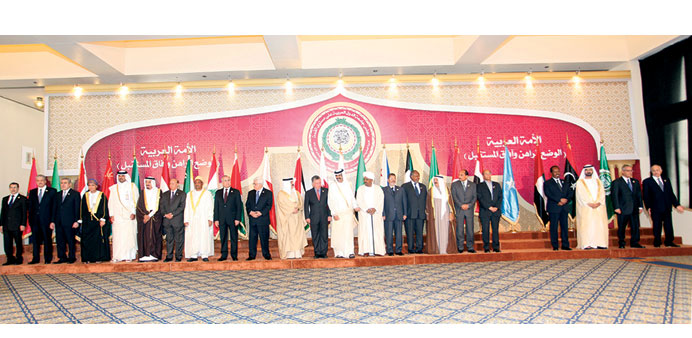
HH the Emir Sheikh Hamad bin Khalifa al-Thani and HH the Heir Apparent Sheikh Tamim bin Hamad al-Thani with Arab heads of state and delegates attendin
Qatar

Emir: Palestinian cause the core Arab issue, key for Mideast peace

QNA/DohaHH the Emir Sheikh Hamad bin Khalifa al-Thani yesterday presided over the inaugural session of the 24th Arab Summit held at the Sheraton Doha Hotel. In his speech before the summit HH the Emir said that the Palestinian cause was the core Arab issue and the key for peace, security and stability in the Middle East. “There is no peace without a just, permanent and comprehensive settlement that addresses the full legitimate rights of the Palestinian people; foremost among these is the establishment of its independent state with East Jerusalem as its capital,” said the Emir. “Israel has to realise that force does not bring security, and that peace alone would achieve security for all, and that its illegal practices or violation of the sanctity of Al Aqsa Mosque, Judaising of East Jerusalem, pursue of settlement policy and detaining Palestinian captives in Israeli prisons, all these practices and policies would only lead to creating tension in the region, increase despair and frustration among the Palestinian people and putting more hurdles on the path of the already stalled peace process. “Realising the gravity of continuation of this situation and its repercussions, we propose - for the sake of putting the Palestinian house in order - convening a smaller Arab summit in Cairo at the earliest possible under the chairmanship of the sisterly Arab Republic of Egypt, and the participation of any Arab countries that wish to attend in addition to Fatah and Hamas leaderships,” he said. Elaborating the Emir said: “The task of this summit – which shouldn’t be wound up before realising that task – is to agree on reaching a Palestinian national reconciliation according to practical executive steps and a specific timetable on the bases of Cairo Agreement 2011 and the Doha agreement 2012, and this includes: 1-Setting up a transitional government from independent figures to oversee the legislative and presidential elections. 2-To agree on a date to hold these elections within a specific timeframe. Those who would remain lagging behind or obstructing this process would bear the responsibility before God, the homeland and the history.“The place of ascension of the Prophet Muhammad - peace be upon him - that God has blessed its environs, is the first Qiblah and the third holiest Islamic site is in a very grave danger, that requires serious action to forestall such danger,” he said. “The Palestinian, Arab and Islamic rights in Jerusalem are uncompromising and Israel has to be aware of this fact, also Arab countries should embark on a quick and serious move in this connection. “In this context, and whereas the Sirte summit resolutions on Jerusalem have unfortunately not been implemented, I call upon your esteemed summit, if we are serious in defending the Arab character of Jerusalem and in order to save what could be saved for the establishment of a fund in support of Jerusalem with a capital of $1bn, provided that it is to be implemented immediately after the conclusion of this summit. “I declare on behalf of the State of Qatar our contribution of a quarter of a billion dollars to the fund. The remaining sum is to be contributed by capable Arab countries, and I suggest that the Islamic Bank for Development manages this fund. “I also wish to refer in this respect to the blockade, which the Gaza Strip suffers from and to stress the need for co-operation and work to enable our brothers there to overcome it and to activate all decisions on the reconstruction of the Strip,” he said. HH the Emir said:  “We welcome the participation of the National Coalition of Syrian Revolutionary and Opposition Forces and the provisional Syrian government in this summit, no doubt they deserve this representation thanks to the popular legality they gained internally and the massive support abroad, and also because of their historical role in leading the revolution and preparing for building the new Syria.” He said: “The development of the serious and tragic situation in sisterly Syria took a catastrophic turn over the past two years and led to shameful tragedies and crimes. Since some time ago remaining tight lipped on these crimes and the suffering of the Syrian people inside Syria and in refugees camps has become a crime per se. “We have built our stance since the outbreak of the crisis on basics that the State of Qatar has remained adhered to, namely: “First: the immediate cessation of the killing and violence against civilians and to preserve the unity of sisterly Syria’s land and people. “Second: To achieve the will of the Syrian people regarding the transition of power. “Third: To support Arab and international efforts and political solutions that achieve the will of the Syrian people and their legitimate aspirations. “The Syrian people, the descendent of the great civilisation, genuine culture and honest Arabism deserves a free, decent and secure life, its people pass alternately the fair governance, united by sense of belonging to the homeland without suppression, exclusion or marginalisation.”  HH the Emir said: “It may be significant that we always stress our concern about the unity of Syria’s territories and people which is a moral and historical responsibility borne by all of us and no body may disclaim it. “Also we put emphasis on the national unity which accommodates all and excepts nobody setup a system without seclusion, restraint or discrimination among its citizens and where the homeland is for all and by all.“It is unfortunate that the Syrian regime is involved in a military confrontation with its people and rejects all calls for serious reform and Arab political initiatives until the catastrophe reached an extent where the dear Syrian people accepts no less than the peaceful transfer of power as stipulated in the Arab League resolution of July 22, 2012. “History will testify in favour of those who stood by the side of the Syrian people in their ordeal, and will testify against those who let them down. “We reiterate our call to the Security Council to stand up for truth and justice, and respond to the voice of human conscience against injustice and oppression of peoples, and to issue a resolution for an immediate cessation of bloodshed in Syria and to bring those who are responsible for the crimes committed against its people to the international justice. From here we renew our commitment to continue to provide humanitarian assistance to the Syrian people, and urge all countries of the world to do the same, and emphasise the importance of holding an international conference under the auspices of the UN for the reconstruction of Syria immediately after the transfer of power according to the will of the Syrian people. “And I’d like to reiterate that we support a political solution that saves the blood and protects the lives, provided that this solution does not turn back the clock. I could see shortly that great Syria rises up from the ruins to build its glory once again. And as stated in the Holy Qur’an “Slacken not, nor grieve, for you will overcome them if ye are ‘indeed’ believers. If you received a blow, the ‘disbelieving’ people have received a blow the like thereof. These are only vicissitudes which we cause to follow one another for mankind, to the end of that Allah may know those who believe and may choose witnesses from you; and Allah loveth not wrong-doers.” “The historical transformation currently experienced by our Arab nation requires dealing with it with new thought, new styles and a genuine will for change, which is inspired by the aspirations of peoples and responds to their legitimate ambitions, The regimes must realise that there is no alternative to reform and no room for oppression, repression, tyranny and corruption. “When I say reform I mean thoughtful reform based on a vision, thought and will, rather than the slogans of reform and fake promises.” HH the Emir further said: “With reform, the systems of governance would enjoy stability, and the people would be reassured about their present and future. With reform, production and development rates would increase and we would be able to cater for a decent and secure live to our States and peoples, and with reform we shall gain world respect and become an active and effective force therein. “Out of the human and nationalistic responsibility, we must stand beside our brothers in the Arab Spring countries to surpass the difficult transition phase, which follows any popular revolution. Nobody should be betting on chaos and instability in these countries to alienate people from the trend of change. “We turn to the political and social forces in these countries to realise that the success of the experience is the responsibility of all of them, and that there is an urgent need for competition to be responsible and subject to the need to secure the success of the experience. This is a national responsibility, which is also an Arab responsibility. “The path of reform and political transition is a long and arduous one, and the fear of obstacles and setbacks faced and are facing the regimes that are wading through the process of change, is unjustified and premature. “If the Arab economic support is required for some of these countries it is more urgent for the revolution countries that today pass through a transitional stage that requires support particularly the sisterly Arab Republic of Egypt by virtue of its population density and economic conditions. “One could not forget the sacrifice made by Egypt and its significant role towards Arab issues and its Arab brothers; therefore, it is the duty of all of us to provide support to the Arab Republic of Egypt in these circumstances. “We are following the positive developments taking place in Somalia with much hope and we affirm our support and our backing for this brotherly country to be able to surmount the ordeal it is facing.“The Republic of the Comoros is one of the promising Arab countries that need more attention and economic support to become a model of what can be achieved by Arab co-operation in supporting an Arab country that is in need to be supported by its brothers. There is no doubt that what is being done by the Arab Commission for Development and Investment in Comoros deserves appreciation and requires further encouragement. “Concerning Darfur, we note with great satisfaction the clear improvement witnessed by that region since the signing of the Doha document on peace and the establishment of the Regional Authority, despite some acts of lawlessness in some areas of the region and tribal disputes that breakout from time to time. “We believe that the Doha International Conference on the reconstruction and development in Darfur, which convenes in Doha on 7-8 April, would usher Darfur into a new stage of development, stability and peace.” HH the Emir said: “The rapid economic developments we are witnessing today lead us to consolidate and activate co-operation among us to support the efforts of economic and social development in the Arab countries, because of the strategic dimensions embodied in that co-operation in light of the global trends of establishing major economic blocs.” “There is no doubt that the achievement of economic, social and political development for our Arab peoples is the optimum way and the essential foundation to achieve the renaissance of our Arab nation at present and in the future. “We all look forward to a better present and future for our peoples and we believe that the way to do that is to reform, develop and modernise our societies. “In the same vein, we support the development of the Arab League in line with the current stage of our regional and international surrounding, so as to enhance their capabilities in dealing with the requirements of this stage and at the same time preserving the principles and objectives on which the League was founded.“The reform and development process of the League should be inspired in the first place by aspirations of the Arab peoples and meeting the legitimate demands of freedom and social justice and in the real Arab solidarity. “The reform process requires setting clear priorities in the action plan of the League and to reach specific operational programmes to achieve these priorities with the participation of all member states, and stay away from red tape and old-fashioned working methods and to introduce mechanisms that promote the work of the Arab League and uphold standards of efficiency and transparency in the selection of cadres qualified to work at the League.“In appreciation of the great efforts being exerted by the staff of the Arab League Secretariat while performing their tasks and out of the desire to provide them with decent life after the long years they spent serving the Arab League we feel it is time to set up a pension fund for them and we declare the State of Qatar’s willingness to contribute $10mn to this fund.”

Gulf Times
Qatar

Qatar, Paraguay sign MoU on cooperation in social affairs

The State of Qatar, represented by the Ministry of Social Development and Family, and the Republic of Paraguay, represented by the Ministry of Social Development, signed a Memorandum of Understanding (MoU) on cooperation in the field of social affairs.The MoU was signed on behalf of the State of Qatar by HE Minister of Social Development and Family Buthaina bint Ali Al Jabr Al Nuaimi and on behalf of the Republic of Paraguay by HE Minister-Counselor for Social and Economic Affairs of the Presidency of the Republic of Paraguay Juan Jose Galeano, on the sidelines of the Second World Summit on Social Development, which concluded in Doha.The MoU aims to enhance cooperation and the exchange of expertise and knowledge in the fields of social development, including social welfare, the affairs of minors, the elderly, persons with disabilities, and family, women, and children, in addition to developing channels for technical and institutional cooperation between the two parties.The MoU also stipulates the exchange of studies, information, and expertise in areas of mutual interest, and the formation of a joint committee from both sides to follow up on the implementation of its provisions and develop future plans and projects, thereby enhancing the sustainability of joint programs and initiatives.This step comes within the framework of the State of Qatar's keenness to expand its international partnerships in the fields of social and human development and to exchange successful experiences in empowering people and promoting social justice in line with Qatar National Vision 2030

Gulf Times
International

Qatar affirms keenness to strengthen international partnerships through international cooperation and multilateral action

The State of Qatar affirmed its commitment to strengthening its international partnerships within the framework of international cooperation and multilateral action, and to support the efforts of developing countries in implementing and achieving the 2030 Agenda of the Sustainable Development Goals. This is achieved by directing partnerships with UN agencies to provide development and humanitarian assistance to countries facing development challenges and disasters beyond their capabilities, in addition to partnerships with the UN to implement the outcomes of the Doha Programme of Action for the Least Developed Countries (2022-2031). This came in the State of Qatar's statement delivered by Second Secretary of Qatar's Permanent Mission to the UN Talal Abdulaziz Al Naama before the General Debate of the Second Committee during the 80th session of the UN General Assembly, at the UN headquarters in New York. The Second Secretary of Qatar's Permanent Mission to the UN explained that developing countries face many challenges that hinder the implementation of the 2030 Agenda for Sustainable Development, noting that the world is witnessing wars and armed conflicts that have caused humanitarian disasters, displacement, and the destruction of infrastructure and livelihoods, in addition to the multiple risks to the lives of the most vulnerable groups. He added that the world is also witnessing the devastating effects of climate change and the resulting shocks and disasters that threaten the lives of millions of people. There are also economic challenges represented by the debt burden, scarcity of development financing, difficulty with borrowing, and the digital divide. Al Naama added that the State of Qatar welcomed the adoption of General Assembly resolution 79/323, entitled the Sevilla Commitment, last August. This resolution affirmed the need to continue reforming international financing structures and improving their effectiveness and flexibility to address current and future challenges and crises, and to strengthen national efforts to achieve economic and social development by creating a favorable international economic environment and effective means of implementation that encourage comprehensive and sustainable economic growth, and to recognize the right to development so that no one is left behind. He stressed that Qatar is making rapid strides in implementing Qatar National Vision 2030, noting the launch of its third phase at the beginning of 2024, which aims to build a diversified and sustainable knowledge-based economy, utilizing digital technology, science and innovation applications, strengthening infrastructure, increasing productivity and stimulating the business environment, with a focus on human development, caring for the family as the basic building block of society, expanding healthcare and social protection services, protecting the environment and building capacity to confront the effects of climate change. Al Naama added that Qatar will host the Second World Summit for Social Development in November, providing an opportunity for high-level dialogue on accelerating the implementation of the 2030 Agenda. Qatar will also co-host with the Republic of Brazil the first meeting of the leaders of the Global Alliance against Hunger and Poverty as a key event on the sidelines of the summit. He affirmed the State of Qatar's support for the UN Secretary-General's initiative to reform the international organization, and renewed support for the UN Resident Coordinator System for the 2025-2026 period with a total of $1 million, to improve the efficiency and effectiveness of operational activities at the country level and assist countries in implementing the 2030 Agenda for Sustainable Development.

HE Hassan bin Abdullah al-Ghanim speaking at the opening session of the Global Parliamentary Conference on Counter-Terrorism in Istanbul.
Qatar

'Qatar pursues holistic approach in fighting terrorism'

Qatar, under the leadership of His Highness the Amir Sheikh Tamim bin Hamad al-Thani, pursues a holistic approach to countering terrorism and violent extremism that is based on addressing the root causes of this phenomenon through development, justice, and respect for international law, HE the Shura Council Speaker Hassan bin Abdullah al-Ghanim has affirmed.HE al-Ghanim highlighted that Qatar has made support for education, funding of development programmes, and provision of job opportunities for young people in crisis-battered zones a core priority in its efforts to counter extremist ideology.Hewas speaking at the opening session of the Global Parliamentary Conference on Counter-Terrorism, hosted in Istanbul, Turkiye, with the participation of a host of speakers of parliaments, legislative councils, as well as representatives of international organisations.The conference convenes at a critical time, as the need grows to unify efforts, strengthen international peace and security, and co-operate in confronting the scourge of terrorism that imperils societal stability and undermines development opportunities, he said.He noted that Qatar pursues a firmly rooted policy against terrorism and violent extremism, one that goes beyond mere security measures to address the economic, social, and political factors that lead to marginalisation and exclusion, the very environment in which extremist ideology takes root.Doha is preparing, as part of its efforts to support sustainable development and strengthen global parliamentary work, to host the second World Summit for Social Development in November. The summit will feature a parliamentary forum organised in partnership between the Shura Council and the Inter-Parliamentary Union (IPU) on investing in people and institutions: the role of parliamentarians in social development, HE al-Ghanim noted.He further indicated that the forum will serve as a parliamentary platform to exchange experiences and best practices, and to discuss policies and legislation that bolster social development, thereby enhancing the role of parliaments in advancing communities and building human and institutional capacities.He averred that the ongoing practices of the Israeli occupation reflect yet another face of terrorism, noting that occupation forces have committed blood-soaked massacres in the Gaza Strip, claiming the lives of tens of thousands of innocent civilians, including children, women, and the elderly, in an egregious breach of international law and human values.The Israeli aggression has extended to target Qatar, which is mediating and spearheading international efforts to secure a ceasefire and alleviate the suffering of civilians in the Gaza Strip, he said, stressing that attacking the negotiating delegation at a civilian-safe location in Doha, which houses schools and embassies, constitutes state terror and a direct threat to civilian lives, in unconscionable violation of international law and diplomatic norms.HE al-Ghanim further added that silence in the face of such violations encourages impunity and undermines the international legal framework, noting that the arbitrary policies of the occupation not only threaten global peace and security but also help foster a fertile environment for the spread of violence and extremism, exacerbating instability across the region and the world.He called on the international community and all parliaments to assume their moral and legal responsibilities, condemn these crimes, hold Israel accountable, and work to suspend the Israeli Knesset’s membership in regional and international parliamentary organisations until it complies with international law and the principles of legitimacy, especially following remarks by the Speaker of the Knesset in which he described the aggression as a message to the Middle East, in presumptuous defiance of the international community and parliamentary values.Qatar has placed counter-terrorism at the forefront of its foreign policy priorities through its active engagement in international coalitions, contribution to shaping global strategies, and support for development programs that address the root causes of terrorism, HE al-Ghanim underlined, before noting that Doha hosts the Office of Parliamentary Participation in Preventing and Combating Terrorism, in partnership with the UN.This office serves as a comprehensive platform for parliaments from around the globe to co-ordinate international parliamentary efforts and organise conferences, seminars, and workshops that enhance legislative and oversight cooperation in this field, he outlined.He called on national parliaments, regional parliamentary associations, and the IPU to intensify efforts and co-ordinate closely with the aforementioned office in support of its programmes and objectives, and to activate its role in forging practical partnerships that contribute to achieving global peace and security, and in reinforcing the values of justice and respect for human rights.HE al-Ghanim hoped that the conference would yield effective outcomes in countering terrorism and violent extremism through concurrence on a comprehensive and precise international definition of terrorism, which draws a clear line between the legitimate struggle of peoples against occupation, as an inherent right, and the terrorist acts carried out by certain states and organisations.Parliamentary unity remains the most effective means to enhance international co-operation, achieve peace and security, and safeguard the future of coming generations, he stressed.For his part, Speaker of the Grand National Assembly of Turkiye, Numan Kurtulmus, underscored the depth of the brotherly relations and strategic co-operation between Qatar and Turkiye, lauding the Shura Council's role in combating terrorism and boosting international cooperation in this field.Kurtulmus called out the double standards of certain nations that claim to fight terrorism while supporting it through proxy wars. He pointed out that the most perilous form of terrorism is state terror perpetrated by Israel against the Palestinian people, amid the silence of the international community.The conference is organised in partnership between the Shura Council and the Doha-based UN Office of Counter-Terrorism (UNOCT) on Parliamentary Participation in Preventing and Combating Terrorism, in collaboration with the Grand National Assembly of Turkiye and the UN Office of Counter-Terrorism (UNOCT).It intends to bolster the role of parliaments in supporting legislative and oversight frameworks for combating terrorism and violent extremism, and in coordinating efforts between parliaments and relevant international organisations to formulate integrated policies grounded in respect for the rule of law and human rights.The agenda includes panel discussions addressing a wide range of issues, foremost among them the absence of a unified international definition of terrorism and its implications, the nexus between terrorism and organised crime, and the impact of occupation and armed conflicts in fueling extremism.Additional sessions will focus on parliamentary oversight in enhancing transparency, ensuring a balance between security and the protection of rights and public freedoms, culminating in the adoption of a final statement containing practical recommendations for the development of the next UN strategy for counter-terrorism.

Sheikha Al Maha al-Thani noted that Qatar has adopted many procedures and measures at the legislative and executive levels that have contributed to achieving tangible results in all dimensions of social development without leaving anyone behind, with the aim of achieving Qatar National Vision 2030.
Qatar

Qatar renews commitment to sustainable development initiatives

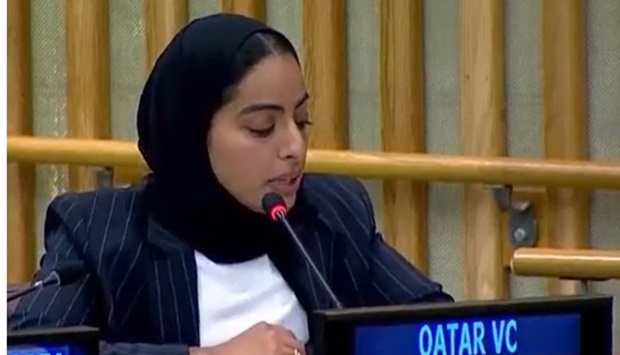
Qatar renewed its commitment to effectively contribute to the international efforts aimed at achieving comprehensive and sustainable development, noting its keenness on adopting an approach based on the protection and promotion of human rights for all segments of the society without discrimination during its development process. This came in the statement of Qatar delivered by Third Secretary of Qatar's Permanent Mission to the United Nations Sheikha Al Maha bint Mubarak al-Thani, before the general debate of the UN General Assembly Third Committee on the item "Social Development". Sheikha Al Maha al-Thani noted that Qatar has adopted many procedures and measures at the legislative and executive levels that have contributed to achieving tangible results in all dimensions of social development without leaving anyone behind, with the aim of achieving Qatar National Vision 2030. She referred in particular to the achievements made through the national committee for the affairs of woman, children, the elderly and people with disabilities of the Ministry of Social Development and Family, which contributed significantly to promoting integration in work and service within a unified and organized national framework among the concerned authorities in the country. She expressed Qatar's aspiration to host the 4th Global Disability Summit in 2028, in co-operation with the International Disability Alliance, stressing Qatar's full readiness to welcome football fans in the FIFA World Cup Qatar 2022 as the most accessible tournament for people with disabilities in terms of the ease of access and movement in all tournament facilities, as well as the digital content that takes into account their specific needs. She reiterated Qatar's keenness to place the youth category at the centre of its development policies, noting that this category enjoys attention in the international development and humanitarian aid programs implemented by Qatar in many countries around the world. She indicated that the total support provided through the Qatar Fund for Development to the education sector amounted to nearly $980mn during the past decade, benefiting millions of young people and children in 65 countries around the world. Sheikha Al Maha highlighted the pioneering role carried out by Qatar in preparing for the Transforming Education Summit held by the UN Secretary-General on Sept 19, whether by holding national consultations on education transformation, or by hosting the preparatory regional consultations for the Arab region and West Asia. She expressed Qatar's pride that the summit program included the launch of two important initiatives as a contribution to the efforts made to transform education, namely the "Rasekh initiative" launched by the Ministry of Education and Higher Education in Qatar concerning localising education for a sustainable future; and the initiative of the Education Above All Foundation in collaboration with the World Bank, the Global Partnership for Education and Sierra Leone related to innovative financing mechanisms for education. She explained that through the experience of Qatar, the importance of adopting family-oriented social and economic policies was emphasised, given their great contribution to achieving comprehensive, feasible and sustainable social development. The Third Secretary of Qatar's Permanent Mission to the United Nations expressed Qatar's aspiration to host the international conference to commemorate the 30th anniversary of the International Year of the Family in 2024.

Gulf Times
Qatar

Qtel Group in push to address key social issues

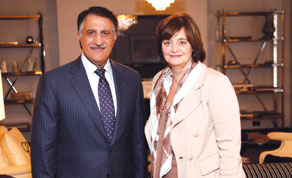
Sheikh Abdullah met with Cherie Blair to discuss expanding initiatives with her Foundation for Women Qtel Group is continuing to “push the envelope” by deploying mobile broadband technology to address key social issues, forging a number of major new partnerships and collaborations in the US in recent weeks. Chairman Sheikh Abdullah bin Mohamed bin Saud al-Thani emphasised Group’s drive to encourage creativity and connections between entrepreneurs and original thinkers, as part of his role as a Commissioner to the UN Broadband Commission for Digital Development, which met in New York last week. According to the UN Broadband Commission report, “State of Broadband 2012”, mobile broadband use could help address the so-called “digital divide” of access to the Internet, as there are almost twice as many mobile broadband subscriptions as fixed broadband connections in the world today. Qtel Group and GSMA teams at the Social Good Summit, including Sheikh Abdullah bin Mohamed bin Saud al-Thani, Dr Nasser Marafih, Lawrence Yanovitch, president of the GSMA Foundation, Beth Gertz, director of the GSMA mWomen Programme, and Maura O’Neill, USAID chief innovation officer and senior counselor Sheikh Abdullah said: “We all recognise the potential impact of mobile broadband on the lives of people in the developed and the developing world. It is becoming a primary enabler of economic progress, healthcare information, and social contact in many societies today. That means that operators have a particular responsibility to ‘push the envelope’ in terms of promoting creativity and the intelligent use of technology.” “State of Broadband 2012” was launched at the Broadband Commission meeting in New York, aiming to expand on the theme of “Achieving digital inclusion for all.” For the first time ever, the report analyses global broadband rollout country-by-country, and the impact of broadband on government policy, economics, social inclusion and sustainability. According to the data, Qatar is ranked eighth in the world in percentage of individuals using the Internet at 86, and more than three-quarters of the country’s medium and large enterprises enjoy broadband access. As well as the Broadband Commission meeting, the Qtel Group chairman and other team-members took part in the Social Good Summit in New York, sharing the excitement and global conversations of the international event. US Secretary of State Hillary Clinton opened the summit, and speakers included two-time Pulitzer Prize-winning New York Times columnist Nicholas Kristof, Olympic gold medalist Allyson Felix, Wikipedia founder Jimmy Wales, author Deepak Chopra and actress America Ferrera — plus, a surprise appearance by World Bank President Jim Yong Kim. At the summit, Qtel Group Chief Executive Officer Dr Nasser Marafih launched the “GSMA mWomen design challenge: redefining the user experience.” The design challenge calls for programmers and product designers to develop services that can increase mobile access and literacy for women in the developing world. In these emerging markets, nearly 300mn women do not have access to mobile phones or do not know how to use them to their full potential, according to GSMA research. Winners of the mWomen design challenge will be announced at the Mobile World Congress in Barcelona in 2013. In addition to taking part in the summit, Qtel Group held discussions with Cherie Blair and her Foundation for Women about expanding initiatives that empower women entrepreneurs. Already Qtel Group has seen strong response on several mWomen initiatives, such as Iraqi operator Asiacell launching the Almas (Diamond) line with features catered to women. Indonesian operator Indosat has trained 5,000 low-income micro-entrepreneurs in selling mobile products and services through the “RumaPulsa” social enterprise, and has launched the “Info Wanita” (Information for Women) service, which delivers to Indonesian women important information on small business management, financial management, life skills, health and childcare. Dr Marafih was also recently appointed chairman of the GSMA Mobile for Development Foundation, a non-profit organisation that supports life-enhancing services to millions of underserved people in emerging markets.

Mary Joy Pigozzi.  PICTURE: Shaji Kayamkulam
Qatar

EAA enrols over 14.5mn ‘out of school’ children into quality education

Educate A Child programme under Education Above All (EAA) Foundation has provided quality education for over 14.5mn out-of-school children so far, disclosed a senior official of the organisation.“We have enrolled over 14.5mn out-of-school children into quality primary education in over 50 countries. The work continues and lots and lots of people are interested in us. And we work with over 50 organisations globally,” Mary Joy Pigozzi, chief education officer, EAA told Gulf Times.Pigozzi was interacting with Gulf Times on the sidelines of the ongoing Second World Summit for Social Development (WSSD2) where EAA is showcasing its activities and taking part in several events of the summit.According to the official, EAA has awarded more than 10,500 scholarships to disadvantaged youth to enable their pursuit of higher education and equipped nearly 4mn youth with skills and economic opportunities for employment since it was founded in 2012 by Her Highness Sheikha Moza bint Nasser.“I think what is good about having been around for more than a decade is that people know that there is one programme which is Educate A Child that focuses specifically on out-of-school children. We have that unified and unitary focus,” noted the official.The official said that EAA has just started a new strategy. She explained: “What we are trying to do now is to try to link our different programmes a little more coherently. So we are looking to work in some countries where more than one programme will be working together. And we will be working in unison. So that is a slightly different approach than we have had in the past.“The point of the new unified approach is to work with countries to support greater impact at the national level through our work across different levels of education to employment,” continued, Pigozzi.She noted that EAA works with various organisations of the UN and have many partnerships with UN agencies such as Unicef, Unesco as well as UNDP.“I think we will continue to work with them in various fields. And as we look at the relationships between education and other sectors, we are also likely to be involved with organisations such as World Food Programme,“ highlighted Pigozzi.The chief education officer said that the EAA has been providing support for the families in terms of income generation through initiatives such as setting up small enterprises as it will help the families and enable them to support their children’s education.Pigozzi stated that the major challenges in providing education to the out of school children are related to the economic factors. “It is poverty and it has many faces. There are many ways that it can be overcome. There are certainly challenges but there are also many opportunities.“Among the opportunities that are encouraging are the engagement of ministries in making more flexible education systems and the engagement of communities and families,” highlighted the official.EAA will hold a session Thursday at the summit on the role of education as a key to social development. “The real focus is how education is a significant key to sustainable development. Education is the real foundation because what is realised through education is not just going to school but learning how to live,” added Pigozzi.

Gulf Times
Qatar

Qatar partakes in third AI Action Summit in Paris

Qatar participated in the third AI Action summit, held over two days in Paris. The Qatari delegation to the summit was led by HE Minister of Communication and Information Technology Mohammed bin Ali al-Mannai.The summit attracted widespread international participation, bringing together heads of state and government, leaders of international organizations, corporate executives, academics, and civil society representatives to discuss the future of Artificial Intelligence (AI) and its impact on societies, economies, and governance structures.Qatar's participation reaffirms its commitment to fostering international collaboration on AI governance and development, underscoring the importance of establishing a comprehensive global framework that ensures transparency, accountability, and equitable access to AI solutions.Commenting on Qatar's involvement, HE Mohammed bin Ali al-Mannai stated: "The Summit offers a unique opportunity for global stakeholders to build a harmonized AI ecosystem. By uniting governments, industry, and civil society, we can ensure that AI innovation is not only a driver of economic growth but also a force for social good, cultural preservation, and global well-being."The AI Action Summit focuses on five key pillars that frame the challenges and opportunities presented by AI: Public Interest in AI, Future of Work, Innovation and Culture, Trust in AI, and Global AI Governance.The Summit concluded with a shared commitment to develop international strategies and partnerships that foster responsible AI innovation. Qatar's leadership and active engagement in these discussions highlight the nation's vision for inclusive digital transformation and a future in which AI benefits all.Underscoring Qatar's position as a hub for digital and technological innovation in the region, Qatar is hosting the World Summit AI for five consecutive years, following the successful conclusion of its first edition last December. Qatar is also preparing to host the second edition of the Web Summit at the end of February. These high-profile global events reflect the State's efforts to build a supportive environment for technology development and AI advancements. (QNA)