Search - World Summit for Social Development

Friday, October 16, 2026 | Daily Newspaper published by GPPC Doha, Qatar.

Search Results for "World Summit for Social Development" (360 articles)

All words
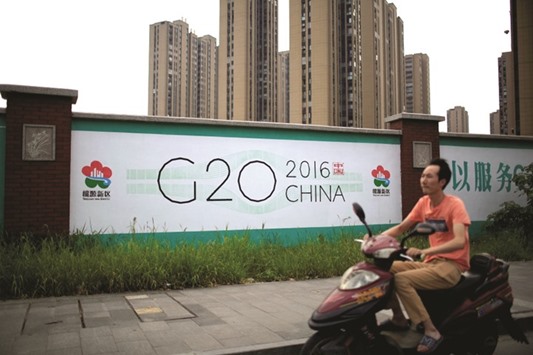
A man rides an electronic bike past a billboard for the upcoming G20 summit in Hangzhou, Zhejiang province, China. Having gone from being a recipient of FDI to a net contributor in recent decades, China is perfectly positioned to lead G20 discussions on global development.
Opinion

China’s chance to lead on development

In September, China will host the G20 meeting of world leaders for the first time. It could not have chosen a more opportune moment to assume a leadership role.  Chinese President Xi Jinping should seize the occasion to push China’s ambitious development agenda globally. Specifically, Xi should make the case that development done right benefits everyone, and he should launch discussions on a multilateral investment agreement to be developed in the next year. This is an achievable goal for the summit: the G20 has a record of relative success in co-ordinating multilateral efforts, such as in its response to the 2008 global financial crisis.  Moreover, the ingredients of successful development are very well known. They include constant technological improvement, which is critical for sustained growth and employment; a focus on maximising human and physical capital; and infrastructure investments geared toward reducing transaction costs and increasing efficiency. We also know the current gaps that exist in development. Developing countries today are constrained by low levels of human and financial capital and by low reserves of or access to foreign exchange, which limits their ability to import the raw materials and equipment needed to ascend global value chains. The best way to close the gaps in human and financial capital, and to increase access to foreign exchange, is through foreign direct investment (FDI).  FDI should not be difficult to attract, because the potential returns should be higher in developing countries, where capital is scarce relative to labour. But as Nobel laureate Robert Lucas noted, capital has been flowing in the wrong direction, from low- to high-income countries. This trend is depleting developing countries’ available capital, limiting development, and widening the global income gap. As Laura Alfaro, Sebnem Kalemli-Ozcan, and Vadym Volosovych pointed out in a 2008 study for the Review of Economics and Statistics, poorer countries are deprived of capital flows partly because they lack the institutions that are needed to receive and facilitate investments. In a sense, these countries are trapped, because they need capital to develop these necessary institutions in the first place. A multilateral investment agreement could fix this problem by making it easier to invest in developing countries. It could also strengthen the economic foundation for growth in developing countries by establishing investment protections and incentives, dispute-resolution procedures, corporate social responsibility benchmarks, and regulatory frameworks for investments made by state-owned enterprises and sovereign funds. The World Trade Organisation (WTO) is the natural place to negotiate this agreement, but past efforts have failed partly because negotiations were seen as heavily favouring developed countries over developing ones. With the global investment environment having changed dramatically in the past decade, negotiations should be restarted. Developing countries now account for a growing share of global outward direct investment (ODI). This means that some emerging market economies themselves are becoming a source of capital and thus have a role to play in any future investment framework. China is the prime example.  China has benefited so much from FDI that it is now increasing its own ODI. According to the UN Conference on Trade and Development, in 2013 China became the third largest source of other countries’ FDI and is expected to become a net capital exporter for the first time in 2016. This trend can only continue, considering the combined impact of China’s “Go Out Policy” of prodding domestic companies to make investments abroad, and it’s “One Belt, One Road” framework to build continent-wide trade infrastructure. In time, China will likely be the world’s largest source of FDI. Having gone from being a recipient of FDI to a net contributor in recent decades, China is perfectly positioned to lead G20 discussions on global development. It should do so by setting a concrete goal for a workable development framework with a clear timeline for reaching specific milestones. An early milestone should be to establish a non-binding investment facilitation framework for developing countries. And, more generally, the agreement should emphasise inclusiveness and honest dealing to foster economic growth for developing and developed countries alike.- Project Syndicate *Justin Yifu Lin, a former chief economist and senior vice president at the World Bank, is professor and honorary dean of the National School of Development, Peking University, and the founding director of the China Centre for Economic Research.

Gulf Times
Qatar

Interior Minister attends final training exercise for National Service Recruits

His Excellency Sheikh Khalifa bin Hamad bin Khalifa Al Thani, Minister of Interior and Commander of the Internal Security Force (Lekhwiya), attended the final training exercise for national service recruits, held under the supervision of the Internal Security Force Training Institute.**media[383918]**A total of 1,842 recruits completed an intensive program that included training scenarios for Qatar National Day 2025 and preparations for securing the Second World Summit for Social Development.**media[383916]**The demonstration featured field exercises simulating a range of security operations, showcasing the recruits’ high readiness and capability to undertake upcoming security responsibilities — foremost among them the FIFA Arab Cup Qatar 2025, set to kick off this December.

Gulf Times
Qatar

WISH joins global pledge for gender equality in health workforce

The World Innovation Summit for Health (WISH), a Qatar Foundation (QF) initiative, joined the pledge for gender equality in the health workforce at a virtual event hosted by the Government of France, World Health Organization (WHO) and Women in Global Health (WGH), titled Gender Equal Health and Workforce Initiative (GEHWI). The event was attended by speakers and participants from various governments and major global organizations, including Sultana Afdhal, CEO of WISH, who made the pledge on behalf of QF's global health initiative. As the first entity in the Middle East to commit to the pledge, WISH aims to increase the representation of women in leadership roles and promote the championing of their contributions within the healthcare sector. Sultana Afdhal, CEO of WISH, said: "As an organization working in the field of global health, we are acutely aware of the vital role that women play across the healthcare workforce. Women make up more than 50 percent of frontline healthcare workers, so it's essential that they are better represented at the leadership level. "Considerable effort still needs to be made to ensure that women are fully part of decision-making processes, and the Gender Equal Health and Care Workforce Initiative represents an important step on that journey." For WISH and QF, this pledge builds upon a commitment made by HE Vice Chairperson and CEO of Qatar Foundation Sheikha Hind bint Hamad Al-Thani, in 2019, where Her Excellency Sheikha Hind announced a pledge for women to make up at least half the panel speakers at conferences and events, locally and internationally. WISH continues to make progress in this area and has over 50 percent female speaker representation at all events, with 75 percent women in its advisory board. Moving forward, WISH will continue to take concrete action with the support of Qatar Foundation to ensure that gender does not present a barrier to any person's development and that everyone is equally recognized. The Gender Equal Health and Workforce Initiative aims to promote the implementation of several actions around four key priorities. These include increasing the proportion of women health and care workers in leadership roles, recognizing the value of unpaid health and care work and the importance of equal pay in the health and social care sectors, protecting women in health and care against sexual harassment and violence at work, and ensuring safe and decent working conditions for all health workers, everywhere. It was launched in February 2021 through a partnership between the Government of France, WHO and WGH.

Gulf Times
Qatar

WISE Accelerator programme opens for submissions

The World Innovation Summit for Education (WISE), an initiative of Qatar Foundation (QF), has opened the submission period for its latest Accelerator programme. WISE Accelerator supports the development of innovative education initiatives that show high potential for scalability and positive impact. Each year, members of selected initiatives are chosen to join the one-year programme, offering tailor-made support to address challenges that hinder their growth and scaling-up process. In addition, WISE Accelerator connects participants to an international network of education stakeholders, creating opportunities to share knowledge and gain the support of potential partners, donors, and investors during international events organised by WISE. Participants will also be matched with mentors who are experts in education, education technology, and leaders in their field. The submission period for WISE Accelerator 2018-2019 will close at 12pm GMT on April 24. A committee comprised of leading experts in education and social entrepreneurship will support the WISE Accelerator team during the selection process, and selected initiatives will be announced in July. The programme will commence at the WISE Forum to be held in New York in September.

Dr Shekhar Saxena
Qatar

WISH calls for collaborative work on dementia plan

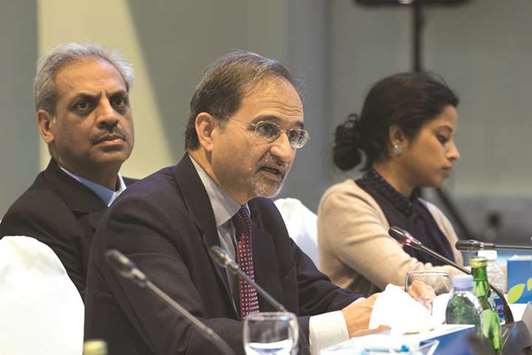
The World Innovation Summit for Health (WISH) has published a report highlighting the need for relevant agencies to work collaboratively when building a national policy that supports people with dementia and their families, and ensures the delivery of effective services.  The report also highlights the benefit of collaborative efforts in the areas of research and innovation, and elaborates on the various challenges and mechanisms of success for developing a dementia plan, as well as ways of strengthening the research infrastructure and identifying national priorities. The WISH report, ‘Enhancing the Response to the Burden and Impact of Dementia through Policy  and Social Innovation in the Eastern Mediterranean Region’, is the result of a meeting held in December 2016 at Hamad Medical City in Qatar. The gathering brought together 70 representatives from 10 of the 22 member states of the World Health Organisation’s (WHO) Eastern Mediterranean Region, which stretches from Morocco in the west to Pakistan in the east, plus experts from 15 other countries. Local representation at the December 2016 meeting included Qatar’s National Dementia Stakeholder Forum, the Ministry of Public Health, Hamad Medical Corporation (HMC) and the Primary Health Care Corporation. Attendees addressed strategies to improve the care and monitoring of those suffering from dementia. The meeting also included discussions of the WHO’s Global Action Plan on the Public Health Response to Dementia, due to be implemented this year.  Dementia is a significant public health concern for the Middle East, as, according to the WHO, the number of people with the condition is expected to almost double in the region, to 4.4mn people, by 2030. Dr Shekhar Saxena, WHO’s director of the Department of Mental Health and Substance Abuse and chairperson of the WISH 2016 Dementia Forum, said: “The meeting hosted by WISH was very valuable for the exchange of information and evidence between countries and experts on dementia. The meeting also contributed to the development of the Global Action Plan on the Public Health Response to Dementia, which was recently endorsed by the World Health Assembly.” Dr Hanadi al-Hamad, chairperson of Geriatrics and Long Term Care at HMC, and focal point for elderly in Qatar, said: “The 2016 forum was an invaluable platform to learn about regional initiatives and best practices, and will help in formulating our national dementia plan.” The dementia report highlights the progress made in planning and service delivery within the Eastern Mediterranean Region, in particular providing a platform for information exchange on national and regional initiatives, and ideas and strategies, such as best practices regarding the assessment of dementia care and monitoring. It also identifies the necessary steps needed to move the dementia agenda forward within the region, as well as globally.  Egbert Schillings, CEO of WISH, said: “The 2016 report takes the key issues we highlighted in 2015 and puts them within the context of the Eastern Mediterranean Region, highlighting successful and progressive initiatives to tackle dementia, as well pointing the way to the next steps we need to take to collaboratively address this public health issue.”

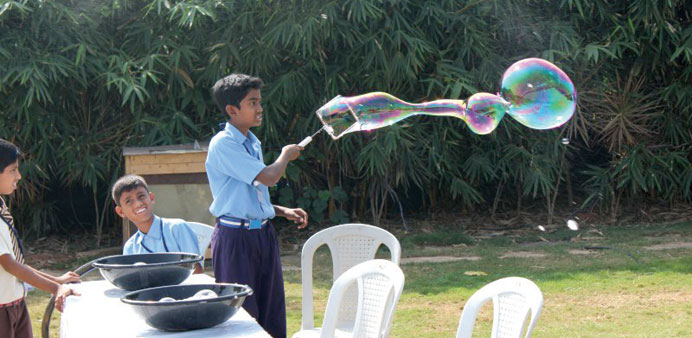
An activity being undertaken in rural India as part of The Lab on a Bike.
Qatar

Innovative, dynamic projects shortlisted for 2015 WISE Awards

By Joseph Varghese/Staff ReporterThe projects shortlisted for the 2015 World Innovation Summit for Education (WISE) Awards represent a number of dynamic and innovative programmes being undertaken in the education sector around the world.They throw light on a number of programmes that are revolutionising the global education scenario as well as on how they contribute to children’s education even in the most remote areas and in challenging conditions.Fifteen projects have been shortlisted for the awards, including one from Qatar.WISE, a global initiative of Qatar Foundation, honours six innovative educational projects annually with the awards. This year, the finalists are from 12 countries and the awards are expected to be announced in September.WISE maintains that the projects provide innovative solutions to education challenges and have a “tremendous positive social impact”. They join the WISE Awards community of projects, supporting the replication of cutting-edge practices and encouraging new collaboration around the world. What is particularly special this year is that two of the shortlisted projects are from the Middle East. Al Bairaq, a Qatar University project, aims to increase the number of students enrolled in science and engineering in Qatar and has benefited 2,988 students and covered 78% of Qatar’s independent secondary schools. The other one is Egypt-headquartered Nafham, a free online K-12 educational video platform that provides students with 5-15 minutes of free crowd-sourced educational videos covering their national curriculum. Its geographical reach includes Egypt, Saudi Arabia, Kuwait, Algeria and Syria. Nafham has around 450,000 visitors monthly.Other projects such as The Lab on a Bike (LOB) are examples of revolutionary ideas taking place in the educational arena. The India-based LOB aims to make hands-on education increasingly accessible in rural areas. Each LOB travels to remote schools with hands-on science models covering topics in physics, chemistry, biology and maths for grades five through 10. It has benefited more than 5mn children and 200,000 teachers so far.The US-headquartered Talking Book Programme produces and records relevant, timely and practical audio lessons on sustainable farming methods and key health practices in Ghana. The messages take the form of interviews, songs, dramas and audio stories that are loaded on to a Talking Book, an affordable audio computer designed for people who cannot read and who have no access to electricity.Spain-headquartered Lights to Learn is a joint effort of the public and private sectors in education, energy and ICTs. The project  provides electricity through the installation of photovoltaic solar systems, offers Internet and IT equipment to the community’s schools, teacher training, community development and sustainability via basic training for members of the community. Its geographical reach covers various countries in Latin America.Videobooks for Deaf Children, another of the shortlisted projects, promotes reading opportunities for deaf children through a free, online video library and has benefited more than 12,000 children. It is based in Argentina.

Gulf Times
Qatar

MoPH symposium to focus on ‘A Healthy City for Children’

The Ministry of Public Health (MoPH) is organising a symposium, ‘A Healthy City for Children’, in collaboration with the World Innovation Summit for Health (WISH) at Mandarin Oriental, Doha hotel in Msheireb tomorrow. The symposium will see the participation of decision-makers and local and international experts. It will showcase key local, regional and international plans, initiatives and experiences for innovation and the development of an action plan for a healthy city for children in Qatar, and focus on addressing childhood obesity in the urban environment, the MoPH has said in a statement. WISH is an initiative of Qatar Foundation. “The symposium will officially mark the start of a journey for building a coalition of policy-makers, researchers, academics and leaders from different sectors and industries to improve health and well-being based on the ‘Health in all policies’ approach, which is one of the National Health Strategy’s priorities,” the statement notes. The event will review regional and international experiences in the field of healthy cities, such as those developed in Tirana, the capital of Albania, Sweden, Kuwait and Oman. It will include two key panel discussions under the following themes: ‘The challenges of combating childhood obesity at the city level: reflections on international experiences’ and ‘Vision for a healthy city in Qatar: solutions, sustainability and commitments’, with the participation of local and international officials and experts. Further, there will be two workshops: ‘Health policy: polices needed for healthy city for children’ and ‘Health curricula: the role of schools in education and the provision of healthy food and drink to healthy children’. The symposium will also support the priority of ‘Healthy children and adolescents’ in the National Health Strategy 2018-2022. A healthy city is one that is continually creating and improving physical and social environments and expanding community resources that enable people to mutually support each other in performing all the functions of life and developing to their maximum potential. “The ‘Health in all policies’ approach will offer healthy choices and make our cities a more child-friendly environment for children to live, play, learn and grow better in,” the statement adds.

His Highness the Amir Sheikh Tamim bin Hamad al-Thani
Qatar

Amir opens 2nd WSSD 2025 Tuesday 

His Highness the Amir Sheikh Tamim bin Hamad al-Thani will patronise the opening of the Second World Summit for Social Development (WSSD) 2025, Tuesday at the Qatar National Convention Center.The summit will bring together Their Majesties, Highnesses and Excellencies heads of state and government, senior officials, and representatives from brotherly and friendly countries, in addition to delegates from regional and international organisations and institutions.The United Nations General Assembly, through Resolutions 78/261 and 78/318, decided to convene the World Social Summit, under the title “Second World Summit for Social Development”.Thirty years after the landmark 1995 World Summit for Social Development in Copenhagen, the global community will gather once again — this time in Doha, Qatar, from 4-6 November 2025 — for the Second World Summit for Social Development.Building on the 10 Commitments of the 1995 Summit and the Copenhagen Declaration, the Second Summit will accelerate action on poverty eradication, the promotion of full employment and decent work, and social inclusion, ensuring that no one is left behind in an increasingly complex and interconnected world. It aims to address persistent gaps, reaffirm global commitment to social development, and give new momentum to the implementation of the 2030 Agenda for Sustainable Development.In Doha, world leaders will come together to redefine strategies for social progress, strengthen global partnerships, and promote inclusive policies that foster equitable opportunities for all. The goal: to build societies that are more resilient, inclusive, and sustainable.The summit will serve as a pivotal platform for dialogue, co-operation, and joint solutions, convening governments, international organisations, the UN system, civil society, co-operatives, academia, the private sector, and experts to strengthen international co-operation for inclusive social development.

Gulf Times
Qatar

Ministry of Foreign Affairs celebrates 80th anniversary of United Nations' founding

The Ministry of Foreign Affairs organized a celebration on the occasion of the 80th anniversary of the founding of the United Nations (UN) and the organization's international day, which falls on Oct. 24 annually, as part of celebrating the existing cooperation between the State of Qatar and the UN.In this context, Her Excellency Minister of Social Development and Family Buthaina bint Ali Al Jabr Al Nuaimi affirmed that over the past eight decades, the UN has been the cornerstone of the multilateral international system and a comprehensive platform for promoting international peace and security, advancing sustainable development, and protecting human rights around the world.In her speech during the ceremony, Her Excellency said that with the celebration of this distinguished legacy, the State of Qatar reaffirms its deep appreciation for the vital role played by the UN and renewed its firm commitment to the principles upon which the organization was founded.Her Excellency explained that this celebratory occasion represents an opportunity to review achievements and to explore the prospects for future joint action to confront the renewed challenges in the world, which today require strengthening international cooperation and adherence to the principles of the UN Charter and the values ​​of solidarity, partnership, and mutual respect, for a better future for humanity.HE Minister of Social Development and Family expressed the State of Qatar's pride regarding its close and strategic relationship with the UN and its various bodies and agencies, noting that this partnership is based on solid foundations of cooperation and coordination on many priority issues.The State of Qatar's commitment to being an active partner in supporting the UN's efforts in the areas of education, health, humanitarian action, development, women and youth empowerment, promoting peace, and resolving conflicts through peaceful means, reflects its unwavering commitment to its role as a responsible member of the international community, Her Excellency pointed out.The 80th anniversary of the UN comes at a time when the State of Qatar is preparing to host the Second World Summit for Social Development in November, in partnership with the UN, HE explained. This summit will represent a pivotal opportunity to reaffirm the importance of the social dimension in achieving sustainable development and promoting policies that ensure social justice and human dignity, especially in light of the multiple challenges the world is witnessing, including increasing poverty, social inequality, and profound demographic and economic changes.Qatar's hosting of the Second World Summit for Social Development reflects the state's deep belief in the importance of international cooperation in addressing social challenges and expanding the scope of social justice, thus achieving comprehensive and sustainable development, Her Excellency said. She also noted that the State of Qatar looks forward to continuing to strengthen its partnership with the UN and working towards a future of peace, justice, and development for all.On behalf of HE Secretary-General of the Ministry of Foreign Affairs Dr. Ahmed bin Hassan Al Hammadi, Her Excellency Director of International Organizations Department at the Ministry of Foreign Affairs Sheikha Hanouf bint Abdulrahman Al-Thani said that this occasion is the culmination of a long journey of collective action to serve international peace and security, and to promote development, justice, and human rights around the world.In her speech during the ceremony, Her Excellency highlighted the UN's pivotal role in addressing global challenges, and referred to the close partnership between the State of Qatar and the organization and its specialized institutions.Since joining the UN, the State of Qatar believed in the importance of multilateralism and joint international action, and has made supporting the efforts of the UN a fundamental pillar of its foreign policy, based on its firm commitment to its international responsibilities, Her Excellency pointed out.HE Director of International Organizations Department at the Ministry of Foreign Affairs noted that Qatar is preparing to host the Second World Summit for Social Development in November, in partnership with the UN. This reaffirms the importance of social development as a cornerstone for achieving peace, stability, and prosperity. This summit also represents a renewed opportunity to unify international efforts to enhance social cohesion, confront marginalization, and achieve social justice for all.HE explained that the summit comes at a time when the world is witnessing profound transformations and intertwined challenges, requiring all to strengthen multilateral cooperation and activate international mechanisms to achieve sustainable development goals, especially in light of the economic, environmental, and humanitarian crises witnessed globally.The 80th anniversary of the UN's founding represents a moment of contemplation of the achievements made despite challenges, and a moment of anticipation of a more united and just international path, she added.Her Excellency said that today, the State of Qatar renews its firm commitment to the principles of the UN Charter and to working together for a world built on dialogue and understanding, in which human dignity is preserved, and policies are formulated on the foundations of sustainable development, social justice, and mutual respect.For her part, Deputy Secretary-General of the United Nations Amina Mohammed said that with the celebration of UN Day, which marked 80 years since the UN Charter came to be, through which nations chose cooperation over conflict and declared that peace, justice and dignity are the right of everyone, everywhere.She said in a video address broadcast during the ceremony that the UN Charter remains the compass, but what the world envisions has not yet been achieved, especially with the emergence of new conflicts, growing inequalities, and the emergence of modern technologies that are reshaping the world. She also noted that the UN must be prepared for what lies ahead.She added that with five years to go until 2030, the world knows that we are not where we should be, and that the Sustainable Development Goals remain unfinished business. She explained the urgent need to accelerate the pace and intensify action, by addressing inequality, reforming the international financial architecture, raising climate ambition, achieving a just energy transition, and ensuring that women and youth have the power to lead change.Deputy Secretary-General of the UN noted that all UN teams in all countries are working to advance this work and bring the UN closer to the people it serves. Her Excellency noted that, after 80 years, the world still looks to the UN as a source of hope, and therefore, there must be continued work aimed for a world of peace and opportunity and dignity for all.In turn, HE Representative of the United Nations Educational, Scientific and Cultural Organization (UNESCO) for Gulf States and Yemen, and Director of its Doha Office, Salah Khaled, said the State of Qatar hosts 13 UN agencies, with more than 300 staff working to achieve the Sustainable Development Goals, support Qatar National Vision 2030, and respond together to regional and global challenges.In his speech during the ceremony, His Excellency added that their partnership with the State of Qatar encompasses education, innovation, climate resilience, social inclusion, labor mobility, cultural heritage, and other areas. He emphasized that Qatar has been and will remain a key partner in transforming the UN's principles into a tangible reality.His Excellency added that the State of Qatar, through the call launched by Her Highness Sheikha Moza bint Nasser, was the initiator of the establishment of the International Day to Protect Education from Attack, which was celebrated for the first time in 2020 by the Education Above All Foundation, UNICEF, and UNESCO.HE pointed out that Qatar, through the Qatar Fund for Development, recently provided a $20 million grant in 2023 to support the efforts of the Education Cannot Wait initiative, a global fund established by the UN to support education in emergencies and protracted crises.His Excellency praised Qatar's diplomatic mediation efforts and its success in leading negotiations aimed at ending conflicts and preserving peace, while advocating for human rights, and described these efforts as commendable.

Dr. Nawaf Kabbara
Qatar

President of Arab Organization of Persons with Disabilities to QNA: strengthening international cooperation represents qualitative leaps in supporting disabled people's rights

President of the Arab Organization of Persons with Disabilities (AOPD) Dr. Nawaf Kabbara stressed the importance of strengthening international cooperation and joint action to support the rights of persons with disabilities. He noted that this cooperation represents a qualitative step towards achieving social justice and inclusion in Arab and international societies. In statements to Qatar News Agency (QNA) on the sidelines the Second World Summit for Social Development in Doha, Dr. Kabbara said such initiatives reflect the international community's commitment to working in a spirit of partnership and understanding, and emphasize the need to overcome conflicts and divisions to achieve the Sustainable Development Goals. Dr. Kabbara noted the signing of a memorandum of understanding with Qatar Foundation for Social Work during the Summit, which will enable the implementation of joint programs to support the rights of persons with disabilities in Qatar, the Arab world, and internationally. He explained that this initiative represents a good start for everyone. He added that the outcomes of the Second World Summit for Social Development are a qualitative response to all those who want to eliminate the other or cling only to their position, noting the importance of coexistence and cooperation among people. Regarding cooperation with the State of Qatar, he expressed the organization's pride in hosting the Fourth Global Disability Summit in Doha in 2028, which will contribute to the Arab Organization of Persons with Disabilities leadership and Qatar in advancing the cause of the rights of persons with disabilities. Despite the difficult circumstances humanity is experiencing today, there is always hope, and history is dedicated to positive change, not negative change, Dr. Kabbara concluded in his remarks to QNA.

Gulf Times
Qatar

Qatar participates in Arab Forum for Sustainable Development 2025

The State of Qatar participated in the Arab Forum for Sustainable Development (AFSD) 2025, held in Beirut under the auspices of the United Nations Economic and Social Commission for Western Asia (ESCWA), as part of regional preparations to follow up on the implementation of the 2030 Agenda for Sustainable Development.The State of Qatar's delegation was led by HE Director of the International Organizations Department at the Ministry of Foreign Affairs, Sheikha Hanouf bint Abdulrahman Al-Thani.During a side event titled "Pathways to the World Summit on Sustainable Development," Her Excellency outlined Qatar's vision for the upcoming World Summit on Sustainable Development, which the country will host from November 4 to 6, 2025. She highlighted the concrete steps and preparations Qatar has undertaken at both national and international levels to ensure effective participation and meaningful outcomes, reaffirming the State's strong commitment to the 2030 Agenda for Sustainable Development.Her Excellency further emphasized that the State of Qatar views the World Summit on Sustainable Development as a vital platform for fostering global dialogue on social development issues and as an opportunity to enhance the effective engagement of all stakeholders, including civil society and the private sector.She expressed Qatar's aspiration for the Summit to reflect global development priorities and reiterated the country's commitment to delivering a successful event. This includes both logistical excellence and broad, impactful participation, reflecting a firm belief that true social development can only be achieved through the collective involvement of all sectors in shaping its future.

Gulf Times
Qatar

Msheireb Properties to organise Doha Smart Cities Summit

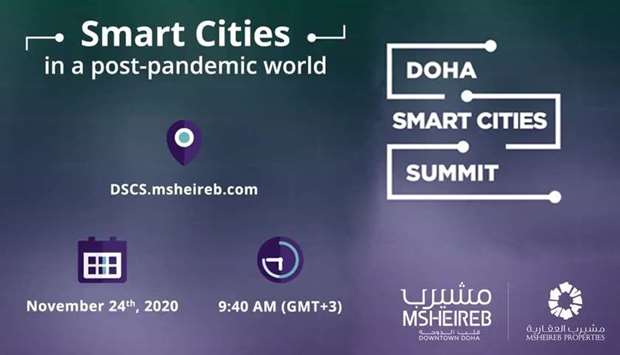
* Event to see participation of government and private institutions and global smart cities' representatives Msheireb Properties, the leading sustainable real estate development company in Qatar, is organising the "first-of-its-kind" virtual summit in the region - Doha Smart Cities Summit - to discuss the role of smart cities in a post-pandemic world. The virtual summit will be held on November 24 through broadcast and digital transmission technology on Msheireb Properties' social accounts, hosting local and international innovators and experts, including representatives from global leading smart cities, such as Amsterdam, Moscow, and Singapore. Doha Smart Cities Summit is a virtual summit for experts, professionals, and a broader audience to share, inspire and shape the Smart City industry's future – with insights from innovators and pioneering developers on the groundbreaking technologies that will impact real estate and city living. The summit comes as part of Msheireb Properties' continuous commitment to adopting sustainable practices of smart cities to strengthen its position among global cities and reflects its effort in supporting 2030 Qatar National Vision that seeks to achieve sustainable development. In addition, the summit will position Qatar as a leading country in promoting partnerships that serve societies and nations. Engineer Ali al-Kuwari, Msheireb Properties acting CEO, said: "The Doha Smart Cities Summit aims to highlight the significant role smart cities play in our everyday lives, specifically under the current challenging circumstances. Msheireb Properties has always been the leading company in introducing smart and sustainable projects in the region, such as Msheireb Downtown Doha, the world's first sustainable downtown regeneration project and one of the smartest and most sustainable city districts in the world.. Smart cities have proven their capabilities to meet the contemporary era's requirements for individuals and companies; it has also contributed to finding innovative solutions in core areas." He added, "Msheireb Properties will be cooperating with international partners and experts during the Doha Smart Cities Summit to discuss the appropriate operational framework that outlines the role and contribution of smart cities can have towards community development." The Doha Smart Cities Summit will be inaugurated by opening keynote speeches from Msheireb Properties, the Ministry of Transportation and Communication, the Supreme Committee for Delivery and Legacy, and Vodafone Qatar, including representatives from global leading smart cities, such as Amsterdam, Moscow, and Singapore. The summit aims to outline the groundbreaking technologies that will impact real estate, city living, and the level of security and safety it provides. Also, a series of panel discussions will highlight a range of specialist areas. The first panel will discuss cyber security in smart cities and the importance of implementing digital systems services. The second panel will discuss mobility and autonomous vehicles and the presentation of a new transportation business model. The third session will be held under the title of “Innovation and sustainability… From Lifestyle Shift to Climate Change.” The summit will end with a special closing panel session on a pandemic-ready smart city model, outlining smart cities’ readiness and preparedness in the stages of lockdown. You can attend the summit virtually on November 24, starting at 9.40am on www.dscs.msheireb.com or on Msheireb Properties social media platforms on Facebook and YouTube.