Author

Monday, December 15, 2025 | Daily Newspaper published by GPPC Doha, Qatar.
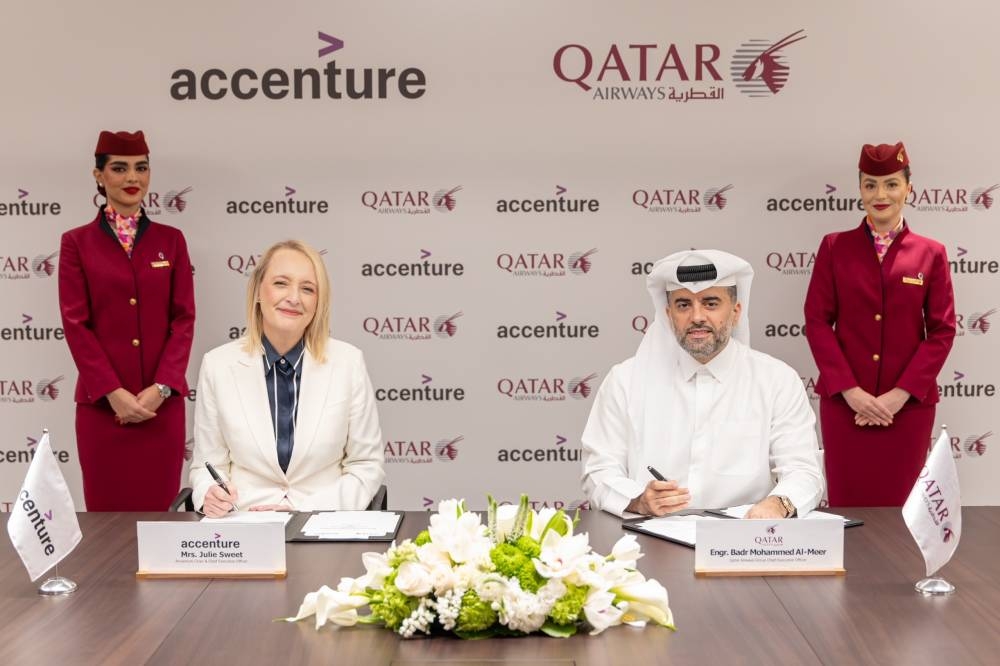
The strategic partnership of Qatar Airways and Accenture aims to elevate customer experience, optimise operational efficiency, and enhance overall airline group performance.
Business
Qatar Airways and Accenture in AI-powered partnership; set up ‘AI Skyways’ to enhance customer experience

Qatar Airways and Accenture have joined forces to revolutionise the aviation industry through artificial intelligence (AI) technologies. This strategic partnership aims to elevate customer experience, optimise operational efficiency, and enhance overall airline group performance.As part of this partnership, Qatar Airways and Accenture has established ‘AI Skyways’ to further position the airline as a “leader in aviation AI and advance technology” in the region and beyond.AI Skyways will lay the foundation to deliver value-led AI initiatives across the Qatar Airways Group through its responsible AI practices, data and platform offerings, and value realisation office that will quantify and maximise the value of AI initiatives. These will accelerate the implementation of AI solutions across a variety of aviation use cases including optimising flight schedules, enhancing predictive maintenance, and personalising customer interactions, allowing Qatar Airways to focus on delivering exceptional travel experiences.In addition, this will allow Qatar Airways to explore future trends and applications of AI in the aviation industry, to ensure sustained growth and adaptation, thereby strengthening its resilience to changing market demands.Qatar Airways’ Group Chief Executive Officer, Badr Mohammed al-Meer, said: "This partnership with Accenture to establish AI Skyways represents a significant milestone in our journey to become leaders in AI-driven aviation. AI Skyways will leverage AI to reimagine a spectrum of operations across Qatar Airways Group - from customer service to operations, to ensure that passengers enjoy a seamless and enriching travel experience.“Furthermore, the partnership will focus on using AI for real-time data analysis to improve decision-making capabilities and operational responses.”This initiative plays a pivotal role in enabling Qatar Airways’ continuous journey to become a ‘Digital-First’ organisation, leveraging AI and other advanced technologies to optimise processes and decision-making capabilities.Accenture Chair and Chief Executive Officer Julie Sweet said: "Together, Qatar Airways and Accenture are applying innovative technologies and new ways of working to create new value for the airline and its customers.“Our AI Skyways partnership is a key engine of this ambition, embedding and scaling AI to create outstanding travel experiences for passengers and deliver greater value to the airline group."Qatar Airways is working relentlessly to design cutting-edge AI-driven solutions that can be replicable across other future initiatives. The airline's commitment to responsible AI deployment will include rigorous ethical guidelines, data privacy measures, and continuous monitoring to ensure that the technology benefits all stakeholders.

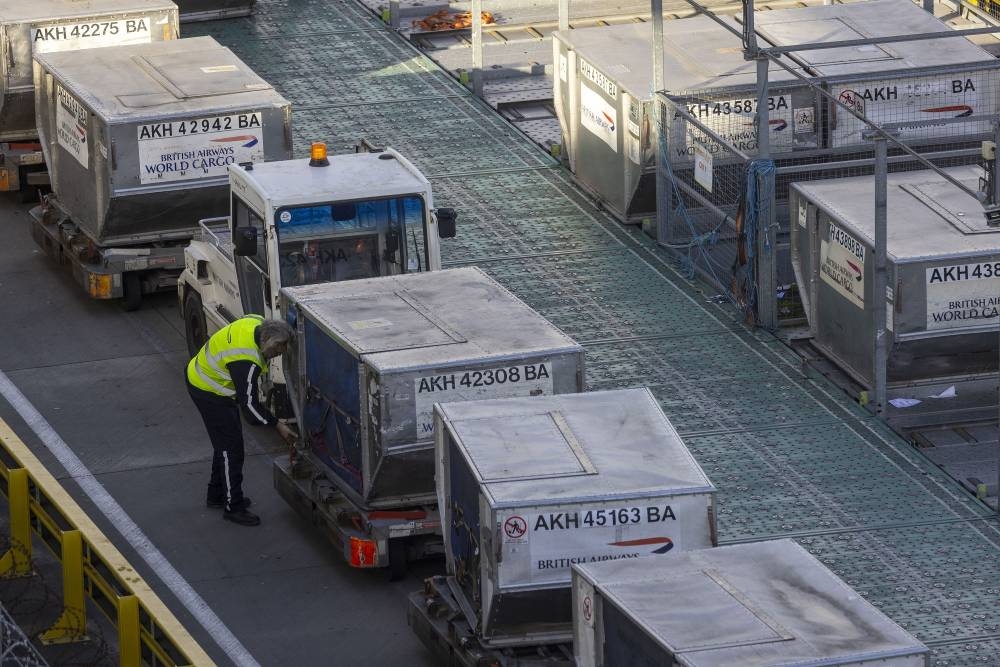
A cargo handler prepares air freight containers for a British Airways flight at Heathrow Airport, in London. E-commerce is reshaping the air cargo sector into a more time-critical, high-frequency, and technology-driven business. It is not only adding to overall cargo volumes but also changing the very nature of how airlines, airports, and logistics providers operate.
Business
E-commerce becomes big structural driver of air cargo growth

Beyond the TarmacFor air cargo, most obviously e-commerce brings growth. It currently averages about 20% of cargo business industry-wide but is expected to grow to at least a third of all cargo shipments.By 2027, e-commerce is expected to be an $8tn market segment, according to the International Air Transport Association (IATA).Moreover, that growth remains stable. Unlike many other trade flows, there is no seasonality but rather a constant, developing demand year-round, according to the global body of airlines.E-commerce has also seen to have a direct impact on other areas on air cargo.First, it is opening up secondary airports because speed of shipment is so important. That, in turn, is generating new business at these airports and supporting the evolution of trade flows.Second, e-commerce is clearly driving innovation in the business. The flow of information is vital in e-commerce, making system integration essential. This brings transparency to the sector, another key component.It is also a factor in ‘ONE Record’ adoption and in driving new solutions in last-mile delivery.ONE Record is an IATA standard for data sharing and creates a single record view of the shipment.It is an end-to-end digital logistics and transport supply chain where data is easily and transparently exchanged in a digital ecosystem of air cargo stakeholders, communities and data platforms.The e-freight programme has set the foundation for the digitalisation of the Air Cargo industry and the electronic Air Waybill (e-AWB) is now used for more than two out of three shipments.Introduced by IATA (International Air Transport Association), the eAWB enables freight forwarders and airlines to manage air cargo documentation electronically, eliminating the need for physical paperwork.Third, e-commerce is strengthening collaboration. Most e-commerce shipments still use freight forwarders or agents, and their experience is vital in a sector that has many fledgling enterprises. Working together is bringing new insights and new solutions that is supporting digital transformation efforts.Industry analysts say that trade wars could bring a temporary volatility to the e-commerce business, but it was pointed out that e-commerce was a global phenomenon and regionally complex. Moreover, the long-term trend of consumers ordering online and expecting delivery within days would not go away.E-commerce was therefore seen by analysts as a structural change in the industry and not simply a new revenue stream.Air cargo embraces sustainability initiatives that range from fleet modernisation to sustainable aviation fuels, electric vehicles and green infrastructure. Reduced packaging is also a vital issue going forward.Undoubtedly, e-commerce has become one of the biggest structural drivers of air cargo growth in recent years, and its influence is only getting stronger.One estimate places the total global air freight market at $319.4bn in 2024.Globally, airlines are collaborating directly with online retailers and logistics providers, moving beyond traditional freight forwarder relationships.Air cargo is increasingly carrying smaller, high-value packages rather than just large industrial shipments.Cross-border e-commerce sales are growing at double-digit rates, fuelled by various global platforms. Consumers now expect rapid delivery for international orders, which often requires air freight rather than slower ocean transport.Unlike some cargo categories that are seasonal, e-commerce drives more consistent demand throughout the year, with peaks during events like Singles’ Day, Black Friday, and Christmas.E-commerce is reshaping the air cargo sector into a more time-critical, high-frequency, and technology-driven business. It is not only adding to overall cargo volumes but also changing the very nature of how airlines, airports, and logistics providers operate.Clearly, the winners will be those who can combine speed, reliability, and digital integration to serve this fast-growing market.

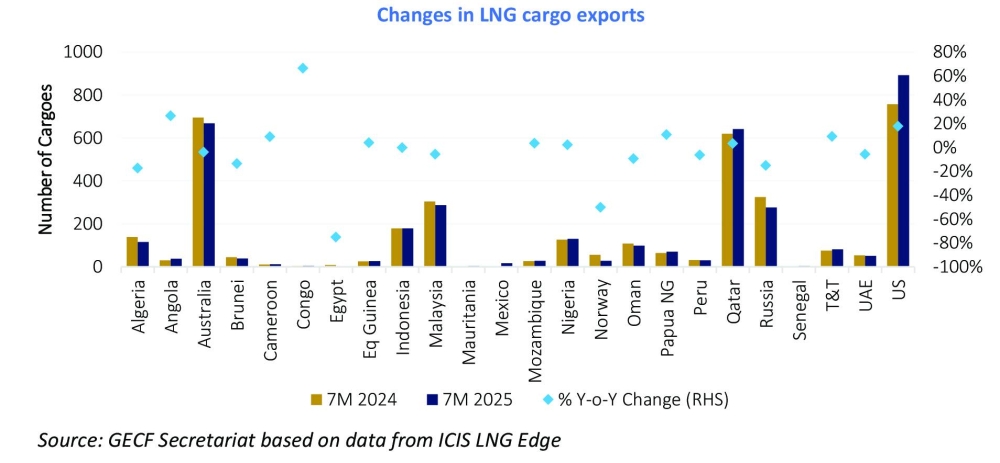
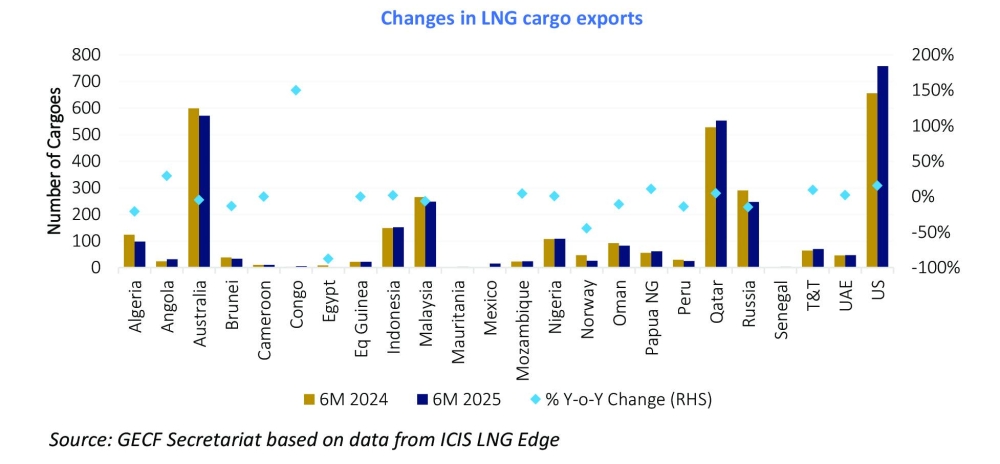
Qatar loaded 25 more LNG cargoes between January and June this year compared to the same period in 2024, GECF data reveal.
Between January and June, the US loaded 102 more cargoes than in the same period in 2024, Gas Exporting Countries Forum said in its recent monthly report.
Business
Qatar loads 25 more LNG cargoes between January and June compared to same period in 2024: GECF

Qatar loaded 25 more LNG cargoes between January and June this year compared to the same period in 2024, according to GECF data.Between January and June, the US loaded 102 more cargoes than in the same period in 2024, Gas Exporting Countries Forum said in its recent monthly report.Congo, Angola and the US recorded the largest percentage increases during this period.In June 2025, there were 504 LNG cargoes exported globally, which was eight fewer compared to one year ago, as well as a decrease of 3% m-o-m.During the first half of the year, some 3,190 cargoes were exported, which was 13 more than during the same period in 2024.GECF countries accounted for 46% of shipments (so far) in 2025, led by Qatar, Malaysia and Russia, the report said.The LNG shipping market continues to be “depressed”, although charter rates have been on the “rise” in recent months.In June, the monthly average spot charter rate for steam turbine LNG carriers globally increased by 210% m-o-m to reach $3,100 per day.However, this average charter rate was still 90% less than one year ago, as well as $31,700 per day lower than the five-year average price for the month.Notably, spot charter rate assessments for steam turbine LNG carriers in the Atlantic Basin regained momentum during the month, after recording assessments of $0 per day since February 2025.Charter rates for the other segments of the LNG carrier fleet also recorded increases during the month. The average spot charter rate for TFDE vessels reached $17,700 per day, which was an increase of 34% m-o-m, but still 61% lower y-o-y. The average spot charter rate for two-stroke vessels rose by 21% m-o-m to $32,200 per day, which was 47% lower than one year ago.For the first half of June, the charter market remained at similar levels to the end of the previous month.However, the escalation of tensions in the Middle East, particularly the perceived threat of closure of the Strait of Hormuz, was a key contributor to the jump in charter rates thereafter.This was reinforced by tightening vessel availability in the Atlantic Basin, due to demand for storage injections in Europe, as well as Egypt increasing the number of LNG cargo imports while purchasing these shipments earlier than expected.The average price of shipping fuels in June increased by 8% m-o-m, to reach an estimated $520 per tonne, GECF said.However, this average price was 9% lower than one year ago, and 10% less than the five-year average price for this month.Compared to the previous month, in June, the upticks in the average LNG carrier spot charter rate and in the cost of shipping fuels were also supported by an increase in the delivered spot LNG prices.As a consequence, there was an increase in the LNG spot shipping costs for steam turbine carriers, by up to $0.16/MMBtu on certain routes.Compared to one year ago, in June 2025, the monthly average spot charter rate and cost of shipping fuels were both lower, while the delivered spot LNG prices were higher.As a result, LNG shipping costs were up to $0.54/MMBtu lower than in June 2024, GECF noted.

Oxford Economics believes that with positive fiscal balance, Qatar will generate a surplus this year and in 2026.
Business
Qatar fiscal balance seen to reach 1.8% of country’s GDP this year, 5.4% in 2026

Qatar’s fiscal balance may reach 1.8% of country’s GDP this year, according to Oxford Economics.In its latest estimate, the researcher noted that Qatar’s fiscal balance (as a percentage of country’s GDP) may reach 5.4% in 2026.Oxford Economics believes that with positive fiscal balance, Qatar will generate a surplus this year and in 2026.The country’s current account (as a percentage of country’s GDP) may reach 17.5% this year and 18.3% in 2026, Oxford Economics said.Qatar’s real GDP growth has been estimated at 2.7% this year and 4.8% in 2026. Inflation will be a negligible 0.4% this year and 2.8% in 2026, Oxford Economics said.According to Oxford Economics, oil prices dipped to around $67 per barrel (last week) after Opec+ announced a 548,000 bpd output increase for September, fully unwinding its 2.2mn bpd production cuts.“While the 2026 outlook remains uncertain amid supply risks and demand-inventory imbalances, this move creates space for GCC economies to boost capacity and support oil sector growth. We expect Brent crude to average around $70 per barrel this year, easing to $64 in 2026,” Oxford Economics noted.The report noted that July PMIs remained in expansion territory, but non-oil activity softened in Saudi Arabia, the UAE, and Qatar as regional tensions weighed on new orders. Egypt and Kuwait saw notable gains.Egypt’s five-month high was supported by rising employment and a slower output decline, while Kuwait's strong performance was led by a sharp rise in new orders.Oxford Economics expects solid non-oil growth in 2025: 4.8% for the UAE and 5% for Saudi Arabia.The moderation in output growth in July was largely due to a slowdown in new business activity, driven by heightened regional tensions that have made it more difficult to attract foreign clients. Still, cost pressures eased slightly in Qatar and Saudi Arabia, while employment rose notably – both pointing to continued resilience in the non-oil sector.In Egypt, the PMI rose to 49.5, its highest since February, reflecting improved sentiment and ongoing structural reforms. Kuwait, diverging from regional peers, saw a sharp increase in new orders supported by greater price competitiveness.“Looking ahead, we expect robust non-oil activity in 2025, with GCC growth projected at 4%, supported by ongoing diversification efforts,” Oxford Economics said.

Gulf Times
Business
Qatar banks record higher credit issuance in June, reflecting positive outlook on economy

Total domestic credit issued by local banks reached QR1.33tn in June, up 5.2% on the same period last year, according to the Qatar Central Bank.An increase in total domestic credit for banks generally means that the banks are lending more money to businesses, individuals, and the government sector within Qatar.“Higher demand for credit signifies a positive outlook on the Qatari economy and rising consumer confidence,” according to an analyst.“Increased lending often signifies that businesses and individuals are borrowing to invest in projects, expansion, or consumption, which can stimulate economic growth. It also indicates that consumers and businesses are confident about the future, hence willing to take on more debt,” he noted.Bank credit has become attractive for both businesses and individuals with rates remaining stable and expected to fall further this year.In its latest banking sector indicators, the QCB noted that total domestic deposit increased by 1.9% (on the same period in 2024) to reach QR850.5bn in June.Higher level of deposits obviously strengthens the banking sector, as banks have more reserves to cover withdrawals and invest in opportunities.With more deposits, banks have more money to lend, which automatically boosts economic activities such as business expansion, consumer spending, and infrastructure projects.“More deposits indicate public confidence in the financial system, which is essential for the smooth functioning of the economy,” the analyst said.QCB data reveal broad money supply (M2) increased by 1.1% to QR740.3bn in June. This represents an increase of 1.1% on the same period last year.M2 includes cash, checking deposits, and easily convertible near money like savings deposits, money market securities, and other time deposits.An increased money supply has seen stimulating economic activity by making more funds available for businesses and consumers to borrow and spend, which then boosts overall economic growth.With more money in circulation, there may be more investment in various sectors, leading to potential economic expansion and development.Total assets of commercial banks in the country increased by 6.3% year-on-year to reach QR2.13tn in June, the QCB said.Higher assets indicate that banks are growing and managing more resources, which enhance their stability and reliability.More assets allow banks to extend more loans to businesses and consumers, fuelling economic growth through investments and consumption, analysts say.It clearly suggests that both domestic and foreign investors have confidence in Qatar’s financial system, leading to increased capital inflows.

The Qatar Central Bank.
Business
Local banks record higher credit issuance in June; reflects positive outlook on Qatar economy

Total domestic credit issued by local banks reached QR1.33tn in June, up 5.2% on the same period last year, according to the Qatar Central Bank.An increase in total domestic credit for banks generally means that the banks are lending more money to businesses, individuals, and the government sector within Qatar.“Higher demand for credit signifies a positive outlook on the Qatari economy and rising consumer confidence,” according to an analyst.“Increased lending often signifies that businesses and individuals are borrowing to invest in projects, expansion, or consumption, which can stimulate economic growth. It also indicates that consumers and businesses are confident about the future, hence willing to take on more debt,” he noted.Bank credit has become attractive for both businesses and individuals with rates remaining stable and expected to fall further this year.In its latest banking sector indicators, the QCB noted that total domestic deposit increased by 1.9% (on the same period in 2024) to reach QR850.5bn in June.Higher level of deposits obviously strengthens the banking sector, as banks have more reserves to cover withdrawals and invest in opportunities.With more deposits, banks have more money to lend, which automatically boosts economic activities such as business expansion, consumer spending, and infrastructure projects.“More deposits indicate public confidence in the financial system, which is essential for the smooth functioning of the economy,” the analyst said.QCB data reveal broad money supply (M2) increased by 1.1% to QR740.3bn in June. This represents an increase of 1.1% on the same period last year.M2 includes cash, checking deposits, and easily convertible near money like savings deposits, money market securities, and other time deposits.An increased money supply has seen stimulating economic activity by making more funds available for businesses and consumers to borrow and spend, which then boosts overall economic growth.With more money in circulation, there may be more investment in various sectors, leading to potential economic expansion and development.Total assets of commercial banks in the country increased by 6.3% year-on-year to reach QR2.13tn in June, the QCB said.Higher assets indicate that banks are growing and managing more resources, which enhance their stability and reliability.More assets allow banks to extend more loans to businesses and consumers, fuelling economic growth through investments and consumption, analysts say.It clearly suggests that both domestic and foreign investors have confidence in Qatar’s financial system, leading to increased capital inflows.

Aircraft on the tarmac at OR Tambo International Airport in Johannesburg. Africa holds immense untapped potential in aviation — in both passenger and cargo markets — but realising this opportunity requires tackling a combination of infrastructure, policy, skills, and market challenges.
Business
Prudent policies can unlock Africa’s huge aviation potential

Africa holds immense untapped potential in aviation — in both passenger and cargo markets — but realising this opportunity requires tackling a combination of infrastructure, policy, skills, and market challenges.Industry experts highlight that many African airports suffer from congestion, outdated facilities, and limited capacity.Upgrading runways, terminals, air traffic control systems, and cargo handling facilities will be essential to improving efficiency and safety, they say.Top aircraft manufacturers Boeing and Airbus project that Africa’s air traffic could more than double in the next 20 years — but only if systematic barriers are tackled.In 2018, an initiative was launched in Africa to liberalise air services in the continent.Dubbed Single African Air Transport Market (SAATM), the initiative focused on prioritising air transport for the economic benefit of the entire continent.Unfortunately, many African countries haven’t either committed or are slow to enforce SAATM.Easier travel between African states would have significantly boosted tourism, business travel, and intra-African trade.Recently, the global body of airlines - IATA urged African governments to prioritise aviation as a catalyst for economic growth, job creation, connectivity, and social development.The airlines body said each state on the continent can do this by enhancing safety, reducing the cost burden, and resolving the issue of blocked airline funds.“Africa’s aviation sector is a vital economic driver, contributing $75bn to GDP and supporting 8.1mn jobs,” noted Somas Appavou, IATA’s Regional Director External Affairs, Africa.“The continent’s aviation market is projected to grow at 4.1% over the next 20 years, doubling by 2044. More important than the growth of the sector is the impact that a successful aviation industry has on social and economic development.As governments prioritise how to deliver their agendas with limited resources it is critical to recognise that supporting aviation underpins jobs, trade, and tourism.”IATA outlined three key priorities for African governments, such as improving safety, reducing taxes and charges on air travel, and ensuring airlines are able to repatriate revenues from the African market.Although aviation safety has improved in the region, the continent’s safety rate lags the global average in its implementation of ICAO Standards and Recommended Practices (SARPS).Also, taxes on air transport in Africa are 15% higher than the global average, while $1bn of carrier revenues are being blocked from repatriation by some 26 different African governments, according to IATA data published during association’s AGM in New Delhi in June this year.Airlines facing blocked funds often reduce flight frequencies or suspend routes.“These challenges are not new but solving them is urgent—that’s why IATA launched the Focus Africa initiative in 2023, working hand-in-hand with governments, industry, and development partners to deliver real improvements in safety, affordability, and connectivity,” Appavou pointed out.“Aviation is not a luxury. It is an economic and social lifeline. Focus Africa is about turning potential into jobs, growth and prosperity.”Mandatory reporting of the Carbon Offsetting and Reduction Scheme for International Aviation (CORSIA) will begin in 2027—as of 2025, 129 countries are participating in CORSIA, including 20 African states.IATA has called on African governments to ensure the success of CORSIA as the only globally agreed, market-based mechanism to address CO2 emissions from international aviation.Africa’s ticket prices are inflated by multiple levies on airlines and passengers. For example, jet fuel costs in many African airports are often far higher than the global average.Analysts project Africa will need tens of thousands of new pilots over the next 20 years, but training capacity is limited. They recommend establishing technical colleges and aviation academies to meet the growing demand for aviation professionals in the continent.If Africa can modernise infrastructure, open its skies, harmonise rules, and train the workforce, the aviation sector could indeed become a growth engine — supporting tourism, trade, and integration across the continent.

The second-quarter data affirms the strong trajectory of real estate sector in the country, driven by a notable rise in transaction volumes and renewed momentum in lease registrations, especially in mid-income and high-demand areas. Established investment hubs such as The Pearl and Lusail continue to attract investors, while emerging areas like Al Wakrah are becoming key pillars for expanding the market base and enhancing its diversity
Business
Qatar real estate sector records transactions worth QR8.9bn in Q2: Aqarat

In the strongest quarterly performance since Q3, 2020, Qatar’s real estate sector recorded transactions worth QR8.9bn in the second quarter of this year, up 29.8% compared to the same period in 2024.This was revealed by Qatar’s Real Estate Regulatory Authority (Aqarat) in the first edition of its ‘Real Estate Bulletin’.The bulletin monitors developments in the country’s real estate sector and highlights trends in real estate transactions, shifts in the rental market, and the geographical distribution of demand.Real estate transactions also saw a significant rise during the mentioned period, reaching 1,915 transactions across various categories, marking a 44% increase compared to the second quarter of 2024. This represents the strongest quarterly performance since the third quarter of 2020.Doha Municipality accounted for the “largest share” of transaction volume, with sales totalling around QR4.8bn, followed by Al Rayyan Municipality with QR1.9bn.According to Aqarat, residential transactions accounted for approximately 44% of the total number of real estate transactions during the period.The Pearl topped the list of “most sought-after” areas, recording some 266 transactions, followed by Lusail with 125 transactions — driven by their strategic locations, quality projects, and growing appeal to both investors and residents alike.Doha recorded the highest percentage of sold units, accounting for around 39.2%, followed by Al Rayyan at 18.2%, and Al Daayen at 17.2%.The rental market was also active, with as many as 58,246 lease contracts registered during the first half of the year — the highest rate recorded for the first half in the past six years.This represents an increase of approximately 26% compared to the same period last year, which recorded 46,073 contracts, Aqarat noted.Al Wakrah Municipality witnessed the “highest demand” for rental contracts, especially in areas like Al Wukair, Al Mashaf, and Al Thumama, which together recorded 5,337 contracts, due to their popularity among tenants for offering reasonably priced housing options.The second-quarter data affirms the strong trajectory of real estate sector in the country, driven by a notable rise in transaction volumes and renewed momentum in lease registrations, especially in mid-income and high-demand areas.Established investment hubs such as The Pearl and Lusail continue to attract investors, while emerging areas like Al Wakrah are becoming key pillars for expanding the market base and enhancing its diversity.Aqarat noted, “The sector is expected to continue benefiting from the accelerating pace of digital transformation, improved regulatory transparency, and strategic investment in infrastructure in line with Qatar National Vision 2030.“Barring any major external disruptions, these strategic pillars position the market for sustainable growth, expanded investment participation, and strengthening Qatar’s position as a leading real estate investment destination in the region.”

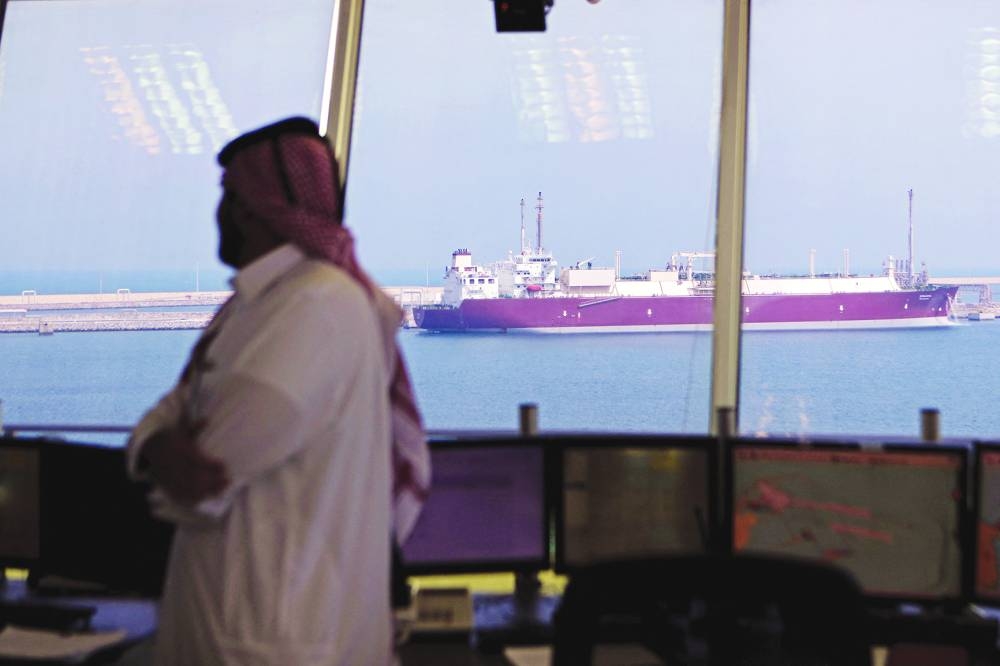
The Ras Laffan Industrial City, Qatar's principal site for production of liquefied natural gas and gas-to-liquids (file). Driven by Qatar, H1 LNG exports by GECF members rose by 0.8% (0.82mn tonnes) year-on-year to reach 97.52mn tonnes in June.
Business
GECF LNG exports scale up to 97.52mn tonnes in first half

Driven by Qatar, first half LNG exports by the Gas Exporting Countries Forum members rose by 0.8% (0.82mn tonnes) year-on-year to reach 97.52mn tonnes in June, GECF has said in a report.In June, LNG exports from GECF member and observer countries grew by 5.7% (0.85mn tonnes) year-on-year to reach 15.94mn tonnes, marking a record high for the month.This increase in LNG exports was driven mainly by higher exports from Qatar, Mauritania, Nigeria, Senegal and Trinidad and Tobago, which offset lower exports from Algeria, Russia and the United Arab Emirates.The LNG exports from Mauritania and Senegal increased due to the ramp-up in production at the jointly developed GTA FLNG 1 facility. Nigeria also recorded higher exports, supported by improved feedgas availability.In Qatar and Trinidad and Tobago, reduced maintenance activity compared to a year earlier contributed to the rise in exports. Conversely, Algeria’s decline in LNG exports was likely driven by lower feedgas availability.In Russia, the decrease was mainly attributed to lower output from the Portovaya and Vysotsk LNG facilities, while exports from the Sakhalin 2 LNG facility marginally declined.Furthermore, higher maintenance at the Das Island LNG facility resulted in lower exports from the UAE.In June, global LNG exports increased by 4.8% (1.56mn tonnes) year-on-year to reach 34.33mn tonnes, marking a record high for LNG exports in the month of June.GECF member countries led the increase, followed by smaller gains from non-GECF countries and LNG re-exports.During H1, global LNG exports reached 213.41mn tonnes, representing growth of 4.1% (8.40mn tonnes) year-on-year, driven mainly by stronger exports from non-GECF countries, with GECF Member Countries and LNG re-exports contributing to a lesser extent.Non-GECF countries maintained their dominance in global LNG exports with a market share of 53%, slightly down from 53.6% a year earlier.Meanwhile, GECF member countries and LNG re-exports accounted for 46.5% and 0.5%, up from 46.1% and 0.3%, respectively, in June 2024.The US, Qatar, and Australia retained their positions as the top three LNG exporters in June this year, according to GECF.In June, the Mena region’s LNG imports jumped by 36% (0.40mn tonnes) year-on-year to reach 1.52mn tonnes, supported by stronger imports in Bahrain and Egypt.Mena region’s LNG imports in H1 surged by 79% (3.00mn tonnes) year-on-year to 6.81mn tonnes.Bahrain continues to ramp up its LNG imports following the resumption of imports in April Meanwhile, Egypt’s increased LNG imports have compensated for lower domestic gas supply.

Aircraft assembled at the Airbus manufacturing plant for passenger jets in Tianjin, China. The global airline industry is currently grappling with significant challenges due to massive delivery backlogs at major aircraft manufacturers like Boeing and Airbus.
Business
Aircraft delivery backlog causes 14-year wait between order, delivery

Beyond the Tarmac The global airline industry is currently grappling with significant challenges due to massive delivery backlogs at major aircraft manufacturers like Boeing and Airbus. These backlogs are having ripple effects across airline operations, financial planning, and growth strategies around the world. In 2025, deliveries are forecast to rise to 1,802, having been revised down from 2,293, and further cuts to this number are to be expected, according to the International Air Transport Association (IATA). The backlog (the cumulative number of unfulfilled orders) of new aircraft has reached 17,000 planes this year, a record high for the industry, IATA noted at its Annual General Meeting in New Delhi in June. At present delivery rates, it would take 14 years to clear the backlog, double the six-year average for the 2013-2019 period. In other words, the delivery backlog of 17,000 implies a 14-year wait between ordering and delivery. The number of deliveries scheduled for 2025 is 26% less than what was promised a year-ago. However, the waiting time is expected to shorten as delivery rates increase. IATA data reveal that over 1,100 aircraft under 10 years of age are in storage. That’s 3.8% of the entire fleet, nearly three times the pre-pandemic comparison of 1.3%. And the annual fleet replacement rate of 3% is well below the normal 5-6%. Aircraft deliveries have fallen sharply from the peak of 1,813 aircraft in 2018. The estimate for deliveries in 2024 is 1,254 aircraft, 30% fewer than what was predicted at the start of the year. As a result of delayed deliveries, the average age of the global fleet has risen to a record 14.8 years, a significant increase from the 13.6 years average for the period 1990-2024. An older fleet translates into higher maintenance costs and higher fuel burn. Therefore, existing supply chain issues are at least partially responsible for the deceleration in fuel efficiency gain – in 2024 fuel efficiency (measured in litres per Available Tonne-Kilometres – ATK) was broadly unchanged (declining a mere 0.1% y-o-y), which is a most regrettable departure from the long-term (1990-2019) trend of annual fuel efficiency improvements in the range of 1.5-2.0%. Had efficiency improvements continued in 2024 at 1.5%, the industry would have burnt 1.4bn gallons less jet fuel and CO2 emissions would have been 13.6mn tons lower, all things being equal. The supply chain issues have also boosted demand for used aircraft, leading to an increase of 20-30% in lease rates of narrow-body aircraft compared with 2019. This, together with higher interest rates, has impacted airlines’ financing costs and bottom lines. Including the contraction in ticket yields, these factors have contributed to limiting the industry-wide net profit in 2024 to $31.5bn (down 10% y-o-y from 2023). IATA estimates that if lease prices, interest rates, and unit maintenance costs had been unchanged compared with 2023, and if fuel efficiency had continued its downward trend, the net profit in 2024 could have been $7.5bn higher – in that case it would have eliminated the drop from 2023 and left the net margin flat year-on-year. Industry analysts say airlines will not be able to expand or modernise their fleets as planned, if aircraft deliveries get further delayed. This is especially problematic for low-cost carriers and emerging market airlines with aggressive growth ambitions. Globally, new routes or frequency increases are also being postponed due to aircraft shortages. Airlines are forced to keep older aircraft flying longer, which impacts fuel efficiency and maintenance costs. With manufacturers behind schedule, airlines increasingly turn to leasing companies to fill the gap. Lessors seem to be capitalising on the high demand, pushing lease prices up substantially. Leasing aircraft often involves longer-term commitments and less customisation, limiting operational flexibility, analysts point out. The delay in aircraft deliveries means airlines have fewer backup aircraft, making them more vulnerable to delays and maintenance-related disruptions. Increased strain on existing fleets often leads to scheduling challenges and potential delays, industry analysts point out. Airlines with sustainability targets are also struggling in view of the delay in new aircraft deliveries, they say, as older planes are less fuel-efficient and emit more CO2.

Qatar’s broad economy is in good shape, with “positive” annual growth across all components of GDP in the first quarter, according to Emirates NBD. PICTURE: Shaji Kayamkulam
Business
Qatar set to clock fastest growth rate next year since 2015: Emirates NBD

Qatar’s broad economy is in good shape, with “positive” annual growth across all components of GDP in the first quarter (Q1), according to Emirates NBD.Indications are that growth has been maintained in the second quarter, with the Qatar Financial Centre PMI survey remaining above the neutral 50.0 level in April and May, the Dubai-based banking group has said in a report.While Qatar saw a record first quarter in terms of LNG exports, hitting 22mn tonnes amid high demand from northeast Asia, there was only a modest 1.5% y-o-y rise in the extraction of crude petroleum and natural gas industrial production index.The second quarter also appears to have got off to a fairly weak start, with the index’s April print down 3.8% year-on-year (y-o-y).“We have pencilled in a 2.0% expansion in the hydrocarbons side of the economy this year. In 2026, however, we project a much more robust 8.0% growth rate given the expected start of operations at the North Field East expansion project in the middle of next year.“This will drive headline GDP growth up to 4.8% next year according to our projections, which if realised would be the fastest growth rate since 2015,” Emirates NBD said.The researcher’s non-hydrocarbons growth forecast for Qatar this year is 3.0%, which would represent a modest slowdown from the 3.4% seen last year.Although the Q1 growth print does offer some upside risk to this projection there has been a slowdown in quarterly growth, which if maintained would see softer annual growth through the remainder of the year.Qatar’s real GDP growth rate slowed to 3.7% y-o-y in Q1, down from 6.1% in Q4-2024. This still marked a strong performance, however, coming in well above the 2.5% averaged over the previous four years.On a quarterly basis, growth was 0.3%, from 0.4% in Q4. The slowdown in annual growth was driven primarily by a drop in ‘mining and quarrying’, mainly from the hydrocarbons sector, where growth fell to 1.0% y-o-y, from 6.3% the previous quarter.There was also a more modest slowdown in non-hydrocarbon GDP, which maintained a robust growth rate of 5.3%, compared with 6.2% previously.“We forecast headline GDP growth of 2.6% this year, compared with 2.4% in 2024,” Emirates NBD said.Notable growth drivers in Q1 include wholesale and retail trade, which expanded 14.6% y-o-y and accounted for 8.4% of GDP, and manufacturing, which made up 7.4% of the total and grew 5.6% y-o-y, compared with a 0.2% decline in Q4-2024.Building and construction saw growth of 4.4% and the outlook for the rest of the year is positive given high levels of project spending in the pipeline.As of June, MEED Projects data gives $52.8bn worth of projects budgeted in Qatar. The bulk of this is in construction, closely followed by transport with investment going into the New Doha International Airport and the Doha Metro network.Transport and storage saw growth of 4.1%, maintaining the healthy pace set over the previous three years.While visitor arrivals in Q1 were down 7% to 1.5mn, the ongoing expansion of Qatar Airways and the development of Doha International as a regional and global hub likely provided support to the sector – in 2024 passenger volumes through Hamad International Airport expanded by 15% to reach 52.7mn passengers, Emirates NBD said.

A Total tanker truck fuels an Airbus A350 passenger plane, with sustainable aviation fuel on the tarmac at Charles de Gaulle airport in France. Airlines operating in Europe are facing mounting challenges stemming from compliance fees imposed by SAF producers and suppliers.
Business
Compliance fee jacks up SAF market price in Europe

Beyond the TarmacAirlines operating in Europe are facing mounting challenges stemming from compliance fees imposed by Sustainable Aviation Fuel (SAF) producers and suppliers.While these fees are designed to support regulatory and sustainability goals, they are adding significant financial, operational, and strategic burdens to an industry already navigating tight margins and a highly competitive landscape.“While it is encouraging that SAF production is expected to double to 2mn tonnes in 2025, which is just 0.7% of aviation’s total fuel needs. And even that relatively small amount will add $4.4bn globally to the fuel bill. The pace of progress in ramping up production and gaining efficiencies to reduce costs must accelerate,” said IATA’s Director General Willie Walsh.The problem with mandates: Most SAF is now heading towards Europe, where the European Union and United Kingdom mandates kicked in on January 1.“Unacceptably, the cost of SAF to airlines has now doubled in Europe because of compliance fees that SAF producers or suppliers are charging,” IATA says.For the expected 1mn tonnes of SAF that will be purchased to meet the European mandates in 2025, the expected cost at current market prices is $1.2bn.Compliance fees are estimated to add an additional $1.7bn on top of market prices—an amount that could have abated an additional 3.5mn tonnes of carbon emissions.Instead of promoting the use of SAF, Europe’s SAF mandates have made SAF five times more costly than conventional jet fuel.“This highlights the problem with the implementation of mandates before there are sufficient market conditions and before safeguards are in place against unreasonable market practices that raise the cost of decarbonisation.“Raising the cost of the energy transition that is already estimated to be a staggering $4.7tn should not be the aim or the result of decarbonisation policies. Europe needs to realise that its approach is not working and find another way,” Walsh said on the sidelines of IATA’s annual general meeting in New Delhi last month.Global SAF market: To support the development of a global SAF market, IATA has worked on two initiatives:A SAF registry managed by the Civil Aviation Decarbonisation Organisation (CADO) that brings a transparent and standardised system for tracking SAF purchases, usage and associated emissions reductions in compliance with international regulations such as Carbon Offsetting Scheme for International Aviation (CORSIA) and the EU Emissions Trading Scheme.The SAF Matchmaker that will facilitate SAF procurement by matching airline requests for SAF with supply offers.IATA urges governments to focus on three areas:Creating more effective policies. Eliminating the disadvantage that renewable energy producers face compared with big oil is necessary to scale renewable energy production in general and SAF production in particular. This includes redirecting a portion of the $1tn in subsidies that governments globally grant for fossil fuel.Develop a comprehensive approach to energy policy that includes SAF. Firstly, advancing SAF production requires an increase in renewable energy production from which SAF is derived.Secondly, it also requires policies to ensure SAF is allocated an appropriate portion of renewable energy production. A holistic approach should support joint use of infrastructure, co-production and other measures that will benefit the energy transition for aviation and for all other economic sectors.Ensure the success of CORSIA as the sole market-based mechanism to address international aviation’s CO2 emissions. IATA urges governments to make Eligible Emissions Units (EEUs) available to airlines. To date Guyana is the only state to have made their carbon credits available for airlines to purchase and claim against their CORSIA obligations.Focus on India: India, one of the emerging economies on the world stage today, is the third-largest oil user after the US and China. India launched the Global Biofuels Alliance to position biofuels as a key to energy transition and economic growth.This includes a target for 2% SAF blending for international flights by 2028 with enabling policies such as guaranteed pricing, capital support for new projects, and technical standards. IATA will be working with the Indian Sugar & Bio-Energy Manufacturers Association (ISMA) and Praj Industries, to provide guidance on global best practices for life cycle assessment of the use of feedstocks in the country.As the third-largest global civil aviation market, India can strengthen its leadership in biofuels with the accelerated adoption of SAF through progressive policies.IATA SAF Matchmaker platform: Recently, IATA announced the release of the Sustainable Aviation Fuel (SAF) Matchmaker platform, to facilitate SAF procurement between airlines and SAF producers by matching requests for SAF supply with offers.When there is a match, airlines and suppliers can connect and take their negotiation offline to agree on specific terms including price and payment terms.The growing use of SAF is essential to decarbonising aviation. However, excessive compliance fees in Europe risk undermining adoption by inflating costs and reducing efficiency.Airlines must balance regulatory obligations with economic realities—something only achievable through smarter, more supportive policy frameworks.Europe’s current approach serves as a cautionary example- without synchronised market development, SAF mandates can do more harm than good!

Qatar's hotels achieved an estimated occupancy rate of 71% in Q1-2025, ValuStrat said in its latest country report. PICTURE: Shaji Kayamkulam
Business
Tourism remains 'strong contributor' to Qatar’s economic activity; Q1 registers 1.5mn visitors

Tourism remained a “strong contributor” to Qatar’s economic activity, with 1.5mn visitors recorded — primarily from the GCC in the first quarter (Q1) of the year, according to researcher ValuStrat.Qatar's hotels achieved an estimated occupancy rate of 71% in Q1-2025, ValuStrat said in its latest country report.The total hospitality stock estimated by Qatar Tourism was 40,787 keys, according to ValuStrat.Some 68% of the total stock comprised 4- to 5-star hotels, whereas 7.7% was classified within the 1-star to 3-star category, while the remaining 24.3% consisted of hotel apartments.The report noted that an estimated 845 hotel keys are set to enter the market in 2025, majorly concentrated in the four and 5-star segments.Travellers from GCC nations accounted for 36% of the total 1.5mn visitors in the first quarter of the year, it said.“A mix of Eid celebrations, jewellery showcases, desert and food festivals, cruise arrivals, and various MICE activities drew over 1mn visitors during Q1,” ValuStrat noted.For Q1, 2025, the Average Daily Rate (ADR) was QR445, a drop of 6.4% YoY.Whilst the Revenue Per Available Room (RevPAR) was QR317, declining 10.7% from Q1 last year, the ADR for 5-star hotels was QR522.The ADR for 3- and 4-star hotels was QR175 and QR220 respectively, it said.In Q1, 2025, the Government of Qatar prioritised real estate and tourism, implementing new policies to enhance investment opportunities and streamline regulations, reinforcing its commitment to economic expansion, ValuStrat noted.Anum Hassan, Head of Research (Qatar) at ValuStrat said: “The first quarter of 2025 reflected a broadly stable real estate landscape in Qatar, with most sectors experiencing either consolidation or modest downward adjustments.”The ValuStrat Price Index (VPI)-Residential Capital Values held firm at 96.5 points, benchmarked against a base of 100 set in Q1, 2021.Both apartment and villa indices recorded no significant movement, maintaining levels of 98.7 and 96 points respectively on a quarterly and annual basis, she said.Retail leasing values “held steady” over the period, while the industrial segment showed encouraging signs of growth, Hassan said.Rents for ambient and cold storage facilities rose by 2.8% and 3.6% respectively. Additionally, recent ministerial directives streamlining business set-up processes for foreign investors have resulted in a notable increase in commercial activity.“In the months ahead, we anticipate further seasonal adjustments, particularly during the summer period, as the market continues to demonstrate resilience while adapting to evolving dynamics,” Anum Hassan added.

A cargo handler prepares air freight containers for a British Airways flight at Heathrow Airport in London. Air cargo plays a pivotal role in the global transport of perishable goods, providing the speed and reliability necessary to preserve product quality and reduce spoilage.
Business
Air cargo provides vital link in global perishable goods supply chain

Beyond the TarmacAir cargo plays a pivotal role in the global transport of perishable goods, providing the speed and reliability necessary to preserve product quality and reduce spoilage.Items such as fresh fruits and vegetables, seafood, flowers, dairy products, and pharmaceuticals have limited shelf lives, making air freight the preferred mode of transportation for ensuring freshness and meeting tight delivery windows — especially for sectors like retail, hospitality, and healthcare.According to the International Air Transport Association (IATA), a seamless and efficient supply chain — heavily reliant on air transport — is essential for getting perishable goods to consumers in top condition.The latest data from IATA’s CargoIS marketing intelligence platform underscores this point: in 2024, the global fresh produce market transported by air grew by 8%.Fruit and vegetables were by far the biggest segment in 2024, representing almost a third of all perishable goods transported by air, IATA noted in a recent report.The next biggest segments were fish (21%), flowers (13%) and meat (10%). The fastest-growing segments were cool goods, up 45% and meat, up 21% year on year in 2024.One of the busiest trade lanes for fruit and vegetables, was between Mumbai and London Heathrow, driven by demand from a thriving Indian community in the UK.The second busiest, was a domestic route between Davao, the Philippines’ agricultural hub and the capital Manila.Australia was by far the biggest exporter of Meat by air in 2024 — with more than 50% of the market. Melbourne was by far the biggest Australian gateway, with meat transported from the city by air growing 55% year on year.Most of these shipments were to key consumer markets in Singapore, Dubai, Doha and Frankfurt.Pakistan and South Africa also featured as top source markets for Meat, with South African shipments by air virtually doubling year on year in 2024.Demand for certain products has shown to be highly seasonal and driven by key celebrations globally. Flower shipments spiked in the first two weeks of February ahead of Valentine’s Day, with Ecuador, Kenya and Colombia making up the top source markets.Similarly, fish shipments increased sharply ahead of Chinese New Year. Norway was by far the biggest source market. Between 20 November 2023 to 4 February 2024, Norway accounted for 46.54% of the chargeable weight of fish transported by air.Most of these shipments were destined for Asia, with Japan, Thailand and China the largest markets.Industry analysts say, currently, over 60% of international fresh flower exports move via air freight.Air cargo moves millions of tons of perishables annually, especially between Latin America, Africa, and major consumption hubs in Europe, Asia, and North America.The pharmaceutical industry alone accounts for billions of dollars in air freight revenue annually due to strict handling requirements.Rising demand for fresh, organic, and exotic foods — fuelled by e-commerce and urban affluence — is increasing reliance on air cargo to meet consumer expectations for availability and freshness.IATA’s Global Head of Cargo Brendan Sullivan said, “The growth in perishable goods volumes highlights the vital role air travel plays in helping farmers, production companies, and traders get their produce from the farm to the supermarket shelf.“Shipping perishable goods by air saves precious time for cargo that has a short shelf life while making it more sustainable by reducing waste. To cope with sustained market growth and consumer needs, IATA has worked with airlines and shippers to develop standards, training, efficient handling techniques, and packaging methods to ensure food safety and a logistics chain where speed of transit is non-negotiable.”Although air cargo handles less than 1% of global trade volume, it accounts for nearly 35% of trade value — a testament to the premium and time-sensitive nature of the goods it carries.For the perishable goods industry, air freight is not just important — it is essential. Without it, modern supply chains for many temperature-sensitive products would not be viable.

Gulf Times
Business
Opec expects global economy to remain resilient in H2 of 2025

The Organisation of the Petroleum Exporting Countries (Opec) said it expected the global economy to remain resilient in the second half of this year and trimmed its forecast for growth in oil supply from the United States and other producers outside the wider Opec+ group in 2026. In its latest monthly report, Opec also left its forecasts for global oil demand growth unchanged in 2025 and 2026, after reductions in April. It said the economic outlook was robust despite trade concerns. Opec noted that the global economy has outperformed expectations so far in H1, 2025, with data indicating better-than-expected growth in India, China and Brazil in Q1. In the US, underlying growth remained solid, while the eurozone experienced a modest rebound from last year. This strong base from H1 is anticipated to provide support and sufficient momentum into a sound H2. However, the growth trend is expected to moderate slightly on a quarterly basis. “With these dynamics, global economic growth is forecast at 2.9% in 2025,” Opec noted. Global oil demand is forecast to grow by an average of 1.4mn bpd, y-o-y, in H2. For the full year 2025, it is forecast to expand by 1.3mn bpd. In the report, Opec said supply from countries outside the Declaration of Co-operation – the formal name for Opec+ – will rise by about 730,000 barrels per day in 2026, down 70,000 bpd from last month’s forecast. Opec now expects US output of tight oil, another term for shale, to hold steady next year at 9.05mn barrels per day. Last month, it expected small growth year on year and in January had forecast output in 2026 would reach 9.28mn bpd. “The 2026 forecast assumes sustained capital discipline, further drilling and completion efficiency gains, weaker momentum in drilling activities and increased associated gas production in key shale oil regions,” Opec said of tight oil.

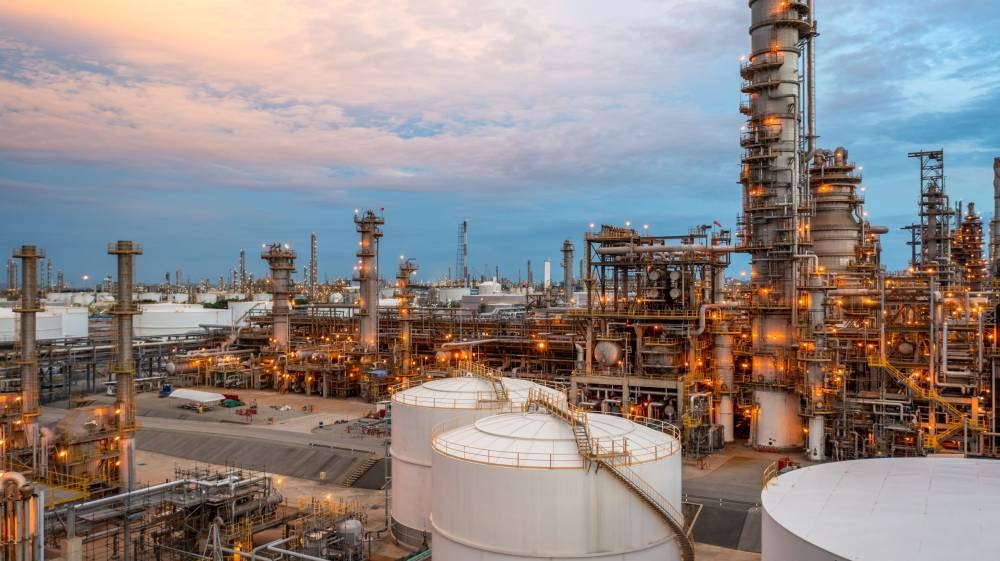
An oil refinery on the outskirts of Doha (file)
Business
Higher oil prices expected to support bank liquidity in Qatar: Oxford Economics

Higher oil prices will likely support bank liquidity in Qatar, despite rising exposure to construction and real estate and persistent foreign funding risk, according to Oxford Economics.Trade credit risk of the country – a measure of private sector repayment risk – is "very low" by regional standards at 3.0 (determined by Oxford Economics under its data-driven methodology) compared with the regional average of 6.1."The main factors underpinning this rating are Qatar’s macroeconomic stability, the credible and well-established exchange rate regime, robust growth, extremely high GDP per capita, and a healthy, well-developed banking sector.Although the country’s external debt burden became large due to heavy investment in a relatively short period of time, and trended up between 2013 and 2021, it has since declined," the researcher noted.Debt is balanced by the large but undeclared foreign assets (including over $40bn of official reserves), current account surpluses, sustained economic growth, and access to cheap external borrowing due to Qatar's high sovereign credit ratings.The country's large external surpluses have been invested abroad in property, financial, retail and other sectors by the Qatar Investment Authority (QIA), which is estimated by the Sovereign Wealth Fund Institute to have assets of more than $500bn. The aim is to reduce the state's reliance on oil and gas earnings.According to Oxford Economics, Qatar’s crude oil production will rise modestly this year and next.“Qatar isn't involved in the Opec+ pact on production quotas and its oil output has been relatively flat in recent years, at around 600,000 barrels per day.“We think growth in the energy sector will remain modest this year, following a 0.6% expansion in 2024, before picking up strongly in 2026-2027,” Oxford Economics said and noted the “gas sector is a priority.”Last year, the authorities doubled down on the North Field gas expansion project, which will have a positive medium-term impact. Qatar raised its liquefied natural gas capacity target to 142mn tonnes per year (mtpy) by end-2030.This is up nearly 85% from the current 77 mtpy, and up 13% on the intermediate target of 126 mtpy by 2027.The first production boost will come from the North Field East project by mid-2026, followed by the North Field South phase of the expansion.The North Field West phase is in its early stages, with construction likely to begin in 2027.Qatar is also making progress in contracting future gas output. The government has signed long-term supply contracts with India, China, France, Germany, Hungary, Kuwait, and Taiwan, the researcher noted.

LNG exports by GECF member countries and observers got a boost in May driven mainly by Qatar, Gas Exporting Countries Forum said in its latest monthly report. The surge in Qatar’s LNG exports was supported by reduced maintenance activity compared to a year earlier, and production exceeding the facility’s nameplate capacity, GECF noted.
Business
Qatar LNG exports' surge boosts GECF output in May

LNG exports by GECF member countries and observers got a boost in May driven mainly by Qatar, the Gas Exporting Countries Forum said in its latest monthly report.The surge in Qatar’s LNG exports was supported by reduced maintenance activity compared to a year earlier, and production exceeding the facility’s nameplate capacity, GECF noted.In May, LNG exports from GECF member and observer countries jumped by 8.9% (1.31mn tonnes) y-o-y, reaching 16.11mn tonnes, which is a record high for the month.The stronger LNG exports came mainly from Qatar, Nigeria, Trinidad and Tobago and Angola, which offset weaker LNG exports from Malaysia and Algeria.Between January and May this year, GECF LNG exports increased marginally by 1% (0.79mn tonnes) y-o-y, reaching 82.40mn tonnes.In May, global LNG exports continued to grow sharply, rising by 8% (2.61mn tonnes) y-o-y to reach 35.1mn tonnes. This marked the 10th consecutive monthly year-on-year increase in LNG exports.Higher LNG exports from both GECF and non-GECF countries drove the overall growth, offsetting a decline in LNG re-exports, the report noted.Between January and May, global LNG exports increased by 5% (8.67mn tonnes) y-o-y to reach 180.91mn tonnes, primarily supported by non-GECF exporters, while exports from GECF countries and LNG re-exports grew to a lesser extent.Non-GECF countries were the largest LNG exporters globally in May 2025, with a market share of 54%, followed by GECF countries at 45.9% and LNG re-exports at 0.1%.Compared to May 2024, the market shares of non-GECF and GECF countries increased from 53.6% and 45.6%, respectively, while the share of re-exports declined from 0.8%.“The US, Qatar and Australia were the top three LNG exporters in May,” GECF said.In May, global LNG imports jumped by 6.9% (2.25mn tonnes) y-o-y to reach 34.75mn tonnes, marking a record high for the month.Europe continued to drive the growth in global LNG imports, followed by a smaller contribution from the Mena region, while Asia Pacific’s LNG imports remained subdued.The stronger netback for US LNG delivered to Europe, compared to Asia Pacific, along with weak LNG demand in the Asia Pacific region, supported the continued strong flow of US LNG into Europe.From January to May, global LNG imports totalled 181.66mn tonnes, reflecting a y-o-y increase of 4.2% (7.36mn tonnes), primarily driven by higher European imports.In May, the Mena region’s LNG imports surged by 94% (0.79mn tonnes) y-o-y, reaching 1.6479mn tonnes, driven mainly by Egypt and Kuwait.Between January and May, the Mena region’s LNG imports doubled, increasing by 2.65 Mt to reach 5.3479mn tonnes.Increased LNG imports in Egypt have compensated for declining domestic gas availability to meet its gas demand. Furthermore, higher gas demand has boosted Kuwait’s LNG imports, GECF noted.

The International Air Transport Association is collaborating with its members, industry partners and governments worldwide to enable airlines to deliver a more seamless, inclusive, and secure passenger experience while improving efficiency and lowering industry costs. Digital travel is a major component of this effort, says IATA.
Business
New technologies seek to put ‘passenger first’ in air travel

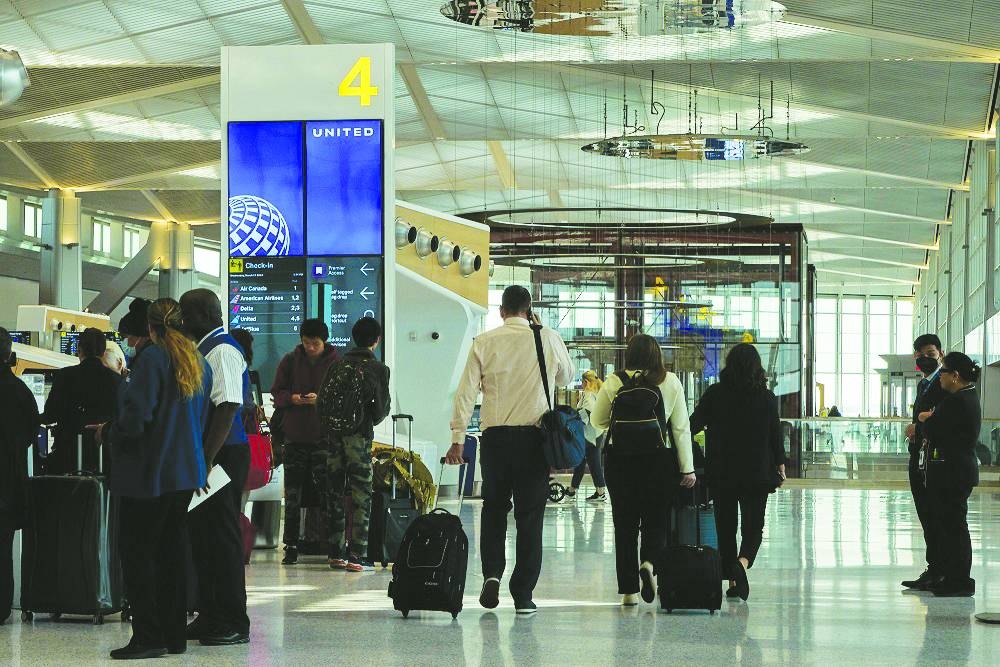
Beyond the TarmacAccommodating the strong demand for air travel requires new technologies, harmonised regulations, and fit-for-purpose infrastructure.The global body of airlines - IATA is collaborating with its members, industry partners and governments worldwide to enable airlines to deliver a more seamless, inclusive, and secure passenger experience while improving efficiency and lowering industry costs.Digital travel is a major component of this effort, the International Air Transport Association says.Travellers can store identity documents in a 'digital wallet' and then, by consenting to share their biometrics, pass through various airport checkpoints—such as bag drop, security, immigration, and boarding—without needing to show physical documents.In 2024, a proof of concept (PoC) using different digital wallets and travel credentials was tested with select travellers on the route between Hong Kong and Tokyo.Cathay Pacific, Hong Kong International Airport, Narita International Airport, Branchspace, Facephi, NEC, Neoke, Northern Block, and SICPA partnered in the PoC, which took place in a functioning airport environment, IATA noted in a report published during its Annual General Meeting in New Delhi early this month.The successful PoC—developed in the IATA Data and Technology Hub—integrates seven verifiable credentials (e-passport copy, live biometric image, visa copy, company ID, frequent flyer membership, retail order, and boarding pass); two digital wallets; and a trust registry to verify issuers.This validates the flexibility of the required technology across travel stages and jurisdictions.It also aligns with government efforts to adopt digital travel credentials based on International Civil Aviation Organisation (ICAO) standards.The European Union (EU), for instance, is preparing to issue digital wallets—a secure means of storing and sharing digital documents—to citizens and residents by 2027.Travel documentation: With passenger traffic set to double by 2040, optimising and enhancing airport processes will need to continue. Verifying passengers’ travel documentation is one of the more time-consuming tasks which will benefit from further automation.IATA’s ‘Timatic Suite’ of products, which includes ‘Timatic Autocheck’, has evolved over decades, earning the trust and reliance of both industry professionals and travellers.Annually, more than 1bn passenger document checks are performed through Timatic. The recent redevelopment of the Timatic Suite of products marks an important progression in simplifying and streamlining the offering to enhance the experience for passengers and users alike.This includes the relaunch of ‘Timatic Web’. With a new Ease of Travel index and an enhanced interface, Timatic Web makes it easier than ever for airlines and travel organisations to provide travellers with real-time updates to help them prepare for their journey.Modern airline retailing: IATA’s Modern Airline Retailing (MAR) initiative is expanding throughout the aviation value chain. Decades-old technologies, processes, and standards that were inhibiting customer centricity are being replaced by MAR’s 100% Offers and Orders typical of genuine retailing.This grants air travellers the same level of transparency on airline products and services that they get when they shop for consumer products online and regardless of where they shop and pay. Indeed, MAR fully integrates payment management.Moreover, travellers will no longer need to juggle reference numbers and various documents, such as passenger name records (PNR); e-tickets; and electronic miscellaneous documents (EMD). Instead, they will have an order detailing their purchase, and the airline internal processes of revenue accounting and reconciliation will be simplified.New Distribution Capability (NDC) messaging standard—integral to the offers phase of the Offers and Orders journey— is established, enabling the industry to focus on the transformation to MAR.This will further smooth passengers’ ability to purchase and receive air travel products and services seamlessly through their preferred channels and at a level of convenience and personalisation akin to genuine modern retailing.By 2026, the Passenger Standards Conference (PSC) aims to develop standards involving Offers and Orders communication, such as product taxonomy, tax integration, and interline data exchange.Importantly, all standards are being developed with a cross-functional approach to break down silos, IATA noted.In 2024, meanwhile, a survey by IATA of major IT providers found that significant progress was being made in the technical architecture that makes ‘Offers and Orders’ possible.The transition to Offers and Orders is thus gathering speed at airlines. The acceleration is demonstrated by the high-level industry transition roadmap released by IATA in November 2024.According to the roadmap, core solutions are anticipated by 2026, with adoption at scale expected from 2030. Leading airlines have already embarked on the journey.The journey to Offers and Orders will affect numerous airline departments. Finance departments, for example, will be transformed. Transactions will be transparent from booking to destination, eliminating the need for lengthy reconciliation processes.The move to transform payment standards has also begun. Conventional payment standards can have proprietary add-ons that lock in an airline to a particular product.Updating these standards will empower airlines to enhance value creation and ultimately offer customers additional preferred payment options.