Author

Thursday, December 11, 2025 | Daily Newspaper published by GPPC Doha, Qatar.
Gulf Times
Business
GCC total debt issuance to rise, says Fitch Ratings

Total debt issuances in GCC would be $149bn in 2025, about $50bn above 2024, according to Fitch Ratings.In comparison roughly $110bn (of debt) was issued in the region 2019 and 2020.Issuances would be split broadly equally between domestic and foreign debt on aggregate in the GCC but with significant differences between countries, Fitch Ratings said.Historically fiscal policy in the GCC has been pro-cyclical. High oil prices have stimulated spending, often leading to permanent commitments, while lower oil prices have been accompanied by cuts in spending that have exacerbated their economic impact.Trends in non-oil economic activity in the GCC are typically correlated with trends in government or wider public-sector spending, which in turn tends to be connected to hydrocarbon revenue. It is also harder to manage public expectations when oil prices are high. What deepens the dilemma is the aim of economic diversification, which will require public investment. Improvements made to public financial management in the past decade and the experience of several oil price shocks provide more flexibility to respond to periods of lower oil prices.New tax tools have been introduced in the past decade and reductions to subsidies and improved management of capital spending has brought more expenditure flexibility.Already there has been a response to the current fall in oil prices, with Saudi Arabia extending VAT to e-commerce platforms from 2026 and increasing the fee on undeveloped land. Fitch anticipates a further recalibration of capital spending plans in sovereigns that are facing fiscal pressure. The impact of any fiscal adjustment will test the resilience of the non-oil economic growth drivers that have been unleashed across the region by recent reforms.Enhancements to business environments, sectoral reforms and, in Saudi Arabia, significant social reforms, have strengthened non-oil economic activity and diversified the economic base of most GCC sovereigns.However, government spending has been an important factor behind economic diversification. A significant component of government development agendas is underpinned by government related entities (GRE) domestic investment.While budget balances may appear less volatile, overall public spending is rising.GCC countries are rerouting significant parts of their surpluses or their balance sheet to large economic-diversification programmes, it said.

Qatar banking sector total assets grew by 0.6% during March to reach QR2.074tn, driven by a rise in domestic assets, according to QNB Financial Services.
Business
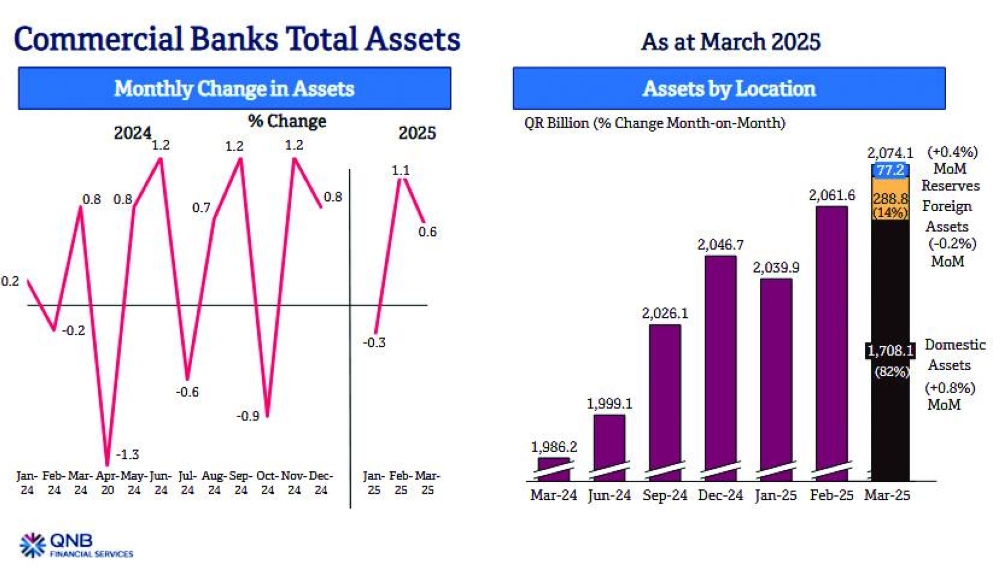
Qatar banks' total assets grew 0.6% to reach QR2.074tn in March: QNBFS

Qatar banking sector total assets grew by 0.6% during March to reach QR2.074tn, driven by a rise in domestic assets, according to QNB Financial Services.Total assets moved up by 1.3% in 2025, compared to a growth of 3.9% in 2024. Assets grew by an average 5.7% between 2020 and 2024.Liquid assets to total assets edged slightly lower to 30.2% in March, compared to 30.4% in February, QNBFS said in its latest ‘Qatar Monthly Key Banking Indicators’.According to QNBFS, Qatar banking sector loan book increased by 0.6% MoM (up 3.0% in 2025), while deposits went up by 0.2% MoM (up 3.2% in 2025) in March this year.With higher loans increase over deposits during March, the Loans to Deposits Ratio (LDR) moved up to 131.0%, compared to 130.5% in February.Overall loan book went up by 0.6% during March to reach QR1,387.7bn. Loans gain in March was mainly due to an increase by 1.0% in public sector loans and a rise by 0.3% in private sector loans.Private and public sectors were the main growth drivers YoY with the government taking QR21.1bn, real estate taking QR18.4bn, and government institutions taking QR16.5bn, QNBFS noted.Loans went up by 3.0% in 2025, compared to a growth of 4.6% in 2024. Loans grew by an average 5.4% over the 2020-2024 period.Outside Qatar loans increased by 0.9% MoM (+0.9% in 2025) in March 2025.Loan provisions to gross loans moved up to 3.9% in March, compared to 3.8% in February.Deposits edged up by 0.2% during March to reach QR1,059.5bn.Deposits uptick in March was mainly due to a gain by 0.7% in public sector deposits and a gain by 0.5% in non-resident deposits.Non-Resident, private sector and public sector deposits were the main growth drivers YoY with the government contributing QR20.9bn, non-residents providing QR12.5bn and personal (retail) adding QR16.8bn, the report noted.Deposits rose 3.2% in 2025, compared to an increase by 4.1% in 2024. Deposits grew by an average 3.9% over the 2020-2024 period.An analyst told Gulf Times, “Banking sector indicators continue to show good promise during March with the further gains in total assets during the month. Total assets increase was mainly driven higher by a QR7.4bn increase in domestic credit.“The overall banks’ credit facilities was pushed higher noticeably by the government (overdrafts and other loans) as it continues to utilise this flexibility in funding its spending needs. Private sector loan gains were also coming in from increasing private consumption, contractors and the pick-up in the services sector”.

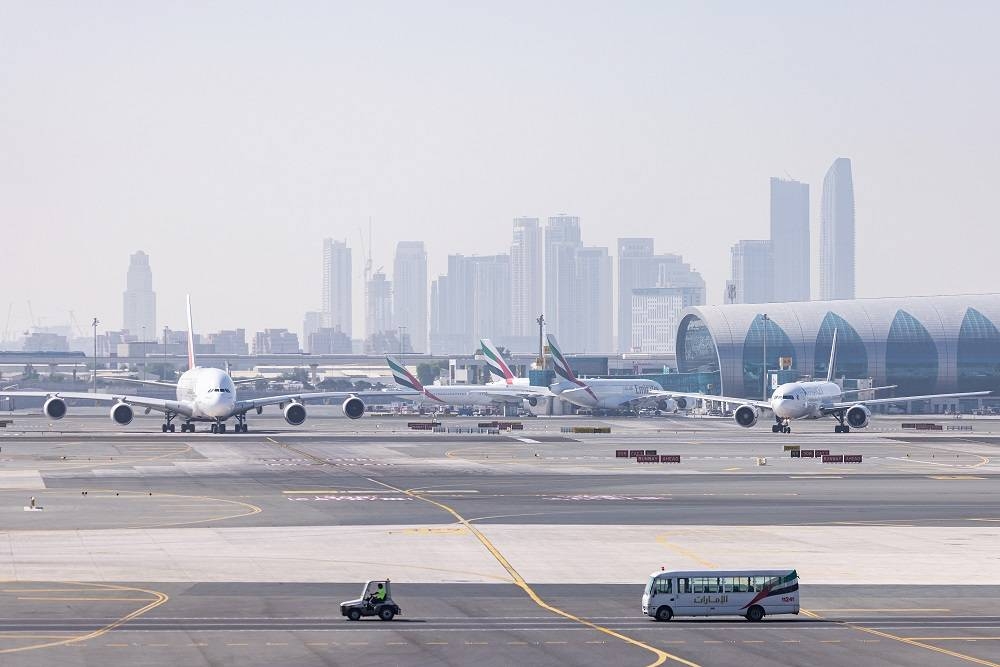
Passenger aircraft on the tarmac at Al Maktoum International Airport in Dubai. Global air travel is expected to grow at a rate of 3.3% annually over the next 20 years. During the period under review, the Middle East region has been projected to grow faster — at 4.8% a year.
Business
Open skies, harmonised regulations can unlock Middle East’s aviation potential

Beyond the TarmacGlobal air travel is expected to grow at a rate of 3.3% annually over the next 20 years.During the period under review, the Middle East region has been projected to grow faster — at 4.8% a year. The GCC countries including Qatar is going to be at the heart of that.That said, the region is not developing evenly, which according to the International Air Transport Association (IATA), is a reality that’s difficult for some to accept.Geopolitical instability, regulatory fragmentation and economic disparity are the reasons cited by IATA for the region’s uneven development in commercial air transport.Geopolitical instability, is obvious, but it bears repeating, IATA says. Conflicts negatively impact aviation. Countries like Yemen, Syria, Iraq, and Lebanon have seen their air travel suffer because of instability and conflict. Sanctions only make things worse.Where aviation continues to demonstrate remarkable resilience in the face of political instability, it does far better in countries that are stable, peaceful and open. The countries that are stable, peaceful, and open have done far better.On regulatory fragmentation, IATA noted that unlike in Europe, the Middle East has no unified air transport market. Instead, a mosaic of bilateral air service agreements and divergent policies are seen.While some states have embraced liberalisation, others continue to impose restrictions on frequencies, routes, and non-national carriers. The lack of a harmonised air transport market impedes connectivity, especially for smaller markets dependent on regional access.If the region is to be meaningfully connected, it’s going to take much more cooperation and consistency.Economic disparity: Propensity to travel is shaped by income and opportunity. Wealthier nations — particularly those in the Gulf — have leveraged - and rightly so - their geographic location and high-income populations to establish global hubs.Smaller or lower-income countries, by contrast, often struggle with limited local demand, constrained resources, and business models that cannot match the economies of scale enjoyed by super-connector airlines.A more integrated approach — built on shared interests and mutual support — can unlock the full potential of aviation in the Middle East, points out Nick Careen, IATA's Senior Vice-President Operations, Safety and Security.The region’s airspace can be better managed, he emphasised at an event in Saudi Arabia recently.Governments in the region must collaborate and support a vision of seamless air traffic management, facilitating the smooth flow of traffic by sharing data, harmonising procedures, and easing military restrictions. This will enhance aviation safety and efficiency.The patchwork of regulations across the region makes life difficult for airlines and passengers. We need consistency. Fragmented and inconsistent rules create inefficiencies, increase delays, and pose safety challenges. By aligning regulatory frameworks, we can ensure smoother operations, lower costs, and enhance the overall safety and security of air travel.Sustainability is a challenge that can’t be tackled by one country alone. Regional collaboration on sustainable aviation fuel (SAF), low-carbon aviation fuels (LCAF), carbon tracking, and incentives for green investments will allow the Middle East to lead the way globally on climate action. SAF, in particular, is a key lever.The region is well-positioned to become a leader in producing and exporting SAF, thanks to its expertise in energy and access to capital.The region's aviation hubs can play a pivotal role in building capacity across neighbouring countries. By sharing expertise, offering training opportunities, and fostering collaborative initiatives, these hubs can strengthen the overall capabilities of the region.This support can enhance operational efficiency, improve safety standards, and contribute to the sustainable growth of the aviation sector throughout the region."These steps form the basis of a more connected and resilient aviation ecosystem across the entire Middle East region—one where every country, regardless of size or income, has a seat at the table and a route to global integration.The Middle East’s aviation story is one of ambition, transformation, and opportunity. Yet, the region must not overlook the disparities that persist.Industry experts say the region has already proven that bold vision and strategic investment can yield extraordinary results. Now is the time to extend that spirit of cooperation beyond borders — to create partnerships that deliver benefits not just to individual states, but to the entire region.A Middle East united by open skies, harmonised regulations, and shared innovation would be even more competitive, more resilient, and deliver even more economic and social benefits for people. And it would ensure that no country is left behind in aviation’s growth story.Careen added: “At IATA, we remain committed to facilitating this dialogue and supporting regional stakeholders with data, insight, and advocacy. We stand ready to help build the frameworks and partnerships that will shape the future.”

Qatar’s economic growth is expected to broadly steady this year before accelerating sharply in 2026, according to National Bank of Kuwait.
In its latest ‘Economic Insight’, NBK said Qatar’s fiscal accounts are expected to show surplus and public debt to fall in 2026.
Business
Qatar’s economic growth expected to 'broadly steady' this year; sharp pickup seen in 2026: NBK

Qatar’s economic growth is expected to broadly steady this year before accelerating sharply in 2026, according to National Bank of Kuwait (NBK).In its latest ‘Economic Insight’, NBK said Qatar’s fiscal accounts are expected to show surplus and public debt to fall in 2026.“Economic growth in Qatar is expected broadly steady in 2025 at 2.4% before accelerating sharply to 5.5% in 2026,” NBK noted.In Qatar, the cyclical downturn following the 2022 World Cup boom has faded and growth is seen accelerating again on stronger tourism activity, new government initiatives, and increased LNG production, National Bank of Kuwait said in its ‘Economic Insight’.Hydrocarbon GDP will play an increasingly vital role in shaping Qatar’s medium-term growth outlook (+9.8% in 2026), with the giant offshore North Field gas expansion project nearing completion, the report said.LNG output expansion is set to generate a 63% jump in already massive capacity by 2027-2028 (to 127mn tonnes per year - mtpy) and will eventually have positive knock-on effects on non-hydrocarbon GDP, as higher resulting revenues are channelled back into the economy to meet the next wave of development goals.Qatar’s Third National Development Strategy targets an annual average growth of 4% in 2024-2030, also helped by business efficiency, FDI-promoting and innovation-enhancing reforms.Goals include growing labour productivity by 2% per year, attracting $100bn in cumulative FDI and developing specialised economic ‘growth’ clusters in manufacturing, logistics and tourism.The fiscal accounts should continue to show a surplus over the forecast horizon, from 2.3% of GDP in 2025 to a wider 4.5% of GDP next year as the first LNG trains from the gas expansion project come online.In recent years, Qatar’s budget surpluses were deployed to lower outstanding public debt, a trend that will likely continue in the medium term; public debt could fall to 34% of GDP by 2026.According to NBK, downside risks to the outlook include a more severe than expected global economic downturn that weakens energy prices, and potentially lower prices for LNG in the event of global market excess supply.“That said, the scale of Qatar’s imminent energy output expansion and domestic investment targets should provide some degree of resilience against international headwinds,” the bank noted.The report also covered Oman and Bahrain and according to NBK, Bahrain’s fiscal deficits are seen widening amid lower oil prices and still-elevated interest rates, despite repeated consolidation efforts. Following sustained reform implementation, Oman’s positive economic performance is seen continuing with non-oil expansion, fiscal surpluses and a declining debt-to-GDP ratio, it said.

Led mainly by Qatar, GECF member countries accounted for 47% of cargoes exported in 2025 thus far, the forum said in its latest monthly report.
Business
Led by Qatar, GECF accounts for 47% of LNG cargo exports so far in 2025

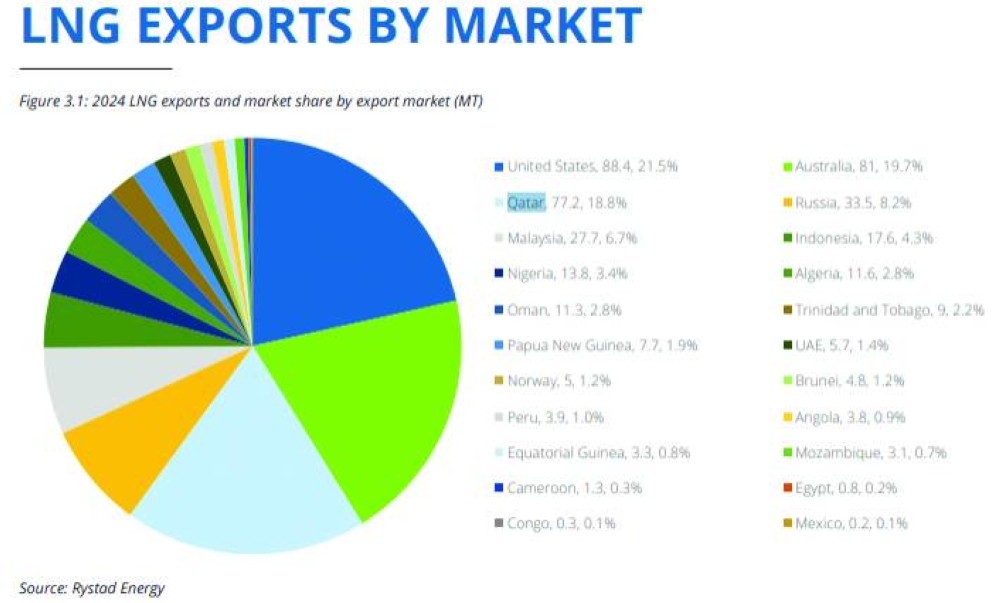
Led mainly by Qatar, GECF member countries accounted for 47% of cargoes exported in 2025 thus far, the forum said in its latest monthly report.In March, some 577 LNG cargoes were exported globally, Gas Exporting Countries Forum said in its Monthly Gas Market Report.This represents an increase of 19 shipments compared to a year ago, GECF noted.Moreover, the number of shipments rebounded in March 2025, by 14% when compared with the total in the previous month.After the first quarter of 2025, total export cargoes reached 1,641, which was similar to the level reached during the same period in 2024.For the January to March period, the US exported some 39 more cargoes than in 2024, followed by Indonesia with 14.According to GECF, there was a slight uptick in the level of spot charter rates, although the shipping market remains depressed.In March this year, the monthly average spot charter rate for steam turbine LNG carriers climbed by 40% m-o-m to reach $700 per day.In March 2025, the average price of shipping fuels decreased by 4% m-o-m, to reach $520 per tonne. Compared with one year ago, this average price was 16% lower y-o-y, and was also 6% lower than the five-year average price for that month.In March 2025, the LNG spot shipping costs for steam turbine carriers decreased further, by up to $0.11/MMBtu on certain routes. This was driven by the small uptick in the average LNG carrier spot charter rate, which was outweighed by the impact of the decreases in the delivered spot LNG prices and the cost of shipping fuels, when compared with the previous month.Compared to one year ago, in March 2025, the monthly average spot charter rate and cost of shipping fuels were both lower, while the delivered spot LNG prices were higher.As a result, LNG shipping costs were up to $0.48/MMBtu lower than in March 2024.In March 2025, global LNG exports surged by 9.8% (3.50mn tonnes) y-o-y to reach a monthly record of 39.23mn tonnes, marking the highest annual growth rate since June 2021.The increase was supported by higher exports from both GECF and non-GECF countries, along with a rise in LNG re-exports.For the period Q1, 2025, global LNG exports rose by 3.9% (4.11mn tonnes) y-o-y, reaching 110.65mn tonnes driven primarily by higher exports from non-GECF countries.The share of non-GECF countries in global LNG exports edged up from 52.2% in March 2024 to 52.8% in March 2025.Likewise, the share of LNG re-exports increased from 0.4% to 1.2% over the same period, while the share of GECF Member Countries declined from 47.4% to 46%.The US, Qatar and Australia were the top three LNG exporters in March, GECF noted.

A cargo handler prepares air freight containers for a British Airways flight at Heathrow Airport, in London. The latest IATA data for global air cargo markets showed total demand, measured in cargo tonne-kilometres, increased by 4.4% compared to March 2024 levels (+5.5% for international operations), a historic peak for March.
Business
Lower fuel costs emerge short-term positive factor for global air cargo

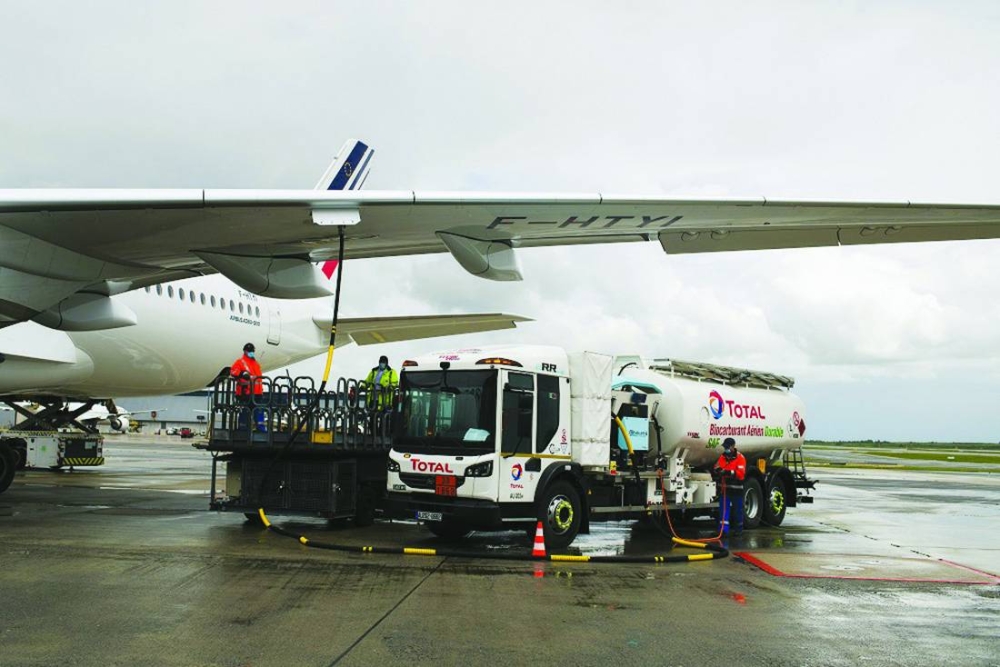
Beyond the TarmacJet fuel is one of the largest cost components for air carriers—often up to 30–40% of total operating expenses.When fuel prices drop, airlines obviously save significantly on expenses, especially for long-haul or frequent routes.Margins also improve, allowing carriers to stay profitable even with competitive pricing.Stronger load factors so far in 2025, combined with decreased fuel costs have contributed to a rise in air cargo yields globally, according to the International Air Transport Association (IATA), which is the global body of airlines.Oil markets experienced significant changes in March this year, primarily driven by increased production from non-Opec+ nations, amid slower global demand due to trade friction, IATA noted in a recent report.Brent crude’s average price in March fell to $72.6, marking eight straight months of y-o-y decline. This represents a 15.1% decrease compared to last year and a 3.5% drop from February.Jet fuel costs plunged even more sharply, falling 17.3% y-o-y to $88.9 and decreasing 6% m-o-m—marking the second month in a row of declines, IATA data reveal.This sharper fall in jet fuel compared to oil narrowed the crack spread to $16.3, a 26.2% drop from $22.1 in March, 2024.Like fuel prices, the spread saw its second straight monthly fall, sliding 3.5%.Meanwhile, stronger load factors (so far) in 2025, combined with decreased fuel costs, contributed to a rise in air cargo yields. These yields jumped 3.8% from last year and 6.6% from February.This rebound ends a three month streak of monthly yield declines that lasted through February.Meanwhile, the latest IATA data for global air cargo markets showed total demand, measured in cargo tonne-kilometres (CTK), increased by 4.4% compared to March 2024 levels (+5.5% for international operations), a historic peak for March.Capacity, measured in available cargo tonne-kilometres (ACTK), expanded by 4.3% compared to March 2024 (+6.1% for international operations).Typically, March volumes rise after a lull in February, driven by the easing of holiday demand.This year’s modest single-digit increase aligns with trends observed in years not influenced by post-Covid recovery factors, where such gradual gains were common.Moreover, a frontloading effect could be implemented to mitigate the tariff impacts in April.Air shipments increased by 3.2% month-on-month (m-o-m) from February to March, after seasonal adjustments. This jump matches past trends, but current events may have contributed to the boost.“The sharp rise in US tariffs may have prompted companies and buyers to make purchases in advance to avoid significant import fees,” IATA said and noted air cargo demand grew across most regions in March.Asia Pacific led the growth with a 9.3% increase, followed by Latin America and the Caribbean at 5.6%.North American carriers rebounded from a decline (- 1.3%) in February to achieve a growth rate of 3.7%.European airlines experienced a 4.4% increase.However, carriers in the Middle East and Africa faced ongoing challenges for the third consecutive month.The Middle East recorded its smallest decline so far at 3.3%, while Africa saw its sharpest drop at 13.4%. Both regions are experiencing the effect of a strong 2024, which suggests that 2025 will be a challenging year.IATA’s Director General Willie Walsh said, “March cargo volumes were strong. It is possible that this is partly a front-loading of demand as some businesses tried to beat the well-telegraphed 2 April tariff announcement by the Trump Administration. The uncertainty over how much of the 2 April proposals will be implemented may eventually weigh on trade.“In the meantime, the lower fuel costs — which are also a result of the same uncertainty — are a short-term positive factor for air cargo. And, within the temporary pause on implementation we hope that political leaders will be able to shift trade tensions to reliable agreements that can restore confidence in global supply chains.”Analysts believe that lower transport costs via air cargo will encourage more international trade, especially of high-value or time-critical goods.Therefore, many forwarders are likely to make air freight a more attractive option compared to slower modes (e.g., sea freight). This enhances the resilience and flexibility of global supply chains.Lower jet fuel price help carriers either improve their bottom line or slash prices to attract more customers, gaining market share.This is especially important in air cargo, where price sensitivity among logistics providers and shippers is high.

Gulf Times
Business
Fawran clocks 5.5mn transactions worth QR10.1bn in one year up to March: QCB

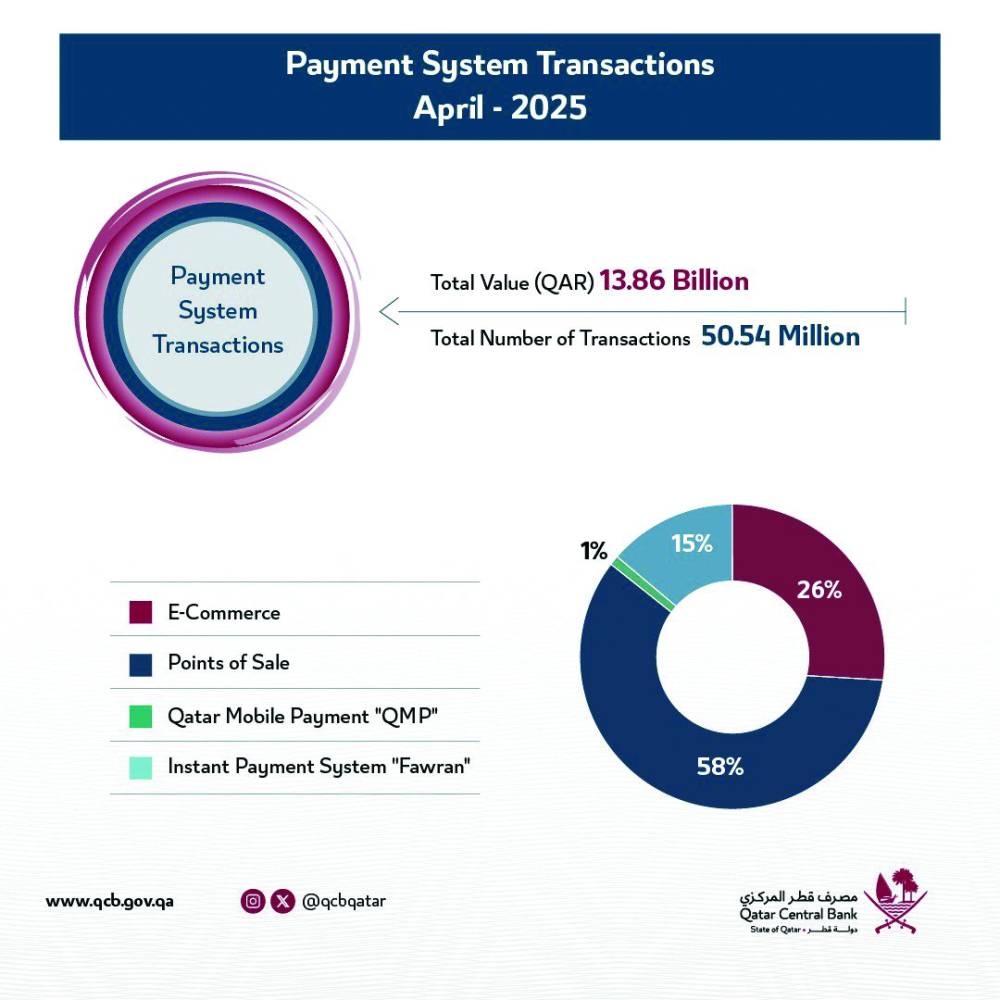
Qatar Central Bank’s instant payment system – Fawran has clocked 5.5mn transactions valued at QR10.1bn in one year since its launch in March 2024, QCB said Tuesday.Transaction volume shows an increase of 31% vis-à-vis Fawran in one year up to March, QCB pointed out.Transaction value vis-à-vis Fawran had gone up 28% during the period.The number of registered individual accounts with Fawran stood at 2.7mn and registered corporate accounts at 99,000 in March, QCB said.QCB said the Fawran system has proven its efficiency in facilitating and improving payment processes in terms of reducing the time required to transfer money between individuals and companies in Qatar. It allows users to send and receive money instantly and securely.Fawran is considered one of the innovative and advanced services, in line with the third strategy for the financial sector in the country and in continuation of the QCB's efforts to develop the infrastructure of payment systems and keep pace with the latest developments in payment systems and electronic transfer of funds.It is designed in accordance with a system based on the latest technologies and security standards, to maintain the security and confidentiality of the information created by the QCB to enable financial institutions to provide the service to their customers with complete reliability.One of the most prominent advantages provided by the instant payment service is enabling bank customers to send and receive money in the country immediately, and within moments. It will also be available round-the-clock without interruption.Earlier, the QCB noted that the launch of the Fawran is part of the projects it has undertaken to enhance the country's payment system.This initiative plays a significant role in strengthening the financial sector, providing diverse payment options for all segments of society, facilitating payment processes, and reducing reliance on cash, thereby lowering associated costs.“This service reflects QCB's commitment to providing the best services to customers of banks and financial institutions in the country, meeting their growing needs in line with the increasing demand for financial technology services, and facilitating financial and commercial transactions between individual and corporate bank accounts to keep pace with the rapid development of the national economy,” the central bank noted.

Gulf Times
Business
Global air passenger demand grows 3.3% year-on-year in March: IATA

Global air passenger demand grew by 3.3% year-on-year in March, a slight strengthening from the 2.7% growth reported for February this year, according to the International Air Transport Association (IATA).A capacity expansion of 5.3%, however, outpaced the demand expansion leading to a load factor decline from record highs to 80.7% systemwide, IATA’s just released data for March revealed.Total demand, measured in revenue passenger kilometres (RPK), was up 3.3% compared to March last year. Total capacity, measured in available seat kilometres (ASK), was up 5.3% year-on-year. The March load factor was 80.7% (-1.6 ppt compared to March 2024).International demand rose 4.9% compared to March 2024. Capacity was up 7.0% year-on-year, and the load factor was 79.9% (-1.7 ppt compared to March 2024).Domestic air travel posted a marginal 0.9% gain, weighed down by declines in the US and Australian markets. Brazil and India reported the strongest growth at 8.9% and 11.0%, respectively. Meanwhile, Australia (-1.2%) and the US (-1.7%) reported declines. The load factor fell -1.3 ppt as domestic capacity expanded 2.5%.Middle Eastern carriers saw a -1% year-on-year decline in demand. Capacity increased 2.8% year-on-year, and the load factor was 74.6% (-2.9 ppt compared to March 2024).The decline in demand is likely related to the timing of Ramadan, which impacts travel patterns, IATA noted.IATA’s Director General Willie Walsh said, “Passenger demand grew by 3.3% year-on-year in March, a slight strengthening from the 2.7% growth reported for February. A capacity expansion of 5.3%, however, outpaced the demand expansion leading to a load factor decline from record highs to 80.7% systemwide.“There remains a lot of speculation around the potential impacts of tariffs and other economic headwinds on travel. While the small decline in demand in North America needs to be watched carefully, March numbers continued to show a global pattern of growth for air travel.“That means the challenges associated with accommodating more people who need to travel — specifically alleviating supply chain problems and ensuring sufficient airport and air traffic management capacity — remain urgent.”

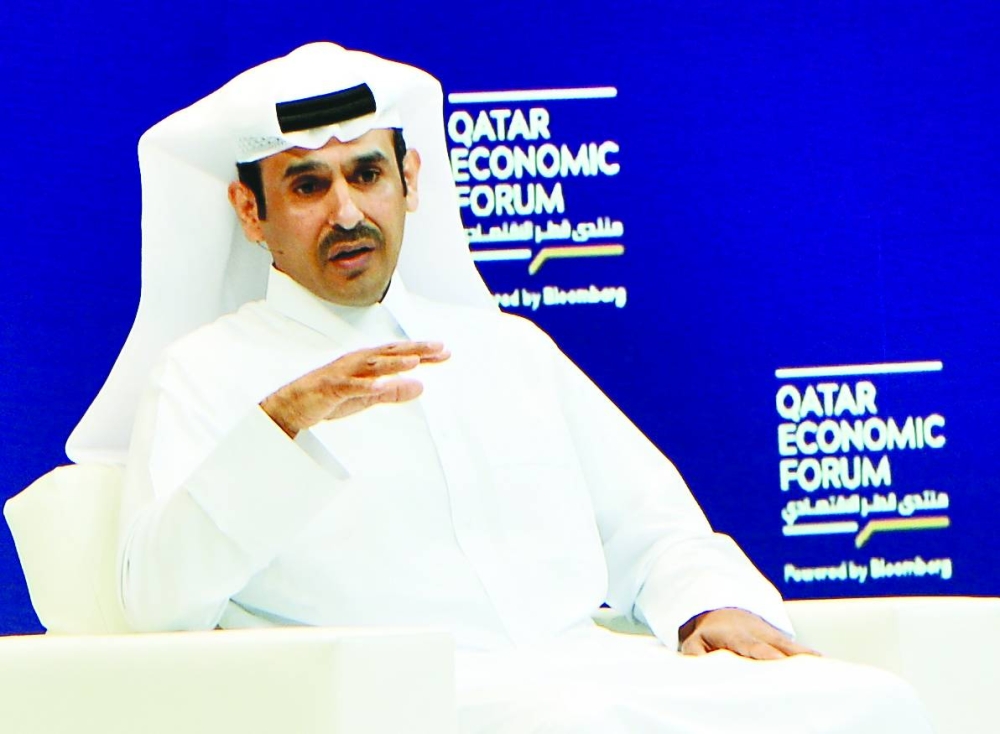
HE the Minister of State for Energy Affairs Saad bin Sherida al-Kaabi speaking at a ceremony held to inaugurate the the Ras Laffan and Mesaieed solar PV power plants Monday.
Business
World-scale Dukhan solar power plant to become operational by 2029: Al-Kaabi

Qatar’s world-scale 2,000-megawatt Dukhan solar power plant will become operational by 2029, HE the Minister of State for Energy Affairs, Saad bin Sherida al-Kaabi said Monday. Speaking at a ceremony held to inaugurate the the Ras Laffan and Mesaieed solar PV power plants, al-Kaabi said 30% of Qatar’s total peak electricity demand will be met by the country’s four solar plants including Dukhan by 2029. The two plants, Ras Laffan and Mesaieed, along with Al-Kharsaah (Qatar’s first solar facility), will play a significant role in meeting the country's electricity demand, contributing about 15% of the total peak electricity demand, al-Kaabi noted. These plants are expected to reduce carbon dioxide emissions by about 4.7mn tonnes annually, he said. In September last year, QatarEnergy announced that it will build a new solar power mega project at Dukhan, which will more than double the country’s solar energy production, significantly contributing to lower carbon emissions in the framework of a realistic energy transition. The new project at Dukhan will boost Qatar’s PV solar power production capacity to about 4,000 megawatts by building one of the world’s largest solar power plants in the Dukhan area, with a production capacity of 2,000 megawatts. The new solar project will be added to QatarEnergy’s solar power portfolio, which includes the existing Al-Kharsaah solar power plant, which was inaugurated in 2022 with a capacity of 800 megawatts of electricity, and to two solar power projects that QatarEnergy built in Ras Laffan and Mesaieed industrial cities with a total production capacity of 875 megawatts, and which were formally inaugurated by His Highness the Amir, Sheikh Tamim bin Hamad al-Thani, Monday. With the addition of the new Dukhan Solar Power Plant, QatarEnergy’s portfolio of solar power projects in Qatar will reach a capacity of about 4,000 megawatts by 2030. This represents approximately 30% of Qatar’s total electrical power production capacity.

Qatar, US and Australia have delivered over 1,000 LNG shipments each in 2024, a new report by GECF has shown.
Business
Qatar, US and Australia deliver over 1,000 LNG shipments each in 2024: GECF

Qatar, US and Australia have delivered over 1,000 LNG shipments each in 2024, a new report by GECF has shown.These three top LNG exporters accounted for 56% of the global LNG shipment, according to 'GECF Annual Gas Market Report 2025'.The number of LNG shipments increased by 1%, adding 66 cargoes, to reach a total of 6,336 cargoes in 2024, the report said.Although the number of LNG shipments have been consistently increasing in recent years, the past three years marked a slowdown in the growth rate of the sector, following the 7% expansion in 2021.GECF members made up six of the top ten exporters: Qatar, Russia, Malaysia, Algeria, Nigeria and Trinidad & Tobago.Together, GECF countries were responsible for 48% of all LNG cargoes exported globally.New entrants to the LNG shipping sector, namely Congo and Mexico, delivered 14 LNG cargoes.Indonesia exported 45 more cargoes than the previous year, marking a 17% increase.Russia followed with a 7% rise, or 36 more cargoes, reflecting its efforts to diversify gas exports.Mozambique saw the largest percentage increase at 24%, adding nine cargoes as it ramped up its export operations.Looking ahead to 2025, the number of LNG shipments is expected to rise, driven by increased LNG exports, new export facility startups, ramped-up supply from existing producers, and new market entrants like Canada, Mauritania and Senegal.LNG shipping cost:New carrier additions have prompted a loosening of the global LNG shipping market, GECF noted,LNG shipping costs depend on three key factors, in particular the cost of chartering the LNG carrier, shipping fuel expenses, and the distance between the loading and receiving ports.The year 2024 proved to be exceptional for the LNG shipping market, as the average annual spot charter rate for steam turbine LNG carriers plummeted to a record low of $25,000/day, down from $43,000/day in 2020, $65,000/day in 2021, $72,000/day in 2022 and $53,000/day in 2023.Similar declines were seen across other segments of the global LNG carrier fleet.The average spot charter rate for TFDE carriers was $40,000/day, while two-stroke carriers averaged $55,300/day—53% and 49% lower than the five-year average, respectively.Spot charter rates were notably atypical in 2024, the report said.Typically, charter rates follow a seasonal pattern, remaining stable during periods of regular LNG demand and rising in Q4 as Europe andAsia compete for cargoes ahead of the winter season.However, in 2024, rates declined from August onward, reaching an average low of $6,400/day in December, the report said.The decline in spot charter rates was driven by three main factors. Firstly, the LNG shipping market experienced a record-breaking expansion of the carrier fleet, with the number of newly commissioned vessels reaching 70 and with the rate of these additions significantly outpacing the growth of global LNG export capacity.Secondly, many of these newly commissioned LNG carriers were initially ordered for long-term charter contracts linked to upcoming liquefaction projects.However, due to the common practice of commissioning vessels before the commercial operations of LNG liquefaction plants commence, coupled with delays in the startup of some projects, many of these carriers have been temporarily redirected to the spot charter market. Thirdly, the decline in LNG cargoes used for floating storage contributed to the slump in spot charter rates in Q4, 2024.Floating storage was nearly non-existent in Europe in Q4, 2024, compared to around 20 carriers used for floating storage in Europe in Q4, 2023, GECF said.

Gulf Times
Qatar
Amir inaugurates Ras Laffan and Mesaieed solar PV power plants

His Highness the Amir, Sheikh Tamim bin Hamad al-Thani, inaugurated the Ras Laffan and Mesaieed solar PV power plants with a combined capacity of 875 megawatts (MW), which will more than double Qatar’s solar energy production to 1,675MW of renewable energy.The inauguration ceremony took place in Ras Laffan Industrial City Monday in the presence of HE the Minister of State for Energy Affairs, Saad Sherida al-Kaabi, who is also the President and CEO of QatarEnergy, and several executives from Qatar’s energy sector, besides senior officials.In remarks at the ceremony, Minister al-Kaabi stressed that the start of operation of the Ras Laffan and Mesaieed solar power plants constitutes an important step towards achieving the fourth pillar of the Qatar National Vision 2030, which is managing the environment in a manner that balances economic and social development and environmental protection.This, he noted, also achieves one of the goals of QatarEnergy’s Sustainability Strategy, which is to generate more than 4,000 megawatts of renewable energy by 2030.Minister al-Kaabi said, “The construction of solar power plants is one of Qatar's most important initiatives to reduce carbon dioxide emissions, to develop sustainability projects, and to diversify electricity generation sources.“These plants are expected to reduce carbon dioxide emissions by about 4.7mn tons annually. The two plants, along with the Al-Kharsaah plant, will play a significant role in meeting the country's electricity demand, contributing about 15% of the total peak electricity demand.“This percentage will rise to 30%, God willing, with the operation of the world-scale 2,000 Megawatt Dukhan solar power plant by 2029.”Al-Kaabi added: “We have moved beyond relying on the expertise of others for the construction, operation, and maintenance of solar power plants, and have begun implementing such projects using our own national expertise. We are proud of them and their achievements.”The Minister thanked the project management team, and all participating companies for their efforts towards completing this project.Minister al-Kaabi concluded by saying: “I am honoured to express our sincere thanks and gratitude to His Highness Sheikh Tamim bin Hamad al-Thani, the Amir of the State of Qatar, for honouring us with his presence today, and for his wise guidance and unlimited support, which have a significant effect on achieving energy projects.”

Gulf Times
Qatar
Qatar Airways Cargo, IAG Cargo and MASkargo announce intention to launch global cargo joint business

Qatar Airways Cargo, IAG Cargo and MAB Kargo Sdn Bhd (MASkargo) have announced their intention to launch a Global Cargo Joint Business, which, subject to regulatory approval, will enable the carriers to further enhance existing service level to customers and partners across the global air freight market.The strategic collaboration will bring together the combined expertise and infrastructure of three leading players in the air cargo industry and is aimed at creating significant customer benefits.A streamlined product offering, enhanced connectivity, faster transit times, and new routing opportunities across their combined extensive networks will deliver greater value and service flexibility to customers worldwide. In parallel, the parties are jointly working at developing industry-leading harmonised safety and security standards for their customers.“This ground-breaking trilateral partnership will significantly improve the accessibility and efficiency of air freight, enabling customers to expand their global air freight.“By combining their resources, Qatar Airways Cargo, IAG Cargo and MASkargo plan to build a truly connected, more agile cargo network that will address the evolving needs of global trade and logistics” Qatar Airways said in a statement.Mark Drusch, Chief Officer Cargo at Qatar Airways Cargo said: “Today marks a significant milestone in our ongoing efforts to redefine the global air cargo landscape. This agreement will bring together three strong players to offer unparalleled service and global connectivity, reinforcing our commitment to customer satisfaction and operational excellence.”David Shepherd, Chief Executive Officer at IAG Cargo said: “This agreement is a testament to our history of bringing businesses together. With years of experience in forging successful collaborations, we understand the real value they bring. This joint business not only unlocks choice and opportunities for our customers but also enhances connectivity for the businesses and industries they serve, further strengthening the role air cargo plays in facilitating global trade.”Mark Jason Thomas, Chief Executive Officer at MASkargo said: "This strategic collaboration marks a pivotal moment for MASkargo and the air cargo industry. We are excited to partner with Qatar Airways Cargo and IAG Cargo to deliver a new era of value and innovation to our customers. By leveraging our combined strengths and expertise, we will provide enhanced service offerings, expanded global reach, and cutting-edge solutions that address the evolving needs of the global market, ensuring greater efficiency and connectivity for our partners and customers.”The carriers expect to implement the agreement in the near future, subject to first obtaining the necessary regulatory clearances.


A cargo handler prepares air freight containers for a British Airways flight at Heathrow Airport in London. Air cargo has always played a key role in maintaining global supply chain resilience. On an average day, 180,000 tonnes of goods reach their destination by air, according to the International Air Transport Association.
Business
Global trade tension reshapes logistics; airfreight under pressure due to uncertainties

Global trade drives prosperity, and any measures undermining the free flow of goods ultimately hurt businesses, consumers, and economies worldwide.Obviously, tariffs and trade barriers decrease global trade flows. Trade tensions, especially between the top two global economies the United States and China and among other major economies, often lead to tariffs and trade barriers, which in turn reduce international trade volumes.Less trade means less demand for air cargo services. For instance, the ongoing US-China trade war has already led to a measurable drop in air freight demand on transpacific routes.Air cargo has always played a key role in maintaining global supply chain resilience.On an average day, 180,000 tonnes of goods reach their destination by air, according to the global body of airlines – the International Air Transport Association (IATA). This is the lifeblood of global trade — driving growth, creating jobs, and spreading prosperity.IATA has emphasised the vital role of air cargo in maintaining global supply chain resilience and called on governments and industry to remain focused on delivering the fundamental expectations of customers — safety and security, digitalisation and sustainability.“Whether supporting global trade, enabling e-commerce, or delivering vital humanitarian aid, the value of air cargo has never been clearer. To meet customer expectations and navigate an increasingly complex environment, the air cargo industry must continuously strengthen safety and security, fast-track digitalisation, and deliver on its sustainability commitments,” said Brendan Sullivan, IATA’s Global Head of Cargo at the opening of the 18th World Cargo Symposium (WCS) in Dubai recently.Amid growing trade tensions, IATA reinforced its position that trade drives prosperity, and that any measures undermining the free flow of goods ultimately hurt businesses, consumers, and economies.“Current trade tensions are deeply concerning. Trade drives prosperity. The more the world trades, the better off, we all are. So, whatever the resolution of current trade tensions is, we know that air cargo will be there to deliver the goods people need and want. And to do that it is critical that we remain focused on the fundamental expectations of our customers — that we are safe, operate with modernised processes and are driving towards sustainability,” said Sullivan.Industry experts say trade tensions create an environment of uncertainty, which discourages companies from committing to large shipping contracts or investing in long-term logistics solutions.Airlines may delay expanding cargo fleets or routes due to unpredictable demand.High-value, time-sensitive goods (like electronics, pharmaceuticals) are often shipped by air. These sectors are particularly sensitive to tariffs and disruptions.For example, if smartphone manufacturers face tariffs, they are very likely to cut production — and fewer units are flown globally. Also, there have been reports that some major international companies are contemplating on shift supply chains to avoid tariffs, increasing complexity and cost of logistics.Ultimately, this will lead to less efficient routing for air cargo, higher costs, and sometimes delays, as hubs shift.Undoubtedly, trade tensions are reshaping global logistics. Improving the air cargo industry’s prospects amid the ongoing or future trade tensions requires both industry-level strategies and governmental or policy support.To protect and grow the air cargo industry, stakeholders must adopt forward-thinking strategies that enhance agility, reduce exposure to geopolitical risks, and leverage emerging opportunities.Industry experts suggest deployment of real-time tracking, blockchain for documentation, and AI-powered demand forecasting. They propose working with manufacturers and logistics providers to implement multi-sourcing, nearshoring, and inventory diversification.Digitisation improves reliability and customer confidence, especially during disruptions. Targeted digital tools can meet the specific needs of specialised cargo while supporting the broader vision of a fully digital, connected supply chain.Therefore, greater investment in digital tools is required.Another suggestion is the development of alternative air routes to avoid reliance on politically volatile lanes.n Pratap John is Business Editorat Gulf Times. X handle:@PratapJohn.

HE the Minister of Transport, Sheikh Mohammed bin Abdulla bin Mohammed al-Thani inaugurating the ICAO Facilitation Conference (FALC 2025) hosted by the State of Qatar and organised by the Qatar Civil Aviation Authority (QCAA) in cooperation with the International Civil Aviation Organisation (ICAO).
The four-day conference is being held under the patronage of HE the Prime Minister and Minister of Foreign Affairs, Sheikh Mohammed bin Abdulrahman bin Jassim al-Thani

Pictures: Shaji Kayamkulam and Ministry of Transport, State of Qatar
Qatar
Civil aviation key to Qatar's economic growth: Minister

HE the Minister of Transport, Sheikh Mohammed bin Abdulla bin Mohammed al-Thani has reiterated Qatar’s strong commitment to civil aviation as a "cornerstone" of economic growth and enhanced regional and global connectivity.“Hosting a major conference like FALC 2025 - ICAO Facilitation Conference- highlights the country’s strong commitment to civil aviation,” Sheikh Mohammed noted.The minister was speaking after inaugurating the ICAO Facilitation Conference (FALC 2025), hosted by Qatar and organised by the Qatar Civil Aviation Authority (QCAA) in cooperation with the International Civil Aviation Organisation (ICAO).The four-day conference is being held under the patronage of HE the Prime Minister and Minister of Foreign Affairs, Sheikh Mohammed bin Abdulrahman bin Jassim al-Thani.The Minister emphasised the importance of hosting the 2025 ICAO Facilitation Conference at a time when the civil aviation industry is facing increasing challenges.He noted that reinforcing operational resilience, responding to regulatory and economic shifts, and embracing digital transformation have emerged as strategic priorities.The conference, Sheikh Mohammed noted, serves as a "pivotal platform" for developing "innovative and proactive solutions to drive a more efficient and sustainable" global air transport system.The minister lauded award-winning Hamad International Airport and Qatar Airways and said they are "symbolic of the country’s commitment to providing a world-class infrastructure" for an “exceptional and integrated” passenger experience."Hamad International Airport and Qatar Airways embody such a commitment in the form of offering an integrated travel experience based on latest traveller data systems that helped cut wait time, and improve security check procedures, in addition to being a main partner to global facilitation initiatives in association with the International Air Transport Association (IATA), thereby putting best universal practices in place," the minister said.Sheikh Mohammed urged conference participants from around the world to take full advantage of the opportunity to deepen international cooperation and engage in productive discussions that lead to meaningful collaboration and impactful solutions for improving air transport facilitation and the traveller experience.He also invited ministers and senior officials to the high-level Ministerial Segment, where a joint ministerial declaration will be announced.“This declaration aims to promote a unified and comprehensive approach to air transport facilitation, support future initiatives, and ensure continued progress based on shared strategic principles,” Sheikh Mohammed noted.ICAO FALC 2025 is attended by more than 120 ministers and aviation authority chiefs from around the world and numerous high-profile officials, experts and leaders representing civil aviation industry in some 190 countries.Held under the theme 'Facilitating the Future of Air Transport: Collaboration, Efficiency, Inclusivity', the conference offers a unique platform for states and aviation industry stakeholders to explore advancements in air transport facilitation.It encourages dialogue on improving cooperation and operational efficiency in global air travel, while fostering collaboration among participants to develop a comprehensive global facilitation strategy that can adapt to the sector’s rapid evolution.The ICAO Facilitation Conference is distinguished by its high-level Ministerial Segment, which sets the strategic tone for the event and reaffirms global commitment to strengthening air transport facilitation. This segment provides a key platform for ministers to discuss and endorse initiatives aimed at connecting communities and enhancing seamless international mobility.In his address, Mohamed bin Faleh al-Hajri, In Charge of Managing the Qatar Civil Aviation Authority (QCAA), noted, “Qatar’s emergence as a global aviation leader, driven not only by its advanced infrastructure but also by its intellectual leadership, active engagement in ICAO initiatives, and ongoing efforts to raise international standards in the sector.”Al-Hajri said, “The conference underscores the need for collaborative efforts to achieve efficiency, inclusivity, and resilience in the transport of passengers and cargo, ensuring smooth and secure global movement.”He added: “This is not just an operational necessity but a key factor in strengthening the aviation sector’s role and its positive impact on the global economy. It drives connectivity between nations, particularly as the industry undergoes significant transformation and rapid technological advancement. This requires a proactive, cooperative approach to address emerging challenges and capitalise on new opportunities in air transport facilitation.”Al-Hajri reaffirmed Qatar’s commitment to advancing international facilitation through active participation in ICAO activities and involvement in various technical committees and working groups.He drew attention to the value of the conference sessions, which will focus on addressing vital topics for the development of air transport facilitation.Al-Hajri emphasised that fostering international cooperation is key to strengthening the global aviation system’s resilience and adaptability.This approach aligns with ICAO’s vision to advance the sector, and he urged all member states and participants to engage in open dialogue that promotes the exchange of experiences, best practices, and practical solutions to support global facilitation frameworks.The 4-day ICAO Facilitation Conference will feature numerous sessions covering key issues related to cooperation and coordination among relevant authorities in the field of facilitation.Topics include cargo release clearance and automation processes, travel document integrity and border control, addressing inadmissible persons, deportees, refugees and stateless persons, combating human trafficking and irregular migration, assistance to aircraft accident victims and their families, capacity building and implementation support for states, and innovation in facilitation.The conference will conclude with the announcement of the adoption of the 'Doha Declaration' on facilitation of international air transport.An exhibition with the participation of various organisations and companies, offering a unique opportunity to showcase the latest procedures and technologies in air transport facilitation, is being held on the sidelines of FALC 2025.ends

Qatar Airways, the largest global airline offering Starlink’s high-speed internet on-board, is now a few aircraft away from completing its Boeing 777 fleet-wide upgrade.
Business
Qatar Airways nears Boeing 777 fleet-wide Starlink upgrade; set to expand to Airbus A350 this month

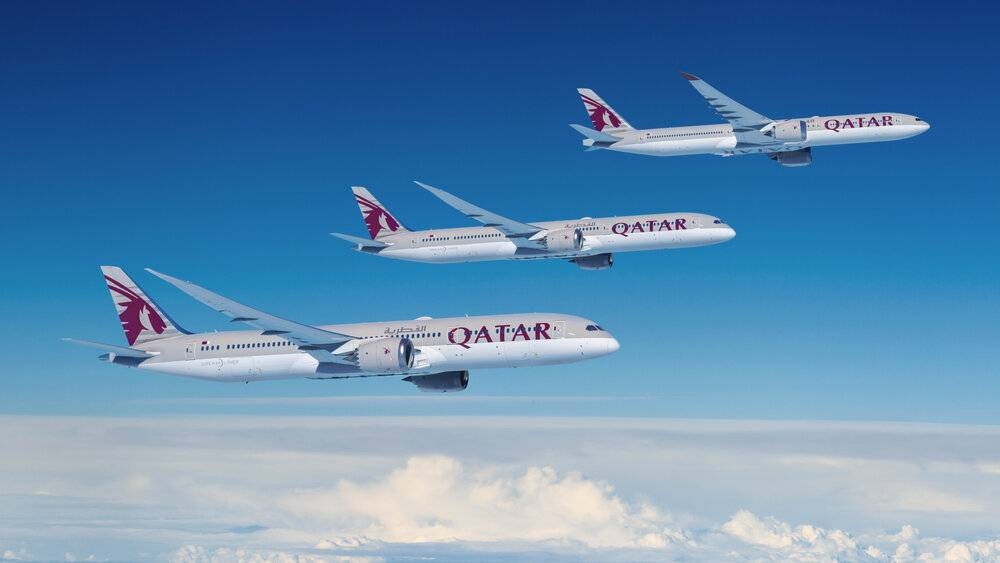
Qatar Airways, the largest global airline offering Starlink’s high-speed internet on-board, is now a few aircraft away from completing its Boeing 777 fleet-wide upgrade.The airline’s rapid rollout reinforces in-flight innovation leadership and marks one of the fastest and most ambitious Starlink installations in the aviation industry.In its "latest global first", Qatar Airways will begin equipping its Airbus A350 fleet with Starlink Wi-Fi this month, “becoming the first airline in the world” to bring this "cutting-edge connectivity" to passengers onboard the Airbus A350 aircraft type.This expansion follows the airline’s success with the Boeing 777 and will see even more passengers enjoying fully complimentary, ultra-fast Wi-Fi for streaming, gaming, and working seamlessly at 35,000 feet.Qatar Airways Group Chief Executive Officer Badr Mohammed al-Meer said, “We are just a few aircraft away from completing a full fleet-wide upgrade of our Boeing 777s with Starlink connectivity—an industry-first for a widebody fleet of this scale.“In April, we will become the first airline in the world to begin equipping the Airbus A350 with Starlink, taking another bold step in our journey of redefining connectivity in the skies. We affirm our continual efforts to enhance our onboard WiFi experience, ensuring passengers enjoy greater comfort, convenience, and service.”With more than 80% of its Boeing 777 fleet equipped with Starlink, the airline has operated more than 6,000 global flights with unparalleled and fastest gate-to-gate internet WiFi connectivity, unmatched by any other airline in the MENA region.As a next-generation aircraft operated on many of Qatar Airways’ most strategic routes, the Airbus A350 upgrade reflects the airline’s continued investment in enhancing passenger experience on every journey, the airline said in a statement.ends

According to a study, advancements in chemical recycling technologies can reduce greenhouse gas emissions by up to 50% compared to traditional plastic production methods. 
Business
Every 1mn ton of GCC-produced recycled plastic generate  1,500 jobs, $650mn in direct GDP: GPCA

Every 1mn ton of recycled plastic produced in the GCC can generate approximately 1,500 jobs and $650mn in direct GDP impact in the region, according to research estimates.Innovation is a driving force behind value creation in the GCC plastic industry, contributing to sustainability, economic growth, and technological advancements, Gulf Petrochemicals and Chemicals Association (GPCA) said in a report.Accelerating innovation plays a crucial role across product design, business models, and resource management, and can support efforts to achieving circular economy in the GCC. Continuous innovation in polymer production and conversion technologies has enabled the GCC region to maintain a competitive edge in the global market. This includes advancements in recycling technologies and the development of new, sustainable materials.GPCA will explore the role of innovation in driving value creation and growth at the 14th GPCA Plastics Conference taking place in Riyadh, Saudi Arabia on April 20 and 21.According to a study, advancements in chemical recycling technologies can reduce greenhouse gas emissions by up to 50% compared to traditional plastic production methods. The 14th GPCA Plastics Conference will provide an ideal platform to spotlight innovations in plastics recycling and discuss the role of regulations in creating an enabling environment for growth.Held under the theme: “The next growth paradigm: value creation through innovation”, the conference will open with a welcome address by Khalfan al-Muhairi, SVP Regional MEAE, Borouge and Vice-Chairman, Plastics Committee, GPCA, followed by a ministerial address outlining regional policy priorities.Dr Abdulwahab al-Sadoun, Secretary General, GPCA, commented: “In the pursuit of the next paradigm of plastics growth, fostering innovation and collaboration will be essential to address the sustainability challenges of our time, while meeting the demand for sustainable plastics and ensuring socio-economic growth. “By fostering cutting-edge advancements and sustainable practices, we can enhance the plastics industry’s position as a dynamic driver of economic growth and environmental stewardship. The 14th GPCA Plastics Conference will serve as a beacon for visionary leaders and innovators from across the region and the world to collaborate and redefine the future of plastics for generations to come.”Ends

A view of the Ras Laffan Industrial City, Qatar's principal site for the production of liquefied natural gas and gas-to-liquids (file). The country is set to spearhead the region's additional LNG annual liquefaction capacity of 124mn tonnes by 2050, Doha-based GECF said in its latest Global Gas Outlook.
Qatar
Qatar accounts for more than 81% of Middle East's current LNG liquefaction capacity: GECF

Qatar accounts for more than 81% of Middle East's current annual LNG liquefaction capacity of 95mn tonnes, according to the Gas Exporting Countries Forum (GECF).The country is set to spearhead the region's additional LNG annual liquefaction capacity of 124mn tonnes by 2050, Doha-based GECF said in its latest Global Gas Outlook.Qatar’s NFE and NFS expansion projects, currently under construction, will add 48mn tonnes annually and the NFW expansion project to add another 16 mtpy.By the end of 2023, NFW was considered an announced project and its development is underway.Additionally, Oman is considering adding 1 mtpy of liquefaction capacity, and Iraq and Iran may develop LNG facilities in the 2030s and 2040s, respectively.The UAE’s planned new additional liquefaction facility, originally scheduled for Fujairah, has been relocated to Ruwais (Abu Dhabi) with a capacity of 9.6 mtpy.Utilisation of the region’s increased capacity is expected to stay around 92% by 2050, GECF noted.The Dolphin gas pipeline, the largest in the Middle East, connects Qatar’s North Field to the UAE and Oman.With a capacity of 33 bcm annually, it currently operates at around 62% of its capacity. In 2023, it delivered 18.8 bcm to the UAE and 1.5 bcm to Oman under long-term contracts that are expiring in 2032.Iran also has two pipelines supplying natural gas to Iraq, serving the Baghdad and Basra regions.Qatar’s LNG exports are expected to grow by 2.2 times, reaching 170mn tonnes annually by 2050, up from 78mt, while pipeline exports are projected to decrease from 20 bcm to smaller volumes by 2040.The UAE, which exports and imports LNG and pipeline gas, exported 7 bcm (5mt) of LNG in 2023 and primarily imported gas from Qatar via the Dolphin pipeline, amounting to 18.8 bcm.LNG exports are handled through the Das Island liquefaction plant in Abu Dhabi, which has a capacity of 5.6 mtpy.Oman’s natural gas trade will continue to consist predominantly of LNG exports. In 2023, Oman exported 12mt of LNG, with over 90% of the exports directed to the Asia Pacific region, GECF noted.Oman’s LNG exports are expected to remain steady at 10 mt by 2030, gradually declining to 8mt by 2040 and further decreasing by 2050.The country operates a single LNG liquefaction facility at Qalhat, with three units and a combined capacity of 10.4mtpy.In early 2024, the country, in partnership with TotalEnergies, reached a final investment decision (FID) to develop the 1 mtpy Marsa (Sohar) LNG bunkering project, which is scheduled to commence operations in 2028.This project is set to establish Marsa LNG as the Middle East’s first LNG bunkering hub, positioning LNG as an alternative marine fuel to help reduce emissions in the shipping industry.Despite its dominant role in the global oil market, Saudi Arabia currently uses all of its gas production domestically and has no immediate plans or strategies to export LNG or pipeline gas.However, in the long term, the country seeks to position itself as a major player in the LNG market through strategic investments and partnerships, GECF said.

Omar Mahmood, partner at KPMG in Qatar
Business
Qatar banks lead GCC region with lowest cost-to-income, highest coverage ratios: KPMG

Qatar banks continue to lead the region with the lowest cost-to-income ratio at 25.6% and the highest coverage ratio for stage 3 loans at 85.1%, reflecting strong financial resilience, according to KPMG.In its ‘GCC listed banks’ results’ report, KPMG noted that in Qatar’s banking sector, Qatar National Bank’s position has been reaffirmed as the largest bank in the GCC by assets, reaching $356bn.The report highlights strong asset growth across GCC banks, supported by robust capital adequacy ratios. Profitability saw a notable increase, driven by higher interest margins and disciplined cost control, while net interest margins (NIMs) remained stable despite economic fluctuations.Non-performing loan (NPL) ratios declined, reflecting prudent credit risk management, and cost-to-income ratios remained among the lowest globally, emphasisng continued operational efficiency. Investor confidence has also been reinforced, with bank share prices showing stability in a volatile market.Across the GCC, profitability increased by 10.5%, driven by loan book growth, stable interest margins, lower loan impairments, and ongoing cost-efficiency measures, KPMG noted.Total assets increased by 9.2%, supported by lending to high-quality customers. While net interest margins saw a slight dip of 0.1%, the overall NPL ratio improved, decreasing by 0.3% to 3.3%, signalling a continued conservative approach to credit risk management.Return on Assets (ROA) (1.5% in 2023) slightly increased by 0.04% compared to the previous year reflecting stable profitability relative to asset growth.Cost-to-income ratios remained stable compared to 2023 at 39%, reflecting the continued focus on cost reductions and operating efficiency. Moreover, the average coverage ratio for stage 3 loans remained broadly in line with prior year at 67%, highlighting the listed banks' cautious provisioning approach.Looking ahead, KPMG predicts that the GCC banking sector will continue evolving with an increased focus on AI and automation to enhance operational efficiencies, alongside the strengthening of ESG frameworks to embed sustainability within banking strategies. The rise of regulatory technology (RegTech) is expected to support compliance and risk management, while further industry consolidation will likely foster stronger and more competitive financial institutions.Additionally, balance sheet growth is projected to accelerate, driven by strategic investments and effective risk management, ensuring sustained financial stability and resilience.Omar Mahmood, Head of Financial Services for KPMG in the Middle East, South Asia, Caucasus and Central Asia, and partner at KPMG in Qatar, commented, "The GCC banking sector remains a pillar of economic stability and growth, demonstrating resilience in the face of macroeconomic uncertainties. The sector’s ability to maintain strong capital positions, enhance asset quality, and embrace digital transformation underscores its commitment to sustainable progress.“Looking ahead, we expect a continued focus on managing non-performing loans, cost control, and the integration of AI and ESG principles into banking strategies, ensuring long-term competitiveness and stability."