


 The Atlantic alliance now has a price list. Europe pays more to keep Ukraine fighting. Washington sells the weapons and pursues a settlement. When Donald Trump asks Europe to help confront Iran, European governments resist. The disputes expose something deeper than a quarrel over money: allies increasingly disagree about danger.
For Ukrainians sheltering from Russian missiles, this is no abstract debate. It determines whether air defences arrive and whether a diplomatic bargain protects their country or leaves it exposed. For Europeans, it raises an uncomfortable question: how much influence does financing a war buy when someone else controls essential weapons?
Trump described the transaction plainly in July 2025: “We’re sending weapons to Nato, and Nato is paying for those weapons, 100%.” The institutional shorthand obscures the mechanism. Participating allies finance American equipment for Ukraine. Washington remains indispensable, but Trump wants others to carry more of the cost of resisting Russia.
This is not a complete American withdrawal. On 13 November, Nato Secretary General Mark Rutte said deliveries through its PURL purchasing program were continuing, including Patriots. His description captured the imbalance: “the US still providing crucial aid into Ukraine, paid for by Europeans and Canada”. Europe pays; America retains leverage.
The contrast with Joe Biden is sharper than a comparison with Barack Obama. Russia began its war against Ukraine in 2014. The full-scale invasion began on February 24, 2022. Biden built the coalition that answered that assault. Trump inherited it, then recast support around transactions, allied spending, and accelerated negotiations.
Europe’s predicament is therefore real, but “abandoned” is too simple. Its dependence persists even as its financial responsibility grows. Kiel Institute analyst Federico Mellace put it directly: “Europe continues to depend on the access to US weapons systems to sustain its military support for Ukraine.” Money has not bought independence.
Nor can Europe’s commitments be dismissed as rhetorical. The EU’s €90bn Ukraine Support Loan covers 2026 and 2027. That is a substantial political undertaking, not proof that every promised euro has arrived. Loans, allocations and delivered assistance are different things. They should not be added together for dramatic effect.
Territory remains the obstacle that weapons purchases cannot resolve. Russia claims Donetsk, Luhansk, Kherson and Zaporizhzhia, alongside Crimea, annexed in 2014. Only Donetsk and Luhansk constitute the Donbas. Moscow’s claims do not establish sovereignty. Russia has claimed entire regions without controlling all their territory. Annexation declarations cannot erase that distinction.
Putin offered his own verdict in September 2022: “Russia has four new regions.” The United Nations General Assembly rejected the attempted annexations. Russian constitutional provisions do not override international law. Treating Moscow’s position as legally
irreversible would concede the argument before negotiations begin. An occupying power cannot legislate international consent.
Zelensky has been equally clear. “Ukrainians will not give their land to occupiers,” he said in August 2025, invoking Ukraine’s constitution. That does not make every possible ceasefire impossible. It makes the distinction between accepting a battlefield reality and signing away sovereignty central to any credible negotiation over Ukraine’s future.
American analyst Richard Haass has challenged the language of territorial compromise. “The so-called land swaps being discussed are in reality Ukrainian land transfers,” he wrote in August 2025, “either of land Russia occupies or covets.” A ceasefire can defer sovereignty. A treaty surrendering it would impose a fundamentally different obligation.
It is therefore misleading to say that everyone agrees Ukraine must concede. Some analysts envisage an armistice leaving Russia in de facto control of occupied land, without legal recognition. That is an assessment of military constraints, not an endorsement of conquest. Whether Moscow would accept such ambiguity remains profoundly uncertain.
Russia also seeks to prevent Ukrainian Nato membership and constrain Ukraine’s security relationship with the West. The dispute extends beyond a line on a map. It concerns whether Ukraine can remain sufficiently armed and politically independent to survive the next crisis. Moscow’s stated security concerns cannot justify invading its neighbor.
The latest diplomacy illustrates both possibilities and limits. November’s Abu Dhabi talks produced an agreement in principle on a major prisoner exchange, without a broader settlement. Calling that achievement minor misses its meaning for families awaiting relatives. But humanitarian progress should not be mistaken for agreement on territory or security.
Trump’s envoys, Steve Witkoff and Jared Kushner, have pursued shuttle diplomacy.
At Dublin’s European Political Community summit, Europe’s place became an issue in its own right. “We need to have the Europeans at the table,” Kushner said. The concession acknowledges reality: a settlement affecting European security requires European political consent.
Emmanuel Macron insisted: “At the end of the day we will be the one to define and decide for our future security as Europeans, have no doubt about it.” Yet insisting on a voice is easier than organising one. Europe’s financial weight still exceeds its ability to negotiate as a united bloc.
Iran exposes the reverse side of this disagreement. In March, EU foreign policy chief Kaja Kallas said: “This is not Europe’s war, but Europe’s interests are directly at stake.” The qualification matters. Europe cannot insulate itself from disrupted shipping, energy shocks, or regional escalation. Refusing combat does not confer immunity.
Germany’s Friedrich Merz challenged the strategy behind the operation: “To this day, there is no convincing plan for how this operation could succeed.” Macron said France was “not party to the conflict”. These were refusals to join the fighting, not declarations that diplomacy, maritime protection or security no longer mattered.
For Middle Eastern audiences, the contrast is revealing. European governments treat Russian aggression as an immediate threat to their security. They have resisted treating Washington’s chosen military course against Iran as an automatic allied obligation. That selectivity reflects geography and national interests. It also exposes the limits of Atlantic solidarity.
The danger is that selective solidarity hardens into mutual abandonment. Washington cannot expect European obedience while reducing partnership to payment. Europe cannot finance Ukraine’s resistance indefinitely without shaping the diplomacy. Ukrainians need protection from conquest. Iranians need protection from another disastrous escalation. Neither should become collateral damage in this estrangement.
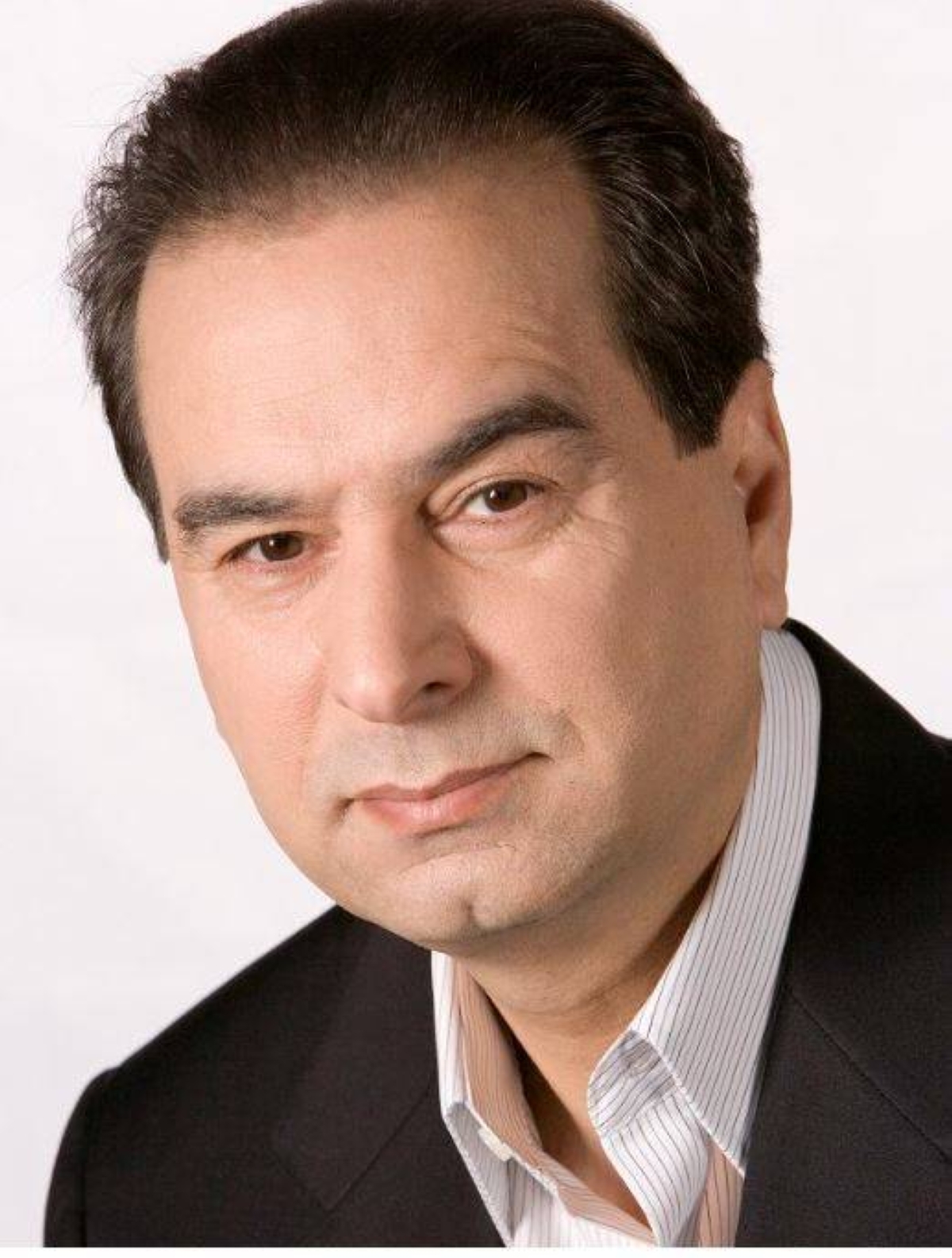
•The writer is a prominent news anchor, programme presenter and media instructor.