


 The midterm elections of November 3 were the most expensive midterms in America’s history. OpenSecrets, a research group that tracks political money, estimates that $11.9bn was spent. Yet the biggest spenders often lost. Elon Musk gave at least $474mn, a record for anyone not on the ballot; about $212mn of it backed a Senate candidate in Texas, who lost. A pro-Israel lobby spent more than $30mn against Abdulrahman El-Sayed in Michigan. He won. Democrats now control both houses of Congress.
The result is about more than money. It gives America a chance to repair a political system that has been getting worse for 16 years. That matters to Americans, and just as much to everyone else. The decline began in 2010, when the Supreme Court, in a case called Citizens United, allowed companies and unions to spend without limit on political advertising.
This led to “super PACs”, groups that can raise and spend unlimited sums. Other groups spend without naming their donors at all; such “dark money” reached at least $1.47bn this year.
People abroad pay too.
They have none of the tools Americans use to correct a bad decision: no vote, no American court to appeal to, and usually no money for a lobby. Yet a vote on military aid, or the choice of an envoy, can change their lives. AIPAC, the main pro-Israel lobby, and its super PAC spent more than $100mn, with the declared aim of defeating candidates who want conditions on military aid to Israel. Such conditions are one of the few ways American law can protect civilians in Gaza. Those civilians had no voice in the matter.
Other powers suffer from the same disease. Russia has its oligarchs, China its well-connected families, the European Union its lobbyists and capitals in the Middle East their networks of patronage. What makes America different is how open its system has become. Almost any billionaire can now buy influence.
Under Donald Trump’s second term, the money has moved beyond campaigns and into government itself. Foreign governments may not fund American campaigns, but they can invest in businesses owned by policymakers. A state fund used a Trump family “stablecoin”, a digital token tied to the dollar, to invest $2bn in Binance, the world’s largest cryptocurrency exchange. Trump later pardoned Binance’s founder, Changpeng Zhao, who had been jailed for failing to prevent money-laundering. Steve Witkoff, Trump’s Middle East envoy, reportedly declared $107mn of income last year from the same crypto business, which his sons helped to found.
Most of this is public. What has changed is that nothing happens as a result. The Justice Department unit that prosecutes corrupt officials has shrunk from about 35 lawyers to a handful. Enforcement of the laws on foreign bribery and on agents of foreign governments has been paused or narrowed. The Federal Election Commission, which enforces campaign-finance law, spent most of the campaign without enough members to act.
Governments did not create this system; they adapted to it. As Washington changed, they built personal ties with the president’s family and friends. That is a risky strategy. Personal ties end when people leave office, and from January a Democratic House of Representatives will have the power to investigate who paid whom.
In Lebanon, America has relied on businessmen. Tom Barrack, a billionaire investor who is ambassador to Turkey and envoy to Syria and Iraq, managed the Lebanese file last year. He now faces questions about reported business links to a planned $15bn Iraq–Syria pipeline. The ambassador in Beirut, Michel Issa, was chosen as a friend of Trump rather than from the diplomatic service. There is no suggestion of wrongdoing by Issa. But America rightly asks Lebanon for transparency and an end to patronage. That message is harder to deliver from a system that increasingly runs on personal connections. Political scientists call this “patrimonialism”: treating the state as the property of a ruler and his family.
Voters did push back. Where money was visible, it often failed, and AIPAC now says it will stop endorsing candidates publicly. Voters also judged a war that critics link to that influence: the war with Iran, which America and Israel launched together in February after months of pressure from Binyamin Netanyahu. After the election JD Vance, the vice-president, said the reason for his party’s defeat was “obvious to almost everyone”. He named the relationship with Israel as one reason Republican voters changed sides.
This remedy is not available to most of the world. Palestinians, Lebanese and Iranians cannot vote in Texas. Most countries cannot afford to buy influence in Washington, and criticism from abroad rarely changes American policy. History offers a harsher lesson: policies shaped by narrow interests tend to produce violent reactions.
In 1953 the CIA and Britain’s MI6 helped overthrow Mohammad Mosaddegh, Iran’s prime minister, after he nationalised Iran’s British-run oil industry. America then armed the shah heavily until the revolution of 1979 made Iran its enemy. Had America weighed the cost of serving oil and arms interests, this year’s war, and perhaps the revolution itself, might never have happened.
The new Congress cannot undo Citizens United. A constitutional amendment is out of reach, and Trump can veto new laws until January 2029. But Congress can do a lot without his signature. The House can investigate World Liberty Financial, the Trump family’s crypto business, and Affinity Partners.
The Senate, which must approve ambassadors, can apply the Foreign Service Act of 1980, which says campaign donations should not be a factor in choosing them. Congress can insist on a working election commission and fund the Justice Department’s anti-corruption unit. It can pass a ban on members trading shares and crypto, which has support in both parties, and force a vote on making super PACs and dark-money groups name their donors. And it can back states such as Montana, which voted on November 3rd, by about 65%, to stop companies spending on its elections.
None of this will reverse 16 years of decline in two. But it would be a start. It would also protect America from foreign money and pressure, and the world from the policies they distort, which often return to harm America itself. If the new majorities fail to act, November’s vote will have changed only who receives the money, not how the system works.
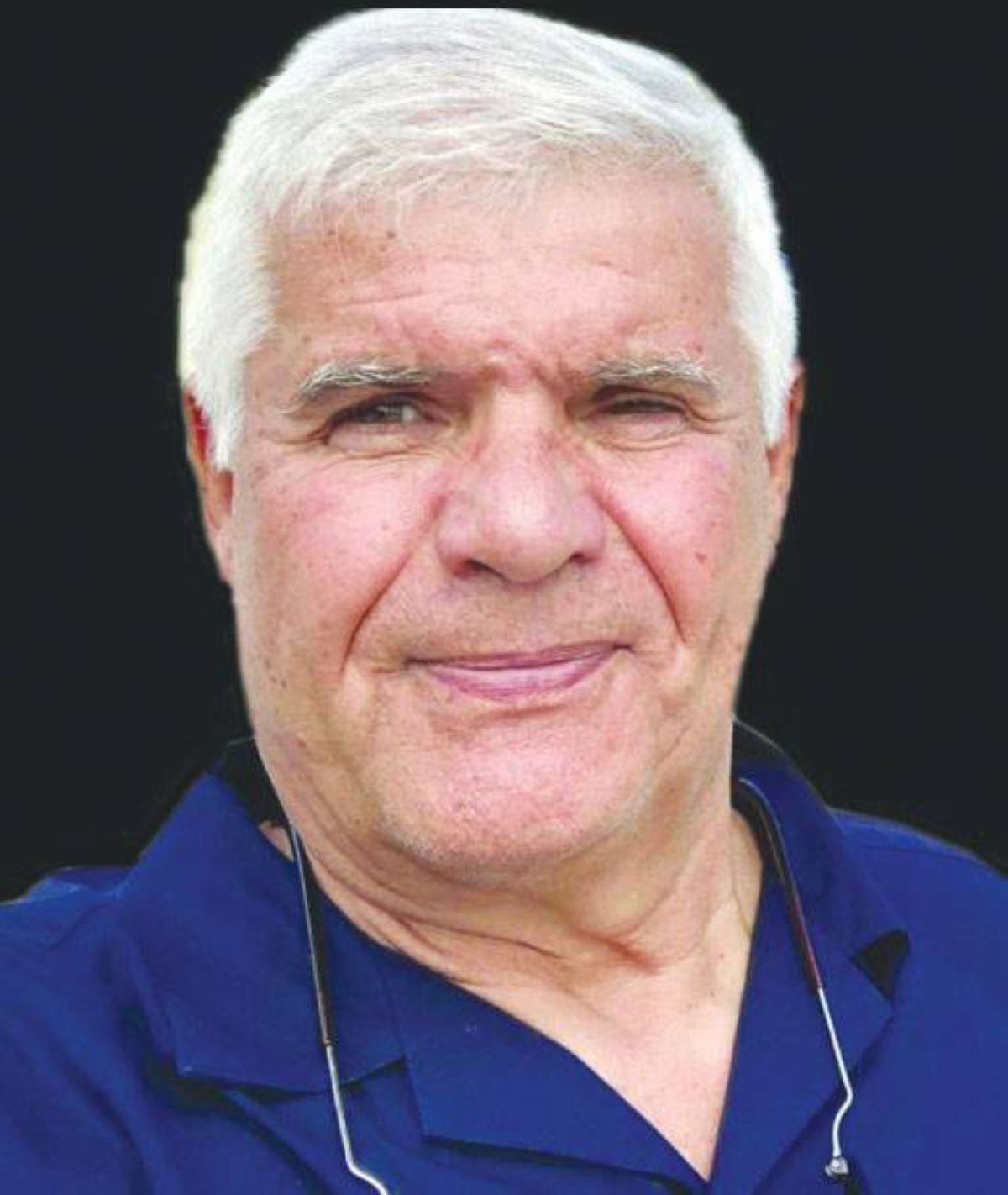
- Jamil Mroue is a Lebanese writer and analyst. He was publisher and editor-in-chief of The Daily Star, Beirut, and editor-in-chief of Al Hayat, London.