


 Monday’s meeting in Tehran between Iran’s leadership and the Saudi, Pakistani and Turkish security chiefs was the first of its kind. The immediate triggers were Houthi missile attacks on Saudi Arabia and renewed American and Israeli threats to strike Iran. But these explain little. The deeper cause is more than 70 years of American mistakes.
A chronology of misreading
The record begins in Damascus in 1949, when Washington helped engineer the coup of Husni al-Za’im and taught a generation of Arab officers that power came through the barracks, with a foreign nod. Four years later, in 1953, it overthrew Mohammad Mossadegh, Iran’s elected prime minister, to secure oil and a compliant Shah. Iran never forgot it.
Washington never reckoned with that wound. It never apologised, never revisited its assumptions and never learned the country it had humiliated. So when the revolution came in 1979, America was blindsided by a nation it thought it owned, and it has been fighting the consequences ever since.
To be fair, America was also anchoring the dollar to oil and keeping oil flowing, its genuine interest here. Yet its policies kept undermining the very stability that interest needed.
In the 1980s it sided openly with Iraq in the war against Iran. It provided intelligence and logistics, encouraged Gulf money to flow to Baghdad, and looked away while chemical precursors, largely from German firms, became poison gas on the battlefield.
In 1991 the first President Bush won his war against Saddam Hussein, called on the Shia and the Kurds to rise, and then left them to be slaughtered. In 2003, after September 11, came the invasion of Iraq and a “war on terror” whose aims stayed vague and whose mishaps multiplied.
The gravest of the second President Bush’s mistakes was born of pure ignorance. In the name of de-Baathification, Washington disbanded the Iraqi army and purged the bureaucracy, emptying the state of the people who ran it. It could not recognise the nodes of power in a society it had never studied, so it destroyed them, and handed the vacuum to militias and insurgents. Since 1979 Washington has played Iran by the Israeli playbook, with diplomacy as a performance between sanctions and strikes.
The general who did not know his enemy
That playbook belongs above all to Benjamin Netanyahu. For 30 years, his career has been built on opposing a Palestinian state and confronting Iran, by force and only by force, doubling down until he described Israel’s future as a “super-Sparta”. His intelligence services have killed Iranian commanders and nuclear scientists one after another, a professionally remarkable feat. Yet Netanyahu does not know Iran. Closer to home, October 7 revealed that his grasp of his nearest neighbours was poor, misplaced and entirely off the mark.
The warrior who planned a battle, not a war
The device that blew this region apart, and set off the wars, side-wars and assassinations since, was the work of one man. Yahya Sinwar was an intelligent, reckless guerrilla commander. He planned a battle. He did not plan a war. He left the consequences to fall on his own people and on other nations. That one man could do this shows how fragile we are.
What the four must learn
The first lesson is that regional security cannot be outsourced. But a region that will not outsource its security must know itself, and it does not. We like to say these peoples know one another through history, religion and culture. We do not. Syria and Iraq share hundreds of kilometres of border with Turkey, yet Turkish is barely taught in either, and Arabic is barely taught in Turkey.
Even within Iraq and Syria, where Kurds are part of the nation, the pattern repeats: Kurds do not learn Arabic as a shared language of citizenship, and Arabs do not learn Kurdish at all. The same is true between the Arabs and Iran. In 2004, on a television news programme tied to a Baathist conference of Syrian emigrants convened by the Syrian government, I suggested that Arabs, who teach their children English, French and Italian, should also teach them Turkish, Persian, Kurdish, Greek and Hebrew. It would double a child’s capacity, and it is the natural thing for neighbours to do. Two Baathists on the panel, Arab nationalists of the jingoistic kind, took me to pieces. “How can you say that? We are Arabs.” Chauvinism lives in all our countries.
The gap is wider between states than between peoples. These governments do not know one another’s systems of governance, their foreign-policy machinery or their institutions. Pakistan may know Saudi Arabia, having served there militarily. Saudi Arabia knows little of Turkey.
There is one instructive exception. Iran and Turkey have built robust institutional ties, on energy, agriculture, the frontier, culture and security, among others, that work independently of the politics of the day. Those ties have carried the two countries through crises that could have gone much worse. That is the model: more knowledge, more institutions, built on reality rather than ignorance. Otherwise these four will simply repeat what America did, interfering without knowledge, without education and without sensitivity, at the same cost.
The fuse is in Palestine
The test is not the Iran-America frontier. The fuse is in Palestine. The evidence is around 1,200 people killed and some 250 taken hostage on October 7, and the tens of thousands killed in Gaza since, more than 100,000 by some estimates. This week the four met as Israelis went to the polls. That timing is an opportunity. The task is to defuse Israel from the inside.
That means one offer, delivered in three tones that reinforce each other. To the new Knesset, in all its factions: a new policy is on the table. To the incoming government: a new situation awaits it. And to the Israeli people: you have a chance for peace. We in the Arab world know civil hatred. We have lived through civil wars, and we know that this anger serves nothing.
To the Palestinians, the message must be as strict and direct as possible. The corruption of the Abbas era does not work. Join us, truly, in forming a government of serious stature that is able to take responsibility.
The contrast that matters
The 2002 Arab Peace Initiative offered Israel normalisation for a Palestinian state, with Iran outside it and opposed. What is new now is the sender: an offer backed by Riyadh, Ankara, Islamabad and, above all, Tehran, which no Israeli government has ever received.
This is the point of the chronology. From Damascus in 1949 to Baghdad in 2003, Washington never recognised the situation in front of it, and never behaved as a power must behave if it does not want war, colonisation or endless eruptions. The four in Tehran have the chance to do what America never did. If they make the offer and Israel refuses it, the world will know where the fuse lies.
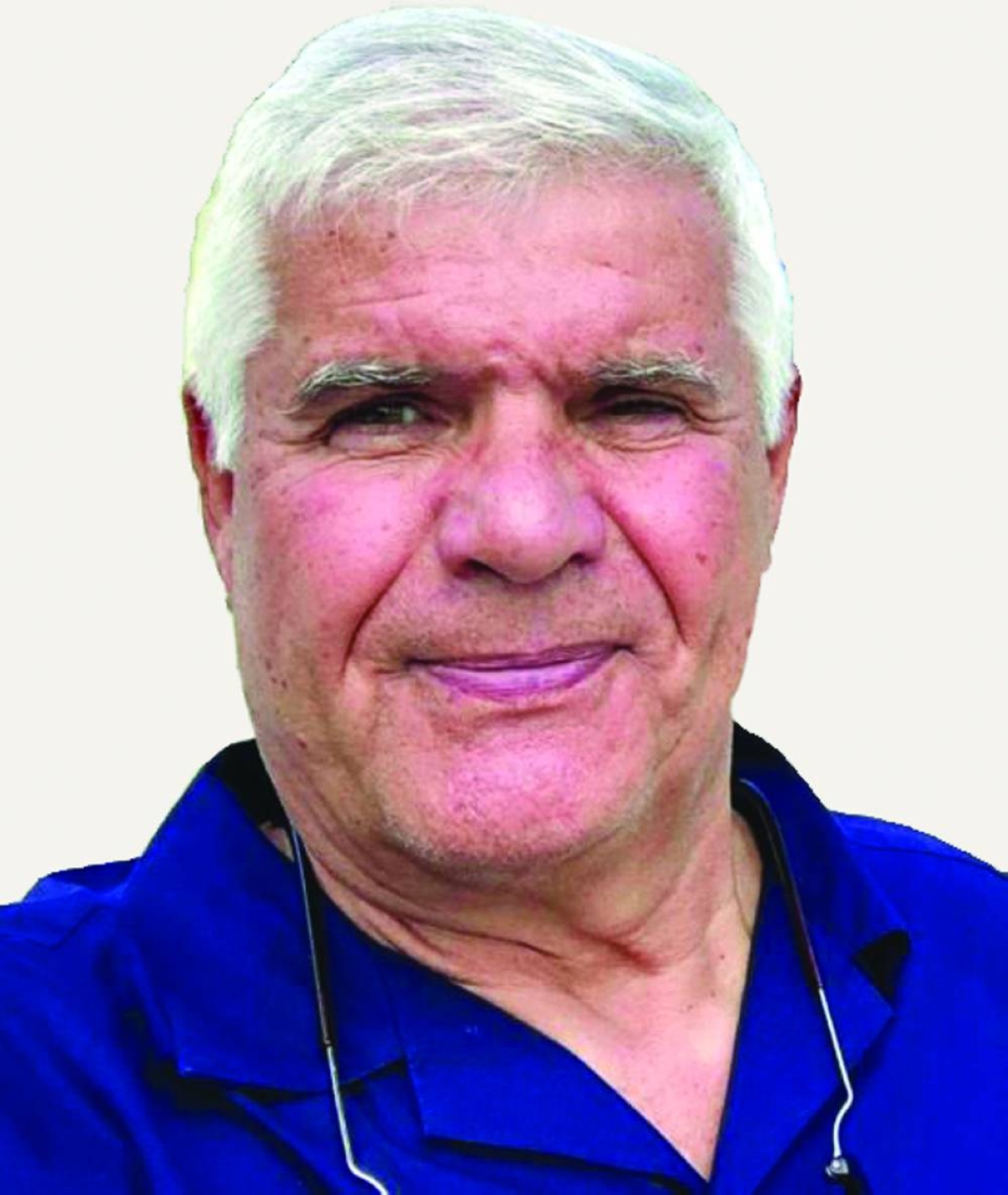
•Jamil K Mroue is a Lebanese writer and analyst. He was publisher and editor-in-chief of The Daily Star, Beirut, and editor-in-chief of Al Hayat, London.