



 On August 7, in the city that now lends the pact its name, Saudi Crown Prince and Prime Minister Mohammed bin Salman stood with Turkish President Recep Tayyip Erdogan and Pakistani Prime Minister Shehbaz Sharif, fresh from the Umrah performed that morning, and signed the Makkah Joint Defence Agreement, committing the three countries to treat an attack on any one of them as an attack on all.
Egypt, present throughout the preparatory diplomacy, chose for now not to sign. Within hours the headlines had crowned the pact an “Islamic Nato.” The label flatters and misleads in equal measure. What was inked in Makkah is better registered as an agreement of intent — a declaration by three consequential states that they mean to build something together — and its worth will be decided not by the signatures but by the diligence and delicacy with which that intent is nurtured.
The instability that produced it needs little rehearsal, for the region knows it by heart: a war on Iran launched in February by a cavalier Washington and an emboldened Israel, Gulf terminals and Hormuz shipping under fire, campaigns running from Gaza through Lebanon into Syria, and an American security umbrella its clients have learned opens and closes at another’s convenience. That is the cauldron. It requires no further description; it requires an exit.
What does deserve description is the manner of the pact’s arrival, because it is the first proof of the seriousness the enterprise will demand. This was no surprise sprung upon the powers. Washington observed silently, and knowingly. Riyadh and Islamabad took care to brief Beijing. And the negotiations that produced the text ran through every concerned capital - Tehran included. A pact born of consultation rather than conspiracy enters the world with an asset no communique can purchase: nobody was ambushed. Openness of that kind is rare in this region’s alliance-making, and it is the correct omen. Durable architecture begins exactly there.
Sobriety is still owed to what the signatures do not yet contain. Turkiye brings a Nato-integrated military and a self-confident arms industry; Pakistan a nuclear-armed force schooled by decades of rivalry with India; Saudi Arabia capital, geography and a procurement culture built on importing protection. Three trajectories, three institutional cultures, three supply systems: welding them into interoperability is a labour of years, and the treaty has yet to define what, in an age of drones, cyberattack and proxy raids, would even trigger its clause. The military scaffolding will take far longer to raise than the most conservative projection allows. That is not an indictment; it is the work order.
Nor will the work proceed unwatched. Every state bordering the three, and every state between them, will register the smallest step forward or backward and sense the subtlest shift in each signatory’s diplomacy — Israel reading encirclement, India reading Rawalpindi, Egypt reading the fine print it has so far withheld its name from. An agreement of intent is examined by its neighbours daily. That scrutiny is not a burden; properly used, it is a discipline.
The stakes justify the discipline. The signatories hold some 380mn people and a combined output above $3.3tn; with Egypt the totals pass 490mn and approach $3.8tn; widen the circle to the bordering and in-between states whose fortunes now move with this treaty’s, and the population concerned crosses a billion. The ink has dried on the tip of a very large body. So has the responsibility the three leaders — and the absent fourth — have taken upon themselves.
And here the emphasis belongs. The military framework the agreement purports to build is not an end in itself; it earns its keep when it becomes the spawning ground for the energetic development of the societies it defends — the development that has been wanting for decades, an eyesore so old the region has stopped seeing it. Stability is not the reward waiting at the end of the security project; it is the input every other project requires first. The deficits are glaring and known: research systems that export their talent, technical education too slow for the demography it serves, business environments that ration dynamism instead of breeding it. What a credible pact manufactures is the one commodity none of the three economies can import — confidence in tomorrow.
The pact’s own architects speak of joint defence-industrial projects; handled well, those are not merely factories for weapons but transmission lines - technology transfer, skilled labour, supplier ecosystems - through which a security budget quietly becomes an industrial policy. Riyadh’s Vision 2030, Ankara’s technological surge, and Pakistan’s vast young population of 257mn are each, in their way, wagers on exactly that.
That is why the enterprise must be constructed professionally, delicately but firmly, from the first day - and why its drafting rooms must hold more than generals and ambassadors. Pool the political economists, the sociologists, the historians into standing think tanks freed to plan the developmental dividend from the word go, and Makkah becomes a catalyst: security cooperation as the vessel for research, industry and the social mobility three restless societies are owed.
Institutionalise the listening too — publish milestones, keep the door open to the absent, measure the civilian dividend as strictly as the military one. Leave it to strategists alone, and it joins the annals of loose and forgotten alliances. The intent has been declared, and declared carefully. Nurtured with the same care, it gives the change this region has awaited for decades a place, at last, to begin.
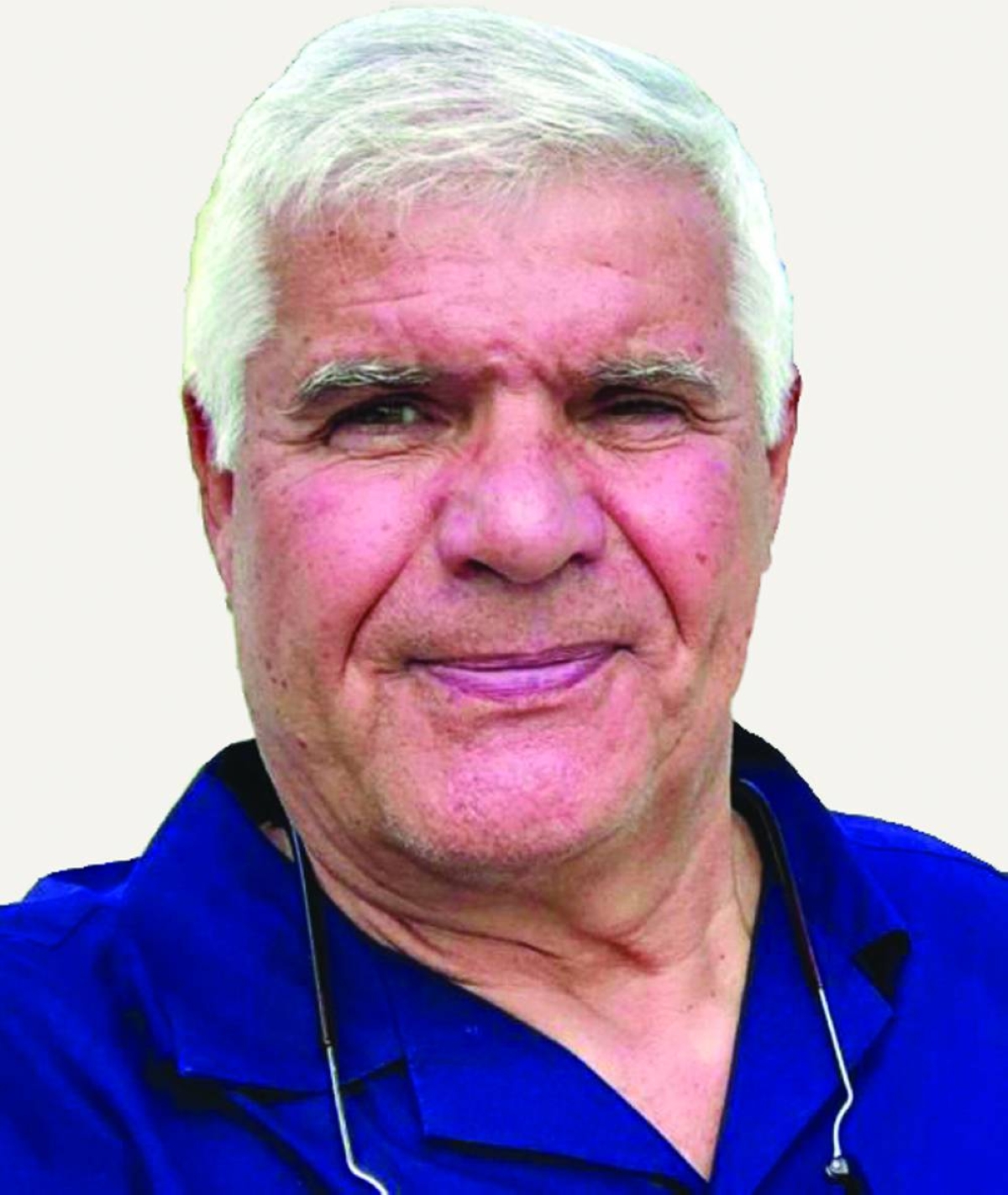
- Jamil K Mroue is Lebanese writer and previous editor of Al Hayat newspaper in London and The Daily Star in Beirut.