



 On Valentine’s Day 1945, aboard the destroyer USS Quincy anchored in Egypt’s Great Bitter Lake, an ailing Franklin Roosevelt sat across from King Abdulaziz Ibn Saud and struck history’s most consequential handshake in the Gulf: American security guarantees in exchange for reliable oil. Roosevelt later told Congress he had learned more about the Middle East in five minutes with the king than in two or three dozen letters. Eighty-one years later, on 28 February 2026, that bargain was tested as never before, and by most honest accounts, found wanting.
That morning, American and Israeli warplanes killed Iran’s Supreme Leader. They opened a war that, within 24 hours, saw Iranian missiles and drones strike all six GCC capitals, along with Amman, Jordan, the first time in history that every Gulf monarchy absorbed direct fire in a single day. The Pentagon’s own forward headquarters at Al Udeid, home to some 10,000 American troops, had already taken a direct hit the previous June, forcing a humiliating evacuation before the wider war even began. Kuwait, which hosts 13,500 US personnel, and Bahrain, home to the Fifth Fleet’s roughly 9,000 personnel, fared no better. The question Gulf capitals and Washington planners now ask, gently in public and bluntly in private, is whether the American security umbrella still covers anyone at all.
“No-one in their right mind would ever put the CENTCOM forward headquarters 100 miles away from Iran, yet that’s where it is.” — General Frank McKenzie (ret.), former CENTCOM commander
The interception numbers, when disclosed, tell their own story. The UAE says it shot down 165 ballistic missiles and 541 drones in the opening barrage alone, yet 35 drones still got through. Kuwait downed 97 missiles and 283 drones. Saudi Arabia, the region’s largest spender, has not released comparable figures at all. These are not the statistics of a defense architecture; they are the statistics of six countries each improvising on its own under fire.
Retired General Frank McKenzie, who commanded CENTCOM until 2022, has answered with rare bluntness. Basing the region’s nerve center a hundred miles from Tehran, he said recently, is something no one in their right mind would do. McKenzie now argues for pulling the “necklace of bases” westward, into Israel, Jordan, and Egypt, putting distance between American forces and Iranian missiles that have only grown faster and more accurate. Michael Rubin of the American Enterprise Institute goes further, arguing that it is time to close US bases in the Middle East, since they have become more of a liability than an asset.
Yet the numbers cut against complacency. The six GCC states together spend more than $130 n a year on defence, a sum exceeding the annual budgets of most mid-sized nations, and still could not produce a joint command, a shared radar picture, or common rules of engagement when the missiles came. Each fought its own war in its own airspace, phoning its own American liaison officer. Riyadh’s arsenal cannot speak to Abu Dhabi’s; Doha’s cannot speak to Kuwait’s. Money bought quantity. It did not buy unity. And unity, not hardware, is what small, wealthy, thinly populated states need most when facing a country of ninety million that has spent four decades mastering the art of imposing costs it need never fully absorb itself.
Here, the strategist’s oldest warning applies: a vacuum left by a great power is rarely filled by nothing. Riyadh has already begun hedging, signing a mutual defence pact with nuclear-armed Pakistan last September, days after Israeli strikes on Doha rattled the entire peninsula.
Muhanad Seloom of the Doha Institute for Graduate Studies captures the Gulf mood more precisely than most: the Gulf states, he writes, are not pivoting to China, nor are they asking the United States to leave; they are simply informing Washington that presence without protection is no longer an acceptable trade.
The old bargain, in which hosting brought presence more reliably than protection, has been exposed by weeks of incoming fire.
That is the paradox confronting American planners as they eye the Indo-Pacific and a rising China. Every dollar and destroyer redirected toward containing Beijing is a dollar and destroyer not defending Manama or Muscat. But an American withdrawal, however partial, does not return the Gulf to some neutral equilibrium. Though bloodied and besieged by months of conflict, Tehran remains unbowed. It now holds the exact prize eighty years of American bases were designed to deny: absolute proximity to the world’s vital oil chokepoint, resilient staying power, and neighbouring Gulf capitals left with nowhere else to look for leverage. Ibn Saud never asked Roosevelt for democracy or nation-building. He asked for a guarantee that his sovereignty and his oil fields would be protected, and got it, verbally, in the course of a single afternoon.
Today’s Gulf rulers are asking a version of the same question with far more urgency, having watched Patriot batteries and THAAD radars strain against Iranian salvos in real time. Washington’s planners can withdraw from the region, redistribute forces westward, or double down, but what they cannot do, if the last war taught anything, is pretend that hosting American troops still automatically means those troops can protect the people hosting them. The Quincy bargain assumed American power was close to absolute. Eight decades and a dozen wars later, that assumption is the one now up for renegotiation.
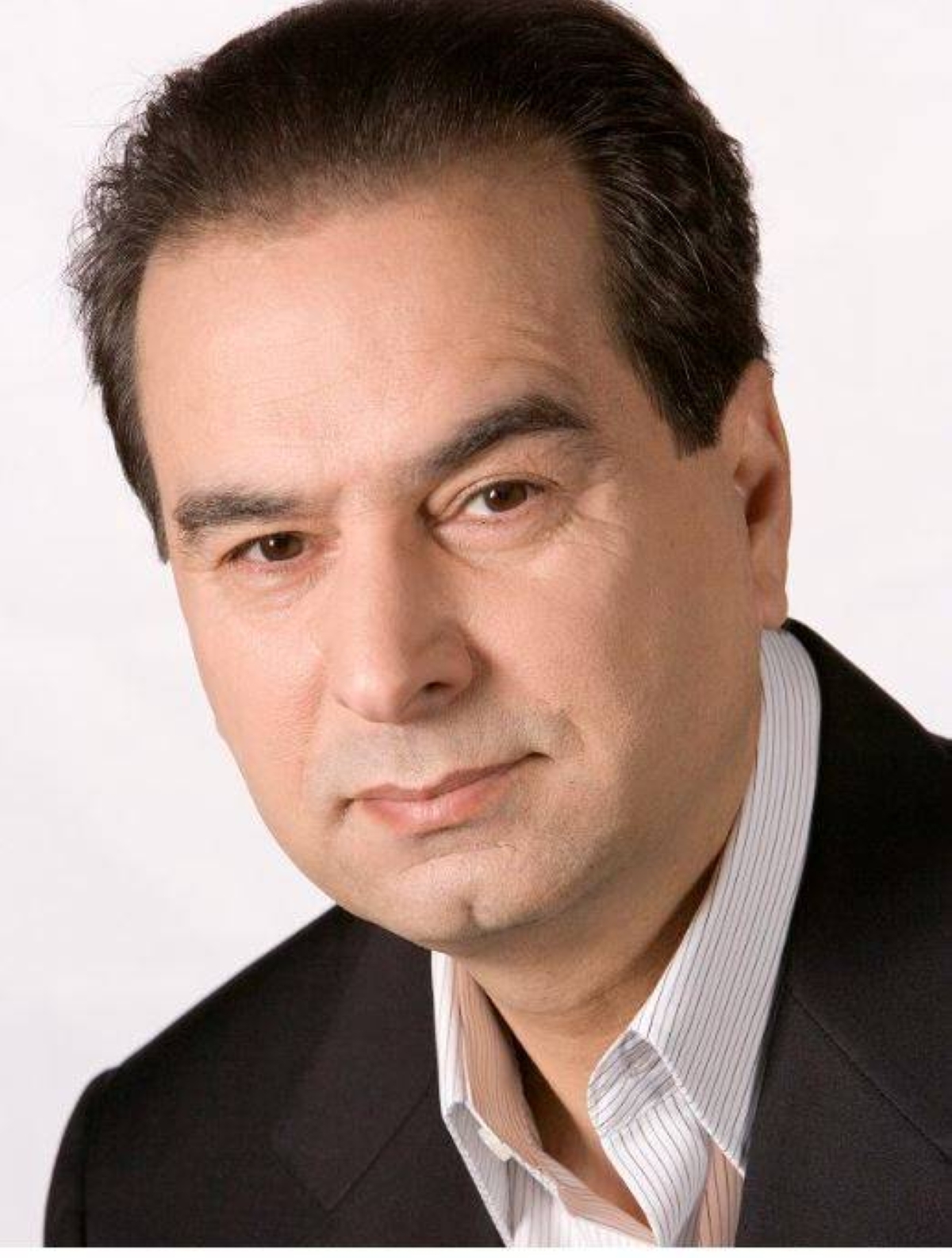
- The writer is a prominent news anchor, programme presenter and media instructor.