



 The Gulf wired its citizens to the state at record speed. Artificial intelligence will now rewire the state itself-and Qatar, of all places, knows how to turn a hard regimen into a pleasure.
Consider an ordinary morning in Doha. A resident opens Metrash2 to renew a residence permit and clear a traffic fine, turns to Hukoomi to register a business and download a legal document, books a hospital appointment, and settles the household bills-without leaving a chair, without meeting an official, without touching a single sheet of paper.
This is not a brochure for some imagined future. It is the present, and it is remarkable. In barely two decades, Qatar and its neighbours have built among the most digitised governments on earth.
The numbers are not modest. Qatar’s Hukoomi portal now carries more than 400 services, and the state expects upward of 90% of government services to be fully digital. In the United Nations’ e-Government index, Qatar leapt 25 places in a single cycle, from 78th to 53rd. Across the wider GCC, citizen satisfaction with digital government runs at a net 81%, residents use these services 22% more often than the global average, and 76% already accept AI-powered public services, according to the Boston Consulting Group. The UAE Pass identity app alone serves more than 11mn users; Abu Dhabi means to be the world’s first fully AI-run government by 2027. None of this came cheaply, and none of it was an accident.
Yet the Gulf may not be granted time to enjoy its achievement. A second wave is already breaking over the first.
The wager
The region has decided, with characteristic boldness, that data centres are to this century what gas and oil wells were to the last. The capital deployed is staggering. Saudi Arabia’s Public Investment Fund launched a $100bn artificial-intelligence vehicle in 2024 and created HUMAIN in 2025 to build the whole stack-chips, clouds, models and apps.
The UAE’s Stargate project is designed for five gigawatts of computing power. The GCC data-centre market, worth $3.48bn in 2024, is forecast to reach $9.49bn by 2030, and McKinsey reckons AI could add $150bn to GCC output by the decade’s end.
Doha has not watched from the sidelines. In December 2025 the Qatar Investment Authority launched Qai, a Doha-headquartered company built to develop and invest in advanced AI infrastructure, placing trust and alignment-its own words-at the centre of its mission. The QIA has taken stakes in leading AI firms abroad, among them Databricks, Cresta and, notably, Anthropic.
In February 2025 Qatar signed a five-year agreement with Scale AI to weave predictive analytics and automation through government services, and in December it hosted the second Global AI Summit under a telling theme: ‘Building the Future of AI Together’. This is a serious wager by serious people --the bet that intelligence, like hydrocarbons before it, can diversify an economy and secure a nation’s place in the world.
The thing that builds itself
There is an irony worth pausing on. Among the firms the QIA has backed is Anthropic, the American maker of the Claude system. On June 4th this year Anthropic published an unusual essay, ‘When AI Builds Itself’. Its authors, Marina Favaro and the co-founder Jack Clark, did not market a product. They issued a warning. Frontier models, they argued, are nearing a threshold they call ‘recursive self-improvement’ -- the point at which an AI system can design and write a more capable successor to itself, with little meaningful human involvement.
The claim is not abstract. Anthropic disclosed that, as of May 2026, more than 80% of the code merged into its own systems was written by Claude-up from low single digits a year earlier. Clark told the BBC that reaching 100% “is possible within two years.” His chosen image is worth repeating: looking down at the vehicle the industry is driving, he said, all he can find is an accelerator; he cannot find a brake.
Anthropic’s proposal is sober rather than alarmist-that the world retain the ‘option’ to slow the most advanced work, under a verifiable agreement, so that, as they put it, “societal structures and alignment research” can keep pace.
Read from a tower in West Bay, that essay should concentrate the mind. The men who build these machines are asking governments to help them slow down.
The Gulf has been pressing the accelerator with both feet-and one of its own sovereign funds helped pay for the warning. What rocket speed means apply such velocity to a society already living inside its apps, and the consequences arrive quickly.
The UAE has said half of all government services will be handled by autonomous AI agents within two years; Qatar’s Scale AI partnership points the same way. The list of unsettled professions is long and familiar. Lawyers, whose drafting and discovery is already automatable.
General practitioners, whose first-line diagnostics machines now match. Office managers, sales supervisors, logistics controllers, even routine police paperwork. Hours of a programmer’s labour compress into minutes; banking, and with it the relationship between citizens and their money, is being rewritten; driverless vehicles cast doubt over the import trade on which several Gulf fortunes were built.
New roles will sprout that nobody can yet name. How, exactly, will a teacher teach when every pupil carries a tutor of infinite patience?
Here Qatar has quietly done something wise. It has refused to chase efficiency for its own sake. Upskilling, job security, data protection and ethics are written into the Digital Agenda 2030; the National Skilling Program, the Qatar Central Bank’s AI guideline and TASMU’s Societal Impact Policy are early attempts to fit the brake Clark says is missing.
The instinct is sound. The flood, after all, has no upstream: there is no border post at which to inspect an algorithm, no harbour to close against a model arriving down the same cable that delivers a passport renewal. For now, we are largely defenceless against what is coming. The question is not whether to meet it, but how.
A change worth wanting
And here the Gulf has an advantage hiding in plain sight. No region prizes well-being more. Its citizens are the most generous visitors to the world’s finest clinics and spas, and they have brought world-class medicine home-to Doha’s hospitals, to the specialists their grandparents once flew abroad to consult. Every person who has ever resolved to live better knows the secret of it: health is not bought, it is willed.
A leaner, stronger life is not a misfortune to be endured but a discipline that, once begun, becomes a genuine pleasure-and the most profitable investment a person ever makes in themselves.
The coming transformation asks for exactly this temperament. Treated as a tsunami, AI is something to fear and flee. Treated as a regimen-chosen, prepared for, sustained by will and want -- it becomes something else entirely. Qatar is already in training.
Its summits, its skilling programmes, its insistence that trust sit at the centre of Qai, are the equivalent of a sensible diet and an early start at the gym: unglamorous, deliberate, and quietly transformative.
The Gulf bought time with oil and is spending lavishly to buy more with silicon. But preparation is the part no fund can purchase for you. Done well, it makes the change ahead not merely survivable but far less dramatic, genuinely enjoyable, and-as the region has every reason to expect-very profitable indeed. The breath we feared we had no time to catch turns out to be the first deep breath of a fitter life.
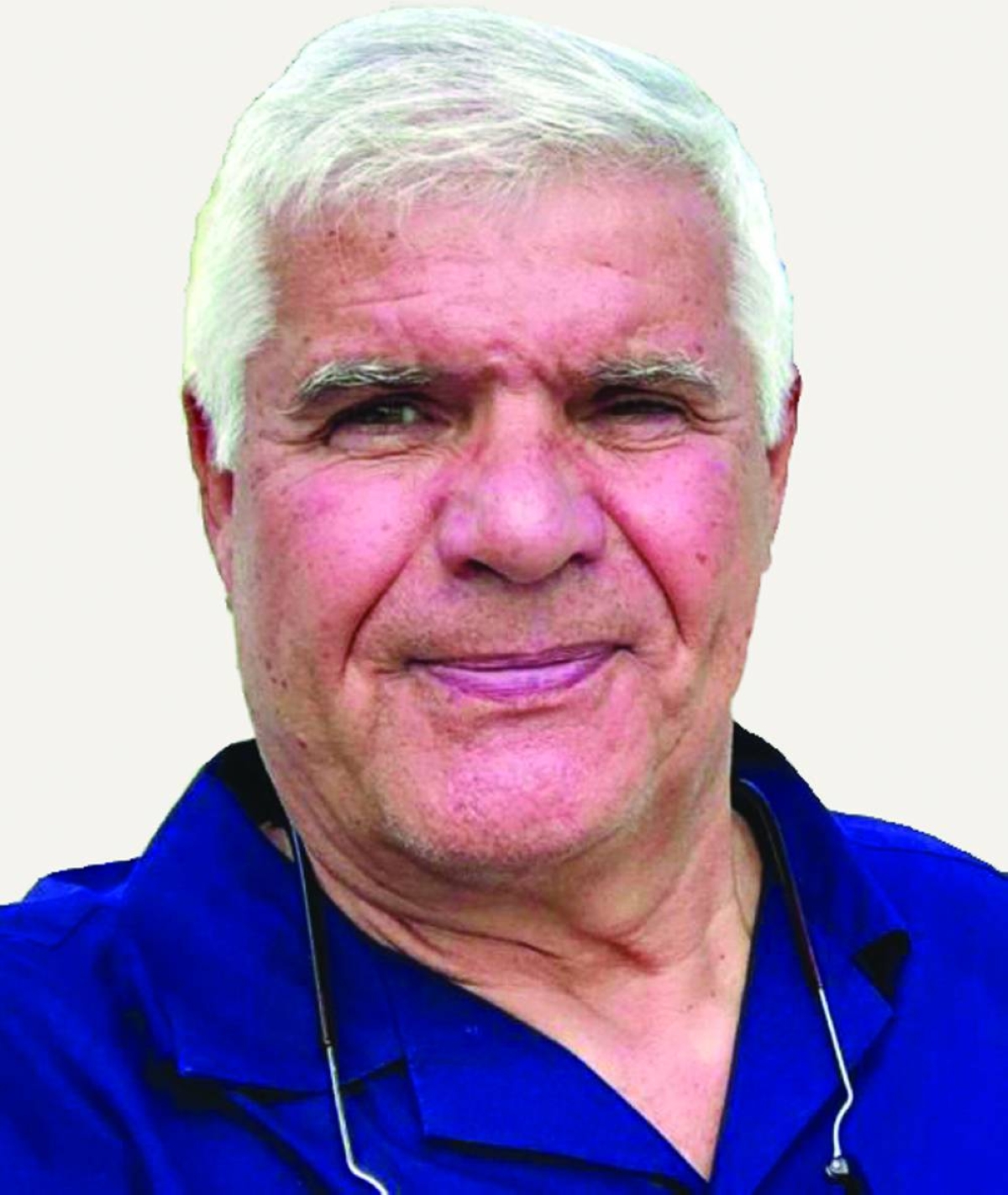
- Jamil K Mroue is Lebanese writer and previous editor of Al Hayat newspaper in London and The Daily Star in Beirut