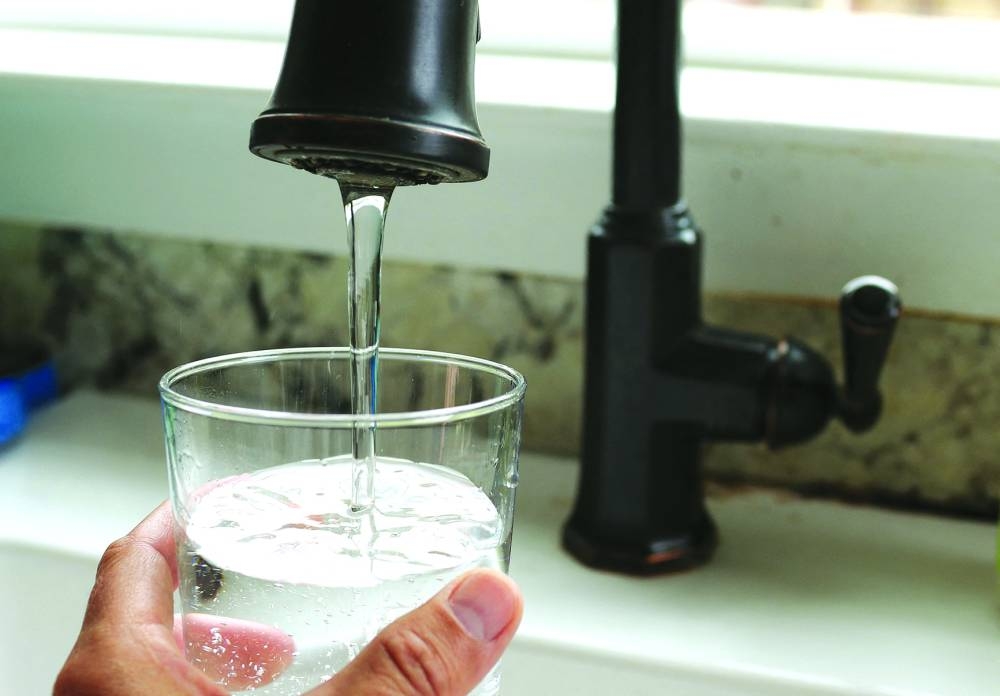
At least 45% of the United States’ tap water is contaminated with toxic “forever” chemicals, according to a study by a government agency.
Found in everyday products such as non-stick frying pans, polyfluoroalkyl substances (PFAS) can linger in the environment for a long time.
PFAS are water resistant, meaning they do not break down in the environment and last in human bodies for years.
Developed in the 1940s with the creation of Teflon, a non-stick cookware coating, today they are used in everything from clothing to plastic products.
Exposure to high levels of PFAS can disrupt hormones, disturb liver function, increase the risk of kidney or testicular cancer, reduce birth weight in infants and compromise the health of pregnant women, according to the US Centres for Disease Control and Prevention (CDC).
The chemicals can reach water supplies through industrial discharges and leaching from landfill sites.
“This USGS study was the first to compare PFAS in tap water from both private and public supplies on a broad scale throughout the country,” Kelly Smalling, a US Geological Survey (USGS) scientist and the study’s lead author, told AFP yesterday.
The paper was published this week in the journal Environment International, and found exposure to PFAS was similar in samples collected from unregulated private wells and regulated public supply.
Overall, the study estimated the probability of PFAS being observed in the water at 75% in cities and 25% in rural areas.
There are more than 12,000 types of PFAS, not all of which are detectable by current testing.
For the purposes of the current research, USGS tested for only 32 types.
The team collected samples from 716 nationally representative locations.
Most exposures occurred in urban areas or places with known high concentrations of PFAS, such as industrial and waste sites.
These included the Great Plains, which runs down the middle of the country, the Great Lakes in the mid-east, as well as cities along the East and West Coasts.
Concerned residents can look up PFAS levels in the zip code via a website maintained by the nonprofit Environmental Working Group (www.ewg.org).
The Environmental Protection Agency (EPA) offers advice for in-home treatment options.
Filters, including those that reverse osmosis technology, activated carbon, and ion exchange have been shown to be highly effective at removing them.
Bottled water may not be a good alternative.
A 2022 study by the USGS found bottled water was frequently contaminated with inorganic and organic compounds, with arsenic, lead, and uranium among the most common.
Last month, US industrial conglomerate 3M announced it would pay as much as $12.5bn to settle numerous claims from US public water systems that accused the company of tainting their supplies.
The company has also agreed to large settlements in the Netherlands and Belgium, and announced in December it would stop manufacturing PFAS substances by the end of 2025.
US chemicals giant DuPont and its spinoffs Chemours and Corteva also announced in June they would pay nearly $1.2bn to settle claims they contaminated water sources serving “the vast majority of the United States population” with PFAS.
The EPA proposed new standards on PFAS chemicals in March, requiring public water utilities to monitor for six compounds and reduce PFAS levels in the water supply.
President Joe Biden’s Bipartisan Infrastructure Law passed in 2021 invests $9bn over five years to help communities reduce PFAS contamination levels in drinking water.