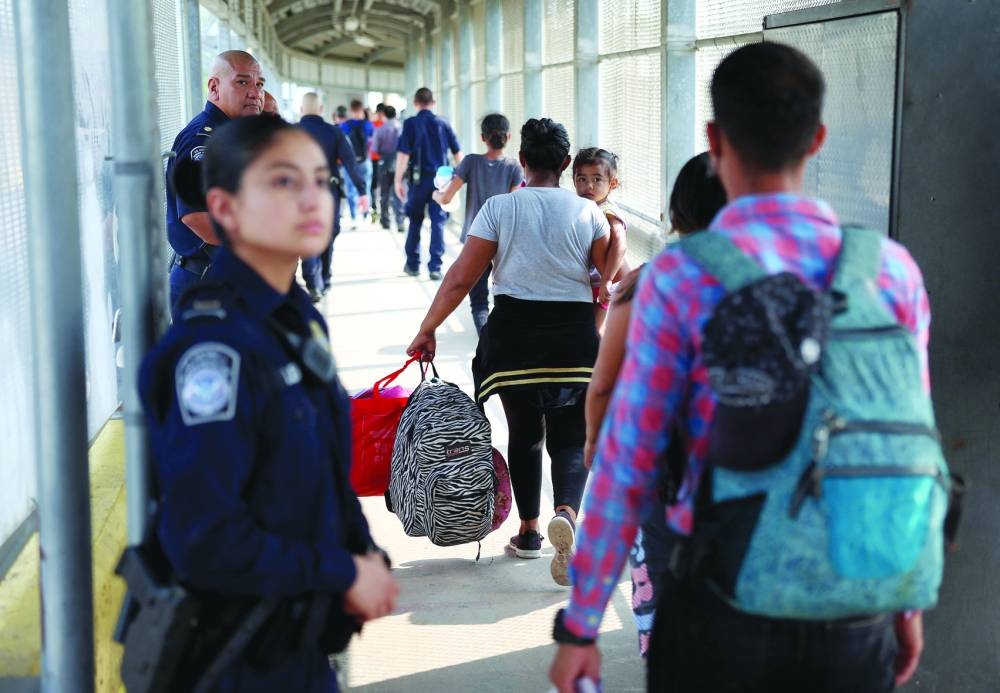
The Biden administration began implementing a sweeping policy shift at the US-Mexico border yesterday as a coronavirus (Covid-19) pandemic-era order that had allowed the swift expulsion of many migrants expired and new asylum restrictions took effect amid confusion and uncertainty.
Several last-minute court actions added to questions about how President Joe Biden’s reworked border strategy will play out, with advocates filing a legal challenge to the new asylum regulation as it was enacted.
Facing concerns that the end of a three-year-old order – known as Title 42 – could strain US border facilities to the breaking point, US officials were keeping a close eye on the movements of migrants that had already reached record numbers in recent days.
“We continue to encounter high levels of non-citizens at the border, but we did not see a substantial increase overnight or an influx at midnight” when Title 42 expired, US Department of Homeland Security (DHS) official Blas Nunez-Neto told reporters yesterday.
Though a chaotic race to US border ports of entry on Thursday appeared to have given way to relative calm yesterday, there was a sense of confusion among some migrants.
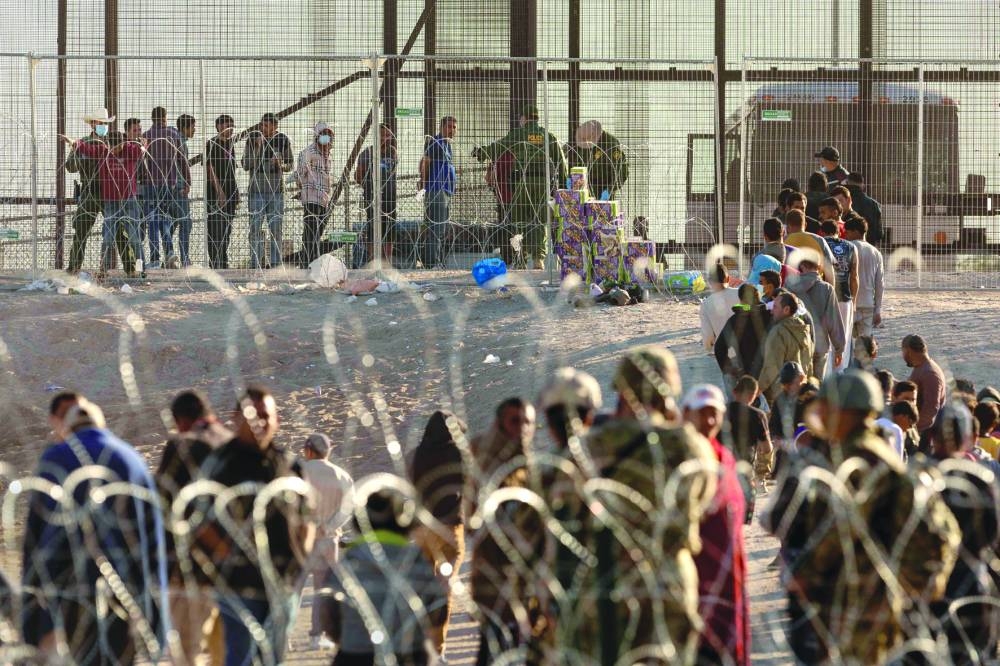
In El Paso, Texas, hundreds of migrants slept outside in front of the border fence overnight.
Texas National Guard, state troopers and border agents patrolled the surrounding area where migrants had waited after surrendering to US border authorities.
Across the border in Ciudad Juarez, several hundred people formed a single-file line at the USborder fence, where authorities let them in several at a time before putting them on buses.
Armed members of the Texas National Guard patrolled the area near the Rio Grande river, erecting tall fencing and coils of barbed wire to stop more migrants from joining the group.
In the Mexican border city of Ciudad Juarez, Agustin Sortomi said he, his wife and two children had tried to surrender to US authorities but had been turned away.
“I don’t know what to do,” he told AFP. “We haven’t realised our dream. Only God knows when we will.”
Immigration advocates represented by the American Civil Liberties Union (ACLU) filed a late night legal challenge against the new asylum bars, claiming they violate US and international laws.
Advocates argue that the new regulation, put in place by Biden’s Democratic administration to curb illegal crossings, resembles restrictions imposed by his Republican predecessor, Donald Trump, that they had successfully blocked in court.
US Homeland Security Secretary Alejandro Mayorkas defended the Biden regulation, saying it aims to encourage migrants to enter using legal pathways.
“It’s going to be a tough transition,” he told MSNBC.
“We are seeing people arrive at our southern border, as we expected,” Mayorkas told CNN early yesterday.
“We are taking them into our custody. We are processing them. We are screening and vetting them and if they do not have a basis to remain, we will remove them very swiftly,” he continued. “Our plan will take some time, but our plan will succeed.”
US asylum officers hurried to figure what would be required to apply the regulation and the logistics of interviewing migrants held in US border facilities.
Returns of some migrants to Mexico – Cubans, Haitians, Nicaraguans and Venezuelans – were due to begin yesterday under the new border provisions, a homeland security official said.
In chaotic scenes on Thursday, migrants scrambled to enter the country before the new rule went into effect.
The regulation presumes most migrants are ineligible for asylum if they had passed through other countries without first seeking protection elsewhere, or if they failed to use legal pathways for US entry, which Biden has expanded.
Tens of thousands of migrants this week waded through rivers, climbed walls and embankments onto US territory.
Around 25,000 migrants were being held in US Customs and Border Protection facilities near the border yesterday, down slightly from record highs earlier in the week, according to the National Border Patrol Council, a union for agents.
About 10,000 migrants per day were reported crossing illegally this week.
A 17-year-old Honduran boy died after being found unconscious in a Florida shelter on Wednesday, according to the US Department of Health and Human Services.
Unaccompanied children are exempt from the new regulation, and advocates have warned that parents might send their children across the border alone.
Trump first implemented Title 42 in March 2020 as Covid-19 swept the globe, with US health officials saying that it was needed to curb the spread of the virus in detention facilities.
The order allowed American authorities to quickly expel migrants to Mexico or other countries without a chance to request asylum.
Some Democrats and immigration advocates say Biden’s new regulation is too harsh.
The measure also counters previous statements Biden made in 2020 on the campaign trail, when he said he thought it was “wrong” for people not to be able to seek asylum on American soil.
Biden, who campaigned on reversing Trump’s policies and is now running for re-election in 2024, kept the order in place and ultimately expanded it.
Migrants have been expelled more than 2.7mn times under Title 42, although the total includes many repeat crossers.
Mexico has generally only accepted certain nationalities – its own citizens, migrants from northern Central America and more recently migrants from Venezuela, Cuba, Haiti and Nicaragua.
So, during the same period, around 2.8mn migrants ineligible for expulsion were allowed into the United States under a process known as Title 8 to pursue their immigration claims in court, which can take months or years.
Even before Title 42 expired, along with the end of the Covid-19 public health emergency, Biden’s administration was grappling with record numbers of migrants at the US-Mexico border, straining border cities.
Republicans fault Biden for easing Trump’s more restrictive policies, while the Biden administration has blamed Republicans for blocking legislation to reform the immigration system.