


Inflation in urban parts of Egypt accelerated to its fastest level since November 2018 on the back of higher food costs.
Consumer prices climbed 14.6% from a year earlier in August, versus 13.6% the previous month, the state-run statistics agency CAPMAS said on Thursday.
Food and beverage costs, which make up the largest single component of the inflation basket, jumped 23.1%. On a monthly basis, price growth slowed to 0.9% from 1.3% in July.
Inflation in Egypt is likely close to peaking after a run-up in food and energy costs that followed Russia’s invasion on Ukraine and the pound’s devaluation in March. Increases in input prices for non-oil companies have already slowed sharply, according to S&P Global, though businesses remained under pressure from higher fuel and raw material costs.
While the government raised fuel prices in July, it said last month that the country is leaving bread subsidies unchanged for now. Authorities had previously vowed to reduce spending on the costly system that provides the staple foodstuff to an estimated 70% of the country’s 100-million-plus population.
Months of quickening price gains have turned Egypt’s interest rates negative when adjusted for inflation, undercutting the country’s appeal to foreign investors in domestic bonds and bills.
The country has seen some $20bn foreign outflows from its local debt market this year.
The central bank is meeting on September 22 under the leadership of acting governor Hassan Abdalla, who replaced Tarek Amer after his resignation last month. The Monetary Policy Committee has kept interest rates unchanged for two meetings and previously described deviations of prices from its target as “transitory.”
The MPC has said that the elevated pace of price increases “will be temporarily tolerated” relative to its target of 7%, plus or minus two percentage points, on average in the fourth quarter.
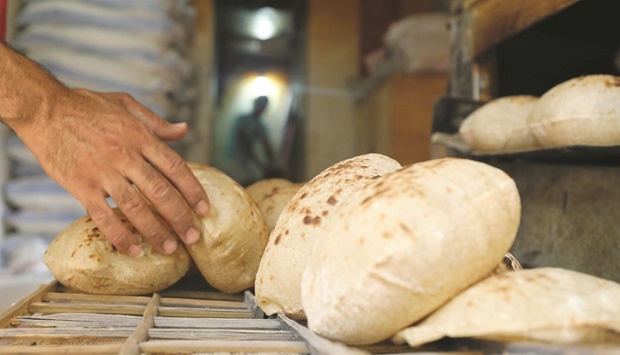
A worker collects bread at a bakery in Cairo. While the government raised fuel prices in July, it said last month that the country is leaving bread subsidies unchanged for now.