


Elon Musk’s vision of taking the guardrails off Twitter Inc’s content moderation is lauded by free speech absolutists, but it risks creating a free-for-all that alienates advertisers and leaves regular users subject to abuse.
Musk lobbed his $43bn takeover offer for Twitter with the intent of unlocking its potential to be the “platform for free speech around the globe.” He added that “free speech is a societal imperative for a functioning democracy.”
But a website with little content moderation would be a concern for advertisers who are brand conscious and wouldn’t want their adds to show up next to controversial posts.
Regular people also could be turned off from the site if it was overrun with harassers or conspiracy theorists.
“The underlying concern would be that Twitter could become a toxic place and a toxic community,” said Joshua Lowcock, global chief marketing officer at media agency UM Worldwide.
Twitter, like other social media platforms, is highly reliant on advertising, which accounted for close to 90% of its $5.1bn in revenue in 2021.
Also like its peers, especially Meta Platforms Inc, Twitter has struggled to balance how it regulates content on the site.
Conservatives rail against what they claim is a liberal bias, while others say the platform doesn’t go far enough in curbing calls for violence or hate speech.
In 2020, dozens of companies — from Coca-Cola Co to Microsoft Corp — paused advertising on Meta’s Facebook in protest over harmful content on the site and concern their ads would appear in association.
Musk, with more than 80mn followers on Twitter, has long been one of the site’s most prominent users and also one of its most outspoken critics.
Much of Musk’s ire against Twitter has been directed against what he perceives as censorship by the platform, and he has sympathized with users who have been booted off.
Even with Twitter’s ever-evolving rules and policies around content, many users still face harassment and doxxing, or the revealing of personal details.
Opening the platform up even more could make that problem worse.
“In terms of everyday users, people hate the harassment,” said Matt Navarra, a social media consultant and industry analyst. “Can you imagine if that was opened up to even more freedom of speech and there would be less policies, rules and repercussions? That would not be a place people would want to hang around in.”
For advertisers, the problem isn’t free speech, but rather the lack of any content moderation on Twitter, said UM Worldwide’s Lowcock.
Under Twitter’s former CEO, Jack Dorsey said: “Twitter prioritised the health of the platform and that was appreciated by the advertising community.” “Trust in the platform increased.
It’s unknown whether Musk will continue that approach or diverge completely,” he said.
For all the businesses he’s been in — from manufacturing electric vehicles to launching rockets and satellites — Musk hasn’t run one that’s primarily supported by advertising revenue.
Before announcing that he planned to acquire Twitter, Musk proposed getting rid of ads and rewarding verification checkmarks to users who paid for a subscription service.
“Musk has never shown any interest in an ad-supported business and one hopes that he will put lieutenants in charge who understand the advertising energy,” Lowcock said.
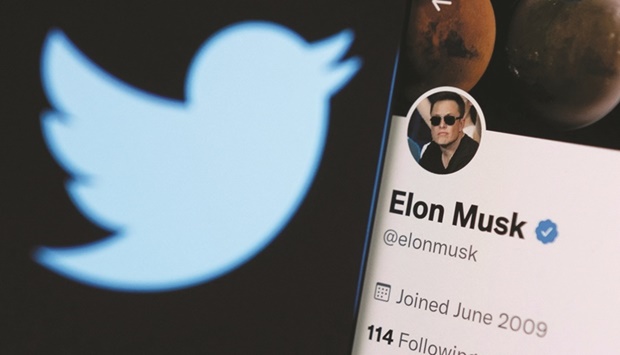
Elon Musk’s vision of taking the guardrails off Twitter Inc’s content moderation is lauded by free speech absolutists, but it risks creating a free-for-all that alienates advertisers and leaves regular users subject to abuse.