


The discovery and diagnosis of a new gastroenterological disease caused by a genetic familial trait has helped save the lives of two young brothers at Sidra Medicine, which prescribed a precision medicine treatment programme.
Researchers at Sidra Medicine, a member of Qatar Foundation, discovered a new form of Inflammatory Bowel Disease (IBD), and the findings of this study were published in the Cellular and Molecular Gastroenterology and Hematology Journal.
The first patient, Salem was taken to a paediatric emergency as he was experiencing extreme symptoms including severe diarrhea and dehydration resulting in cardiac arrest. Doctors worked around the clock to save his life, and while he was resuscitated, his brain was already damaged resulting in cerebral palsy.
Salem’s younger brother Saoud also ended up coming to Sidra Medicine showcasing similar early-onset IBD symptoms. During the consultations, the parents revealed that they had lost two pregnancies to miscarriages before Salem was born.
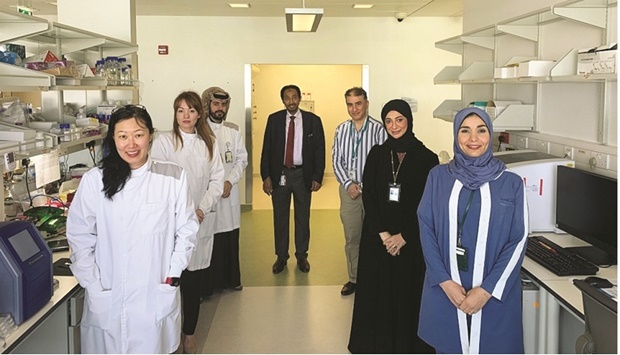
Both Salem’s and Saoud’s blood samples were sent to Sidra Medicine’s Human Genetics lab for genetic and molecular investigation. Dr Bernice Lo, principal Investigator, along with research specialists Ahmad al-Shaibi and Satanay Hubrack studied the samples and made a new discovery.
“During the molecular investigation and comparison of both the brothers’ genotypes, we noted a striking loss of mucus in their gastrointestinal cells and that they were highly stressed. They basically had a dysfunctional version of AGR2 which was not allowing for the proper production of mucus – AGR2 allows for the production of mucus that protects the gut. We had never come across such a finding in humans before and the diagnosis allowed us to conclude that the mutation was because of a genetic familial trait and was the main cause of the disease,” al-Shaibi said.
The findings established that the brothers had genetically inherited the disease and pointed to the possibility that if their parents, who are related to each other, were to have more children in the future, there was a risk they too would be born with the same condition.
With the disease and causal effects of the new type of IBD now identified, the most important stage was about to begin – ensuring that Salem’s condition didn’t further deteriorate and to prevent a severe episode of the disease from manifesting in Saoud.
Dr Mamoun Elawad, division chief of gastroenterology at Sidra Medicine said: “ What makes our care programme at Sidra Medicine unique is that all our patients under the age of six who showcase symptoms of early-onset IBD undergo genetic and immunology testing and have their entire genomes sequenced. In the case of these two brothers, what was discovered is truly ground-breaking and will change the lives of future patients diagnosed with the same disease.”
Salem’s condition is now stable as he has started his customised medication protocol to prevent him from experiencing any further severe effects of IBD. His brother Saoud is currently waiting to go on the same medication. His health is now under careful monitoring by his parents and the team at Sidra Medicine.
Sidra Medicine’s genetic testing and whole genome sequencing for patients with IBD is a joint collaboration with the Gastroenterology clinic and Human Genetics team and is part of its Precision Medicine program – a first and only one of its kind in the Middle East.
The first patient, Salem was taken to a paediatric emergency as he was experiencing extreme symptoms including severe diarrhea and dehydration resulting in cardiac arrest. Doctors worked around the clock to save his life, and while he was resuscitated, his brain was already damaged resulting in cerebral palsy.
Salem’s younger brother Saoud also ended up coming to Sidra Medicine showcasing similar early-onset IBD symptoms. During the consultations, the parents revealed that they had lost two pregnancies to miscarriages before Salem was born.
Both Salem’s and Saoud’s blood samples were sent to Sidra Medicine’s Human Genetics lab for genetic and molecular investigation. Dr Bernice Lo, principal Investigator, along with research specialists Ahmad al-Shaibi and Satanay Hubrack studied the samples and made a new discovery.
“During the molecular investigation and comparison of both the brothers’ genotypes, we noted a striking loss of mucus in their gastrointestinal cells and that they were highly stressed. They basically had a dysfunctional version of AGR2 which was not allowing for the proper production of mucus – AGR2 allows for the production of mucus that protects the gut. We had never come across such a finding in humans before and the diagnosis allowed us to conclude that the mutation was because of a genetic familial trait and was the main cause of the disease,” al-Shaibi said.
The findings established that the brothers had genetically inherited the disease and pointed to the possibility that if their parents, who are related to each other, were to have more children in the future, there was a risk they too would be born with the same condition.
With the disease and causal effects of the new type of IBD now identified, the most important stage was about to begin – ensuring that Salem’s condition didn’t further deteriorate and to prevent a severe episode of the disease from manifesting in Saoud.
Dr Mamoun Elawad, division chief of gastroenterology at Sidra Medicine said: “ What makes our care programme at Sidra Medicine unique is that all our patients under the age of six who showcase symptoms of early-onset IBD undergo genetic and immunology testing and have their entire genomes sequenced. In the case of these two brothers, what was discovered is truly ground-breaking and will change the lives of future patients diagnosed with the same disease.”
Salem’s condition is now stable as he has started his customised medication protocol to prevent him from experiencing any further severe effects of IBD. His brother Saoud is currently waiting to go on the same medication. His health is now under careful monitoring by his parents and the team at Sidra Medicine.
Sidra Medicine’s genetic testing and whole genome sequencing for patients with IBD is a joint collaboration with the Gastroenterology clinic and Human Genetics team and is part of its Precision Medicine program – a first and only one of its kind in the Middle East.