


Supply disruptions took a chunk out of euro-area economic growth last year and may persist into 2023 because of the pandemic, presenting a test for the European Central Bank, the International Monetary Fund warned.
“The prospect of prolonged supply bottlenecks raises challenges for monetary-policy makers,” the Washington-based lender said on Thursday in a report. “Keeping medium-term inflation expectations stable despite transient boosts to inflation, including from supply disruptions and surging energy prices, is key.”
In a blog post summarising the study’s findings, IMF managing director Kristalina Georgieva and the authors, Oya Celasun and Alfred Kammer, said the supply shocks are mostly transitory for now, and wages are likely to rise only moderately.
For this reason, the ECB’s decision to maintain accommodative monetary policy until inflation settles at the 2% mid-term target – versus more than 5% at present – makes sense, they said.
Labour and component shortages, transport holdups and lockdowns have plagued the world economy since the coronavirus crisis erupted. While some of the most acute snags are starting to clear as caseloads ebb and many countries ease restrictions, the IMF cautions that new mutations akin to omicron risk further disruptions.
Supply constraints lopped 2 percentage points off economic expansion in the eurozone in 2021, reducing manufacturing output by 6%. They also boosted inflation, generating about half of the increase in producer price, excluding energy costs, according to the IMF.
It urged regulatory measures are needed to fast-track licensing and logistics. Governments can also lean on fiscal policy but must make spending well targeted to avoid further boosting prices.
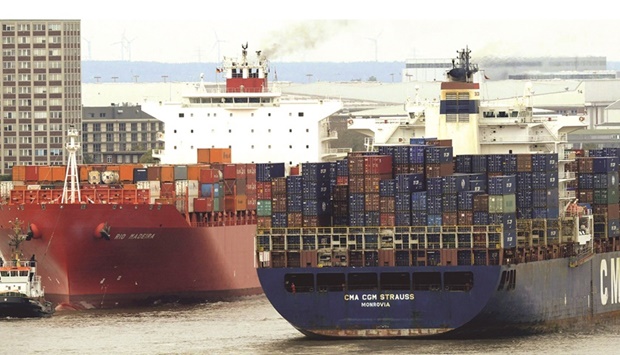
Containerships sail on the Elbe river as they leave and arrive at the harbour of Hamburg, Germany (file). Supply constraints lopped 2 percentage points off economic expansion in the eurozone in 2021, reducing manufacturing output by 6%.