


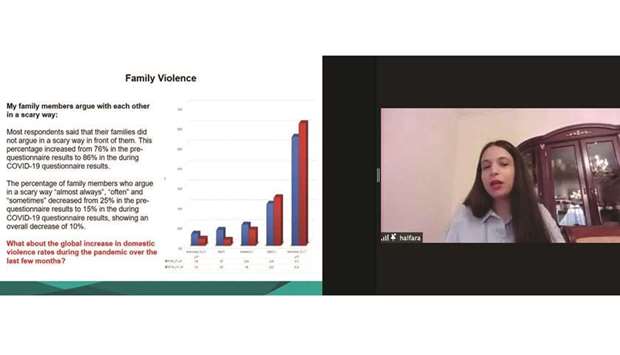
Doha International Family Institute (Difi), a member of Qatar Foundation, participated in an international teleconference on “How Strong Families Around the World Endure the Global Pandemic.”
Difi was represented by family policy officer Heba al-Farra and researcher Aisha Sultan at the event that had researchers from Africa, Asia, Europe, Latin America, North America, Oceania, and the Middle East to discuss Covid-19 and how it is impacting families in their countries.
Topics discussed included how families are using their inherent strengths to endure the effects of the pandemic, and how to further reinforce the family unit through the global crisis. The event, held over three days, saw presentations from 12 groups of speakers followed by Q&A sessions attended by around 2,000 participants from across the globe. During the session al- Farra and Sultan presented the findings of two Difi studies on the family during Covid-19.
Sultan’s presentation, titled “The Strengths and Challenges of Families during Covid-19 in Qatar”, explored the impact of Covid-19 on family cohesion in Qatar. The study aims to identify the effects of pandemic-associated challenges on families and gain a better understanding of the attitudes, coping strategies, and resources used by family members, as well as recommended suitable intervention policies, programmes, and services to aid families in similar crises.
The study showed that more than 60% of participants feel the pandemic positively impacted their family cohesion, strengthened family bonds, and brought them closer to immediate family members. It also identified that love, support, communication, and respect between family members were magnified, and that through discussions and problem solving, family members’ resilience or ability to cope improved.
“The Role of the Family on Adolescent Wellbeing during Covid-19”, presented by al-Farra, focused on family factors that have influenced adolescent health – before and during Covid-19.
The project suggests that secure attachments between parents and children maximises protective factors and lowers risk elements. The primary protective factors included strict and continuous rule setting, conscious surveillance, open and healthy communication, emotional support, and role model behaviour, whereas learned negative social behaviour, dysfunctional parenting methods, limited surveillance, frequent fights, and lack of family cohesion were risk issues.
Topics discussed included how families are using their inherent strengths to endure the effects of the pandemic, and how to further reinforce the family unit through the global crisis. The event, held over three days, saw presentations from 12 groups of speakers followed by Q&A sessions attended by around 2,000 participants from across the globe. During the session al- Farra and Sultan presented the findings of two Difi studies on the family during Covid-19.
Sultan’s presentation, titled “The Strengths and Challenges of Families during Covid-19 in Qatar”, explored the impact of Covid-19 on family cohesion in Qatar. The study aims to identify the effects of pandemic-associated challenges on families and gain a better understanding of the attitudes, coping strategies, and resources used by family members, as well as recommended suitable intervention policies, programmes, and services to aid families in similar crises.
The study showed that more than 60% of participants feel the pandemic positively impacted their family cohesion, strengthened family bonds, and brought them closer to immediate family members. It also identified that love, support, communication, and respect between family members were magnified, and that through discussions and problem solving, family members’ resilience or ability to cope improved.
“The Role of the Family on Adolescent Wellbeing during Covid-19”, presented by al-Farra, focused on family factors that have influenced adolescent health – before and during Covid-19.
The project suggests that secure attachments between parents and children maximises protective factors and lowers risk elements. The primary protective factors included strict and continuous rule setting, conscious surveillance, open and healthy communication, emotional support, and role model behaviour, whereas learned negative social behaviour, dysfunctional parenting methods, limited surveillance, frequent fights, and lack of family cohesion were risk issues.