


August 13-15 marks the 50th anniversary of “the weekend that changed the world,” when US president Richard Nixon suspended the dollar’s convertibility into gold at a fixed price and rung down the curtain on the Bretton Woods international monetary system. The subsequent half-century brought many surprises. From a monetary standpoint, one of the greatest was the dollar’s continued dominance as a vehicle for cross-border transactions.
Under Bretton Woods, the dollar’s supremacy was readily explicable. America’s financial position coming out of World War II was impregnable. Changes in the price at which dollars could be converted into gold were unthinkable, first because of that financial strength and then, as the country’s monetary position weakened, because of the possibility that one devaluation would create expectations of another.
Many thought that Nixon’s move would diminish the dollar’s international role. With the currency fluctuating like any other, it would be too risky for banks, firms, and governments to put all their eggs in the dollar basket. They would thus diversify by holding more reserves and conducting more transactions in other currencies.
Why this didn’t happen is now clear. The greenback had the advantage of incumbency: the fact that one’s customers and suppliers also used dollars made it awkward to move to alternatives. What’s more, the alternatives were – and remain – unattractive.
As for the euro, there is a shortage of AAA-rated euro-denominated government bonds that central banks can hold as reserves. Those authorities are therefore reluctant to allow those they regulate to do business in euros, since they are unable to lend the currency to banks and firms in need. China’s capital controls complicate international use of the renminbi, while there are justifiable fears that Chinese President Xi Jinping could abruptly change the rules of access. And smaller economies’ currencies lack the scale to move a large volume of cross-border transactions.
Some say that issuance of central bank digital currencies, or CBDCs, will transform the status quo. In this brave new digital world, any national currency will be as easy to use in cross-border payments as any other. This will not only erode the dollar’s dominance, the argument goes, but also greatly reduce transaction costs.
In fact, the conclusion doesn’t follow. Imagine that South Korea issues a “retail” CBDC that individuals can hold in digital wallets and use in transactions. A Colombian exporter of coffee to South Korea can then be paid in digital won, assuming of course that nonresidents are permitted to download a Korean wallet. But that Colombian exporter will still need someone to convert those won into something more useful. If that someone is a correspondent bank with offices or accounts in New York, and if that something is the dollar, then we’re right back where we started.
Alternatively, the Colombian and South Korean central banks could issue “wholesale” CBDCs. Both would transfer digital currency to domestic commercial banks, which would deposit it into customer accounts. Now the Colombian exporter would end up with a credit in a South Korean bank rather than in a South Korean wallet – assuming this time that nonresidents are allowed to have Korean bank accounts. But, again, the exporter would have to ask the South Korean bank to find a correspondent to convert that digital balance into dollars and then pesos in order to have something of use.
The game changer would be if CBDCs were interoperable. The South Korean payer would then ask its bank for a won-denominated depository receipt, and a corresponding amount of CBDC in the payer’s account would be extinguished. That depository receipt would be transferred into a dedicated international “corridor,” where it could be exchanged for a peso depository receipt at the best rate offered by dealers licensed to operate there. Finally, the Colombian payee’s account would be credited with the corresponding number of digital pesos, extinguishing the depository receipt. Voilà! The transaction would be completed in real time at a fraction of the current cost without involving the dollar or correspondent banks.
• Barry Eichengreen is Professor of Economics at the University of California, Berkeley. He is the author of many books, including the forthcoming In Defense of Public Debt.
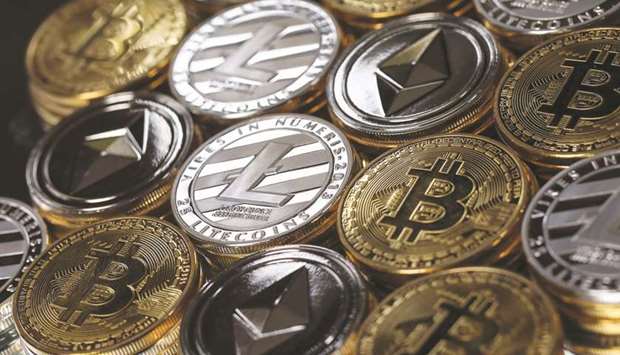
(Representative photo)