


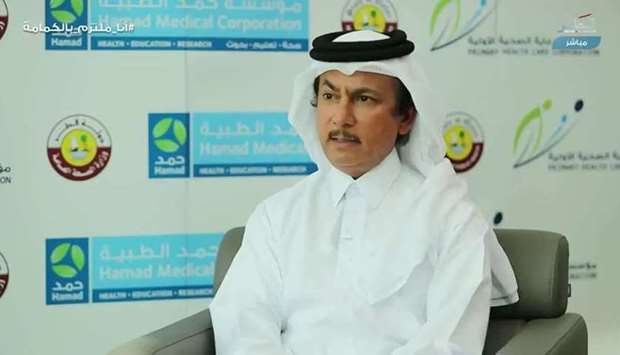
Dr Abdullatif al-Khal, chair of the National Strategic Group on Covid-19 and head of the Infectious Diseases Division at HMC, on Wednesday said Qatar is going ahead with the first phase of the lifting of Covid-19 restrictions as planned, and the development is linked to positive indicators seen regarding the number of infections in the society.
"Though we were worried about a rise in infections after the Eid holidays, these were considerably low due to the high level of awareness among the people and the progress of the national vaccination programme. However, the gradual lifting of restrictions in the coming period does not mean laxity in strictly following the preventive and precautionary measures as the virus is still there and spreading in many countries," he told Qatar TV.
"Vaccination and the precautionary measures complement each other and people should continue to follow the measures to continue curbing the spread of the disease. The new strains of the virus are more infectious and spread more quickly, and the measures are there for the protection of the people, in particular those who have not got the vaccine so far. As more and more people get the vaccine, more privileges will be given to them," Dr al-Khal said.
The official said 60% of eligible people in Qatar have got at least one dose of the vaccine and more than 1mn people have received both doses. "Until now, the effectiveness of vaccines used in Qatar against the new strains has been proven and we are safe from them, according to the latest scientific findings. However, if the manufacturers find out any out new information, updates would be given accordingly."
"We advise anyone thinking of travelling abroad for tourism to make sure that they get the vaccine alongside their family members and also ensure that they comply with the regulations and requirements of the countries they are visiting. They should also make sure that the destination country has good and effective healthcare infrastructure and facilities, in particular for the elderly and those with chronic diseases. Also, people should avoid travel to high-risk countries," Dr al-Khal said. "We hope that before the end of this month, we could return to around 80% of normal health services at HMC, and the private health sector will follow."
"Though we were worried about a rise in infections after the Eid holidays, these were considerably low due to the high level of awareness among the people and the progress of the national vaccination programme. However, the gradual lifting of restrictions in the coming period does not mean laxity in strictly following the preventive and precautionary measures as the virus is still there and spreading in many countries," he told Qatar TV.
"Vaccination and the precautionary measures complement each other and people should continue to follow the measures to continue curbing the spread of the disease. The new strains of the virus are more infectious and spread more quickly, and the measures are there for the protection of the people, in particular those who have not got the vaccine so far. As more and more people get the vaccine, more privileges will be given to them," Dr al-Khal said.
The official said 60% of eligible people in Qatar have got at least one dose of the vaccine and more than 1mn people have received both doses. "Until now, the effectiveness of vaccines used in Qatar against the new strains has been proven and we are safe from them, according to the latest scientific findings. However, if the manufacturers find out any out new information, updates would be given accordingly."
"We advise anyone thinking of travelling abroad for tourism to make sure that they get the vaccine alongside their family members and also ensure that they comply with the regulations and requirements of the countries they are visiting. They should also make sure that the destination country has good and effective healthcare infrastructure and facilities, in particular for the elderly and those with chronic diseases. Also, people should avoid travel to high-risk countries," Dr al-Khal said. "We hope that before the end of this month, we could return to around 80% of normal health services at HMC, and the private health sector will follow."