


Students at Weill Cornell Medicine-Qatar (WCM-Q) have received funding for their research cataloguing the biodiversity of lagoons created at a wastewater treatment plant. The rehabilitation of Al Karaana Lagoons by the public works authority Ashghal began in 2017, augmented by a domestic wastewater treatment plant in the vicinity. Since then, the area has become a haven for wildlife and is particularly rich in bird life.
Mentored by the Division of Pre-medical Education’s associate professor of biology Dr Kuei-Chiu Chen, students at WCM-Q will now document the flora and fauna found in the area and compare the statistics to those from 2015 and 2017 before the water was cleaned to such a high standard.
The pre-medical students visited the site during the college’s winter break to see how the wastewater is treated and pumped into the lagoons, and have recently been awarded a grant from WCM-Q’s Student Research Mentorship Programme to help them complete the study.
Ayaterahman Draidia, one of the students taking part in the study along with Momina Tareen and Nuran Bayaktar, said, “Our trip to the treatment plant was a great way to contextualise all the research we had made into the process by seeing with our own eyes. We first got briefed on the overarching waste decontamination process and the many steps required as the engineers explained how the entire plant functioned. Afterwards, we were given a tour of the entire plant, where we were able to take a close look at all of the different tanks and generators involved.
“The main purpose of the study is to observe any changes in biodiversity of the Al Karaana Lagoons after its environmental rehabilitation, which we will do by collecting data on various organisms, starting with birds. As a lifelong resident of Qatar, I was surprised by how little I knew about the country’s bird population and how greatly I had underestimated its diversity.”
The cataloguing of the species at Al Karaana Lagoons will take place at both day and night and may demonstrate the importance of the lagoons for migratory birds.
When Ashghal conducted a study in September 2015, they found 48 bird species associated with the site, but this was before the water was treated to such a high standard to remove all contaminants. Dr Chen said it would be very interesting to see the results and was a valuable learning experience for the students involved.
She said: “From an educational point of view, the study will be an invaluable educational tool, introducing students to the concept for research and allowing them to take responsibility for it. I will be there to provide mentorship, but we really want them to take ownership of this research.
As qualified doctors, WCM-Q expects them to conduct their own medical research and to embrace the ideas of lifelong learning and knowledge creation, so this is their first step towards that goal.”
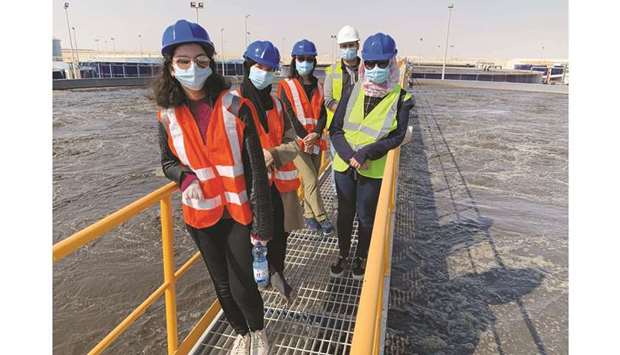
WCM-Q students with Dr Kuei-Chiu Chen at Al Karaana Lagoons.