


HE Lolwah AlKhater, Assistant Foreign Minister, Spokesperson for the Ministry of Foreign Affairs and Executive Director of the Doha Forum, said 2020 was a year that challenged the notion of multilateral co-operation.
Speaking at a panel discussion examining the findings of the Doha Forum 2020 Report on the theme of Covid-19 recovery, HE AlKhater said: “2020 has been a year that challenged the notion of multilateral co-operation. We saw both instances of solidarity and co-operation as well as cases of failure and isolationism. The timely Doha Forum Report addresses the weaknesses that the pandemic has exposed in the global community. It also lays the roadmap ahead for how global and regional co-operation can lead to a durable, sustainable and broad-based recovery from Covid-19.”
The College of Public Policy (CPP) at Hamad Bin Khalifa University (HBKU), in collaboration with the Doha Forum and Stimson Center, convened the panel discussion. ‘Coping with New and Old Crises: Global and Regional Co-operation in an Age of Epidemic Uncertainty’ analyses the current and long-term challenges that have emerged from the pandemic and highlights the need to build on enhanced global co-operation and solidarity engendered by the new crisis. The Doha Forum developed the report in partnership with the Stimson Center, a US-based think tank.
The panel discussion was held at Minaretein, Education City, on January 27. Dr Leslie A Pal, founding dean of CPP, moderated the discussion between HE AlKhater; Dr Richard Ponzio, director of the Just Security 2020 Programme and a senior fellow at the Stimson Center; and Saji Prelis, co-chair of the Global Coalition on Youth, Peace and Security.
In discussing the recommendations of the report, the speakers considered its findings that current international efforts toward global challenges are too often fragmented and under-resourced. Charting the way forward, the report recommends a three-year global green recovery effort with four critical dimensions of global-national-local interaction. It also points to the promising role of new public-private partnerships to spur innovation through new technologies and promote job and wealth-creation opportunities.
Speaking after the event, Dr Pal, dean of CPP, said: “The pandemic has put into focus the faultlines in multilateral co-operation. At this critical juncture and facing a growing number of serious global challenges, we have new opportunities to address those challenges as an international community – if we pull together. The focus of this event has, therefore, been the framework at the heart of the Doha Forum Report 2020 that offers a roadmap for a co-ordinated global green recovery effort.
“No doubt this will be the first of many efforts to further amplify the role of civil society and academic institutions like HBKU in elaborating the global governance and public policy implications.”
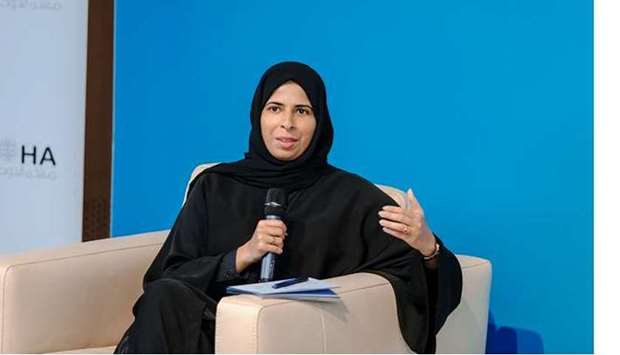
HE Lolwah AlKhater at the panel discussion.