


Carbon allowances in the European Union rose to €31 ($37.57), matching the record from 2006 as policy makers plan to step up measures to cut greenhouse-gas emissions and meet increasingly ambitious climate targets.
Carbon futures have risen steadily this year as policy makers flagged plans to bolster the world’s most extensive programme to slash fossil-fuel pollution. The EU’s Emissions Trading System creates financial incentives to push industries away from polluting, supporting the bloc’s goal of net zero emissions by 2050.
The price of carbon is a vote of confidence from the market that the EU is serious about its aim to cut greenhouse gases significantly in the coming decades and a signal to industry about the costs of continuing to pollute. It forces thousands of power plants and industrial sites to pay more for their emissions and encourages many of them to switch from more polluting fuels like coal to cleaner ones such as natural gas and renewables.
EU leaders were discussing at a summit on Thursday a plan to tighten their carbon-reduction goal to 55% by 2030 from 1990 levels. Their endorsement will pave the way to the adoption of a landmark climate law that will then trigger a swathe of emissions regulations affecting the entire economy.
The carbon price is a crucial tool to realise that goal. Higher carbon prices will be key to get companies to shift toward lower-carbon business models, just as they have helped drive coal out of the mix in favour of low-carbon renewables. A higher price could also mean that permit auctions will enable the EU to raise more money to subsidise new low-carbon practices that aren’t yet economically competitive.
“Hitting €31 shows the EU’s commitment to the most ambitious climate targets in the world,” said Ariel Perez, partner at Hartree Solutions.
The permits will have to get much more expensive to push businesses to cut emissions fast enough to meet the EU’s goals for the coming decades, he said.
Beyond the broader policy picture, there are short-term changes in the market that are boosting prices. New permits are released to the market through weekday auctions. The last offering this year will happen on Monday before resuming in late January or early February. That pause of at least a month is putting upward pressure on prices.
The cap on emissions is also set to decrease next year as a new trading period with stricter rules begins on January 1, meaning there will be less volume than usual once auctions begin. In the future, the carbon price could help push businesses to phase out other polluting technologies and invest in low-carbon ones such as hydrogen and carbon capture and storage.
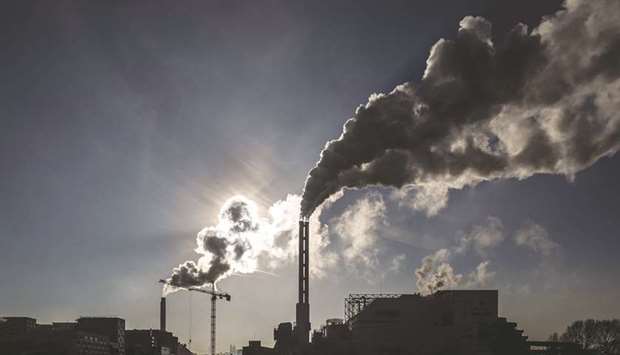
Smoke rises from the chimneys of a waste incineration plant in Saint-Ouen on the outskirts of the French capital Paris (file). Carbon futures have risen steadily this year as policy makers flagged plans to bolster the world’s most extensive programme to slash fossil-fuel pollution.