


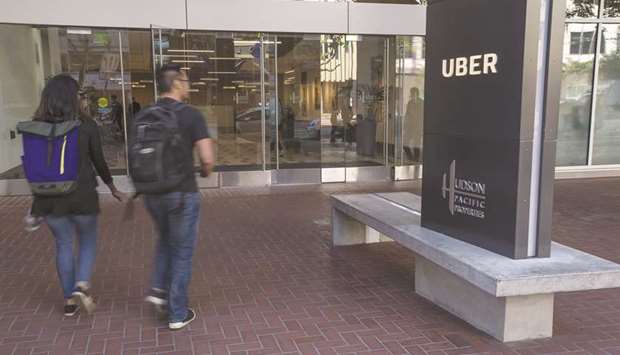
Uber on Thursday reported that it lost $1.1bn in the recently ended quarter as the pandemic walloped its ride-hailing business, while boosting its food delivery service.
Total revenue dipped 18% from a year earlier and the third-quarter loss was marginally higher than in the same period last year.
Revenue in Uber’s mobility unit was down 53% from the same quarter last year, while money taken in from Uber Eats, which includes delivering restaurant meals or other orders, more than doubled, according to the San Francisco-based company.
“Despite an uneven pandemic response and broader economic uncertainty, our global scope, diversification, and the team’s tireless execution delivered steadily improving results,” chief executive Dara Khosrowshahi said in an earnings release.
Uber shares that had been buoyed by the triumph of an initiative that lets drivers remain classified as independent contractors in California drifted slightly lower.
Demand for rides directly correlates to pandemic lock-down restrictions in cities, and Uber’s mobility and deliver units are positioned to take advantage of returns to pre-virus lifestyles, Khosrowshahi said in a earnings call.
“Uber is becoming the go-to app for getting around or getting something delivered your door in 30 minutes,” Khosrowshahi said.
The global pandemic has set back Uber’s efforts to drive into profitability, but executives said they remain optimistic.
“As consolidated growth returns, it will return to a more profitable foundation,” said chief financial officer Nelson Chai.
Drivers are staying away as well as riders, sharing fears of Covid 19, according to Uber.
“We have to make sure that drivers, understand that it’s safe to drive,” Khosrowshahi said.
“These are human beings and what’s happening outside is very tough.”
Uber is offering incentives to get drivers back on the road for the service.
Meanwhile, riders using the service tend to be people who don’t have the option to stay home because of their jobs, and they are very price sensitive, according to Khosrowshahi.
Uber’s outlook was brightened this week with the passage of a California referendum allowing it and other “gig economy” operators to keep their contractor-driver business model.
The measure known as Proposition 22 effectively overturns a state law which would require the ride-hailing firms and others to reclassify their drivers and provide employee benefits
“You’ll see us more loudly advocate for new laws like prop 22,” Khosrowshahi said.
“It’s a priority for us to work with governments across the US and the world to make this a reality.”
Labour organisers have vowed to fight for worker rights, which they say were eroded by an initiative letting ride-share and delivery services in the smartphone “gig economy” not provide security to those getting the jobs done.
“It’s a way for an extremely unprofitable sector to buy themselves a new lease on life and hoodwink legislators,” UCLA labour centre researcher Brian Justie said of Prop 22. “I don’t think a lot of workers are happy about this.”
Allianz
German insurance giant Allianz yesterday reported a slight rise in third-quarter profit, though revenues declined and it did not update its full-year outlook, as the company weathered the challenge of the pandemic.
The Munich-based insurer made a net profit to the end of September of 2.1bn euros ($2.5bn), up 5.9% year-on-year.
Operating profit declined 2.6% and revenues by 6.1% to 31.4bn euros.
The results were “solid in an environment that will remain challenging”, chief executive Oliver Baete said in a statement.
Allianz has not published a new profit forecast for the full year.
In April, it withdrew its initial forecast of operating profit of between 11.5 and 12.5bn euros.
Operating profit in its property-casualty unit fell by 2.4% as the negative effects of the pandemic were offset by lower reimbursements on natural disasters.
The insurer’s life/health division saw sales fall by 9% year-on-year due to lower premium volumes on retirement savings products, especially in the United States and Germany.
In the nine months to September, Allianz said the “adverse impacts” from the pandemic amounted to 1.3bn euros, causing operating profit to fall 14.6% in the year to date compared with the same point in 2019. Shareholders will feel the effects of Covid-19 in the immediate future.
Due to the “ongoing economic uncertainties” linked to the pandemic, Allianz discontinued its previously suspended share buyback programme for 2020 and will no longer distribute the remaining 750mn.
Richemont
Profits tumbled at Richemont during the first half of its non-standard financial year, the Swiss luxury giant said yesterday, as pandemic gloom in Europe outweighed booming Chinese sales.
Richemont, which counts Cartier among its brands and is ranked second only to French giant LVMH in the luxury industry, saw profits slump by 82% in the six months to the end of September compared to the same period in 2019, to 159mn euros ($188mn). Like many firms, Richemont’s sales were hit hard in the April through June period when many markets were under coronavirus lockdowns and then rebound in July through September after restrictions were eased.
If sales were down 26% over the entire period to 5.5bn euros, they had nearly recovered, dropping by only 5% in the July-September quarter after having tumbled by 47% in April-June.
However there were differences among the regions: sales jumped by 78% in China in July-September, but this only “partly mitigated double digit declines in Europe, the Americas and Japan”, said Richemont.
While many Western nations eased coronavirus restrictions, international tourist travel remained frozen.
This hurt the luxury sales in these countries as Chinese tourists had become a major clientele.
The company noted “strong domestic sales in China...benefited from very robust local demand in the absence of purchases overseas.”
Chairman Johann Rupert said Richemont’s “strong presence in China and an acceleration in digital initiatives have partially mitigated the consequences of temporary store closures and a halt in tourism worldwide.”
Richemont has allied itself with China’s giant online retailer Alibaba to reinforce its position and has for a number of years worked to develop online commerce, a sales channel that luxury houses were initially worried might damage their brands or hurt retailers.
It noted during the half year that eight of its brands including Montblanc, dunhill, Panerai and Piaget had opened flagship stores on Luxury Pavilion, an exclusive invite-only app-within-app in Alibaba’s Tmall shopping app where high-end brands recreate the luxury environment of their physical boutiques.
Singapore Airlines
Singapore Airlines yesterday reported a record net loss for its fiscal second quarter as the carrier continued to reel from the impact of the coronavirus pandemic on global air travel.
The airline, which has shed thousands of jobs and grounded much of its fleet, said its net loss in July-September totalled S$2.34bn ($1.7bn), down from a net profit of S$94.5mn in the same period the year before.
Revenue for the quarter plunged 81.4% to S$783.8mn, the airline said in a statement.
First half net losses totalled S$3.47bn.
“The recovery from the Covid-19 pandemic is likely to remain patchy, given the new waves of infections around the world and concerns about imported cases,” it said.
The carrier added that it had concluded talks with Airbus on a revised schedule for the delivery of aircraft orders and similar negotiations with Boeing were at an “advanced stage”. Last month the firm said it was cutting about 4,300 jobs — around 20% of its workforce.
With the aviation industry in deep crisis due to the pandemic, airlines have turned to alternative ways to raise cash, from offering “flights to nowhere” to tours of aircraft.
Singapore’s flag-carrier scrapped earlier plans for no-destination flights following an outcry over the potential environmental impact.
But it offered passengers the chance to dine on board two parked A380 superjumbos — the world’s biggest passenger jet — and is also offering home deliveries of plane meals.
Industry body the International Air Transport Association (IATA) estimates that airlines operating in the Asia-Pacific region stand to lose a combined $27.8bn this year.
IATA forecast in July that global air traffic is unlikely to return to pre-coronavirus levels until at least 2024 — a year later than previously projected.
..