


The hosting countries of the World Cup are planning to make the most of the economic benefits after the World Cup, just as Russia achieved after 2018 edition profits estimated at $14bn, but Qatar broke this rule and turned into an exception, and began years ago to reap the benefits of hosting the 2022 World Cup through its accelerated pace of integrated and sustainable development in all sectors of the state.
Yasir al-Jamal, Vice-Chairman of the Technical Operational Office at the Supreme Committee for Delivery & Legacy (SC), said that the 2022 Qatar World Cup played an important role in accelerating the pace of development and the completion of many projects planned in advance within the Qatar National Vision 2030. He considered that the World Cup and development are two sides of a single message that Qatar is prepared to organise the most important event in the Arab region and the Middle East and provide the best version in the history of the World Cup.
Speaking to Qatar News Agency (QNA), al-Jamal said that Qatar’s recent development projects have been planned for a long time within the Qatar National Vision, but hosting a huge historical event of the size of the World Cup was the main vehicle that drove these projects directly to see the light quickly, according to the planned form and schedule set in the plan of the comprehensive committee to organise the World Cup.
He added the SC’s projects for the hosting of the World Cup began at the right time after the completion of the period of planning and design, where the start of the construction phase and all projects are now in full swing, all of which will be ready by the end of 2020 and the beginning of 2021.
The Qatar World Cup projects have been progressing rapidly in various sectors since 2010, which confirms the ability of Qatar to fulfil its promise to organise the best version in the history of the World Cup, serving all the countries of the region and benefiting the people of the region, al-Jamal said.
Vice-Chairman of SC’s Technical Operational Office pointed to the achievements that have been made following eight years of hard work within an integrated plan which included stadiums hosting World Cup matches, training grounds and infrastructure facilities. He explained that this is evident in the accelerated pace of development and the completion of many mega projects, most notably the Doha Metro project, three lines of which (red, golden, orange) will be fully completed by the end of 2019 and the beginning of 2020. This is a major achievement within a short period.
He noted that the establishment of Hamad International Airport and its opening in 2015, with extensions to be added in the coming period, as well as the road projects that are completed daily by the Public Works Authority “Ashghal” throughout Qatar, were not to achieve at a fast pace without the World Cup. The World Cup stadiums, which are the most sophisticated in the world of football both in terms of design and exterior shape and in terms of interior design, were not built solely to host the tournament, but to reflect the Qatari originality and give the fans a unique and unprecedented experience of learning more about the rich Qatari heritage.
Al-Jamal added that Al Wakrah Stadium, which will be completed this month, will be ready for official matches. It is inspired by traditional boats, especially that the city of Wakrah is coastal and located in the southern region.
Al-Jamal stressed that the cooling technology is one of the characteristics of Qatar’s stadiums, and there are no stadiums in the world using this technology. The cooling technology in Qatar stadiums has undergone various stages of development since it was first applied in Al Sadd Stadium, then Khalifa International Stadium, and now at Al Wakrah Stadium, which will be opened this month.
Al-Jamal added that the committee promised to donate 170,000 chairs through co-ordination with the FIFA and distribute them to countries that need to develop sports infrastructure.
Al-Jamal emphasised that the main idea in the construction of the World Cup stadiums was based on the economic and social sustainability of these facilities after the World Cup so that the community benefits from it.
Concerning the crisis brought about by the unjust blockade imposed on Qatar, and its impact on the World Cup projects, al-Jamal stressed that the siege has become a success story for Qatar, adding that since the first hours of the blockade, the SC began to communicate with the main contractors in order to activate the emergency plans in the work schedule of the World Cup project, which was designed with great flexibility and immediate readiness to meet any emergencies, in order to re-evaluate the status of suppliers and supply systems.
Al-Jamal added that the blockade benefited contractors in a big way and opened new doors for them in terms of quality of materials and competitive prices, by opening up to markets in Turkey, Oman, Vietnam, South Korea and other countries. It was an opportunity for local contractors to communicate with these companies and to get high quality products at a better price.
Al-Jamal added that in addition, the local market rebounded after the SC reviewed the evaluation of the local market, to discover that many products manufactured locally need to develop the plant so that this product reaches international quality, and this is evident in the World Cup stadium chairs, which are 100% local.
Al-Jamal stressed that many local companies have begun to move effectively after the blockade to take their chances in World Cup projects, and the contracts signed for the World Cup projects reached about 100 contracts, 62%, are of local companies, which strengthens the local economy.
Al-Jamal asserted that there is no problem with the operation of the World Cup stadiums which are scheduled to be completed in the beginning of 2021 until the official launch of the championship at the end of 2022, as this will be under the responsibility of the main contractor for each stadium, and this is according to the contracts signed by the SC with the main contractors in all stadiums.
Al-Jamal confirmed that the World Cup projects were implemented by the joint efforts of all governmental and non-governmental institutions, stressing that these efforts are very important to continue the march and the success of the event during the period of the tournament. He explained that the committee has set up integrated plans to deal with all aspects of transportation, in co-operation with all the relevant authorities from the Ministry of Transport and Communications, the Ministry of Municipality and Environment, Ashghal, Hamad International Airport and the Mowasalat company, where everyone expressed observations and all aware of their role and responsibilities during the tournament. He added that FIFA will be briefed on the plan for adoption as a full transport plan in the World Cup.
Responding the questions about Qatar’s inability to absorb the expected audience to watch the World Cup, al-Jamal refuted all these opinions by saying that SC has developed integrated and alternative plans for everything related to hosting the World Cup.
He explained that SC did a comprehensive survey of the hotel rooms expected to be available during the World Cup, when it found that it would not be enough, it developed alternative plans such as building cruise ships and special fans villages that will also help to introduce visitors to Qatari heritage in the important tourist areas, in addition to renting private housing units, and all these plans are being studied accurately in order to reach the appropriate number that will cover the needs of all visitors to the World Cup.
With regard to the fans’ zones during the World Cup, al-Jamal explained that the committee has planed three main areas for fans during the World Cup (Al Bidaa Park, Al Khor Park, Al Wakrah Park), and is currently contacting FIFA to adopt fans’ zones during the World Cup, with a capacity of about 50,000 people.
He added that the committee is looking to create additional areas for gathering the masses, but for a smaller number, in some important tourist areas where the infrastructure is available, and the places are rich in Qatar’s culture and heritage.
Regarding the number of World Cup teams, al-Jamal stresses that all Qatar’s plans and arrangements are based on the hosting of 32 teams, but SC is open to the FIFA and the sports community’s opinions on this matter, especially that SC’s position from the beginning is that the World Cup is the championship of all peoples of the region and will benefit all of them.
He added that the final decision will be made clear in June during FIFA meeting, adding that the final word in this matter is for Qatar, which will take into account the interest of the state and its people and will implement the best option.
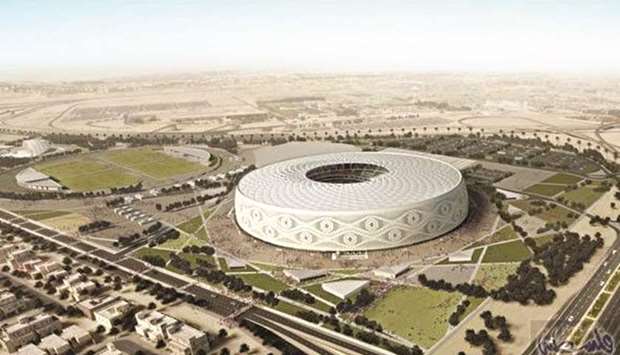
The World Cup stadiums reflect the Qatari originality and give the fans a unique and unprecedented experience of learning more about the rich Qatari heritage.