


Stocks rose on both sides of the Atlantic yesterday as investors entertained a glimmer of hope that negotiations may yet soften the blow of an unfolding trade war between Washington and the EU, dealers said.
European car stocks surged after the US ambassador in Berlin, Richard Grenell, told bosses of Germany’s biggest car firms that Washington was calling on the EU to bring tariffs to zero on car imports – in exchange for equal treatment by the US.
European auto sector concerns were “easing a bit to boost the markets in Europe”, observed analysts at Charles Schwab, after German Chancellor Angela Merkel responded by saying she would back talks with trading partners on lowering automobile tariffs.
In Milan, Fiat Chrysler stock gained more than 5% and in Paris, Peugeot and Renault were 3% or more higher in closing trade.
German auto shares also rose across the board, with BMW up more than one percent, while Daimler and Volkswagen both added over 2% on the day.
This, combined with strong German economic data, made the DAX index in Frankfurt Europe’s star performer. The DAX 30 was up 1.2% at 12,464.29.
The Paris and London stock markets also rose. The FTSE 100 rose 0.4% to 7,603.22 points and Paris’s CAC 40 gained 0.9% to 5,366.32 points at close yesterday.
Wall Street was higher as traders returned to their desks after Wednesday’s national holiday and reacted to solid US employment data, which offset worries about trade tensions, as well as a possible lessening of tension between Washington and the EU.
But analysts were quick to point out that the bigger trade war – between the US and China – is still happening as Washington is set to begin enforcing tariffs on more than $34bn in Chinese imports from today.
Beijing has vowed to respond with its own tariffs immediately, arguing it has “no choice but to fight” and accusing Washington of “opening fire on the whole world” with the trade restrictions.
Greg McKenna, chief market strategist at AxiTrader, said “there has been a subtle but distinct shift in the number of voices who are now saying this could all end up in a big global mess with a huge hit to global growth”.
In Europe meanwhile, official data showed German industrial orders bounced back in May after a string of setbacks, suggesting Europe’s largest economy may not face the sharp slowdown some observers feared.
Yesterday’s positive data was “more evidence that the economy could rebound during the second half of the year”, ING Diba bank economist Carsten Brzeski commented.
The euro gained after the data.
Elsewhere, oil prices traded lower after Trump fired a warning shot at Opec.
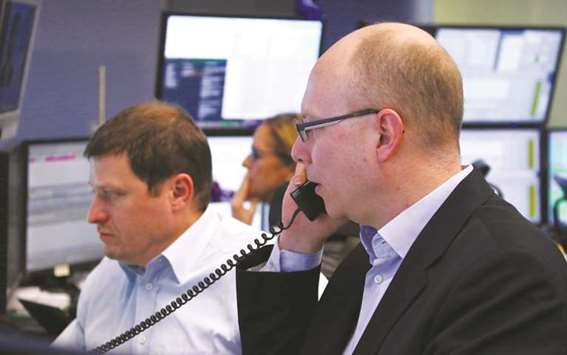
Traders are seen at the Frankfurt Stock Exchange. The DAX 30 rose 1.2% to 12,464.29 points yesterday.