


Libya’s crude output dropped 11% as clashes among rival armed groups over the last 10 days led to the closure of some of the Opec nation’s biggest oil export terminals, forcing a number of fields to halt production. Output fell by about 80,000 bpd to 620, 000 barrels since fighting broke out among armed groups began on March 3, according to a person familiar with the matter, who asked not to be identified because of a lack of permission to speak to media.
Es Sider, the country’s biggest oil port, and Ras Lanuf, its third-largest, remain closed, according to the person. Crude production halted at Waha Oil Co, which pumps crude to Es Sider. Waha is a joint venture between the state oil company National Oil Corp, Hess Corp, Marathon Oil Corp and ConocoPhillips.
The recent clashes dealt a blow to recent gains in the North African nation’s oil output. Exports had resumed from Es Sider and other facilities that were previously shut amid fighting in the country, which has Africa’s largest crude reserves. Output in February was about 700,000 bpd, almost double the level of the previous year, data compiled by Bloomberg show.
Waha Oil has a capacity of more than 300,000 bpd, according to the NOC website. Its production dropped by half to 40,000 bpd after the closure of Es Sider port, before it came to a complete halt at the end of last week. The country has also been rescheduling crude loadings at Es Sider and Ras Lanuf and transferring them to other ports like Zueitina and Brega.
Libya is struggling to revive oil production amid political turmoil and conflict among forces competing to control its energy assets. The country is still pumping far less than the 1.6mn bpd it produced before a 2011 uprising that ushered in years of instability.
The Organisation of Petroleum Exporting Countries exempted Libya from its agreement in November to cut output to end a global oversupply.
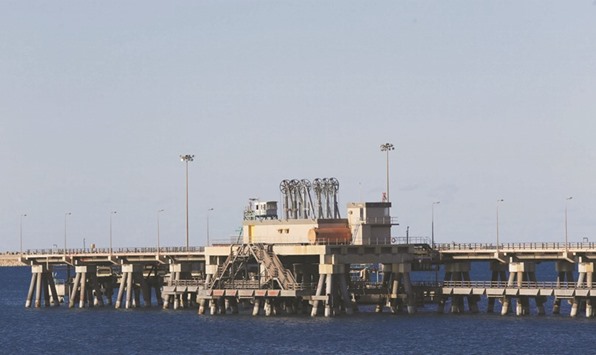
A view of the industrial zone at the oil port of Ras Lanuf, Libya on January 11, 2017. The country’s crude output dropped 11% as clashes among rival armed groups over the last 10 days led to the closure of some of the biggest oil export terminals, forcing a number of fields to halt production.