


President Rodrigo Duterte welcomes media’s role as watchdog even as he considers it a partner in informing the people about what the government is doing for them, a palace official has said.
In a message he delivered on behalf of press secretary Martin Andanar at the launching of the Media Ownership Monitor (MOM) website, press undersecretary Enrique Tandan said: “President Duterte believes that, as partners for change, the members of the media have a huge responsibility in keeping the government institutions in check.
Change happens when there is a constant voice that keeps the government up on its feet, making sure that no detail will go unknown from the public eye.”
But the president also wants media to be a partner in delivering the government’s messages to the people.
“For the president, this is how the media works as the government’s sidekick, so to speak,” Tandan said.
Christian Mihr, representing Reporters Without Borders, or RFS, which initiated the MOM project, noted that “the Philippines, a country with a president who decided to lead his countries closer to China media should play a crucial role as a facilitator of societal debates, watchdog of government and essential mediator of democratic processes”. Mihr cautioned about “the subtle yet strong ties between business interests and political power” that could limit media’s independence.
The MOM website contains the findings of a three-month research conducted jointly by VERA Files and Reporters without Borders on the top media outlets in the country, their profiles as well as on the extent of media ownership concentration.
The study showed that the two giant broadcast companies – ABS-CBN Corp and GMA Network Inc.– dominate the Philippine media industry and have a major influence in shaping public opinion.
The research revealed that some media companies practice corporate layering, which not only masks the real owners but could also be related to taxation issues.
Stressing the importance of transparency in media ownership, Mihr asked, “How can people evaluate the reliability of information, if they don’t know who provides it? How can journalists work properly, if they don’t know who controls the company they work for? And how can media authorities address excessive media concentration, if they don’t know who is behind the media´s steering wheel?”
He said those are questions that MOM wants to address both worldwide and in the Philippines,e specially.
The Philippines is the sixth country where RSF implemented MOM.
Started last year in Colombia and Cambodia, this year RSF embarked on MOM in six more countries, Tunisia, Turkey, Mongolia, Peru and Ukraine next to the Philippines.
It is funded by the German ministry for economic development and co-operation, BMZ.
Reporters Without Borders Germany has existed for 21 years and is part of the international, Paris-based organisation Reporters sans frontières, whose aim is to defend human rights, in particular freedom of the press and the right to inform and be informed anywhere in the world.
VERA Files is non-profit media organisation composed of veteran journalists committed to advance excellence in journalism by engaging in research-intensive, high-impact reports in multiple formats and providing training, particularly mentoring of journalists.
A human rights expert from the United Nations has agreed to hold a “high level debriefing” with the Philippine officials to discuss whatever will be the findings of the investigation into drug killings in the country.
This was in compliance with the condition laid down by president Rodrigo Duterte that a UN representative must be subjected to scrutiny in a public forum.
A briefing note published on the website of the Office of the UN High Commissioner for Human Rights said that Agnes Callamard, UN special rapporteur on extrajudicial, arbitrary and summary executions, was open to discuss her preliminary findings and present an end-of-mission statement.
She will also hold a press briefing to share her initial observations with the media.
A report on the visit will be submitted to the UN Human Rights Council.
Callamard and special rapporteur on the right to health Dainius Púras will be in the Philippines on the first quarter of 2017.
“The general purpose of the visits of the special rapporteur on extrajudicial, summary or arbitrary executions is to examine the level of protection of the right to life in law and in practice in the concerned country,” read part of the briefing note.
It added: “The special rapporteur’s inquiries into cases of unlawful killings or summary executions are of a fact-finding nature only (monitoring and reporting). They are not of a criminal, judicial or quasi-judicial nature.”
Callamard will hold meetings with government and other public officials at the national and local level.
She will also have dialogues with various non-governmental organisations, representatives of international or regional organisations, the diplomatic community, victims, witnesses, detainees and the media.
The Philippine government was requested to commit to ensure free, confidential and unsupervised interviews with victims, families of victims, legal representatives, detainees, and civil society representatives as a whole.
It was also asked to ensure free and unrestricted access to all regions as well as places of detention and facilities where detainees may be kept.
“It is crucial for the effective implementation of the country visit that these Terms of References are fully accepted by Governments.
These are essential guarantees which ensure that the mission delivers on its outcomes, to the benefit of all those involved,” the briefing note said.
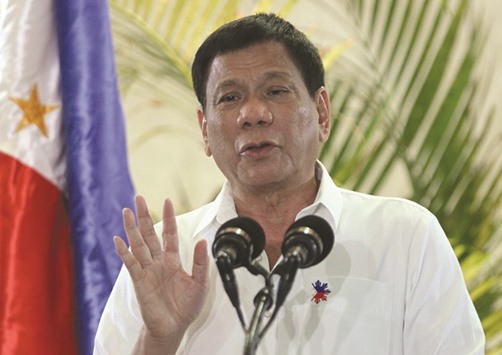
President Rodrigo Duterte.