


Ex-Soviet Moldova went to the polls yesterday in its first popular presidential election since the 1990s, seen as a tug-of-war between supporters of closer relations with Russia and those seeking EU integration.
The crisis-hit country of 3.5mn wedged between Ukraine and Romania is the poorest in Europe and has struggled with a string of high-profile corruption scandals which are overshadowing the vote.
Presidential candidates are presenting diametrically opposed visions for the country’s future: calling for deeper ties and boosting trade with Moscow, or committing to the path toward Europe.
Voters are leaning in opposite directions as well.
“We can’t be without Russia, that’s our export market” that could provide cheap gas, said Igor Lopukhov, 66, a Russian-speaking pensioner who cast his vote for Socialist Party candidate Igor Dodon, a leader in opinion surveys who has pledged to restore co-operation with former Soviet master Moscow.
Dodon’s main opponent in the polls is former education minister and proponent of EU integration Maya Sandu, who is supported by younger Western-leaning Moldovans.
“We have to build Europe at home,” said Ion Lupusor, a 27-year-old who had studied in Europe before returning.
“If we don’t vote, pensioners will decide the country’s development, and they vote for going ‘Back to USSR’,” he said.
Forty-one per cent of the population live on less than $5 (€4.6) a day while the monthly average salary is $240, according to World Bank figures.
Many Moldovans make ends meet only through remittances sent by relatives working abroad, which make up nearly a quarter of gross domestic product (GDP).
“My daughter sends me money (for food) from Italy,” said 70-year-old Zinovia Ilonel, who also voted for Dodon. “She’s never coming home.”
The central election commission in Moldova said voting was monitored by over 3,200 Moldovan observers and 562 more from abroad.
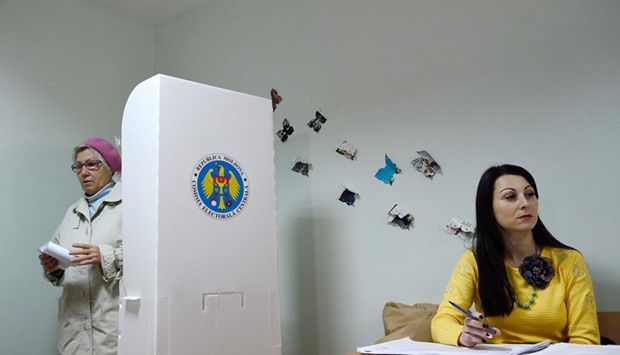
A woman prepares to cast her vote at a polling station in Chisinau.