


The risk India will suffer below-average monsoon rain for a third year, a once-in-a-century event, probably means the central bank has room for just one interest-rate cut before an extended pause.
Thirty-five of 39 economists surveyed by Bloomberg see the Reserve Bank of India lowering the repurchase rate to 6.5% from 6.75% today, one predicts no change while three forecast a reduction to 6.25%. The median estimate in a separate survey shows the benchmark will drop to 6.50% this quarter and to 6.25% in the October- December period and stay there till at least June 2017.
Two years of back-to-back drought have meant India’s reservoirs are three-quarters of the past decade’s average.
Water scarcity could hurt crops, worsen price pressures and dent growth in Asia’s third-biggest economy. RBI governor Raghuram Rajan would also be wary of the recent recovery in oil prices that could imperil inflation targets.
“It’s difficult to see a clear roadmap for further cuts beyond April, as the RBI may be concerned about uncertain monsoon rains and a rebound in oil prices,” said Gaurav Kapur, a senior economist in Mumbai at Royal Bank of Scotland Group.
“The central bank would also like to see how a reduction in small savings rates and new rules for banks to calculate their lending rates translate into better policy transmission.” Finance Minister Arun Jaitley in his February 29 budget retained a pledge to shrink the fiscal deficit to a nine-year low, soothing RBI concern that government stimulus would stoke prices. Calls for a rate cut intensified after data mid-March showed consumer-price gains in February rose 5.18%, the least in four months and much lower than the 5.52% increase economists estimated.
Jaitley on March 30 reiterated a demand for lower borrowing costs. History shows that India hasn’t had three back-to-back droughts in at least 100 years and a new rate-setting system that takes effect April 1 will ensure commercial lenders pass on the central bank’s reductions much quicker to customers, he said. The government last month also slashed interest rates on small savings, which competed with banks for deposits. The lowest rainfall since 2009 parched vast tracts of farm land, hurting rice, corn, sugar cane and oilseed crops last year. About half of India’s 1.3bn population is employed in agriculture, which accounts for roughly 18% of the nation’s $2tn gross domestic product.
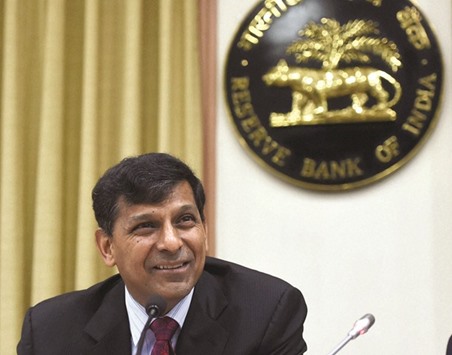
The Reserve Bank of India governor Raghuram Rajan at a press conference in Mumbai. Thirty-five of 39 economists surveyed by Bloomberg see the RBI lowering the repurchase rate to 6.5% from 6.75% today.