


The first-ever training programme on the humane care and use of laboratory animals held from January 5 to 18 by Qatar University Laboratory Animal Research Centre (QU-LARC) drew 23 trainees from Biomedical Research Centre, LARC and the Colleges of Medicine, Arts & Sciences and Pharmacy.
The aim of the programme was to engage trainees in a general understanding of the regulations and responsibilities in the use of laboratory animals for research.
Attendees participated in in-classroom theory and hands-on learning led by LARC director Dr Hamda al-Naemi and LARC operational services manager Dr Vijay Kanth.
The theory course was obligatory for students and researchers who intend to use Centre facilities, regardless of previous training.
It covered a range of issues related to animal research such as national and international laws and policies, ethics, occupational health and safety, zoonotic diseases, and rodent housing and husbandry.
Participants also learned about personal safety inside LARC facilities, the importance of personal protective equipment requirements, and how researchers can access LARC facilities for their research. Also highlighted were details on the Institutional Animal Care and Use Committee.
The hands-on course was for personnel who would be handling live animals at the Centre. It covered working with BS60 biosafety cabinets, proper handling of rodents in terms of blood collection, euthanasia and necropsy techniques, and bio-waste disposal.
“It is our obligation to help researchers and students to be trained and certified to use the laboratory animals at the centre in a humane and responsible manner,” Dr Hamda said.
She added that the use of animals in research and teaching is a privilege, carrying with it unique professional and moral obligations for all personnel and students involved in animal research to follow standardised and safe laboratory practices to ensure that all animals involved in research are treated humanely and in accordance with national as well as institutional policies.
Participants were awarded course completion certificates by QU acting vice-president for research Dr Darwish al-Emadi who said that the training was necessary because the quality of research and the welfare of laboratory animals have everything to do with the capacity and competence of the people who play active roles in the care and use of animals and related research.
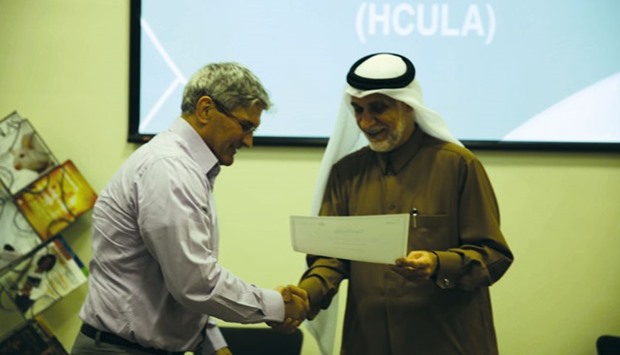
Dr al-Emadi presenting training certificate to a participant.