In Zurich, on December 2, 2010, Qatar won the rights to host the first ever FIFA World Cup in the Middle East.
And exactly five years later, Qatar is rapidly progressing as the country gears up to host the showpiece event of 2022.
On the day of the fifth anniversary, the location of the seventh stadium venue of the 2022 World Cup was announced as the Ras Abu Aboud area of Doha, near the airport.
In addition, the main contractor of the Al Wakrah Stadium will be announced next week.
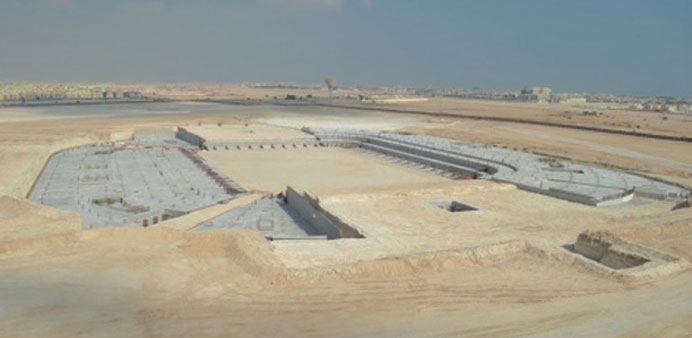
Including Al Wakrah, six stadiums are in various stages of construction across the state. Three have completed early and enabling work stages—the 60,000-capacity Al Bayt Stadium, which will host a semi-final, and the 40,000-seating Al Wakrah Stadium and new Al Rayyan Stadium, both of which are quarter-final venues.
Foundation piling work is progressing at the 40,000-capacity Qatar Foundation Stadium and the refurbished Khalifa International Stadium, with a capacity of 40,000, will be the first stadium to be completed by the end of next year.
The venue of the grand final, the 80,000-seat Lusail Stadium, is also progressing rapidly in the early works stage.
The stadiums are just the tip of the proverbial iceberg as the entire country progresses across different projects.
Nasser al-Khater, Assistant Secretary General of the Supreme Committee for Delivery & Legacy (SC), told www.sc.qa: “Locally and internationally, stadiums are the thermometer for measuring progress as the most visible signs. But a lot of work has happened in other sectors as well.”
Doha Metro and Lusail Light Rail infrastructure projects are on in full swing as part of Qatar Rail’s plans of providing a seamless transportation offering to visiting football fans.
Significant progress has been made towards completion of the first phase of the Metro in late 2019. About 60 percent of the 113 kilometres of tunnelling work has already been completed. By 2021, Qatar Rail projects will provide 600,000 passenger trips per day.
Significant strides have been made as the World Cup accelerates human, social, technological and environmental progress in line with Qatar National Vision 2030.
Pioneering legacy-oriented initiatives such as the Josoor Institute, Challenge 22, Tarsheed 22 and Generation Amazing are well underway, and the SC’s Worker Welfare Standards have set a standard for workers’ accommodation and health and safety guidelines.
The economic model of awarding stadium contracts to regional as well as international companies is unique.
As are the various community engagement initiatives including the memorandum of understanding with various local communities in Qatar, the ongoing five-week roadshow to engage with and give a voice to communities and the Al Rayyan Recycled Art Workshop, a unique way of blending art, football and conservation through public art installations in the new Al Rayyan stadium using the waste material from the demolished old stadium.
Five years on from that historic day at the FIFA headquarters in Switzerland, the entire country is moving in one direction as it prepares to welcome the world in 2022.