


By Joey Aguilar/Staff Reporter
Cyber threats in various parts of the world and the region have become faster and creates more impact due to connectivity, a senior official at the Ministry of Information and Communications Technology (ictQATAR) told Gulf Times.
“Connectivity is reaching everyone in a very fast pace so (cyber) threats are also using these channels to disrupt what connectivity is delivering,” said engineer Khalid al-Hashmi, assistant undersecretary of Cyber Security Sector at ictQATAR.
Al- Hashmi was speaking on the sidelines of a press conference about the holding of the third National Cyber Security Drill “Star-3” this month. The event aims to measure the level of readiness of various sectors of the society in Qatar against evolving cyber threats.
The Ministry’s Qatar Computer Emergency Response Team conducts the drill in a different format for different purposes.
Al-Hashmi noted that cyber attacks existed since the beginning of the internet when people were putting services online.
“The reason it is fast and the impact is high is because people are getting more connected through their smart devices now,” he said. “At the beginning, they only had PCs in their offices connected to the internet or to whatever application they had. Now, people also have a smart device in their pocket, and a couple of work stations at home. It is all about connectivity,” al-Hashmi added.
To help prevent and combat cyber threats, IctQATAR has been holding lots of workshops, trainings and similar drills for various organisations and sectors in Qatar.
The Ministry also invests heavily in drafting policies and standards known as ‘administrative controls’ to boost its strengths and further improve its weaknesses in dealing with different issues such as cyber attacks, according to al-Hashmi.
About threats on devices, the ictQATAR official sees mobile service providers investing to improve the safeguards within smartphones and other gadgets such as tablets and ipads.
“What we need to do is to compliment this is making the public aware of the usage of those safeguards,” he said.
Al-Hashmi noted that each smartphone has a default configuration and people who are familiar with the technology know how to enable and adjust it with their needs.
He reiterated that the aim of “Star-3” is to raise the technical skills within the workforce in the country. The official also stressed the importance of having skilled people who can deal with the evolution of technology to protect their organisation and homes, which he cited as one of the challenges in Qatar.
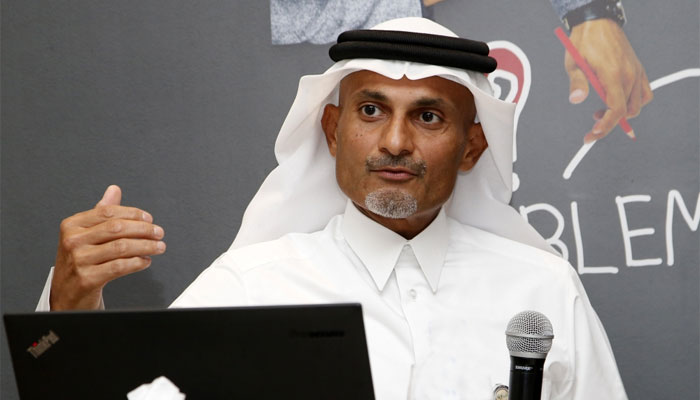
Engineer Khalid al-Hashmi