


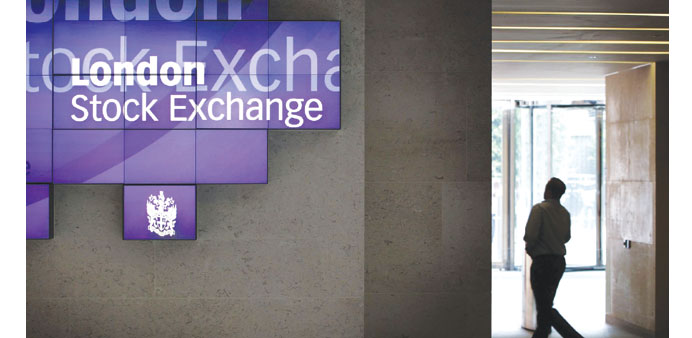
The London Stock Exchange’s $2.7bn acquisition of Frank Russell is meant to help its push into supplying benchmarks to passive investment funds
By Paul J Davies/Dow Jones
The London Stock Exchange is going with the flow and investors should be happy to ride along.
Its $2.7bn acquisition of Frank Russell, owner of the Russell 3000 index among others, is meant to help its push into supplying benchmarks to passive investment funds. This industry has boomed since the financial crisis with Vanguard Group-which uses the LSE’s FTSE indexes-recently topping $3tn in assets under management for the first time.
LSE shares are up 11.5% since it first confirmed it was in talks over a deal in mid-May-even though a good chunk of it is being funded with a near £1bn ($1.66bn) rights issue.
The exchange launched the fund-raising Friday, which will increase its equity base by 17%. The new stock is priced at a 30.1% discount to the theoretical ex-rights price-that is the current market capitalization plus the funds being raised divided by the total number of shares after the issue.
This discount looks large but compares well with other recent UK rights issues.
The average discount since the start of 2009 for deals worth more than £350mn is more than 38%, according to data from Barclays, which is leading the deal, and Dealogic, the data provider. Deals this year from Babcock International Group, RSA Insurance Group and Intu Properties priced at discounts between 33% and 37%.
Higher discounts cut both ways for investors.
A bigger discount effectively makes the option to buy shares more valuable, helpful if an investor chooses to sell their rights.
On the flip side, investors face greater dilution of their existing stake if they don’t take up their rights.
LSE will also draw down almost £700mn from existing bank facilities but with just £200mn of net debt before the deal and almost £550mn of operating cash flow last year, the burden isn’t great.
In any case, the LSE is reviewing its plans for the asset-management arm of Russell and a sale could make any increase in debt temporary.
With a forward price-earnings ratio of 17.7, LSE is at a premium to European peers, but still lags Intercontinental Exchanges, owner of the NYSE, on 21.3 times.
As the LSE begins to get more out of the LCH.Clearnet clearing business it bought last year and show synergies from Russell, that gap should start to thin.