


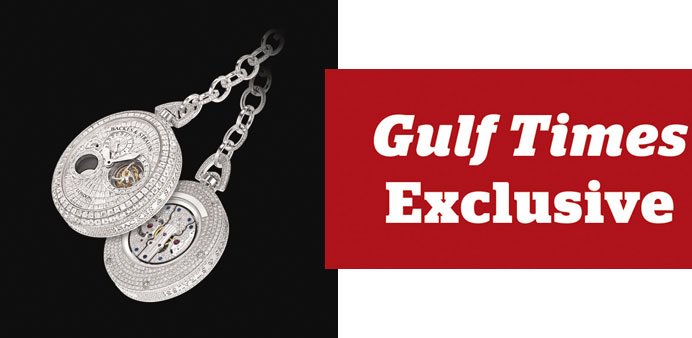
The Regent Beau Brummell Tourbillon Pocket Watch (limited edition) by Backes & Strauss. Many of the companies showcasing their brands at a UK luxury brands event in London either have or plan to have a presence in the Gulf and all have private clients from Qatar and other Gulf countries.
By Denise Marray/Gulf Times Correspondent/London
When Gulf Times attended a top UK luxury brands event in London this week, one thing immediately became apparent — the Gulf region is very important to the leading players in an industry worth £32bn to the UK economy.
Held in the elegant surroundings of Spencer House, London’s finest surviving eighteenth-century town house built for John, first Earl Spencer, an ancestor of Diana, Princess of Wales, Walpole’s Celebration of British Luxury event afforded an opportunity to speak to representatives of leading brands such as Backes & Strauss, Ettinger, Redman Whiteley Dixon, Boodles, Savoir Beds, FRHI hotels and resorts, Cliveden, Halcyon Days, Cole & Son, Miller Harris and Henry Poole &Co. Here was a chance to take in some of the world’s finest diamonds, bespoke leather goods, world-renowned hospitality, unique tableware, luxury yachts, exquisite perfumes and superb tailoring.
Many of the companies showcasing their brands either have or plan to have a presence in the Gulf and all have private clients from Qatar and other Gulf countries.
A business woman with her sights set on Qatar made the evening memorable for many of the women present by having her team of expert manicurists give an Only Fingers + Toes manicure on the night. India Knight, founder and chief executive of the company sees great potential in the Gulf region.
An interesting aspect that is emerging in the luxury market is the demand for digital talent by the leading companies. A survey of luxury brands from the membership bases of Walpole and global trend authority WGSN has highlighted how views towards digital have evolved.
Various factors including time pressed consumers, digital innovation and control of brand identity are driving luxury brands to have an omni-channel focus. According to recent research by McKinsey, the digital platform is projected to reach $21bn by 2020and is expected to drive 40% of sales growth for luxury brands. According to 77% of those surveyed by Walpole and WGSN, digital also has a significant impact on brand loyalty and reputation. Some 58% had seen significant increase in sales from their digital investment and 90% expect digital sales to increase over the next five years.
Luxury brands are now recruiting digital experts to help them take their marketing strategies to the next level. The challenge is how quickly they can find and keep the talent to develop and capitalise on the opportunity.
Twitter, Facebook and Instagram are having a notable impact on footfall for many companies. It’s a global phenomenon. For example, Chinese visitors to Sloane Street in Knightsbridge, home to the ultimate luxury store, Harrods, increased markedly following the implementation of dedicated Weibo and Wechat accounts highlighting all that the area has to offer.
Hugh Seaborn, chief executive, Cadogan (owners of much of Chelsea) observed: “Visitors tend to plan their upcoming shopping trips 2-3 months in advance; it is crucial that we communicate with them via their most trusted and popular channels.”
However, the role of the store is still vital. As was pointed out you cannot smell perfumes or feel fabrics online. 83% of respondents stated that it is still important to have a strong physical presence. It was also remarked that digital could not replace the added value of face to face customer service and the social experience of offline sales. It was noted that a great deal of the pleasure associated with luxury items come from the experience of selecting them in beautiful settings attended by knowledgeable staff.
As Seaborn said: “The most satisfying purchase remains one that comes with wonderful memories.”