


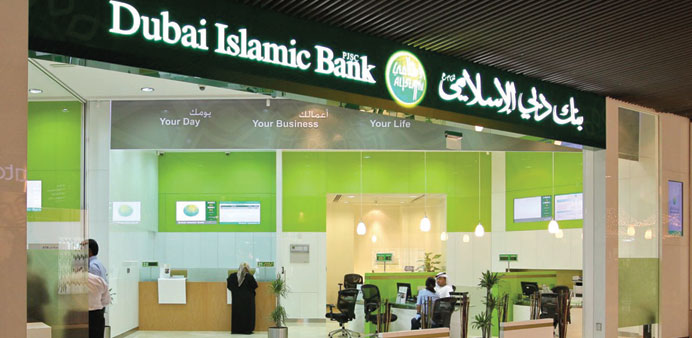
While lenders including Dubai Islamic Bank are targeting Muslim-majority nations such as Kenya and Iraq, where formal bank accounts are scarce, the IMF study has said Shariah-compliant lenders need to improve their operating model to attract depositors
Bloomberg/Dubai
Islamic banks have yet to devise strategies for attracting large swathes of the global Muslim population, limiting the industry’s prospects, according to researchers at the International Monetary Fund.
Growth of Shariah-compliant finance has done little to boost inclusion for individuals and businesses without bank accounts, a working paper from staff at the Washington-based fund said this month. Banks need to focus on small-and medium-sized enterprises and pursue private equity and venture capital initiatives, according to the paper.
The research underscores some of the challenges facing an industry that Ernst & Young says may more than double to $3.4tn between 2014 and 2018. While lenders including Dubai Islamic Bank, Standard Chartered and Abu Dhabi Islamic Bank are targeting Muslim-majority nations such as Kenya and Iraq, where formal bank accounts are scarce, the IMF study said Shariah-compliant lenders need to improve their operating model to attract depositors.
“If there is an economic added value, then the industry would prosper, develop and increase its assets,” Mohamed Damak, global head of Islamic finance at Standard & Poor’s, said by phone from Paris on February 17. “If there is no economic value, then they will most probably stagnate.”
The IMF study surveyed the 57-member states of the Organisation for Islamic Co-operation, where it said the share of individuals citing religious reasons for not using bank accounts is “noticeably higher than in other countries.” It found the use of financial services has grown more slowly than physical access to the services.
“Islamic finance, in its current form, has not significantly contributed to improving inclusion,” Sami Ben Naceur, lead author of the study, said in the report. “Islamic banks may need to improve their current operating model so as to attract depositors and serve SMEs.”
It proposed private and public sector initiatives such as developing Islamic microfinance and reform of financial regulation.
Dubai Islamic Bank, the largest Shariah-compliant lender in the UAE, plans to open a unit in Kenya this year as it seeks to expand outside its home market, where credit growth is forecast to slow in 2015. Standard Chartered started offering Islamic services in the African country in March 2014. The bank plans to expand to Nigeria, Tanzania and Uganda, it said in a press release on its website in March.
In Kenya, about 42% of the adult population had accounts at formal financial institutions as of 2011, compared to about 60% in the UAE, according to World Bank data. In Iraq, where Abu Dhabi Islamic Bank opened a unit in 2012, the penetration was about 11%.
“Islamic banking is growing at between 15% to 20%, so it must be reaching somebody,” Afaq Khan, chief executive officer of Standard Chartered Saadiq, the bank’s Shariah-compliant unit, said by phone from Ras Al-Khaimah on February 17. “It wasn’t reaching them before and it’s reaching them now. It must be financially inclusive.”
While the IMF’s researchers found that Islamic banking within OIC countries was associated with greater use of bank credit by households and by firms for investment, it said there was no significant effect on other indicators of credit use.
The Islamic finance industry expanded beyond predominantly Muslim states in the Middle East and Asia last year, with the UK, Luxembourg, Hong Kong and South Africa all selling debut Islamic bonds.
“Shariah compliance is certainly important for some customers,” S&P’s Damak said. “The economic added value of Islamic finance is important too.”