


IANS/Dhaka
Residents of Bangladesh capital city from all walks of life are busy preparing to celebrate the Bengali New Year of 1420, which falls on April 14.
Celebration of the Bengali New Year begins with the sunrise when people wearing new dresses would gather in the main venues around the Dhaka University.
The entire Bangladesh gets into a festive mood as it celebrates the New Year, hoping that the new year would bring peace and prosperity to the South Asian nation of about 153mn people.
Tens of thousands of people wearing masks and traditional dresses, mostly students of colleges and universities, are expected to join the colorful procession - Mangal Shobha Jatra - to welcome the new year with good spirits.
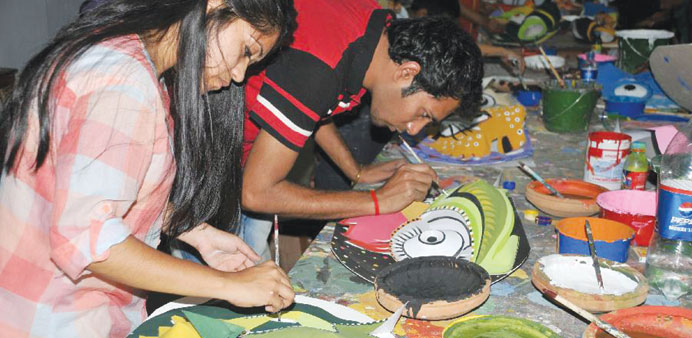
During the procession, students from the Dhaka University usually carry large symbolic figures of owl, tortoise, tiger and elephant all made of bamboo.
Some students of the Fine Arts Institute of the university were assigned to make artifacts featuring rickshaws, ox, dragon, crocodiles, flying birds, warriors on elephant’s back, horses and tigers chasing evil spirits.
Shammi Akter Sumi, a parade co-ordinator, said this year’s procession is the 25th that they have co-ordinated to welcome Bengali
New Year.
Fostering peace and amity among the people in the community is the theme in this year’s New Year celebration.
Sumi said that the procession would be joined by other residents aside from students.
According to Sumi, to raise funds for the procession, students sell clay frogs, elephants, horses and dolls and also from the sale of art-works, clay pots, masks, show pieces, paintings and watercolors.
“We make various types of colourful masks. We make owl, tiger, horse, and elephant and so on. And we start our day with the procession,” Pran Roy, another artist, said.
According to the organisers, hundreds of artists will put their hands together on New Year’s eve to paint the walls and the streets in front of the institute with birds, elephants, horses and other
animals.
In Bangladesh, Pohela Boishakh, or the first day of the New Year, is a national holiday.
Mughal Emperor Akbar introduced the Bangla calendar year and the celebration of Pahela Baishakh, marking the advent of Bengali New Year, which is now considered as an integral part of the Bengali’s cultural heritage and tradition and a day of merriment.