


|
Despite the country’s robust economic growth, unemployment is expected to worsen even beyond the term of President Benigno Aquino due to “global spillovers,” the International Labor Organisation (ILO) said. |
In a recently released executive summary, ILO said the 7.3% unemployment rate in the Philippines for 2013 was the highest among Association of Southeast Asian Nations (Asean) member-countries and other nations in the Pacific region.
Data culled from the Global Employment Trends indicated that until 2017, the country’s unemployment rate will steadily rise to 7.3% in 2014, 7.4% in 2015, 7.4% in 2016 and 7.5% in 2017.
“In the Philippines, despite robust economic growth in excess of 6.8% in the past two years, job growth has been subdued and the unemployment rate remained at around 7% throughout 2012 and 2013,” the ILO report said.
Interestingly, the unemployment rate for the entire Southeast Asian region is forecast to remain steady at 4.3% until 2017.
“Philippine’s GDP (gross domestic product) remained strong … supported by government spending on infrastructure,” the report said.
Aquino will step down in June 2016. When he does and if the ILO forecast is to be believed, the Philippines will continue to have the worst joblessness rate in the Asia-Pacific region.
When asked for comment, presidential communications secretary Herminio Coloma said the Aquino administration is “intensifying job generation by promoting expansion and new investments in manufacturing and high value-added industries.”
“This will create more high-quality jobs. Chronically high unemployment is being addressed through targeted skills training programmes by Tesda and DOLE’s job-matching programmes,” Coloma told The Manila Times.
He was referring to the Technical Educational Skills Development Authority and the department of labour and employment.
Although Indonesia in 2013 posted the second highest unemployment rate at 6%, this figure is seen to taper off to 5.9% by 2017.
“Economic growth in Indonesia, the region’s largest economy, is estimated to have moderated considerably in 2013 to 5.3%, compared with GDP growth exceeding 6.2% annually from 2010 to 2012 as demand for the economy’s exports slowed and the possibility of ‘monetary tapering’ in the US raised volatility in Indonesia’s financial market,” the report stressed.
With only two remaining years in office, the president is finding himself increasingly alienated from the very people he proudly proclaimed four years ago as his bosses.
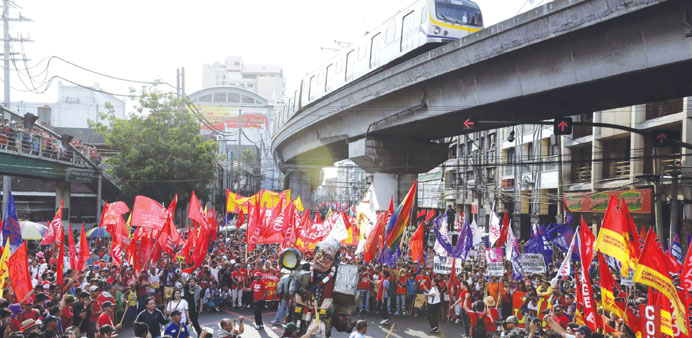
The labour coalition Nagkaisa (United) that led thousands of its members in a Labor Day march to Mendiola near Malacanang yesterday described the last four years under Aquino as “extremely disappointing.”
The group said none of the most pressing concerns raised by organised labour such as contractualisation and high electricity rates were seriously addressed, while extra-judicial killings, tax breaks and other urgent issues are locked under contentious discussions among political advisers and economic managers.