IRIN/Jayapura
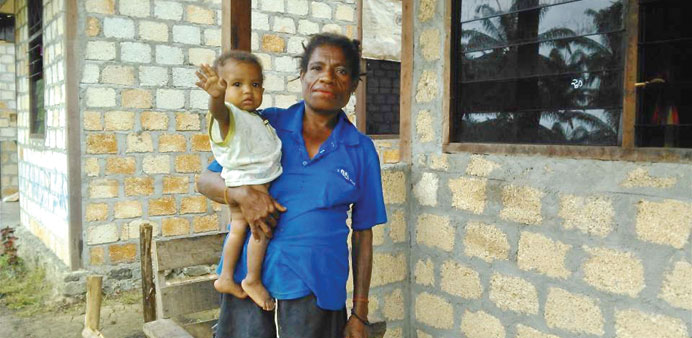
Indonesian Papua is taking steps to combat violence against women and children as concerns grow about the level of domestic abuse.
According to the National Commission on Violence against Women, Papua Province recorded 1,360 cases of gender-based violence per 10,000 women in 2012.
“Many people still resort to violence to solve problems. Even parents and teachers believe that if corporal punishment is not used, children won’t have discipline,” said Dwi Utari, a senior programme assistant in charge of child and mother protection at the UN Children’s Fund (Unicef) in Papua.
Unicef points out that in 2011, in a survey conducted in three of Papua’s 29 districts between 67% and 79% of children under the age of 15 said they had been physically punished, with 24 to 31% indicating “severe” physical punishment.
The findings indicate that those in charge of protecting children — parents, caregivers, teachers — often perpetrate the violence.
But the figures may not reflect the reality, because many cases of gender violence in Papua remain unreported, said Margaretha Hanita, deputy chairwoman of the government-run Centre for Woman and Child Empowerment in Jakarta, the capital. In 2012 the National Commission recorded the highest number of incidents here — 1,699 per 10,000 women.
“In Jakarta many women have the courage to report and have much greater access to information on where to report,” unlike in Papua, where there is less awareness and advocacy on the issue, as well as lower levels of formal education,” said Hanita.
The Asian Human Rights Commission said in May 2011 that indigenous women in Papua reported high rates of domestic violence perpetrated by their husbands and partners, and little protection from police or state agencies.
Tanah Papua, which consists of West Papua and Papua provinces, is a predominantly ethnic Melanesian region with a population of 3.8mn. It is rich in natural resources, including the world’s largest gold deposit, but lags behind the rest of the country in several development indicators.
Papua has one of the largest budgets out of the country’s 34 provinces — nearly $600mn in 2012 — and the fifth highest gross regional product.
But its human development rankings are among the nation’s lowest, including an adult literacy rate of only 64%, and less than six years, on average, of formal schooling per resident.
Women are often denied entitlements and resources available to men, while poor access to education fails to harness the potential of young people.
Alcohol consumption, a widely recognised problem among men in Papua, and long-held traditional beliefs are among factors fuelling domestic violence, Unicef’s Utari said.
“Alcohol has a lot to do with domestic violence. When people are under the influence of alcohol, they can’t think clearly, and even engage in violence, including forced sexual intercourse.”
Papua New Guinea (PNG), the neighbouring country whose residents have similar cultural identities and languages as Indonesian Papuans, has also grappled with gender-based violence.
The PNG Law Reform Commission noted that 70% of women in PNG said they had been physically abused by their husbands, and in some parts of the country that number reached 100%.
In July 2013, Indonesian Papua Province enacted a bylaw on domestic violence, drafted with the assistance of Unicef.
Three districts — Jayapura, Keerom and Jayawijaya — are piloting the bylaw’s implementation, which has provisions for services for the victims as well as the perpetrators of domestic violence, including treatment, counselling, rehabilitation and mediation.