


By Noimot Olayiwola/Staff Reporter
The Hamad Medical Corporation’s National Centre for Cancer Care and Research (NCCCR) is mulling plans to introduce the revolutionary immunotherapy for treating cancer patients in Qatar. Cancer immunotherapy is the use of the immune system to reject cancer.
“We are already doing cancer immunotherapy at the NCCCR with the available antibodies but we want to expand into experimental protocols,” NCCCR medical director Dr Alexander Knuth told Gulf Times yesterday.
He was speaking on the sidelines of the two-day Sidra Medical and Research Centre symposia series on “Updates on Immunotherapy of Cancer and Immunoscore”, which began yesterday in partnership with the Society for Immunotherapy of Cancer (SITC).
The main premise of cancer immunotherapy is stimulating the patient’s immune system to attack the malignant tumour cells responsible for the disease, either through immunisation of the patient or through administration of therapeutic antibodies as drugs.
“We have lots of patients and our team is very competent,” said Dr Knuth.
“We only need to sort out the legal requirements so that we can do clinical trials as they are being done in other countries. There is a lot of enthusiasm and support at all levels all the way up into the Supreme Council of Health. So, I am very confident that we’ll soon develop our own research protocols in Qatar,” he explained.
The strength required to achieve such a feat is already available in Qatar, he asserted. “We have the Hamad Hospital, which is a big health care centre, and the presence of highly qualified research institutes such as Weill Cornell Medical College in Qatar, Qatar Biomedical Research Institute and Sidra Medical and Research Center, is strength in itself.”
There are also financial, personnel and structural supports on ground in addition to the soon to be opened Translational Research building as well as a clinical trial centre.
“Cancer immunotherapy is a developing field and we want to get to the forefront. We are doing right now what is available through industrial providers but what we really aim is to build on other people’s researches and bring it to the population in Qatar so that they can benefit from this step forward,” he stressed.
Describing cancer immunotherapy as “the greatest revolution in cancer medicine”, he noted that it was an obligation for health care workers to explain to patients what cancer was and that they were not necessarily dying from the disease.
“We can cure more than half of the patients with the available therapies and may be the number is even higher now that we have cancer immunotherapy to supply to patients. There is a shift in the possibilities of what we can offer to patients and they also need to recognise this,” he maintained.
Sidra’s chief research officer Dr Francesco M Marincola shared similar views.
“I think it is time to start using immunotherapy in Qatar. Maybe Hamad Hospital can start and then later Sidra. In other parts of the world, people are using it and they are surviving the disease.”
According to Dr Marincola, immunotherapy could have some serious side effects but not in the long term like other treatments of cancer.
“It is real that immunotherapy could also have serious side effects, but the good news is these effects are not long term and they are less serious than chemotherapy. Meanwhile, not many people respond to immunotherapy but when they do, the cancer does not recur,” Dr Marincola claimed.
Asked why the therapy could not work with many people, he said it could be due to some genetic reasons.
At the symposium, leaders and visionaries in the field of cancer immunotherapy from around the world and the Middle East region are coming together to provide an educational environment focused on improving the outcome for patients with cancer by incorporating strategies based on cancer immunotherapy, Dr Marincola added.
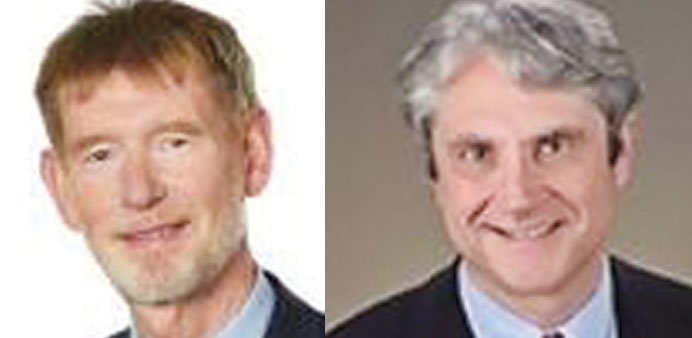
Dr Knuth and Dr Marincola