


|
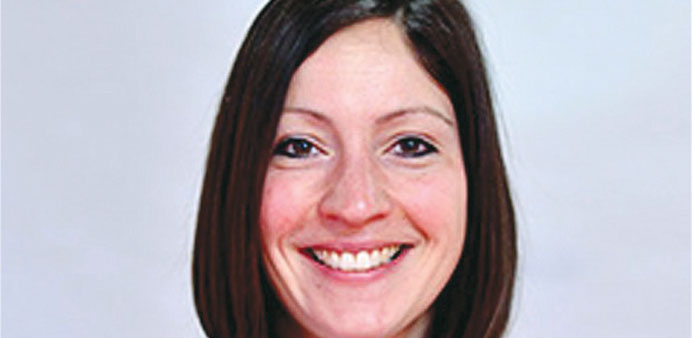
Refereeing rugby matches when you are a solicitor by day can be a treacherous position. Only a few weeks ago Claire Hodnett, who recently became the first woman to be appointed to the RFU’s national panel of referees, had to appear at Nottingham crown court with a black eye. |
“It wasn’t ideal when I was appearing before a high court judge,” she says, laughing. “I just ran past somebody who’s arm flicked out and caught me totally by mistake, so I had a black eye for a week. There were a few questions over that one.”
The 36-year-old specialises in childcare and child protection, advising social services and representing them at court hearings.
Hodnett’s story is an extraordinary one, the Shrewsbury-born amateur rugby player went from being a heavily overweight No8 to a female pioneer in elite rugby officiating, refereeing up to Championship level in the men’s game next season and this summer at the Women’s Rugby World Cup. Along the way she has transformed herself, physically, in order to meet the rigorous standards set by the RFU match officials panel.
“I played rugby at university level, but I was pretty crap to be honest. That may have been partly because of my size because I was enormous,” she laughs, self deprecatingly. “Because I was significantly overweight and had two knee operations, I decided that playing rugby was not going to be possible. As I made that decision I happened to see a female referee at my local rugby club so I thought, ‘I want to do that.’
“I went on a local rugby referees course and it turned out I was quite good at it. I would never have imagined when I said that I would get to the level I have done in the men’s or women’s game.”
The hardest part of the journey was meeting the refereeing criteria, in particular the RFU’s fitness test. “Whatever way you look at it women are made up differently to men,” she says. “Men, generally, are naturally quicker than women. That is the bottom line.”
Hodnett trained hard to clinch the national standard level 16 on the yoyo test (a variant on the bleep test, which focuses on intermittent recovery) “It almost killed me the first time I had to do it,” she says, laughing, “but I can do it now.”
Asked whether she has encountered sexist attitudes on her journey to the top, akin to the criticism levelled at football match officials Sian Massey and Amy Fearn in recent years, Hodnett is vociferous. “Oh no, you just wouldn’t get that in rugby,” she insists, “because regardless of what people think of you as a person or as a referee the sport is a respectful sport and incidents of that kind are very few and far between.
“Some of the supporters will come up to me after the game and say, ‘Oh I wouldn’t have known we had a woman out there, you were really good.’ From time to time you hear, ‘Oh bloody hell woman! He was offside!’ but it’s in the context of my decision was wrong, not you’re a woman and that you’re not good enough.
“I think being the first, I’ve had to really show the progress I’ve made but also my ability to continue to make progress because the games at this level and above get more challenging, their speed of skill, their speed of thought, everything happens so much quicker. I’ve had to evidence that, because some men, those that make decisions at the RFU or whatever body it is, haven’t always been reassured that the females can do the job like the men.”
Insiders tip Hodnett to reach the Premiership over the next few seasons. “I would give it a good go, but I am 34. If it’s not me, I am absolutely convinced that another female will referee in the Premiership one day.” she says. “But I am obviously going to give it a bloody good go.”