


Reuters/Washington
US consumer prices rose in May and a gauge of underlying price pressures showed signs of stabilizing after a long decline, a potential comfort to Federal Reserve policymakers who would like to see stronger inflation.
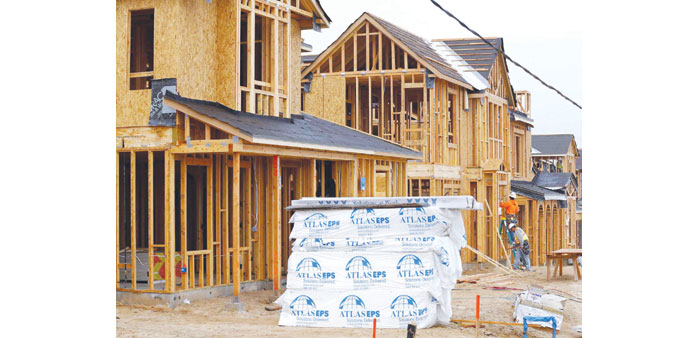
Other data yesterday showed an increase in ground-breaking at home construction sites, the latest sign America’s housing market recovery will help counter the drag on the economy this year from government austerity.
The Labor Department said its Consumer Price Index edged 0.1% higher last month after two straight months of declines, just below analysts’ expectations.
In a sign of stronger demand in the economy, consumer prices outside of food and energy rose 0.2%, just above the pace clocked in April.
These so-called “core” consumer prices, which US central bankers monitor closely because they are less volatile, were up 1.7% in the 12 months through May. The increase last month matched April’s gains and supported the view that a worrisome downward trend in core inflation, which began a year ago, might be coming to an end.
“That does tend to lend some credence to the fact that it will be stable,” said Aaron Kohli, an interest rate strategist at BNP Paribas in New York.
While May’s reading for 12-month core inflation remains below the Fed’s 2% inflation target, a stabilisation could make the Fed more comfortable paring back its economic stimulus programmes as soon as this fall.
The Fed began a two-day meeting yesterday in which it is expected to leave a bond-buying stimulus programme unchanged.
“The economy has been performing decently,” said Carl Riccadonna, an economist at Deutsche Bank in New York. “I don’t think the Fed is concerned” with weak inflation data.
In May, the gain in the core price index was supported by a 0.2% increase in clothing prices, as well as a strong 0.3% increase in shelter costs.
The Fed actually targets a separate but related measure of inflation published by the Commerce Department, known as the PCE index, which has shown even weaker levels of core price increases. The PCE index puts less weight on shelter, so yesterday’s data might not signal a similar stabilisation in the core PCE index.
Investors on Wall Street appeared to largely shrug off the data.
A separate report showed US housing starts rose less than expected in May, likely reflecting labour and material constraints, although the overall trend remained consistent with strength in the housing market.
Though permits for future home construction fell, that followed a surge in April, which hoisted them above the 1mn-unit mark. The pullback last month reflected a drop in the volatile multi-family sector, but permits for single-family construction touched their highest level in five years.
The Commerce Department said yesterday housing starts rose 6.8% to a seasonally adjusted annual rate of 914,000 units. April’s starts were revised up to show an 856,000-unit pace instead of the previously reported 853,000 units.
Economists polled by Reuters had expected ground-breaking to rise to a 950,000-unit rate last month.
Builders, who are ramping up construction to meet demand for housing against the backdrop very low inventory, have been complaining about labour shortages and increased material costs.
Sentiment among single-family home-builders hit a seven-year high in June, a report showed yesterday, amid optimism over current and future home sales.
Lean inventories are pushing up home prices, which are in turn boosting consumer confidence and spurring consumption, helping soften the blow on the economy from tighter fiscal policy and slowing global demand.
The Federal Reserve has targeted housing as channel to boost growth, through monthly purchases of $85bn in government and mortgage-backed securities.
Though residential construction only accounts for about 2.5% of gross domestic product, housing has a wider reach on the economy. Analysts estimate that for every single-family home built, at least three jobs lasting for a year are created.
Starts are expected to top a 1mn-unit pace this year.
Last month, ground-breaking for single-family homes, the largest segment of the market, rose 0.3% to a 599,000-unit pace. Starts for multi-family homes increased 21.6% to a 315,000-unit rate.
Permits to build homes fell 3.1% last month to a 974,000-unit pace. Permits for multi-family homes dropped 10% to a 352,000-unit rate. Permits for single-family homes rose 1.3% to a 622,000-units, the highest since May 2008.